

South Africa Has AI Leverage. Its Draft Policy Leaves It Unused
- Published
- Source
- IEEESpectrumAI
South Africa is positioned uniquely in the global landscape of artificial intelligence (AI) governance due to its substantial reserves of platinum-group metals, which are essential for semiconductor manufacturing. This strategic advantage, coupled with the country’s status as the largest data center market in Africa, places it at the center of a geopolitical contest between Chinese and American tech companies vying for influence over AI infrastructure on the continent.
The urgency for South Africa to establish a robust AI policy has intensified following the withdrawal of a draft policy that failed to address critical governance issues. Minister of Communications and Digital Technologies Solly Malatsi's decision to withdraw the draft came after concerns were raised about inaccuracies within the document. In response, a new independent panel has been formed to revise the policy, led by experts from various institutions, although no timeline for completion has been established.
As major investments from companies like Microsoft and Huawei are underway, South Africa faces a pivotal choice: to negotiate terms that ensure data sovereignty and technology transfer or to accept standard commercial terms that could lead to dependency on foreign infrastructure. The outcome of these negotiations will not only impact South Africa but could also set a precedent for AI governance across the African continent. Without a clear policy framework, the country risks losing its leverage in a rapidly evolving technological landscape.
Original report
South Africa Has AI Leverage. Its Draft Policy Leaves It Unused
IEEESpectrumAI · Nathan-Ross AdamsThis briefing is an independently written summary based on publicly available reporting and is provided for industry information and news discovery. The original report and source publication are credited and linked where applicable. RobotToday does not claim ownership of third-party source material.
Rights concerns? Contact [email protected] with the relevant URL and details. We will review the matter and take appropriate action where warranted.
More related news
- 1
-
2
ROBOTTODAY Weekly October 19 – 23, 2026 RobotToday · 2 days ago
- 3
- 4
- 5
- 6
- 7
- 8
- 9
- 10
- 11
-
12
RobotToday Weekly October 12 – 16, 2026 RobotToday · 1 week ago
Related Suppliers

BioRobotics Laboratory, Korea University of Technology and Education
Korea, Republic of (South)
South Korean university research laboratory focusing on haptics, exoskeletons, rehabilitation robotics, and autonomous ground vehicles.

McMaster Manufacturing Research Institute
Canada
Hamilton, Ontario applied manufacturing research center at McMaster University; runs a 21,000 sq ft facility with seven research labs.

Robotics Education & Competition Foundation
United States
The REC Foundation is a US nonprofit that runs VEX-based robotics and drone competitions reaching 1.1 million students across 70 countries.
E-COBOT
France
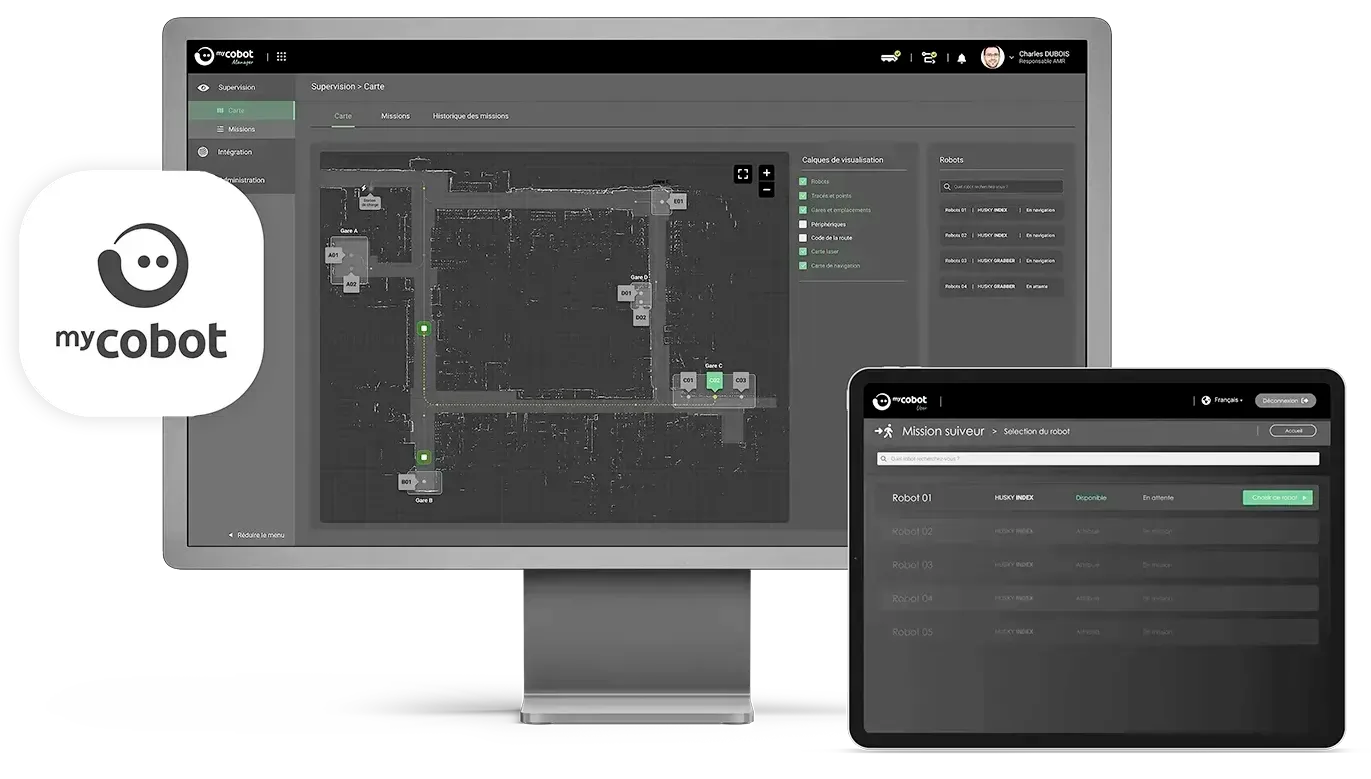
French AMR manufacturer and system integrator offering the HUSKY robot range and MyCobot fleet management software.
EasyMile
France
Toulouse, France autonomous-vehicle software company founded 2014; EZTow and EZDolly systems automate industrial tow tractors and cargo movers at airports.

Filics
Germany
Munich-based robotics startup making ultra-flat omnidirectional AMRs that drive under Euro pallets for space-efficient intralogistics.

Da Shiang Automation Industrial Co. Ltd. 達詳自動化工業股份有限公司
Taiwan
Taiwan-based robotic system integrator founded 2013; 1,000+ robot projects in automotive, aerospace, and metal manufacturing.

Janome Industrial Equipment Europe GmbH
Germany
German sales subsidiary of Janome Industrial Equipment (Japan), distributing servo presses and desktop/Cartesian robots in Europe since 1984.

Industrial Technology Research Institute (ITRI) 工業技術研究院
Taiwan
Hsinchu County, Taiwan applied-technology research institute founded 1973; over 6,500 staff developing autonomous mobile robots and AI perception systems.
Ortelio Ltd
United Kingdom
Ortelio Ltd is a UK cloud robotics research company founded in 2011 that develops AI platforms giving robots intelligence for service and healthcare tasks.

Parata Systems
United States
Durham, North Carolina pharmacy automation maker acquired by BD in 2022; builds robotic vial-filling and packaging systems.

Pensa Systems
United States
Austin-based AI retail shelf platform using autonomous drones and CV to detect stockouts; customers include J&J, AB InBev, and Circle K.
Robotics needs a service framework.
RSF defines a common language for robot service capability, lifecycle operations, certification pathways, and service-provider networks.
Join the RobotToday community on LinkedIn
Daily robotics news, in-depth analysis, conference highlights, and discussions with professionals worldwide.


