Industry Briefing
A single destination for timely, editor-curated robotics news from around the world.

South Africa Has AI Leverage. Its Draft Policy Leaves It Unused
South Africa is positioned uniquely in the global landscape of artificial intelligence (AI) governance due to its substantial reserves of platinum-group metals, which are essential for semiconductor manufacturing. This strategic advantage, coupled with the country’s status as the largest data center market in Africa, places it at the center of a geopolitical contest between Chinese and American tech companies vying for influence over AI infrastructure on the continent. The urgency for South Africa to establish a robust AI policy has intensified following the withdrawal of a draft policy that failed to address critical governance issues. Minister of Communications and Digital Technologies Solly Malatsi's decision to withdraw the draft came after concerns were raised about inaccuracies within the document. In response, a new independent panel has been formed to revise the policy, led by experts from various institutions, although no timeline for completion has been established. As major investments from companies like Microsoft and Huawei are underway, South Africa faces a pivotal choice: to negotiate terms that ensure data sovereignty and technology transfer or to accept standard commercial terms that could lead to dependency on foreign infrastructure. The outcome of these negotiations will not only impact South Africa but could also set a precedent for AI governance across the African continent. Without a clear policy framework, the country risks losing its leverage in a rapidly evolving technological landscape.
Ai Artificial-intelligence Microsoft South-africa Huawei Ai-policy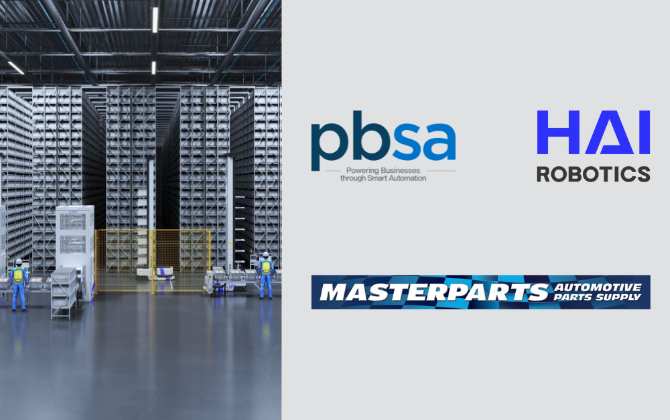
PBSA and Hai Robotics to Deliver South Africa’s First HaiPick System for Masterparts
PBSA is preparing to implement South Africa's inaugural HaiPick System for Masterparts, representing a major leap forward in the logistics of automotive spare parts. This innovative automation solution, created in collaboration with Hai Robotics, is designed to increase storage density and enhance picking accuracy while tackling existing operational challenges within the automotive aftermarket. The project is slated to commence operations in the fourth quarter of 2025, reflecting a commitment to modernizing the industry and improving efficiency in supply chain management.
Warehouse Automation Supply Chain Management Automotive Logistics Robotics Logistics Technology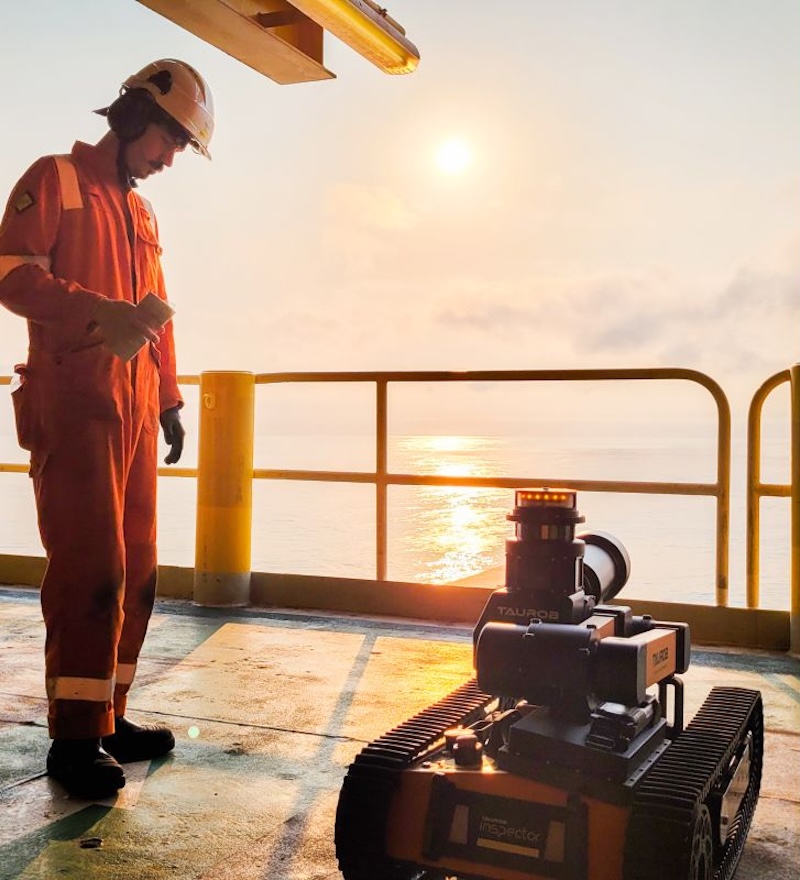
From oil platforms to power plants: Dietsmann showcases robotics-driven maintenance in Africa
Dietsmann, a leading independent provider of operation and maintenance services for energy production facilities, has announced its participation as a Bronze Sponsor at the upcoming African Energy Week (AEW) 2026. This significant event is scheduled to take place from October 12 to 16 in Cape Town, South Africa. The sponsorship underscores Dietsmann's longstanding commitment to the African energy sector, which has been a focus for the company for decades. By engaging in this prominent industry gathering, Dietsmann aims to enhance its visibility and influence within the region, reflecting its evolving role in supporting energy production and sustainability initiatives across Africa.
Events Features AEW 2026 African Energy Week AI analytics automation news
Small-AI Models Gain Traction Around the World
One morning in 2019, Adebayo Alonge was in a Cape Town hotel room, preparing to demonstrate his startup’s AI answer to a serious problem in African health care: counterfeit medication, which kills thousands of people across the continent every year.The RxScanner is a handheld spectrometer that scans a pill with infrared light, then sends the item’s molecular profile to an AI model equipped with a pharmaceutical database. In seconds, the AI identifies the medication from its molecular profile—or reports that it’s phony.Pharmacies were using the system in more than a dozen countries, including Ghana, Kenya, Myanmar, and Alonge’s native Nigeria. But that morning in South Africa, it didn’t work. “I was shocked,” Alonge says.The spectrometer connected to the AI model—but the data center was 14,000 kilometers away and bandwidth was limited. “Our server was in the United States, and just to get the result of a single scan was taking me over 5 minutes.”So Alonge immediately asked his engineers to shrink the AI model down to a smaller, low-power, unconnected version that could run entirely on his Android phone. They produced it 2 hours later, and that saved the demo.More importantly, the work birthed a new version of his device, which can authenticate a pill in places without broadband, computers, or even reliable electricity. It also turned Alonge into an advocate for this kind of “small AI.”Small AI for Global Health Care AccessSmall AI is a far cry from wealthy nations’ colossal large language models (LLMs), hyperscale data centers, multibillion-dollar investments, and debates about AI consciousness. But for millions of people around the world, the only AI that matters, and often the only kind available, is small. (According to a World Bank Report issued in November, only 0.7 percent of internet users in the world’s poorest countries have used ChatGPT, compared to a quarter of all internet users in the most developed nations.)“Most people are discussing AI from the LLM/generative side. But that needs a lot of computing power, electricity, massive data, and skilled people to manage it,” Ajay Banga, president of the World Bank, said last January at the World Economic Forum, in Davos. “Outside the developed world, other than maybe India and China, very few countries have that combination.”By contrast, small AI can deliver useful, even life-saving services to people in areas that have none of those things, Banga said. In India, where the government’s AI plans call for more development of small AI, many such systems are working for farmers.For example, a drone-based system developed by Bala Murugan and colleagues at the Vellore Institute of Technology, in India, takes photos of cashew plants and quickly identifies those with splotches that indicate disease. All the processing takes place on the drone itself, so there’s no need for a computer on-site, nor for a connection to a central server.Using small language models trained for a specific problem, and sometimes running on cheap, low-power devices, other small-AI implementations have been developed to identify ant infestations in a Uruguayan vineyard, detect the presence of malaria-carrying mosquitoes in a number of nations, and run electrocardiograms from an Arduino device in parts of Brazil that lack access to more complex equipment.“This is the most important area in AI nowadays,” says Marcelo José Rovai, a professor at the Institute of Engineering and Information Systems at the Federal University of Itajubá, in Brazil, who was involved in all three projects. “It’s growing very fast.”Low-Power, Small-AI Models on Devices Small AI models can run on a variety of low-power devices, including [from left to right] an Arduino Nano 33 BLE Sense, a Seeed Wio Terminal, and an Arduino Portenta.Moez AltayebFor Alonge, Rovai, and other advocates, small AI is not just “a promising trend,” as that November World Bank report calls it. It may be, in the long term, the form of AI that will touch the most lives and remain sustainable after some of the giant models become too costly for most users.“I think the future of AI is not like one giant model, at a center. I think it’s millions of small, precise models deployed at the edge, each one solving like a specific problem, a specific context,” Alonge says. This is partly because much of humanity—including people in parts of rich countries as well as the developing world—lives without access to cutting-edge frontier models. But, he says, it’s also because those models are not sustainable.“If someone is not subsidizing it, most people will not be able to afford those models. So those of us who are said to be small-AI developers are the ones who will have to build for the majority of the world,” Alonge says.There is no strict definition of “small AI,” but people often use the term for language models with at most a few billion parameters. (Compare that to cutting-edge models, which can include more than a trillion.) That’s small enough to run directly on a phone or a Raspberry Pi. That’s what allows these applications to run on devices without a connection to a data center and use only a few watts of power, often supplied by a battery or a solar panel.Despite their small footprint, these models aren’t fundamentally different technology from that of gigantic AI models, Rovai says. Many instances of small language models were created the same way the phone-based version of Alonge’s pharmaceuticals scanner was—by “pruning” large models, or removing the parameters that weren’t involved in the task. The result is a system that’s less capable generally but still very good at the specific job it was pruned for, Rovai says. A lighter version of RxAll’s RxScanner spectrometer sends its results to an AI model run locally on a phone to check that a drug’s molecular signature is genuine.RxAllOther small models are created by “distillation.” They are trained to mimic a large model, until their performance approaches that of their “teacher,” Rovai says. In other cases, a larger model’s precision is reduced, for example, so that a model run on 32-bit architecture can run on 8-bit designs. In situations where the machine learning application is being used to classify data or predict patterns (like an ant infestation), it’s trained from the beginning on a small device, not derived from a larger model at all. Running all these small, specialized systems is becoming easier, Rovai says, for two reasons.The first reason is that hardware is getting better and more capable while using less power, he says. This means more and more phones can run small AI—especially those equipped with neural processing units, which are specialized chips that handle AI tasks like facial recognition and changing the brightness, shadows, or contrast in a photo.In 2025, slightly more than a third of all smartphones shipped worldwide were capable of running generative AI, and that figure will reach 45 percent by the end of this year, according to the technology research firm Counterpoint. By the end of next year, slightly more than half of all smartphones will be able to run a small AI model.The second reason Rovai cites is the shrinking footprint of language models. Both Google DeepMind’s Gemma 4 (released in April) and Alibaba’s Qwen 3.5 are “fantastic” for small AI, Rovai says. Both models are “open weight,” meaning users can adjust the connections between parameters to suit their needs. This makes it easy, for example, “to take a lot of data from, say, the milk industry and retrain the model specifically on that,” Rovai says.Rovai illustrated these reasons on a Zoom call, using one of his most recent experiments. Holding up a device, he says, “This is the new Arduino UNO Q—a US $50 device with a Qualcomm chipset. I’m running a language model here, which collects data from sensors and analyzes that data to detect tiny pools of water where mosquitoes might be breeding. It takes 3 watts to run it.”Support for Small-AI DevelopmentConvinced that millions of people are already benefiting from these kinds of applications, the World Bank now actively promotes small AI with grants, mentorship programs, financing, technical advice, and models of government policies that are friendly for small-AI development. For example, in Rwanda, the World Bank is backing a government program to help low-income households get devices that can run AI.All that said, no one claims that large language models are going away entirely. To create a generative AI that can run on a phone or other small device requires the architectural insights, data processing, and results of a larger model, Rovai says. “We need the big models to create these smaller models.” And for all that small AI can benefit people without access to big AI, the technology can’t solve the larger problems of development and digital inequality, Alonge says. Implementing small AI won’t allow nations to escape the challenge of creating an ecosystem to support AI: reliable power, a supply chain that works, and an educational system that develops the talents needed to create AI tools.Though his drug-scanning system can run for days on a phone with no connection, “you still want to be able to enable periodic syncing for updates with new signatures for the medications and analytics,” Alonge says. “And even when you are using batteries, reliable power is important. That phone battery is not going to last forever.”In many parts of the world, the future of small AI isn’t assured, he says. “It works, and many places will eventually need to use it. The question is whether or not the political actors are wise enough to invest in infrastructure to support it long term.”
Small-language-models Artificial-intelligence Llms
$4.1 Billion Deal Shows Why Ferrari and Tesla Are Ditching Copper for a Substitute
$4.1 Billion Deal Shows Why Ferrari and Tesla Are Ditching Copper for a Substitute $4.1 Billion Deal Shows Why Ferrari and Tesla Are Ditching Copper for a Substitute Stjepan Kalinic Sun, July 5, 2026 at 8:31 AM PDT 6 min read RACE.MI TSLA Benzinga and Yahoo Finance LLC may earn commission or revenue on some items through the links below. Substitution is one of the fundamental economic forces. If a product goes up in price, consumers have a direct incentive to switch to a cheaper substitute. While branding power dictates some price flexibility, such calculations are more straightforward for fungible commodities. When copper costs about $15,000 a metric ton, manufacturers have every right to ask – does every wire really need to be copper? With data centers, grid upgrades and green-energy projects tightening supply, the answer from automakers is increasingly no. Aluminum, trading at $3,100 per ton, is being promoted wherever physics allows. Don't Miss: A single bad hire can set a startup back years. Here are the 5 hires founders most often misjudge — and why Still Learning the Market? These 50 Must-Know Terms Can Help You Catch Up Fast Driving Investment and Corporate Consolidation Aside from being much cheaper, the metal is lighter and good enough for many vehicle applications. The appeal to save on weight is just a bonus for range-anxious electric vehicles. Ferrari has used aluminum in bodies, engines, and chassis for years and has recently begun using aluminum power cables in the 296 hybrid and other models. The payoff can be meaningful: wiring weight savings of up to 20%. "We are not choosing aluminum because it's cheaper; we choose the material that has better performance," the firm's communications executive Dario Esposito said per Reuters. Market interest is driving asset transactions, as Alcoa Corp. has just signed a binding agreement to acquire most of South32 Ltd.'s aluminum value chain for $4.1 billion. These include assets in Australia, South Africa and Brazil, but not the Mozal operation in Mozambique. The largest domestic aluminum producer expects the transaction will generate about $900 million in synergies. JPMorgan estimates the aluminum substitution could affect about 2% of global copper demand this year, and potentially as much as 6% by 2030. Trending: Avoid the #1 Investing Mistake: How Your 'Safe' Holdings Could Be Costing You Big Time A Partial Substitute Still, aluminum is not copper with a discount sticker. It is less electrically conductive, meaning cables often must be thicker to carry the same current. Those properties create problems in tight spaces – shared by both data centers and automobiles. For high-performance systems and specialized applications, copper's efficiency still remains ahead. Story Continues Then, there are environmental and geopolitical complications. The final phase of aluminum production is energy-intensive, often generating a much larger carbon footprint than copper. Energy prices have squeezed domestic producers and closed smelters, while trade frictions, including U.S. tariffs, further complicate sourcing. Cable makers provide some guidance on the issue. Xavier Mathieu, VP of Nexans, the second-largest global cable manufacturer, said buyers typically start switching when copper costs about 3.5 times as much as aluminum. The current ratio exceeds 4.2. The math means aluminum will keep swallowing market share where weight and space permit, but copper's performance edge still means it is the hedge, not the heir. Photo by laowaika via Shutterstock Read Next: Skip the Regrets: The Essential Retirement Tips Experts Wish Everyone Knew Earlier. Think you're saving enough for your kids? You might be dangerously off — see why Building Wealth Across More Than Just the Market Building a resilient portfolio means thinking beyond a single asset or market trend. Economic cycles shift, sectors rise and fall, and no one investment performs well in every environment. That's why many investors look to diversify with platforms that provide access to real estate, fixed-income opportunities, precious metals, and even self-directed retirement accounts. By spreading exposure across multiple asset classes, it becomes easier to manage risk, capture steady returns, and create long-term wealth that isn't tied to the fortunes of just one company or industry. Arrived Backed by Jeff Bezos, Arrived Homes makes real estate investing accessible with a low barrier to entry. Investors can buy fractional shares of single-family rentals and vacation homes starting with as little as $100. This allows everyday investors to diversify into real estate, collect rental income, and build long-term wealth without needing to manage properties directly. FarmTogether Farmland has historically held its value through market volatility and delivered returns uncorrelated to stocks and bonds. For accredited investors, FarmTogether offers direct access to high-quality U.S. farmland starting at $15,000 — fully ma

A rainbow patchwork quilt shows agriculture from space | Space photo of the day for June 4, 2026
A vibrant patchwork of colors now blankets South Africa, as revealed in a new composite image produced from data collected by NASA's latest Earth-observing mission. This innovative imagery showcases the diverse landscapes and ecosystems of the region, highlighting the advancements in satellite technology and Earth observation capabilities. The image serves not only as a stunning visual representation but also underscores the importance of monitoring environmental changes and natural resources. By utilizing cutting-edge technology, NASA aims to enhance our understanding of the Earth's systems and promote informed decision-making regarding environmental conservation and management.
Earth Astronomy Solar System
Seven Sense for Excellence: Geek+ Adds MEA Debut Wins to Five European SCEA Titles
Geek+, a prominent player in the field of autonomous mobile robots (AMR), has garnered notable accolades in the Middle East and Africa by securing two esteemed awards: the Retail Supply Chain Excellence Award and the Best Use of Robotics Award. These honors, received recently, underscore the effectiveness of Geek+'s collaborations with Takealot Fulfilment Services in South Africa and Starlinks in Saudi Arabia. The recognition highlights the company's innovative robotic solutions, which significantly improve operational efficiency within the logistics industry.
Autonomous Mobile Robots Warehouse Automation Supply Chain Excellence E-commerce Logistics Robotic SolutionsRobotics needs a service framework.
RSF defines a common language for robot service capability, lifecycle operations, certification pathways, and service-provider networks.