

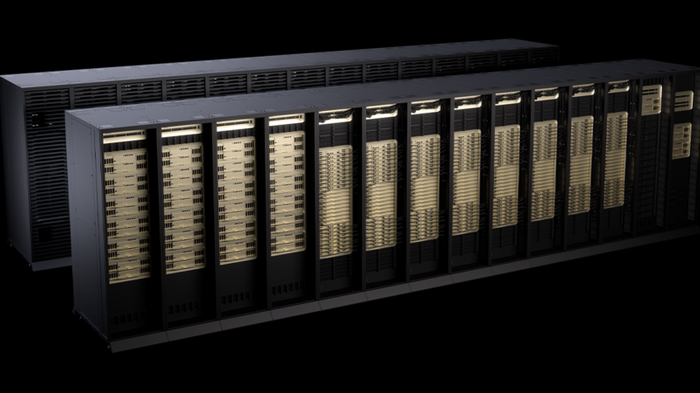
NVIDIA's Vera Rubin is redefining post-training workloads for agentic AI, emphasizing continuous adaptation and refinement. Unlike traditional models, agentic AI requires ongoing adjustments as environments and tools evolve, making post-training a critical, never-ending process. This shift necessitates a new compute pattern, focusing on maximizing intelligence per dollar through efficient forward and backward passes in the learning cycle.
The significance of this development lies in its potential to enhance the efficiency of AI models. By optimizing cost per token during inference, NVIDIA aims to improve the overall intelligence per dollar, ensuring that models remain valuable as they adapt to changing conditions. This continuous learning approach allows models to not only respond to prompts but also to plan and recover from challenges in real-time, thereby increasing their operational effectiveness.
Looking ahead, the integration of NVIDIA's NeMo libraries will facilitate the transition from bespoke research to scalable infrastructure for post-training. As the demand for agentic AI grows, the focus will be on how effectively these models can adapt and learn in dynamic environments, ultimately determining their value in practical applications. No further timeline was disclosed at the time of publication.
Editor's Note
The evolution of agentic AI represents a significant shift in how AI models are developed and deployed. Continuous learning and adaptation are becoming essential as industries seek to leverage AI in rapidly changing environments. This trend highlights the importance of investing in robust AI infrastructure that can support ongoing model refinement and optimization, ensuring that organizations can maximize their returns on AI investments.




























Leave a comment