


On a Zoom call from Boca Raton, a WatchBot robot is visible in the frame behind Harald Braun. He catches the reaction across the screen.
“This is not a setup,” he says. “This is actually revenue-generating.”
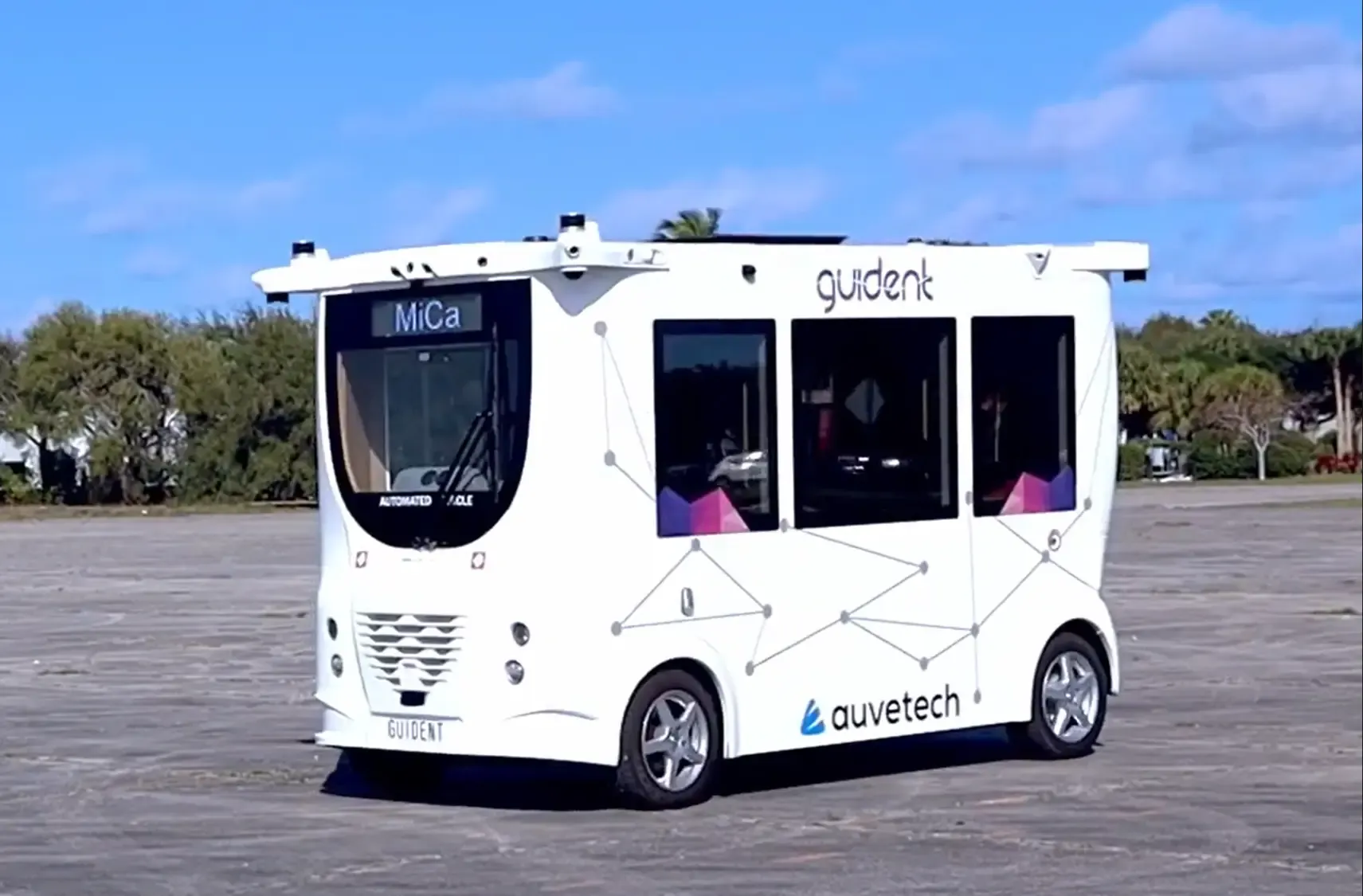
It’s a small moment, but it’s the whole thesis. Guident Corp., founded in 2020, develops a human-in-the-loop oversight platform for autonomous vehicles and ground-based inspection robots. The company’s Remote Monitor & Control Center (RMCC) provides connected robotics operations across heterogeneous autonomous fleets, combining redundant 4G/5G and satellite connectivity with patented low-latency video streaming and an AI-based risk identification system called IRLS. Current confirmed deployments include SAE Level 4 autonomous shuttles in South Florida, an autonomous bus at Michigan State University, WatchBot robots across waste management facilities, and WatchBot deployments in the security vertical with an international security company. RobotToday spoke with Executive Chairman and CEO Harald Braun on July 9, 2026.
Industry Context: The Regulation That Exposed the Gap
The robotics industry has spent a decade arguing over hardware — actuators, sensors, navigation stacks. California’s updated AV regulations, effective July 2026, shifted the conversation entirely. For the first time, a major regulatory framework didn’t ask what autonomous systems could do. It asked who was watching — and how fast they could respond.
The mandates are specific:
30-second response time when first responders contact a driverless vehicle
Two-minute fleet compliance with emergency geofence commands
Continuous pre-collision black-box data recording (minimum 30 seconds)
24/7 remote operator availability — operators physically in the U.S., holding valid California driver’s licenses
1-million-mile testing threshold for heavy autonomous freight before commercial deployment
These requirements don’t describe a smarter robot. They describe the infrastructure required to watch over one. In other words: a nervous system.
Florida, where Guident operates, has separately mandated remote monitoring and control for public-road AV deployments. Guident’s AuveTech shuttle currently runs a four-mile route in West Palm Beach and a one-mile route in Boca Raton under NHTSA oversight, in mixed traffic.
The Interview
RobotToday: Let’s start with the business thesis. What problem is Guident actually solving?
Harald Braun: From a business thesis, it’s very important that we believe that autonomous vehicles and robots need to be monitored, and if necessary, controlled. That is a very important thesis — because monitoring leads sometimes to edge cases where vehicles and robots need to be controlled by somebody remotely.
RobotToday: That sounds almost counterintuitive — the more autonomous a machine becomes, the more you need humans watching it.
Braun: Yes. And the regulatory environment is now confirming this. There are safety requirements, oversight requirements, emergency response requirements, remote operation requirements, and accountability requirements — and I built Guident around these capabilities. California just wrote our product roadmap into law.
RobotToday: Walk us through the platform architecture.
Braun: We have four modules: Monitor, Assist, Teleoperation, and Analytics. All four work together on a single dashboard. The Remote Control Operator sees everything from one place. We install a small hardware device on each vehicle — the Vehicle Teleoperation Unit, or VTU. Think of it as a modem connecting all the vehicle’s sensors and cameras on one side to our RMCC network on the other. We don’t manufacture vehicles or robots. Our software runs on top of whatever hardware the customer is already using — AuveTech shuttles, Star Robotics WatchBots, eventually humanoids. The platform doesn’t change. Only the hardware underneath does.
RobotToday: You claim your RMCC is the only solution with simultaneous terrestrial and satellite redundancy. What does that mean in practice for an operator trying to meet California’s 30-second response mandate?
Braun: When a first responder contacts a driverless vehicle, you have 30 seconds. If your only connectivity is a single 4G carrier and that carrier has a dead zone at that location, you’ve already failed the compliance test before you’ve started. Our system maintains simultaneous access across 4G/5G and multiple satellite constellations — GEO and LEO — and dynamically selects the optimal path. The vehicle never loses its link to a human operator. That’s not a feature. That’s the prerequisite.
[RobotToday Editorial Note — Network Latency]
Guident has not provided specific figures on end-to-end glass-to-glass (G2G) video latency or maximum disconnection windows during satellite link switchover at this stage. The company states its patented streaming architecture is designed to meet real-time teleoperation requirements, but independent validation data under operational conditions has not been disclosed. These metrics will be key proof points as Guident scales toward commercial fleet operations and regulatory audits.
RobotToday: Tell us about the IRLS — what is it doing under the hood?
Braun: IRLS stands for Incident Risk Level System — we call it ‘Predict and Prevent.’ With information from the vehicle itself, the robot itself, and the environment around it, the system identifies risk indicators earlier, scores emerging events, and helps operators respond faster. It surfaces those situations before they escalate, so a human oversight person in the remote monitoring center can act — choose a different route, adjust the mission, or guide the robot toward an area that needs attention. A robot that calls for help after an incident is a liability. A robot that helps operators get ahead of one is a product.
RobotToday: How does IRLS affect how many vehicles a single operator can realistically manage?
Braun: That is a very important question. The whole point of IRLS is that the RCO doesn’t monitor raw sensor data across dozens of vehicles simultaneously — that’s impossible. IRLS filters, scores, and surfaces only the signals that need human attention. One operator can monitor multiple vehicles across different geographic areas from a single dashboard.
[RobotToday Editorial Note — Operator-to-Vehicle Ratio]
Guident has not disclosed the specific operator-to-vehicle ratio achieved in current live deployments at Coastal Waste & Recycling or the AuveTech shuttle operation. This ratio is the central unit-economics variable for any remote oversight platform: the higher the ratio, the more viable the business model at scale. It remains an open data point as the company approaches its Nasdaq IPO.
RobotToday: Let’s talk about the Coastal Waste deployment. How did a waste management company end up on Guident’s customer list?
Braun: We never thought about waste management before meeting them. But their biggest challenge is trucks — the load of waste management trucks heating up, to the point that the load is burning and the trucks are in flames. This is one of the most common situations in the world. And they’re normally not burning alone, because they’re standing next to each other. So they take other trucks with them. That actually happens. We built a thermal detection system for their yard. Coastal’s team built a mock-up of a truck and a typical load so we could calibrate the alarm thresholds. They were insanely dedicated to getting it right — you couldn’t tell who worked for which company.
RobotToday: What does WatchBot actually do at the facility?
Braun: Nightly thermal inspections across the truck fleet. Damage detection — comparing each vehicle against its own prior-day baseline using vision language model inference. PPE compliance monitoring. Tank cage audits. The robot goes around the yard and checks all of this, every night, without fatigue. In a data center we monitor, the robot flagged a computer unit with elevated thermal readings before any visible symptom appeared. Directly somebody checked it out. The nervous system fired before any human in the building noticed a problem.
RobotToday: Beyond waste management, where is WatchBot currently deployed?
Braun: We also have active WatchBot deployments in the security vertical — we’re working with an international security company, though we’re not disclosing the name at this stage. And we see strong expansion potential in areas like oil and gas facilities and airports, where the inspection requirements are intensive and continuous human coverage is not practical. Those are markets we’re actively targeting.
RobotToday: California requires remote operators to be physically in the U.S. and hold valid California driver’s licenses. That eliminates offshoring your operations. For a platform business trying to scale, that’s a significant cost constraint.
Braun: Compliance has a cost. But compliance is also the product. If you’re an AV operator who needs to deploy in California, you need an RMCC that already meets these requirements — you can’t build it yourself, you can’t offshore it, and you can’t fake it. The regulation that looks like a cost is actually our market.
[RobotToday Editorial Note — Unit Economics]
Guident's S-1 registration statement is currently under review. Specific gross margin targets and the operator-to-vehicle ratio at which the platform becomes sustainably profitable have not been disclosed, consistent with standard IPO quiet period practice. These figures will be among the key variables investors assess upon the prospectus becoming public.
RobotToday: You’ve mentioned agentic AI as the next evolution. Where is Guident actually on that curve?
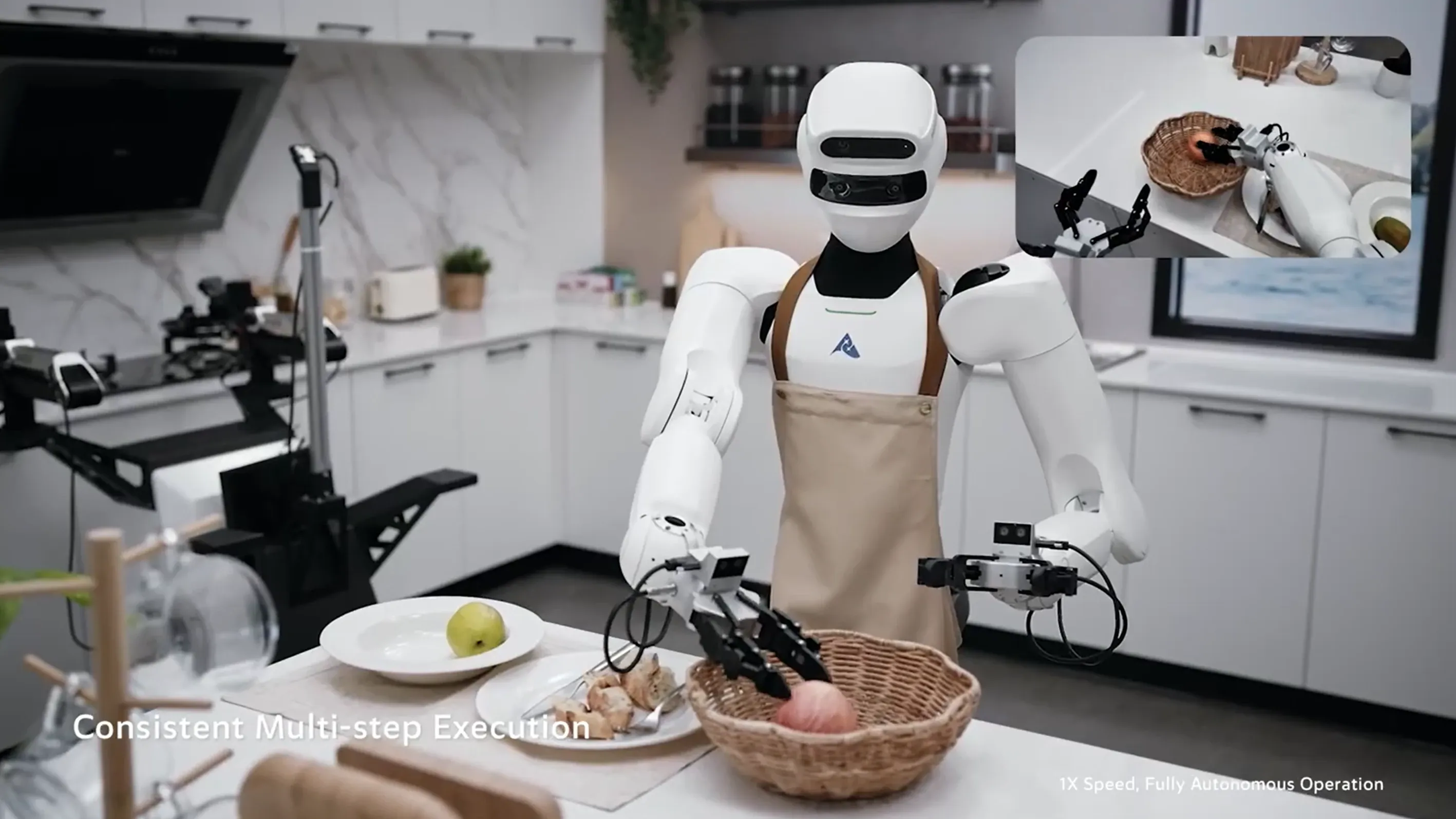
Braun: Today’s WatchBot identifies risk indicators and reports them. The next step — which I believe will definitely happen — is that the robot takes action. It detects a route blockage and removes it. It finds a failing component and schedules the repair. That’s the agentic piece. And it will most likely happen first with humanoid robots, because they have the physical capability to act on what they see.
RobotToday: The industry consensus is that humanoid commercialization is 3–5 years out at minimum. Is Guident building toward humanoid integration now, or is this still conceptual?
Braun: Our platform is hardware-agnostic by design. The RMCC doesn’t care what the hardware is. We can integrate any autonomous system that has sensors, cameras, and a network connection. The architecture is ready. What we’re waiting for is the hardware to mature to the point where commercial deployments make sense.
[RobotToday Editorial Note — Humanoid Integration]
Guident has not disclosed whether its RMCC has been connected to any humanoid robot hardware — from Figure, Agility, Unitree, or other manufacturers — in any capacity. The company's position is that its platform architecture is hardware-agnostic and ready for integration when humanoid hardware reaches commercial maturity. The distinction between a theoretically compatible platform and one actively being tested with embodied AI hardware remains an open question for the industry.
RobotToday: Last question. Five years from now, one sentence.
Braun: We are making autonomous vehicles, including robots, safer.
RobotToday: That’s the same sentence you used when you founded the company in 2020.
Braun: Yes. Because the problem hasn’t changed. And we haven’t stopped working on it.
RobotToday Analysis
The AWS Analogy — and Why It’s the Right One
Waymo and Cruise made a deliberate choice: vertical integration. They build the vehicle, the autonomy stack, and the remote assistance infrastructure. It’s defensible — if you’re Waymo. For the other 95% of the AV and robot industry — every mid-size developer without Alphabet’s balance sheet — that path is closed. They need a compliant, always-on, human-in-the-loop oversight platform that doesn’t cost $200 million to build, and that meets California’s regulatory specifications on day one.
That’s the AWS moment. Amazon didn’t invent the server. It made the server available to anyone who needed one, at a price that made building your own irrational. Guident is making the same bet: that AV regulatory complexity will make a compliant, third-party RMCC the only rational infrastructure choice for any operator who isn’t a tier-one tech giant.
“Hardware will commoditize. The oversight layer won’t.”
[RobotToday Observation] The four editorial notes in this article identify the data points that separate a compelling platform story from a validated business: G2G latency under network stress, operator-to-vehicle ratio in live deployment, gross margin at scale, and humanoid integration status. These remain undisclosed. This article will be updated if Guident provides this data. Until then, the thesis is architecturally sound. Execution at commercial scale is the open variable.
Technical Significance
Guident’s IRLS addresses a real systems engineering constraint: raw sensor monitoring across a distributed fleet is not scalable for human operators. A risk-scoring and prioritization layer is an architectural requirement for any platform targeting commercial fleet densities. The simultaneous terrestrial/satellite connectivity architecture targets the failure mode California’s mandates are designed to prevent.
Commercial Significance
California’s 2026 framework converts remote monitoring from optional to a procurement requirement. Florida’s existing mandate shows regulatory diffusion is underway. WatchBot’s confirmed deployments in waste management and the security vertical diversify revenue beyond the AV sector’s unpredictable timeline. Oil and gas facilities and airport operations represent identified target expansion markets.
Industry Outlook
The robots are here. Most of them still don’t have a nervous system. Guident has six years of live deployment experience, 18 patents, ISO 27001 certification, and a regulatory tailwind its competitors cannot manufacture. The pending Nasdaq IPO will put specific numbers to the business model. Until then, the architecture is the argument.



Leave a comment