

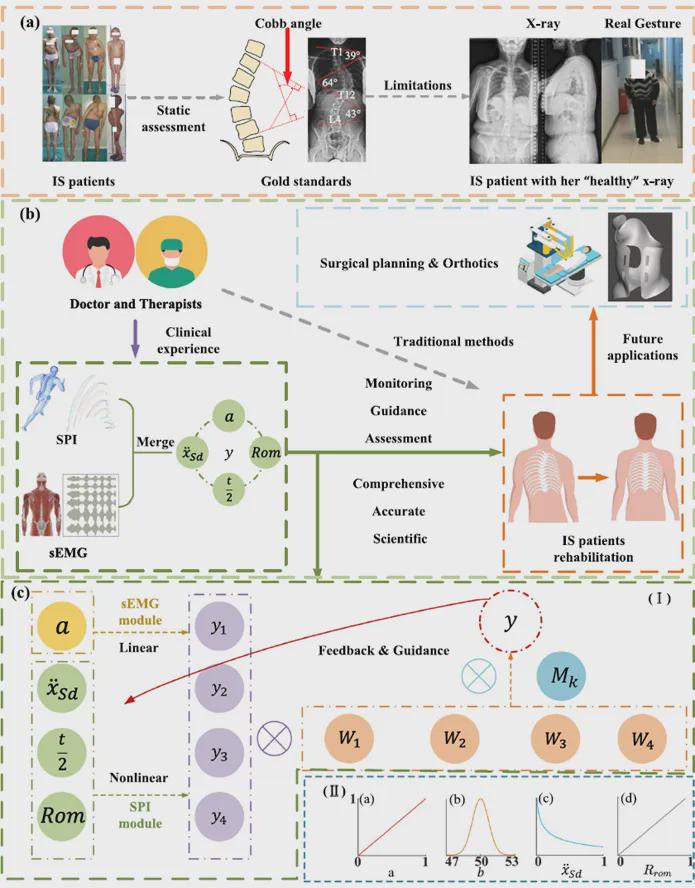
A research team led by Professor Jianfeng Li from Beijing University of Technology has developed a novel multi-modal dynamic assessment method for patients with idiopathic scoliosis (IS). This method integrates surface electromyography (sEMG) and spatial positioning information (SPI) to monitor and evaluate rehabilitation movements, addressing the limitations of traditional static imaging methods that fail to capture dynamic spinal function during movement.
The significance of this development lies in its ability to provide a quantitative assessment of rehabilitation quality, muscle coordination, and dynamic balance, which are critical for effective treatment of IS. The study, published in 'Medical & Biological Engineering & Computing,' demonstrates that the new system can accurately evaluate the quality of rehabilitation movements by analyzing muscle activation and spatial movement data, offering insights into the effectiveness of rehabilitation exercises.
Looking ahead, the research team aims to enhance the system by exploring wearable assessment solutions using inertial measurement units (IMUs) and portable sEMG devices. They plan to expand their patient sample size and conduct long-term clinical validations to advance the technology towards portable, intelligent, and clinically applicable solutions for IS rehabilitation.
Editor's Note
The integration of dynamic assessment methods in rehabilitation for idiopathic scoliosis represents a significant advancement in patient care. By combining sEMG and SPI, this approach enhances the understanding of muscle function and movement quality, which is crucial for effective rehabilitation strategies. As the technology evolves, it may lead to more accessible and personalized treatment options for patients.






























Leave a comment