

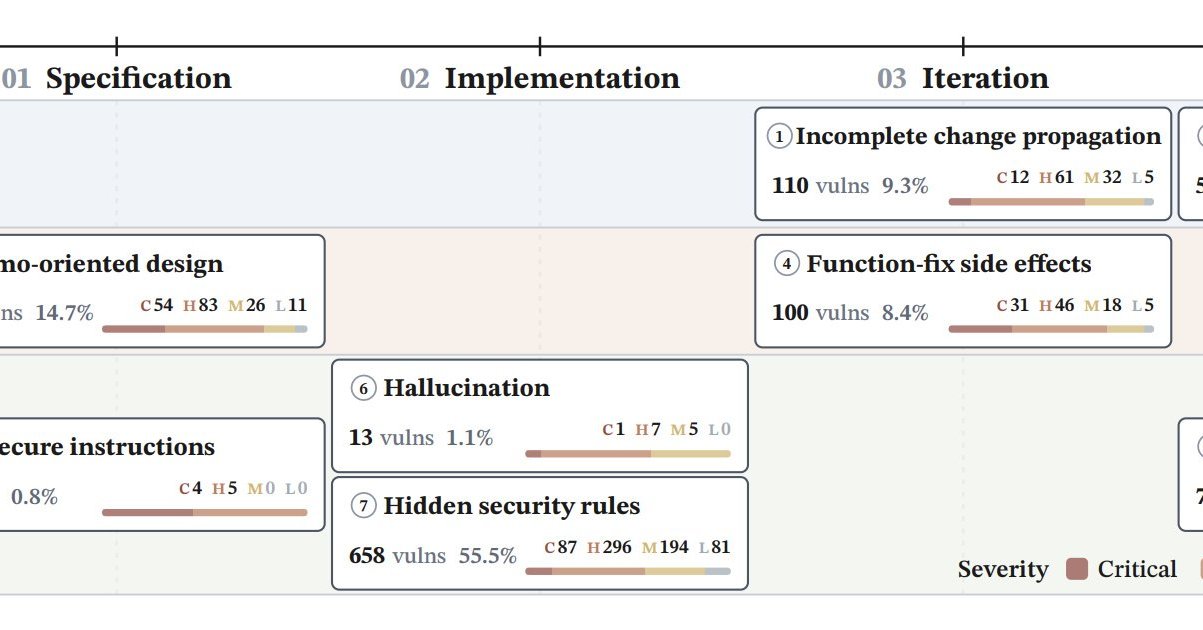
A study conducted by researchers from Microsoft and the National University of Singapore revealed that 91% of web applications generated using the 'vibe coding' technique contain at least one vulnerability. This technique allows users to create applications by simply providing natural language instructions, raising concerns about the security of AI-generated applications.
The research analyzed 200 randomly selected web applications from a pool of 8,695 publicly available vibe-coded apps. Of the vulnerabilities identified, 65.77% were classified as critical or high severity, posing risks such as unauthorized access, system takeover, and data leaks. The study categorized the causes of these vulnerabilities into three main types: memory defects, purpose defects, and knowledge defects.
To test the effectiveness of countermeasures, the researchers conducted experiments that showed varying results based on the prompts given to the AI. While a simple prompt resulted in a 25.7% chance of recurring vulnerabilities, adding specific instructions reduced this to 11.0%. However, overly detailed technical instructions led to a 45.7% increase in vulnerabilities, indicating the complexity of ensuring security in AI-generated applications. No further timeline was disclosed at the time of publication.
Editor's Note
The findings highlight significant security challenges in AI-driven application development, particularly as vibe coding becomes more prevalent. Organizations must consider these vulnerabilities when adopting AI technologies for application creation, as the risks of data breaches and system compromises could have serious implications for enterprise security and compliance.
Copyright Notice
This briefing is an independently written summary based on publicly available reporting and is provided for industry information and news discovery. The original report and source publication are credited and linked where applicable. RobotToday does not claim ownership of third-party source material.
Rights concerns? If you believe any material in this briefing infringes your copyright or other rights, please contact [email protected] with the relevant URL and details. We will review the matter and take appropriate action where warranted.





























Leave a comment