

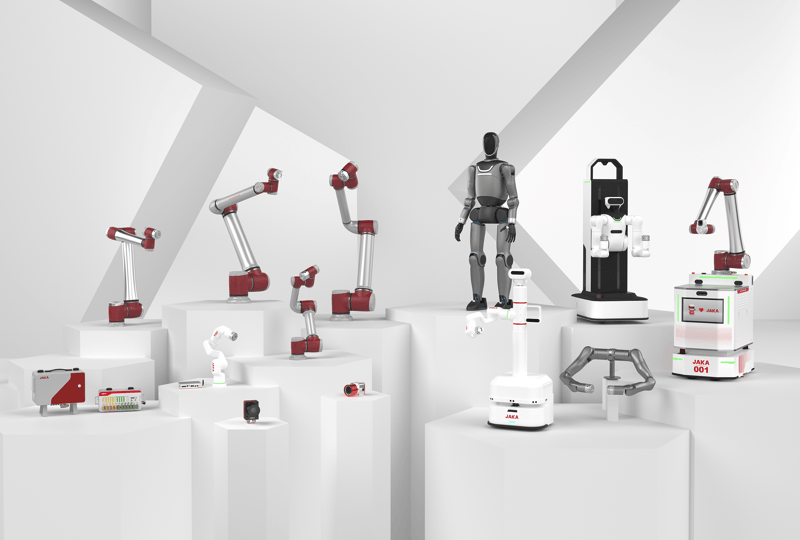
In recent years, manufacturing has experienced a significant transformation as companies shift from standalone automation to interconnected and flexible systems. JAKA, a leader in collaborative robot technology, has observed this evolution, where production environments are increasingly designed around coordinated robots, autonomous guided vehicles (AGVs), and Industrial Internet of Things (IIoT) platforms. This transition enables automation to adapt dynamically to real production conditions while ensuring safety and flexibility in workplaces that prioritize human interaction.
Initially, collaborative robots were embraced for their ability to work safely alongside human operators, facilitating smoother automation processes. As their applications have matured, integrating these robots with AGVs and IIoT systems has become a logical progression. This integration allows for synchronized material handling and processing tasks, enhancing efficiency. IIoT connectivity further supports real-time data exchange, enabling predictive maintenance and improved process visibility, which is crucial for maintaining flexibility in production lines.
AGVs play a pivotal role in extending automation beyond fixed workstations. When connected through IIoT infrastructure, these vehicles and robots can share crucial information, reducing idle time and manual interventions while enhancing workflow traceability. This coordination not only boosts operational efficiency but also increases transparency, allowing for continuous optimization and informed decision-making.
To facilitate this integrated approach, JAKA has developed the Ai12, a collaborative robot designed for easy deployment through wireless teaching and graphical programming. This technology enhances safety and adaptability, allowing for seamless human-robot interaction. JAKA envisions a future where industrial robotic automation is not merely a collection of isolated machines but a cohesive system that evolves with production demands, fostering smarter and more responsive industrial environments.




















Leave a comment