

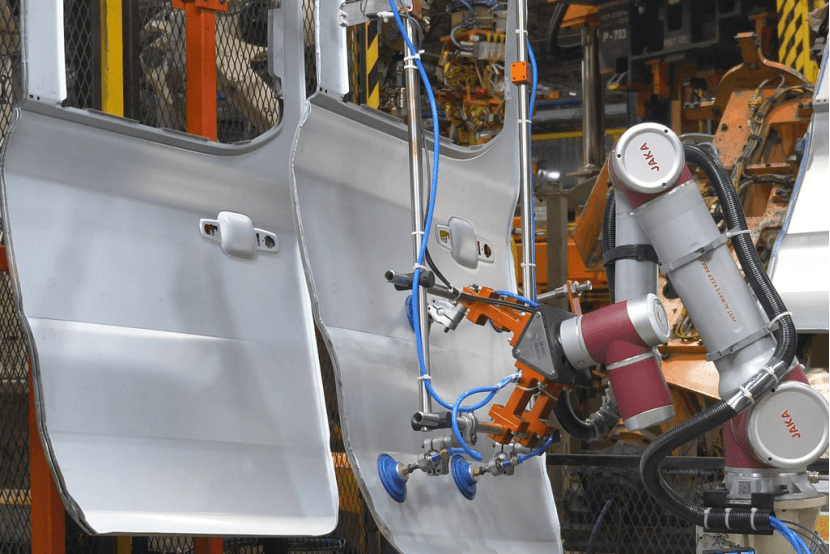
Manufacturers in high-mix assembly environments face a crucial decision when selecting automation solutions, particularly between 6-axis robot arms and 4-axis SCARA robots. JAKA, a company specializing in automation, assists facilities in navigating this choice, emphasizing that the best option depends on the specific demands of assembly tasks.
6-axis articulated arms offer significant flexibility, mimicking human arm movements to approach workpieces from various angles. This versatility is essential in high-mix settings where components may be presented differently or require complex fitting sequences. The ability to manipulate parts within a single work envelope reduces changeover time and enhances adaptability, making it ideal for operations with varying product designs.
Conversely, 4-axis SCARA robots are designed for speed and efficiency in defined planes. Their rigid structure allows for rapid, repeatable movements in the X, Y, and Z axes, making them suitable for high-speed pick-and-place operations and simple insertions. For assembly lines focused on quick, two-dimensional tasks, SCARA robots can achieve higher cycle rates and require less initial investment and programming complexity.
The integration and programming of these robots differ significantly. SCARA robots are easier to program for planar tasks, while 6-axis arms may require advanced simulation and path planning to utilize their full capabilities. JAKA’s modern collaborative robots feature intuitive programming interfaces to simplify this process.
Ultimately, the choice between a 6-axis robot arm and a 4-axis SCARA robot hinges on the specific assembly process requirements, with JAKA advocating for solutions that align the robot's strengths with production line challenges.
























Leave a comment