UAS Radar

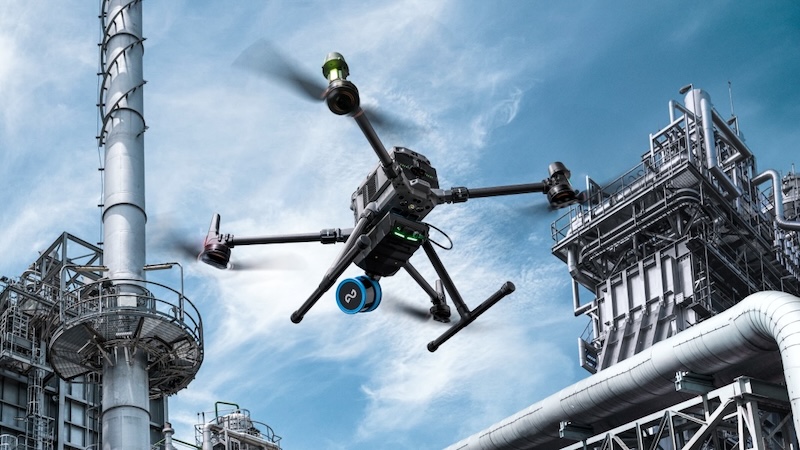
UAS Radar, associated with Robin Radar Systems, provides radar-based drone detection and tracking systems for airspace security. Their systems are deployed at airports, critical infrastructure, and defense sites to identify and classify unmanned aerial vehicles.

Share
UAS Radar
Laan van Delftweg 1
Delft 2627 AN
RobotToday Initiative

Robotics needs a service framework.

RSF defines a common language for robot service capability, lifecycle operations, certification pathways, and service-provider networks.

Share

Related Content

ROBOTTODAY Weekly July 13 – 17, 2026

ROBOTTODAY Weekly July 13 – 17, 2026

This week in robotics: Hyundai takes full ownership of Boston Dynamics, Xpeng targets 1,000 Iron humanoids a month, LimX Dynamics raises $200M pre-IPO, and Agility opens a Silicon Valley physical-AI hub. July 13–17, 2026.

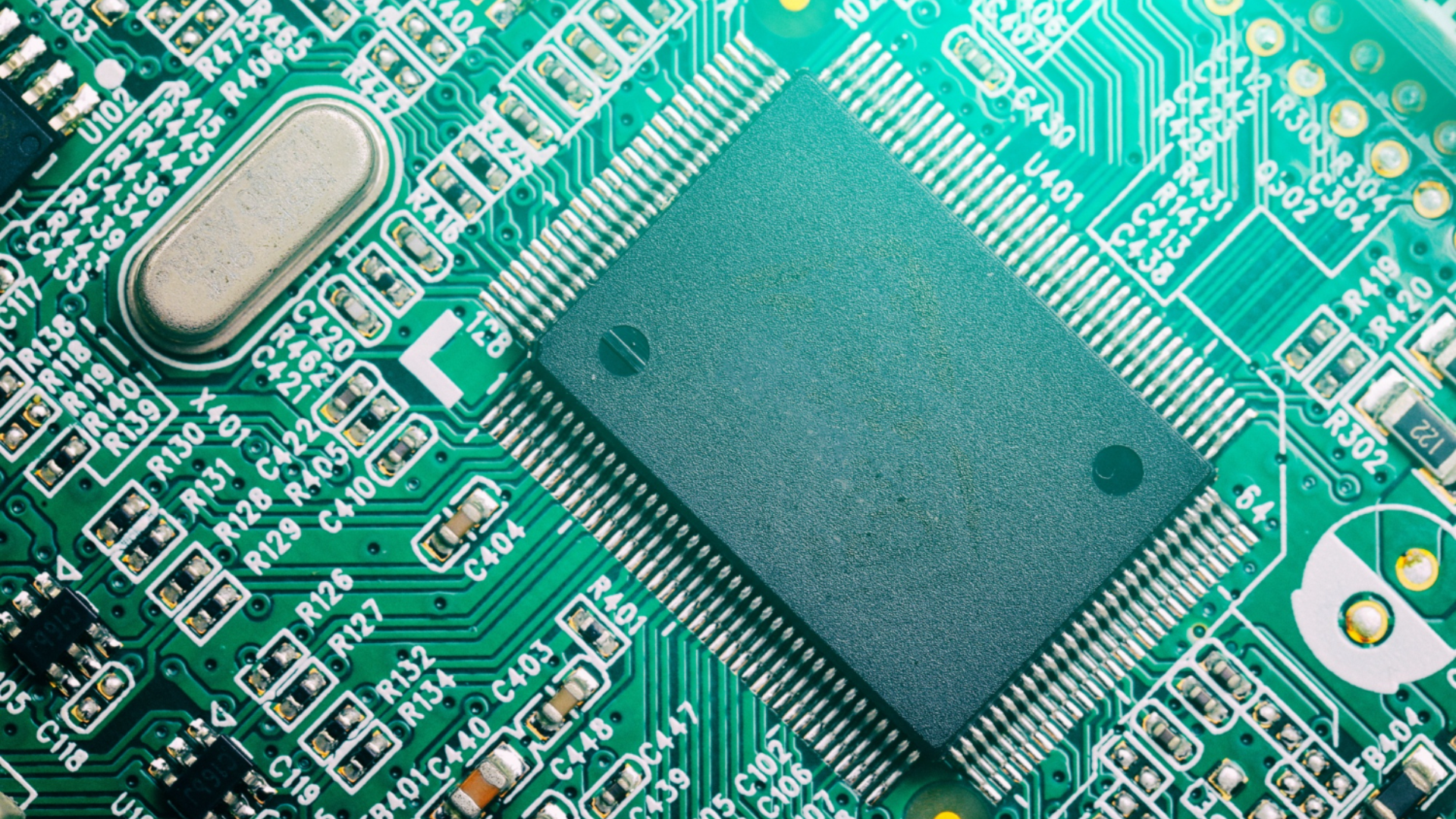
Biren Develops Next-Gen Optical Links for Enhanced AI Chip Connectivity

Biren Develops Next-Gen Optical Links for Enhanced AI Chip Connectivity

Biren, a Shanghai-based startup, is pioneering optical technology to connect thousands of AI accelerators into unified computing systems. As AI models grow increasingly complex, the demand for efficient interconnectivity among GPUs has intensified, with traditional copper connections reaching their limits. Biren's innovative near-packaged optics (NPO) architecture aims to support clusters of up to 1,024 AI accelerator cards, significantly enhancing computing capabilities. This advancement is crucial for AI infrastructure companies striving to meet the needs of models with trillions of parameters. Biren's approach addresses the scalability challenges faced by conventional server architectures, which typically cap at around 128 GPUs. By positioning optical fibers closer to chips, the company enhances bandwidth and data transmission efficiency, positioning itself against competitors like MetaX and Alibaba. Looking ahead, Biren is testing its NPO interconnect system while also developing an orthogonal hardware architecture in collaboration with ZTE. Although the semiconductor industry is still in the early stages of optical interconnect technology, widespread adoption is projected for around 2028, contingent on further advancements and real-world validation of these systems.

AI and Robotics
Yimu Technology Showcases Physical AI's Capabilities at WAIC 2026

Yimu Technology Showcases Physical AI's Capabilities at WAIC 2026

At WAIC 2026, Yimu Technology attracted significant attention with its demonstration involving two identical peanuts. The exhibit illustrated the concept that while visual cues may be indistinguishable, tactile feedback reveals critical differences in texture and resilience. This highlights the importance of physical interaction in understanding the physical world. The significance of this demonstration lies in its implications for Physical AI. Traditional robots have struggled to interpret tactile information, often failing in tasks requiring sensitivity, such as handling fragile items. Yimu Technology emphasizes that the key to advancing robotics is not merely increasing model size but ensuring robots receive accurate physical feedback from their environment. Looking ahead, the focus will be on how effectively robots can integrate this tactile feedback into their operations. Yimu Technology's approach, which utilizes optical systems to measure minute deformations, could revolutionize how robots interact with their surroundings. No further timeline was disclosed at the time of publication.

Physical AI Tactile Sensors Robotics Machine Learning
Nvidia and Hugging Face Enhance LeRobot with Advanced Open Robotics AI Tools

Nvidia and Hugging Face Enhance LeRobot with Advanced Open Robotics AI Tools

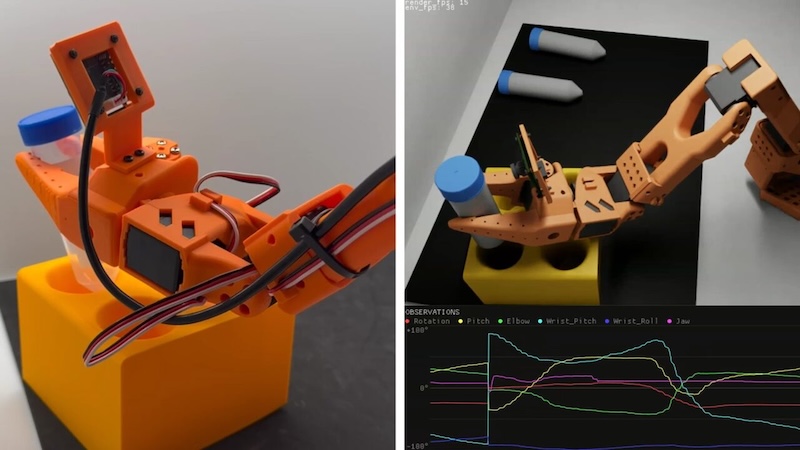
Nvidia and Hugging Face have expanded their partnership to introduce new AI models and robotics frameworks to the LeRobot platform, enhancing accessibility for developers. The integration of Nvidia Isaac GR00T 1.7, a vision-language-action foundation model, and the Isaac Teleop framework aims to streamline the development process for AI-powered robots. This collaboration is significant as it combines Nvidia's community of over three million robotics developers with Hugging Face's 16 million AI developers, fostering a broader access to physical AI technologies. The new tools will enable standardized workflows for data collection, model training, and performance evaluation, making it easier for developers to create and deploy robotic solutions. Looking ahead, the planned support for Nvidia Cosmos 3 will further empower developers by allowing the generation of synthetic data and simulation of environments. No further timeline was disclosed at the time of publication.

Artificial Intelligence Computing ai Hugging Face humanoid robots Isaac GR00T 1.7
Tencent Launches WorkBuddy App on HarmonyOS, iOS, and Android for Mobile AI Tasks

Tencent Launches WorkBuddy App on HarmonyOS, iOS, and Android for Mobile AI Tasks

Tencent has launched the WorkBuddy agent desktop app across HarmonyOS, iOS, and Android, marking a significant step in mobile AI integration. This launch positions HarmonyOS as the first native agent application, facilitating seamless interaction between mobile devices and PCs for workplace AI tasks. The introduction of the WorkBuddy app is important as it bridges the gap between mobile and desktop environments, enhancing productivity and efficiency in workplace settings. By enabling AI-driven tasks on mobile platforms, Tencent aims to streamline workflows and improve user experience across devices. Looking ahead, the focus will be on how users adopt the WorkBuddy app and its impact on workplace productivity. No further timeline was disclosed at the time of publication.

Technology
RoboScience Unveils First Cloud-Based Large Model for Robotics at WAIC

RoboScience Unveils First Cloud-Based Large Model for Robotics at WAIC

At the WAIC, RoboScience showcased a groundbreaking cloud-based embodied large model named Visics, capable of controlling multiple robotic hands. This innovation allows for seamless switching between different robotic hands while maintaining operational efficiency, demonstrating the ability to recognize and grasp various objects autonomously within 30 seconds. The significance of this development lies in its potential to revolutionize robotic operations across diverse applications. By enabling a single model to adapt to various hand configurations, Visics enhances the versatility of robotic systems, allowing them to perform complex tasks without the need for extensive retraining when hardware changes occur. Looking ahead, the industry will be keen to observe how Visics performs in real-world scenarios and its ability to execute long-term tasks by integrating multiple actions. No further timeline was disclosed at the time of publication.

Robotics Cloud Computing AI Automation Object Recognition
Dahuang Technology Showcases Advanced AI Multimodal Capabilities at WAIC 2026

Dahuang Technology Showcases Advanced AI Multimodal Capabilities at WAIC 2026

On July 17, 2026, the World Artificial Intelligence Conference (WAIC) commenced in Shanghai, focusing on the theme 'Intelligent Partners, Co-Creating the Future.' Dahuang Technology presented its AI multimodal capabilities, showcasing a comprehensive system that includes understanding, connecting, interacting, and controlling complex data. The demonstration highlighted the company's transition from video-centric solutions to a broader AI multimodal framework. Dahuang Technology's Sports AI system, based on the BlackEye multimodal spatial model, was a key feature, providing real-time analysis of sports events. This system can automatically label players, track movements, and generate slow-motion replays, demonstrating the AI's ability to comprehend complex video scenarios. The technology has already been validated in high-profile events like the 2026 World Cup and the Paris Olympics. The company also introduced its AI multimodal perception compression technology, achieving over tenfold compression efficiency while maintaining video quality. This capability is crucial for applications in drone inspections, remote communications, and robotic operations, addressing the growing demands for bandwidth and data transmission efficiency in various sectors. No further timeline was disclosed at the time of publication.

AI Multimodal Technology Video AI Data Compression Sports AI Human-AI Interaction
China's Embodied AI Models Gear Up for Competition Ahead of WAIC 2026

China's Embodied AI Models Gear Up for Competition Ahead of WAIC 2026

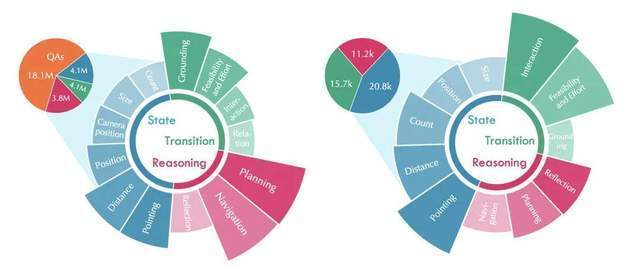
China's leading tech companies are intensifying their efforts in embodied AI as they prepare for the WAIC 2026 event in Shanghai, scheduled for July 17. This year's competition is marked by the launch of several advanced models, including Xiaomi's X0, a multimodal generative model with 38 billion parameters designed to enhance robotic training data generation. The significance of this competition lies in the critical need for physical interaction data, which is currently lacking by over 99%. Xiaomi's generative model aims to address this gap by autonomously generating and augmenting training data without the need for new data collection, thereby improving efficiency by 83 times. The event will showcase over 200 companies, highlighting the growing importance of embodied intelligence in the tech landscape. As the industry evolves, companies like Tencent Cloud and RoboScience are also making strides with cloud-based embodied AI services. The competition at WAIC 2026 will be pivotal, as companies vie for dominance in the emerging ecosystem of embodied intelligence, with advancements in visual understanding and cognitive reasoning being key areas of focus.

Embodied AI Robotics Data Synthesis Open Source Cognitive Computing
McLaren Construction Partners with FieldAI to Deploy Autonomous Robots Across UK Sites

McLaren Construction Partners with FieldAI to Deploy Autonomous Robots Across UK Sites

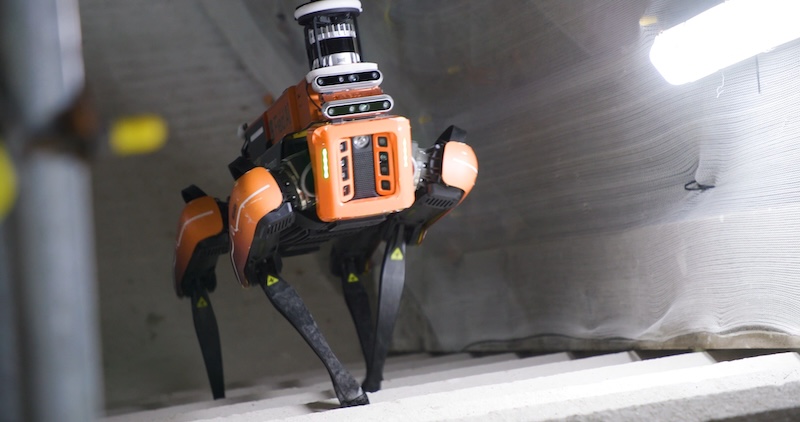
McLaren Construction has formed a partnership with FieldAI to implement autonomous quadruped robots at its construction sites in the UK. These robots will initially be used for capturing 360° site imagery, generating point cloud data, and assisting with progress verification, safety compliance, and quality assurance. The capabilities of these robots will expand over time, enhancing their utility on-site. This partnership is significant as it marks FieldAI's entry into the UK market and builds upon its existing deployments across Europe, Asia, and North America. The use of AI-enabled deviation analysis will facilitate quicker identification of quality issues, ensuring better installation practices and reducing rework. McLaren aims to enhance project monitoring and compliance through this innovative technology. Looking ahead, McLaren Construction anticipates that the collaboration will yield valuable insights for broader robotic applications within the company. The deployment of FieldAI's Field Foundation Models will enable robots to adapt to complex environments without relying on pre-existing maps, thus enhancing operational efficiency. No further timeline was disclosed at the time of publication.

Construction News artificial intelligence Autonomous robots autonomous systems construction automation
Emesent Raises $17 Million to Enhance Cortex AI and Aura Cloud Software Development

Emesent Raises $17 Million to Enhance Cortex AI and Aura Cloud Software Development

Emesent, an autonomous mapping and robotics company, has secured $17 million in funding to advance its Cortex AI autonomy platform and expand its Aura cloud software. This funding includes a $7 million venture debt facility from the National Reconstruction Fund Corporation and a $10 million equity round supported by various investors. The investment is significant as it will enable Emesent to scale its manufacturing operations in Wacol, Queensland, Australia, and enhance its capabilities in sectors such as mining, defense, and architecture, engineering, and construction. CEO Charles Miller emphasized the importance of this funding in meeting the demands of clients operating in challenging environments. Looking ahead, Emesent plans to leverage this capital to deepen its presence in critical sectors and further develop its AI and autonomy technologies. No further timeline was disclosed at the time of publication.

Financials & Investments News AEC artificial intelligence aura Australian robotics
Patreon Enhances Measures to Block AI Bots Scraping Creator Content

Patreon Enhances Measures to Block AI Bots Scraping Creator Content

Patreon, the membership platform for creators, is intensifying its efforts to prevent AI bots from scraping its content for training purposes. The company announced its collaboration with Cloudflare to block access to AI bots that attempt to use creators' work without permission. This move comes as AI scraping has evolved, prompting Patreon to strengthen its defenses since implementing initial measures in 2023. The significance of this action lies in the growing concern among online publishers and content creators regarding the unauthorized use of their work by AI models. With the introduction of new features like the redesigned Home Feed and Quips, more content could potentially be exposed to crawlers. Cloudflare's tools, including the Pay Per Crawl marketplace, enable website publishers to restrict AI bots, reflecting a broader industry trend towards protecting creator rights. Looking ahead, Patreon is committed to refining its AI policies and enforcement tools using Cloudflare's AI Crawl Control technology. The company aims to ensure that creators have a say in how their work is utilized by AI companies, contrasting with the prevailing norm where creators often have little control over AI training on their content. No further timeline was disclosed at the time of publication.

AI cloudflare Patreon
FUTURE WARFARE | The Geopolitical Competitive Landscape

FUTURE WARFARE | The Geopolitical Competitive Landscape

Military robotics is no longer a U.S.-centric story. Global defence spending crossed $2.75 trillion in 2026; defence-tech VC hit a record $49.1 billion in 2025; and a multipolar robotics order is crystallising in real time — with China’s 15th Five-Year Plan institutionalising civil-military fusion, Europe’s €381 billion defence budget financing its own AI champions, and Turkey and Israel reshaping the export market with affordable, combat-proven systems. Part Five of the Future Warfare Series maps the country-by-country competitive landscape, the collapsing regulation race, and the investment forces reshaping who builds — and who controls — the autonomous weapons of the next decade.

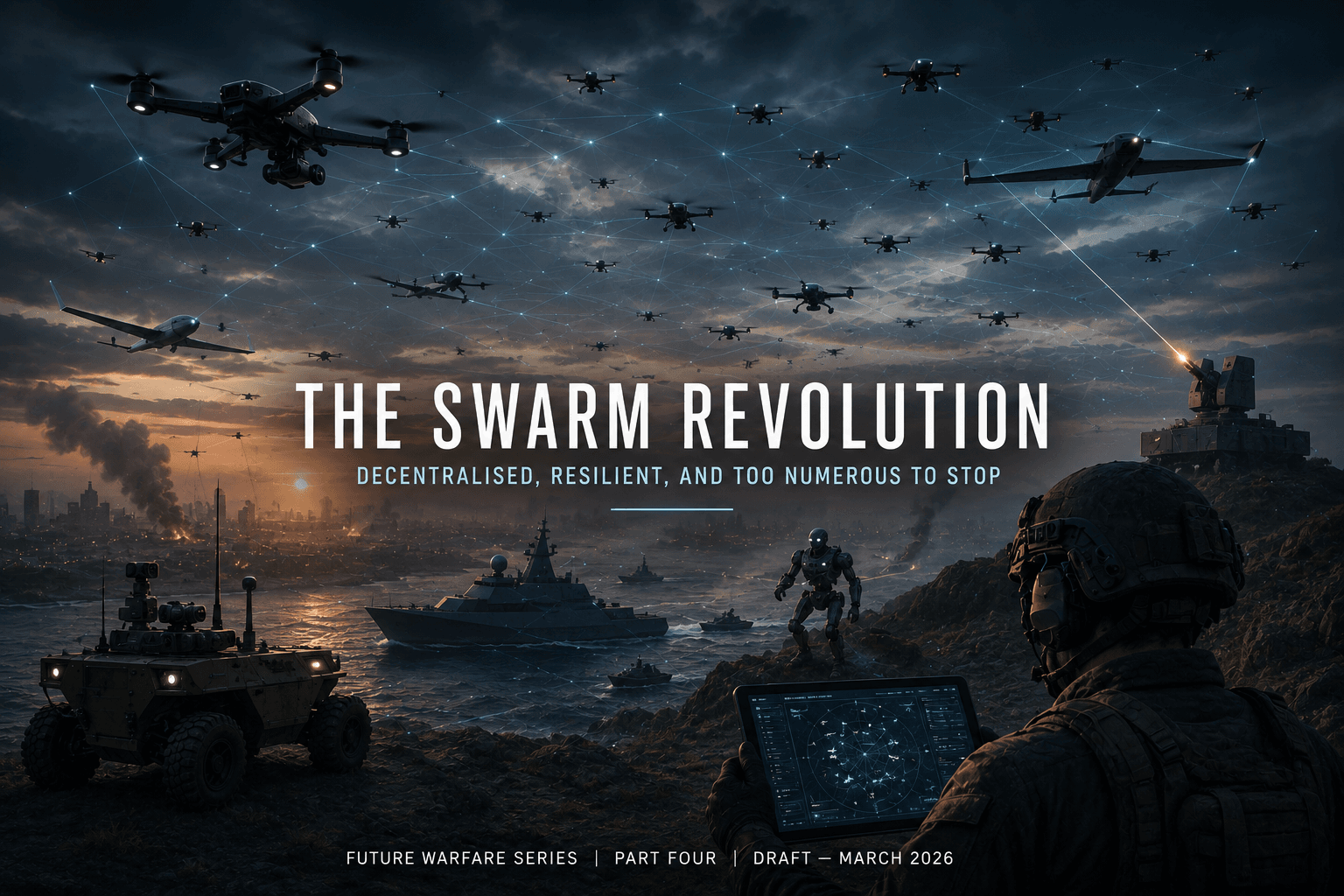
FUTURE WARFARE | The Swarm Revolution - Decentralised, Resilient, and Too Numerous to Stop

FUTURE WARFARE | The Swarm Revolution - Decentralised, Resilient, and Too Numerous to Stop

Inside the drone swarm revolution: Discover how Ukraine’s Swarmer tech, China’s AI formations, and the Pentagon's Orchestrator Prize are reshaping warfare.

FUTURE WARFARE | Land - Unmanned Ground Vehicles — From Logistics Mules to Front-Line Robots

FUTURE WARFARE | Land - Unmanned Ground Vehicles — From Logistics Mules to Front-Line Robots

Ukraine fielded 15,000 unmanned ground vehicles in 2025 — surpassing its own procurement targets by over 100 percent. A single UGV held a front-line position for 45 days. Up to 90 percent of supplies to Pokrovsk now move by robot, not truck. The U.S. Army cancelled its $3 million Robotic Combat Vehicle and is starting over. China is deploying $3,000 robot dogs in PLA urban-warfare exercises. This article maps the emerging UGV battlefield — from Ukraine’s garage-built logistics fleet to the Pentagon’s stalled combat-vehicle ambitions, and from Ghost Robotics’ Vision 60 to the quadruped proliferation problem no treaty has yet addressed.

EU Bets €1.5B on Drones and AI: Inside EDIP's 2026–2027 Defence Industry Programme

EU Bets €1.5B on Drones and AI: Inside EDIP's 2026–2027 Defence Industry Programme

The EU's €1.47 billion European Defence Industry Programme (EDIP) 2026–2027 targets drones, counter-UxS systems, AI-enabled autonomy, and loitering munitions across six major funding calls — allocating over €232 million directly to unmanned systems and related electronics supply chains.

From Pilots to Production: The Counter-Drone Industry Enters a New Phase

From Pilots to Production: The Counter-Drone Industry Enters a New Phase

The global counter-drone (C-UAS) sector is scaling fast. New EU and US factories, an ․87M US Army contract, and the 2026 FIFA World Cup deployment mark a turning point for autonomous anti-drone technology. Read RobotToday’s March 2026 briefing.

Merops Counter-Drone System: How Former Google CEO Eric Schmidt Is Shaping AI Air Defense

Merops Counter-Drone System: How Former Google CEO Eric Schmidt Is Shaping AI Air Defense

Merops, backed by Eric Schmidt's Project Eagle, is redefining air defence with low-cost AI interceptor drones. Here's how the Surveyor system is changing NATO and Middle East operations.

FUTURE WARFARE | The Autonomy Spectrum

FUTURE WARFARE | The Autonomy Spectrum

How modern weapons shattered the concept of human control — from kill-switch confirmation to AI systems that select targets independently.

FUTURE WARFARE | The Economics of Attrition

FUTURE WARFARE | The Economics of Attrition

How the cost equation of modern warfare has inverted: a $500 AI-guided drone now rivals a $2 million precision missile in tactical effect. Part One of the Future Warfare Series examines the unit economics, supply chain realities, and venture capital forces reshaping defence procurement — from Ukraine's 1.7 million FPV drones to Anduril's $30 billion factory-as-weapon bet.