

Shanghai Rongtai Health Technology Corp. Ltd. 上海荣泰健康科技股份有限公司
Qingpu District, Shanghai massage-chair maker; brand dates to 1997; listed on the Shanghai Stock Exchange since 2017 under ticker 603579.
Contact Shanghai Rongtai Health Technology Corp. Ltd.
WEBSITE
https://en.rotai.comHEADQUARTERS
China

Company Facts
Founded
1997
Primary Role
Manufacturer
Company Size
-
Primary Region
Asia-Pacific
Annual Sales
-
Funding Stage
-
Funding Total
-
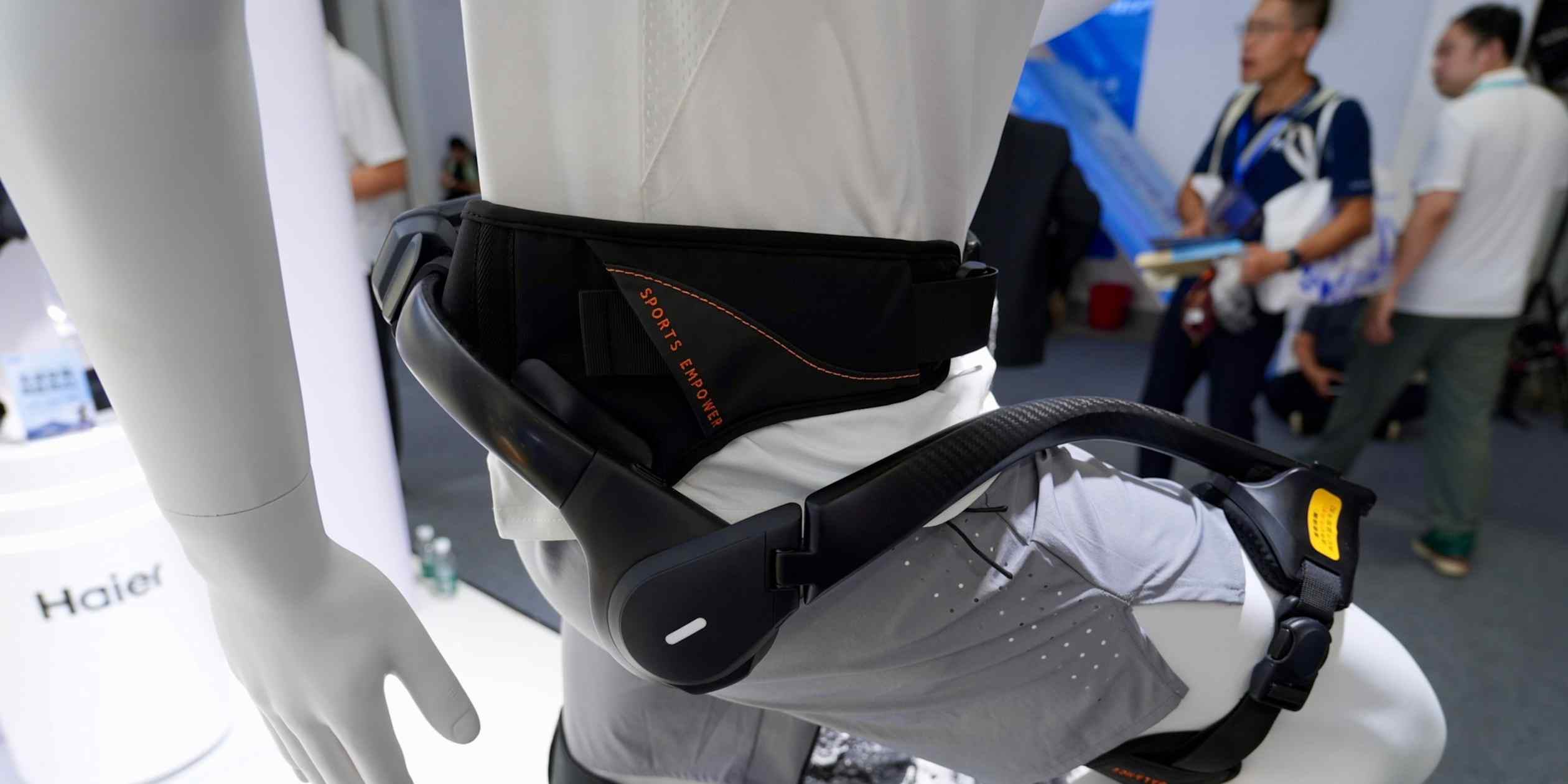
China's Exoskeleton Robots Transition into Consumer Markets Beyond Medical Use
Exoskeleton robots, also known as powered suits, are increasingly entering the consumer market in China, moving beyond their traditional applications in medicine and industry. This shift was highlighted by appliance maker Haier Group, which showcased its exoskeleton products at the World Robot Conference in Beijing in August 2026. The emergence of exoskeletons in everyday life signifies a notable trend in the robotics sector, as companies and startups race to capitalize on this nascent market. The growing interest in these wearable devices reflects a broader movement towards integrating advanced technologies into daily activities, enhancing physical capabilities for consumers. Looking ahead, the competition among appliance makers and startups in the exoskeleton market is expected to intensify. As more companies enter this space, it will be crucial to monitor developments and innovations that could shape the future of consumer robotics. No further timeline was disclosed at the time of publication.

Mondo Robotics' Beni: A Tumbling Robot Camera with Significant Obstacle Avoidance Issues
Mondo Robotics has introduced Beni, a small bipedal robot designed to capture and record video while following users. Equipped with a built-in camera and sensors, Beni can perform tricks like flips and roll while tracking specified objects via an app. However, after several weeks of testing, reviewers found Beni's obstacle avoidance capabilities severely lacking. The importance of Beni lies in its potential as a fun companion for personal activities like sports and pet video recording. Despite its interesting features, the robot struggles significantly with obstacle avoidance, often losing track of its target in cluttered environments. Reviewers noted that even in open spaces, Beni failed to navigate around obstacles effectively, which detracts from its overall usability. Moving forward, it will be crucial to monitor Mondo Robotics' efforts to improve Beni's obstacle avoidance technology. Currently priced at $599, the robot's value is questionable given its primary flaw. If Mondo can address these issues, Beni could become a more appealing option for users engaged in various activities, but until then, recommendations are limited.
Robot Cameras Obstacle Avoidance Consumer Robotics Video Technology
Shangwei New Materials Launches Personal Robots Despite Stock Price Decline
On September 20, Shangwei New Materials launched two personal robots under its consumer brand, Qiyuan Robotics, targeting the personal and family market. CEO Tian Hua stated that their goal is to position their products as the 'Apple of robotics.' However, following the launch, the company's stock price fell by 4.14% on September 21 and continued to decline over the next two days. The introduction of Q1, the world's first small-sized humanoid robot, and T1, a transformable personal robot, aims to explore the consumer market for robotics. Key functionalities include children's programming, companionship, and remote photography. Industry experts suggest that while the initial focus on fun is valid, the long-term value will depend on the robots' practical applications. Looking ahead, Qiyuan Robotics plans to invest 1 billion yuan over the next five years to develop its ecosystem and enhance its hardware and AI capabilities. The success of these personal robots in generating stable sales and profits will be crucial for Shangwei New Materials as it seeks to establish a new growth trajectory in the robotics sector.
Personal Robots Consumer Robotics AI Technology Smart Home Robot Development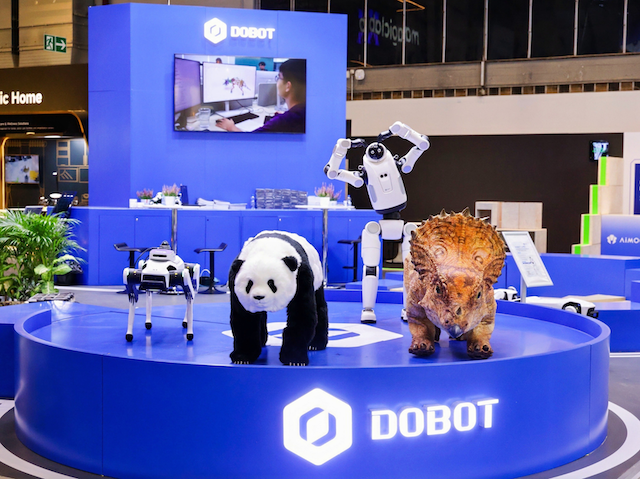
DOBOT Showcases Innovative Robotics at IFA Berlin 2026 with Consumer-Focused Products
DOBOT Robotics is presenting its diverse robotics portfolio at IFA Berlin 2026, featuring products like the Rover X1 robotic dog and DOBOT LUMO humanoid robot. This event marks a significant shift towards consumer-oriented robotics, showcasing how these technologies can enhance everyday experiences. The importance of this exhibition lies in DOBOT's commitment to expanding robotics beyond industrial applications. By introducing robots designed for entertainment, education, and interaction, DOBOT aims to make robotics more accessible and engaging for the general public. Looking ahead, the focus will be on how DOBOT continues to innovate in the consumer robotics space. With products like the panda-inspired Pandabo and the dinosaur-themed Rover X1 Auton Roamer Sinoceratops, the company is set to redefine the role of robotics in daily life. No further timeline was disclosed at the time of publication.
cobot welding robotic welding welding robot welding automation 6D Touch Positioning Through Arc Seam Tracking
Genisom Secures Series B Funding, ForgeAI Raises Angel Round, Qiyuan Launches $3,000 Robots
Genisom AI has successfully closed a Series B funding round of tens of millions of dollars, led by Stone Venture from the UAE. The funding aims to enhance their robot production capabilities, with over 15,000 units produced by June 2026. This move signifies a strong push towards advancing autonomous navigation technologies. ForgeAI, a startup linked to Tsinghua University, has raised an angel round in the low- to mid-single-digit millions of dollars, backed by TusStar. The funds will support the development of a general-purpose skills operating system, which aims to improve efficiency in property-cleaning tasks, showcasing the potential for robots to replace multiple human workers. Additionally, Qiyuan Robotics has launched its Q1 and T1 consumer robots, priced starting at approximately $3,000, with shipments commencing on October 1. This launch reflects the growing trend of consumer robotics and the integration of AI technologies into everyday tasks, indicating a shift in market dynamics towards more accessible robotic solutions.
AI AI Funding & Investment Robotics China Farada Group ForgeAI
Qiyuan Robot Introduces Personal Robots Priced from 19,999 Yuan
On September 20, Qiyuan Robot, a consumer robotics brand under Upwind New Materials, launched two personal robots, the Q1 and T1, starting at 19,999 Yuan. The Q1 is priced at 19,999 Yuan, with an exploration version at 26,999 Yuan, while the T1 starts at 19,999 Yuan and the T1 Pro at 29,999 Yuan. Orders will be fulfilled sequentially starting October 1. This launch is significant as it marks a shift in the consumer humanoid robot market towards price differentiation and varied applications. Qiyuan's strategy focuses on education, companionship, and entertainment rather than household chores, reflecting a pragmatic approach to commercialization. The company has already tested prototypes in thousands of homes, gathering extensive user feedback to inform future product development. Looking ahead, Qiyuan aims to evolve its products through three stages: interesting, useful, and lovable. The company is also advancing a large model focused on household tasks. As the market evolves, the success of Qiyuan's subscription and service models will depend on creating a robust ecosystem that goes beyond hardware sales, with a target of achieving 30% of overseas revenue in the robotics sector by next year.
Personal Robots Companionship Technology Consumer Robotics AI Development
ZhiHuiJun Faces Challenges After 210 Million Yuan in Advance Payments for Robotics Business
On September 20, at the Shanghai West Bund Dream Center, QiYuan Robotics held a product launch themed 'My Personal Robot.' The event featured celebrities, tech bloggers, and industry partners, showcasing their Q1 and T1 models in various life scenarios. Despite the excitement, the parent company, Upwind New Materials, reported 210 million yuan in advance payments for its consumer robotics business, which has yet to generate revenue. This situation highlights the gap between consumer interest, as evidenced by the advance payments, and actual revenue generation. While QiYuan's products are priced at 19,999 yuan and are set for delivery starting October 1, the company faces the challenge of converting these payments into confirmed sales. The robotics sector is known for its difficulties in transitioning from consumer hardware sales to recognized revenue, making this a critical juncture for QiYuan. Looking ahead, Upwind New Materials has set ambitious targets for its new business, including a requirement for new business revenue to exceed 25% of total income by 2026. The company aims for a 700% growth in new business revenue by 2028. However, the path to achieving these goals remains uncertain, particularly as consumer expectations evolve and competition intensifies in the personal robotics market.
Consumer Robotics AI Technology Product Development Market Strategy
Robotic Principles Transforming Home Cleaning with Smart Sensors and Self-Maintenance
The consumer robotics landscape is evolving, with a shift from humanoid robots to specialized devices like smart vacuum cleaners. These modern floor-care appliances are integrating robotic principles, enhancing their functionality and efficiency in home cleaning tasks. This transition is significant as it highlights the growing importance of specialized robotics in everyday life. While humanoid robots aim for versatility, specialized devices excel in specific tasks, showcasing how robotics can improve consumer products before general-purpose robots become widely available. Looking ahead, the distinction between specialized and general-purpose robotics will continue to shape the market. As technology advances, consumers can expect even more sophisticated features in home cleaning devices, paving the way for future innovations in robotics.
Home robots Robotics Sensors adaptive automation Autonomous robots cleaning robots
Qiyuan Robotics Unveils Affordable Humanoid Robots Starting at 19,999 Yuan
On September 20, Qiyuan Robotics, a subsidiary of Weiqi New Materials, officially launched two consumer-grade humanoid robots, Q1 and T1, priced as low as 19,999 yuan, setting a record for the lowest price in this category. The product lineup includes four models: Q1, Q1 Explorer, T1, and T1 Pro, with prices ranging from 19,999 yuan to 29,999 yuan. This pricing strategy is supported by enhanced mass production capabilities, allowing Qiyuan Robotics to produce thousands of units efficiently. The company has integrated automotive manufacturing standards to ensure quality and consistency, with the ability to assemble a robot every 2.5 minutes. Shanghai's robust robotics industry, which accounts for about one-third of the national market, provides a strong foundation for this production model. Looking ahead, Qiyuan Robotics aims to capitalize on the evolving consumer robotics market, focusing on developing applications that enhance user engagement and emotional value. The company plans to expand into international markets next year, with expectations that overseas revenue will contribute approximately 30% of total sales. No further timeline was disclosed at the time of publication.
Humanoid Robots Consumer Robotics AI Robotics Manufacturing
Benmo Power Successfully Passes HK Listing Hearing as Student of Li Zexiang Launches IPO
On September 17, Benmo Power (Beijing) Technology Co., Ltd. successfully passed its listing hearing with the Hong Kong Stock Exchange. Founded by Zhang Di, a graduate of Beijing Institute of Technology and a master's student under Li Zexiang at Hong Kong University of Science and Technology, the company focuses on robot technology with direct drive technology as its core capability. Benmo Power primarily engages in the sales of robot power modules in China, with projections indicating that by 2025, the company will achieve a total revenue of 282 million yuan, with approximately 97.4% of this revenue coming from direct drive modules for consumer products like robotic vacuum cleaners. According to Frost & Sullivan, the company ranks eighth in China's consumer robot power module industry with a 2.4% market share and holds the top position in the direct drive module sector with a 61.1% market share. Looking ahead, Benmo Power's product line is set to expand, with the upcoming release of the P0610 series embodied joint modules in 2026. The company's ability to transition from component sales to complete robot systems will be crucial in capturing the humanoid robot market, which represents a significant growth opportunity in the robotics sector.
Robotics Direct Drive Technology Consumer Robotics IPO Automation
ROBOTTODAY WEEKLY September 7 – 11, 2026
This week in robotics: JD.com plans to deploy three million robots across its logistics network, XPeng commissions its IRON humanoid production line, FANUC and Google launch an AI arc-welding agent, and Unitree shares fall 53% from their post-IPO high. September 7–11, 2026.

China’s Dexterous Hand Industry, 2026 Part 3 — The Players
Five vendor archetypes, MIR’s composite top ten, eight company profiles and six field deployments — every firm linked to the RobotToday supplier directory.

China’s Dexterous Hand Industry, 2026 Part 2 — The Technology
Linkage, tendon, direct drive or hybrid — and why hardware is converging while the DL1–DL5 manipulation scale decides who wins. Part 2 of 3.
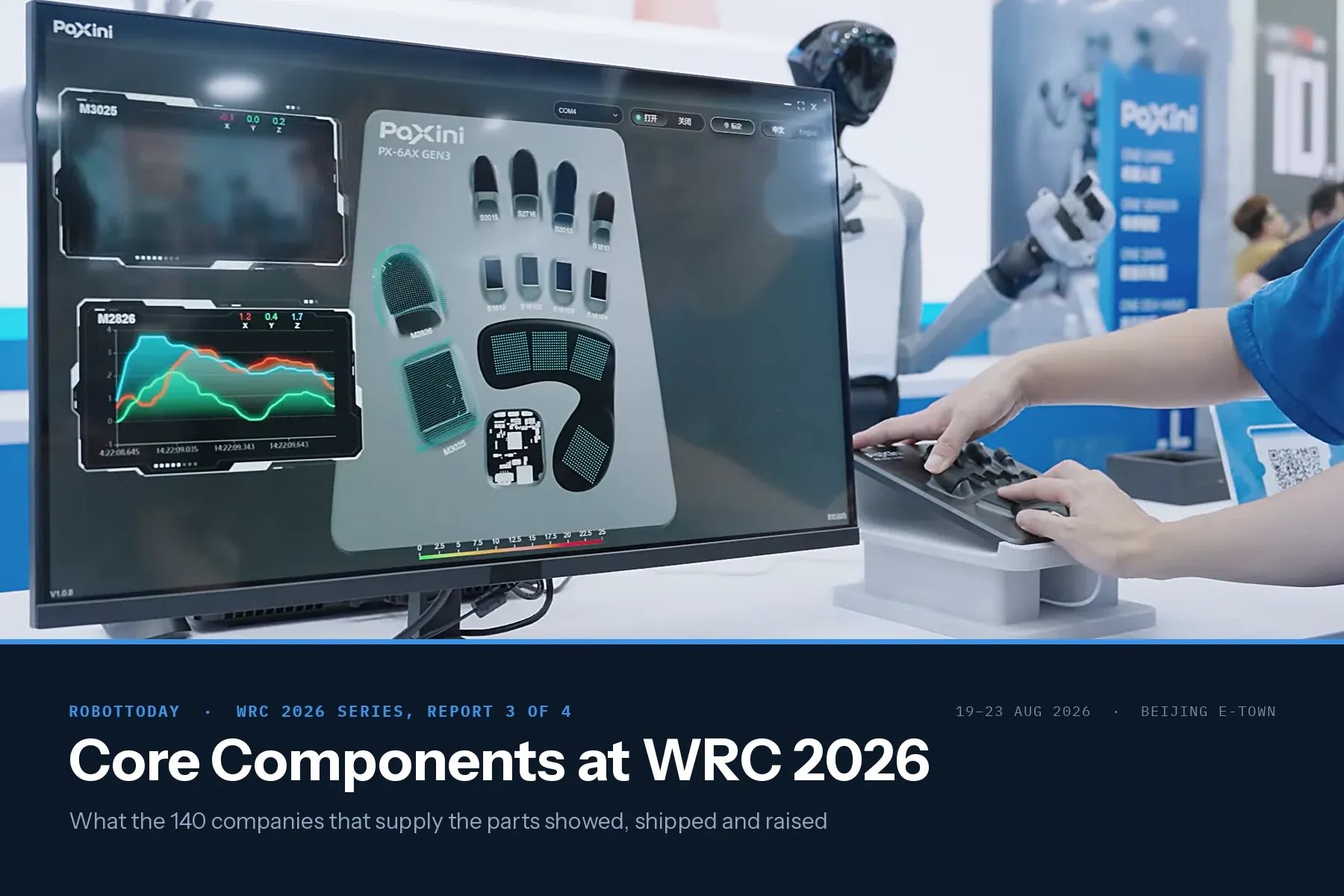
WRC 2026 Core Components: 137 Robot Parts Suppliers
The third report in the WRC 2026 series. Report 1 mapped all 248 exhibitors by category and Report 2 covered the 139 that build finished robots. This one covers the 137 that build what goes inside them.

Why the Tesla Supply Chain for Optimus is Consolidating in Chinese Yangtze River Delta
Why Tesla’s Optimus supply chain is consolidating in China’s Yangtze River Delta, where actuators, motors, and robotics suppliers enable humanoid scale.

Rongtai‘s Surge In The Tesla Optimus Supply Chain
Learn how Zhejiang Rongtai is emerging as a strategic supplier in Tesla’s Optimus humanoid robot supply chain, providing critical insulation and safety materials.
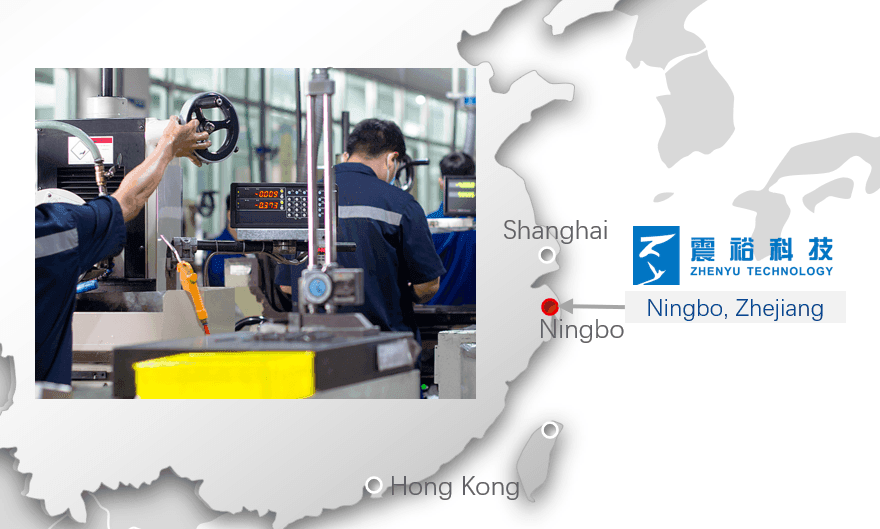
How Zhenyu Technology Is Becoming a Key Linear Actuator Supplier Candidate for Tesla’s Optimus Humanoid Robot
Explore how Zhenyu Technology is emerging as a key candidate to supply linear actuators for Tesla’s Optimus humanoid robots, enhancing precision motion control
Tesla Optimus Supply Chain Analysis: Moons' Strategic Role in Motion Control and Mini Actuators
Discover how Shanghai MOONS’ Electric is becoming a strategic motion-control and mini-actuator supplier in Tesla’s Optimus humanoid robot supply chain.
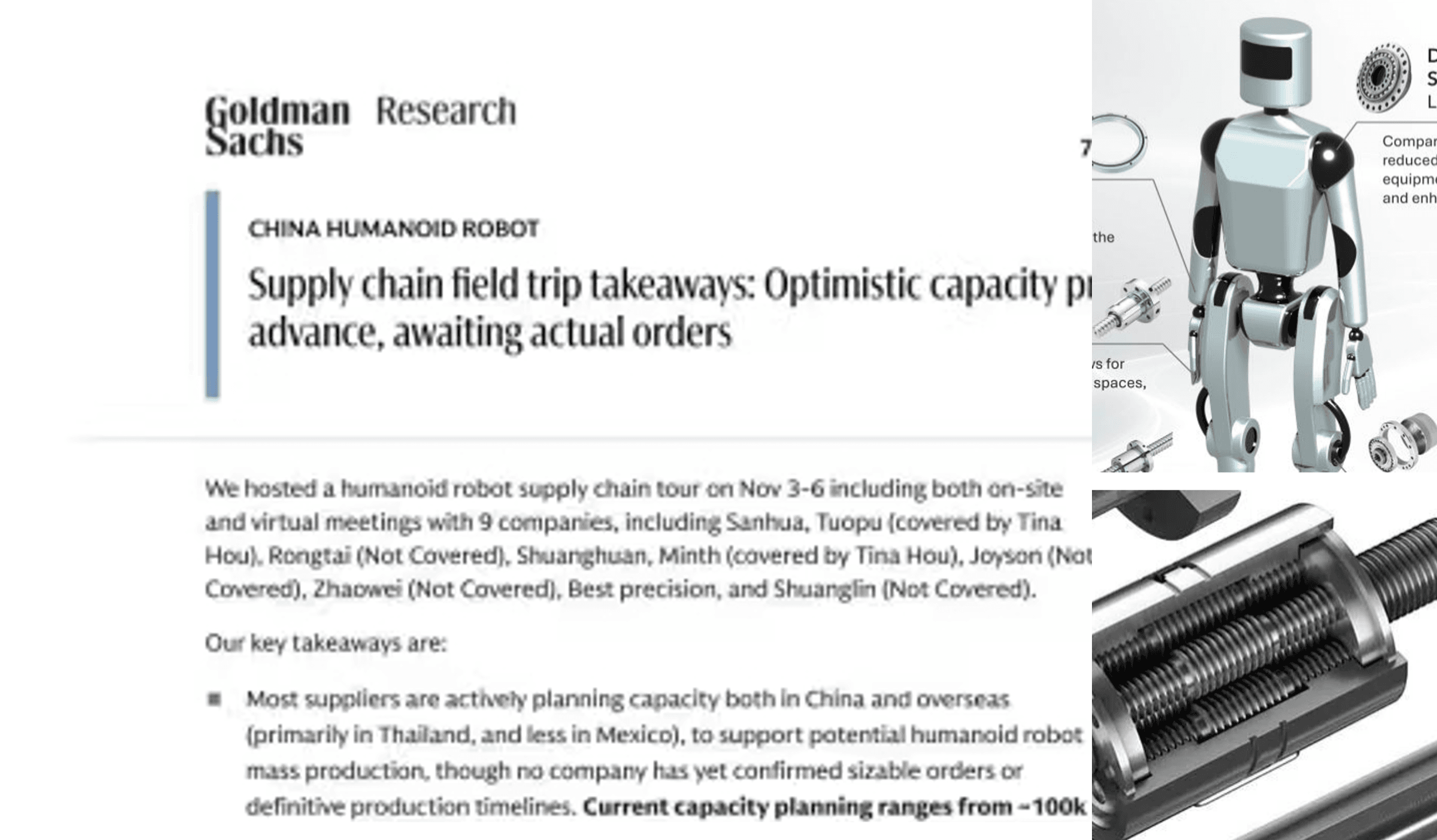
What Goldman Sachs Discovered About China‘s Humanoid Robots
Goldman Sachs’ field report reveals China’s humanoid robot supply chain building massive production capacity ahead of confirmed orders, betting on post-2026 demand.

Tesla’s Humanoid Robot Supply Chain Comes Into Focus
An in-depth look at Tesla Optimus’ emerging supply chain, revealing key component partners, manufacturing hurdles, and what it means for humanoid robots at scale.


