Atlas Robotics

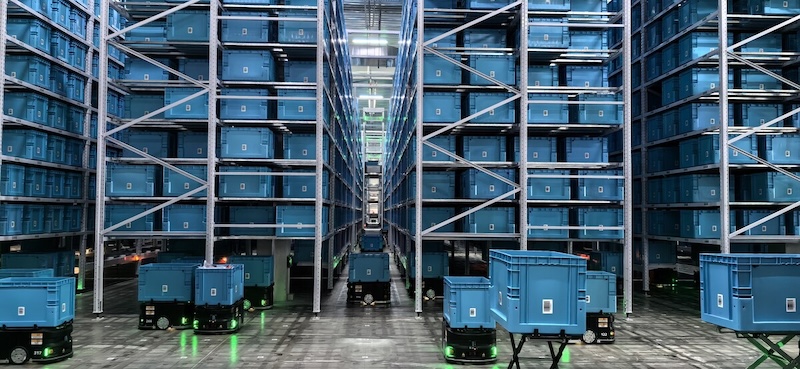
Physical AI platform developer building autonomous warehouse robots under a unified AI brain. Products include the LeVO autonomous forklift family for pallet transport and vertical storage. AI intelligence earned in real warehouse environments is shared across all robot embodiments in commercial deployment.

Share
Atlas Robotics
400 N Lexington St
Pittsburgh, PA 15208
RobotToday Initiative

Robotics needs a service framework.

RSF defines a common language for robot service capability, lifecycle operations, certification pathways, and service-provider networks.

Share

Related Content

ROBOTTODAY Weekly July 13 – 17, 2026

ROBOTTODAY Weekly July 13 – 17, 2026

This week in robotics: Hyundai takes full ownership of Boston Dynamics, Xpeng targets 1,000 Iron humanoids a month, LimX Dynamics raises $200M pre-IPO, and Agility opens a Silicon Valley physical-AI hub. July 13–17, 2026.

WAIC 2026: Embodied Intelligence Enters Industrial Deployment Era

WAIC 2026: Embodied Intelligence Enters Industrial Deployment Era

WAIC 2026 in Shanghai (July 17–20) saw 200+ embodied intelligence companies, 300+ live robots, and first confirmed humanoid deployments in logistics and pharmacy. RobotToday engineering analysis.

Yimu Technology Showcases Physical AI's Capabilities at WAIC 2026

Yimu Technology Showcases Physical AI's Capabilities at WAIC 2026

At WAIC 2026, Yimu Technology attracted significant attention with its demonstration involving two identical peanuts. The exhibit illustrated the concept that while visual cues may be indistinguishable, tactile feedback reveals critical differences in texture and resilience. This highlights the importance of physical interaction in understanding the physical world. The significance of this demonstration lies in its implications for Physical AI. Traditional robots have struggled to interpret tactile information, often failing in tasks requiring sensitivity, such as handling fragile items. Yimu Technology emphasizes that the key to advancing robotics is not merely increasing model size but ensuring robots receive accurate physical feedback from their environment. Looking ahead, the focus will be on how effectively robots can integrate this tactile feedback into their operations. Yimu Technology's approach, which utilizes optical systems to measure minute deformations, could revolutionize how robots interact with their surroundings. No further timeline was disclosed at the time of publication.

Physical AI Tactile Sensors Robotics Machine Learning
Faraday Future's FFAI Accelerates Robotics Expansion and Exceeds Shipment Goals at Automate 2026

Faraday Future's FFAI Accelerates Robotics Expansion and Exceeds Shipment Goals at Automate 2026

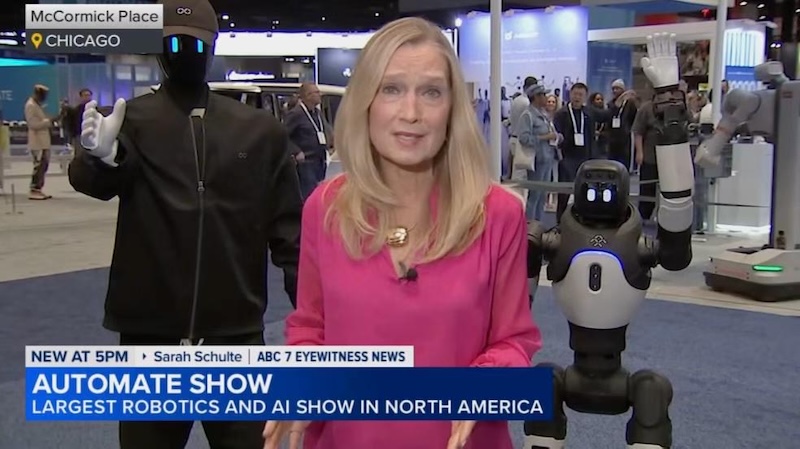
Faraday Future's AI subsidiary, FFAI, announced its accelerated expansion into commercial robotics at Automate 2026 in Chicago. The company showcased its 'one brain, multiple forms' robotics platform and revealed that June robot shipments are expected to exceed 100 units, bringing total first-half deliveries to over 220 units, surpassing its initial target ahead of schedule. This milestone is significant as it marks FFAI's transition from an education-focused robotics business to industrial automation, targeting commercial deployments across manufacturing, logistics, and research. The company presented a range of robotics products, including the All-New Futurist humanoid robot and the FF Faber mobile manipulator series, highlighting its commitment to integrating advanced AI technologies into various applications. Looking ahead, FFAI outlined a broader strategy focused on an open embodied AI ecosystem, which includes its EAI Brain software platform and an EAI Data Factory for operational data collection. No further timeline was disclosed at the time of publication.

Artificial Intelligence Events News ai All-New Futurist Automate 2026
Fujitsu Collaborates with Fanuc, Yaskawa, and Kawasaki to Enhance Physical AI with Nvidia

Fujitsu Collaborates with Fanuc, Yaskawa, and Kawasaki to Enhance Physical AI with Nvidia

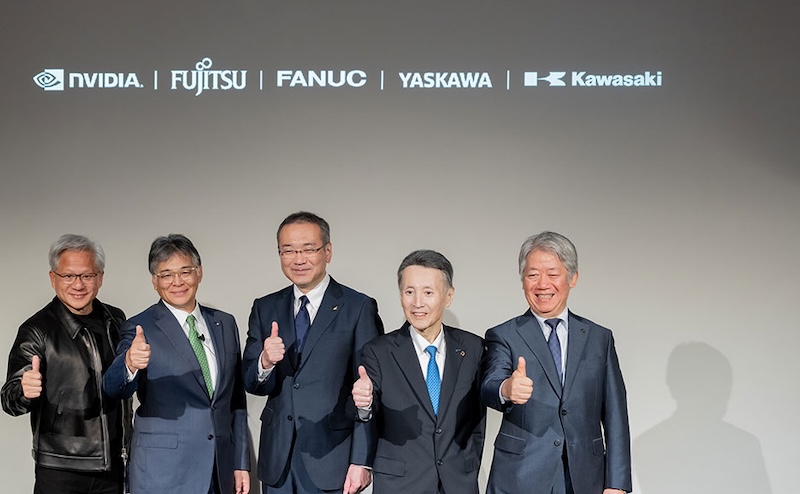
Fujitsu has initiated a partnership with Japanese robotics firms Fanuc, Yaskawa Electric, and Kawasaki Heavy Industries to advance the development and deployment of physical AI in sectors such as manufacturing, logistics, and healthcare. This collaboration will leverage Nvidia's physical AI technologies to create a collaborative control platform that connects digital systems with robots and physical equipment. The initiative aims to accelerate the adoption of physical AI, addressing challenges like labor shortages and an aging workforce while enhancing global competitiveness. The platform will optimize production planning in manufacturing, automate material handling in logistics, and improve healthcare operations by automating the transport of medical supplies and assisting with patient interactions. Fujitsu plans to develop an open collaborative control platform that integrates AI, robotics, and data analysis technologies, ensuring interoperability and addressing cybersecurity concerns. No further timeline was disclosed at the time of publication.

Artificial Intelligence Industry News ai factory automation fanuc
Toyota and Nvidia Enhance Collaboration to Advance AI in Vehicles, Manufacturing, and Urban Infrastructure

Toyota and Nvidia Enhance Collaboration to Advance AI in Vehicles, Manufacturing, and Urban Infrastructure

Toyota and Nvidia have broadened their partnership to develop physical AI technologies that encompass next-generation vehicles, manufacturing, robotics, and urban infrastructure. This collaboration builds on a previous agreement, focusing on advanced driver-assistance systems using Nvidia's DRIVE AGX platform and DriveOS operating system. The significance of this partnership lies in its potential to revolutionize mobility and manufacturing. Rishi Dhall, Nvidia's vice president of automotive, emphasized that physical AI will enhance the intelligence of various machines, making vehicles more autonomous and urban environments safer and more responsive. Toyota aims to implement Level 2++ functionality in its future vehicles while leveraging Nvidia AI models for efficient software engineering. Additionally, Toyota is integrating AI into its manufacturing processes through factory simulations using Nvidia's Omniverse and Isaac Sim frameworks. The partnership also extends to urban mobility technologies via Woven by Toyota, which is developing models to analyze traffic conditions. No further timeline was disclosed at the time of publication.

Computing News advanced driver assistance systems ai automotive AI digital twins
Ofo Resurfaces After Five Years, Still Operational Amid Refund Concerns

Ofo Resurfaces After Five Years, Still Operational Amid Refund Concerns

On July 15, Ofo, the bike-sharing company, unexpectedly updated its official WeChat account after nearly five years of silence. The post was a recruitment notice for patients with skin diseases, unrelated to its bike-sharing business, yet it sparked significant public interest regarding unrefunded deposits. Many users expressed their concerns, asking when their deposits would be returned. Despite widespread belief that Ofo had ceased operations, records indicate that its associated operational entity, Beijing Baike Lock Technology Co., Ltd., remains active. However, the company faces high-risk information, including numerous legal cases and enforcement actions, which raises questions about its future viability. As Ofo navigates this uncertain landscape, stakeholders should monitor any developments regarding its operational status and the potential for deposit refunds. No further timeline was disclosed at the time of publication.

mimic Robotics Launches Comprehensive Platform for Advanced Dexterous Robot Manipulation

mimic Robotics Launches Comprehensive Platform for Advanced Dexterous Robot Manipulation

mimic Robotics has unveiled a new robotic hand, the mimic hand M1, along with the mimic wearable U1 exoskeleton and a proprietary software platform. This integrated system aims to enhance general-purpose dexterous manipulation in industrial robots by addressing the challenge of collecting high-quality training data for AI models that perform human-like tasks. The significance of this launch lies in mimic Robotics' approach to design, which focuses on human hand morphology rather than traditional two-finger grippers. The mimic hand M1 features 15 actuated degrees of freedom and is capable of handling payloads over 25 kg, while the mimic wearable U1 allows human operators to demonstrate tasks in real-time, improving data collection for AI training. Looking ahead, the company’s innovative middleware and teleoperation software are expected to enhance robot control and AI inference speed. No further timeline was disclosed at the time of publication.

Components Computing News ai automation dexterous manipulation
Inteq's Jon Roberts Discusses Strategic Shift in Warehouse Automation Investment

Inteq's Jon Roberts Discusses Strategic Shift in Warehouse Automation Investment

Warehouse automation is evolving from a mere operational efficiency tool to a strategic priority for organizations, driven by ongoing labor shortages and rising fulfillment expectations. Inteq, a UK-based warehouse automation specialist, emphasizes the importance of integrating robotics and software to create flexible, hardware-agnostic solutions that adapt to changing operational needs. Jon Roberts, sales director at Inteq, highlights that software, particularly Warehouse Execution Systems, is now the critical component of successful automation projects. These systems serve as the central hub connecting robotics, equipment, and personnel, enabling more efficient operations. The shift towards software-first strategies reflects a broader trend where businesses recognize the risks of inaction in the face of increasing competition and complexity in supply chains. Looking ahead, companies investing in integrated automation platforms are likely to gain a competitive edge in logistics and fulfillment. The conversation also touches on the growing role of AI in predictive operations and the transition of autonomous mobile robots into essential warehouse infrastructure, supported by innovative commercial models like Robotics-as-a-Service. No further timeline was disclosed at the time of publication.

Features Logistics Supply chain Warehouse robots amrs artificial intelligence
Panasonic Connect's Scott Zerkle Discusses AI's Role in Smart Manufacturing Transformation

Panasonic Connect's Scott Zerkle Discusses AI's Role in Smart Manufacturing Transformation

Panasonic Connect is at the forefront of transforming manufacturing systems as electronics become smaller and more complex. The company offers smart manufacturing solutions that integrate surface-mount technology (SMT), robotics, AI analytics, and connected factory platforms. Through its Gemba Process Innovation strategy, Panasonic Connect aims to enhance productivity and operational resilience in factories. The increasing complexity of electronics, particularly in vehicles and industrial systems, is reshaping production line design and operations. Scott Zerkle, associate director of technical operations at Panasonic Connect North America, emphasizes that AI's primary value lies in supporting factory workers through predictive maintenance and defect detection, rather than replacing them. He highlights the need for manufacturers to connect data across various production elements to foster continuous improvement. Looking ahead, Zerkle predicts that the next significant advancement in smart manufacturing will involve integrating AI tools with data from machines and materials. This integration will enable factories to learn from their production history, ultimately enhancing efficiency and adaptability in high-mix production environments. No further timeline was disclosed at the time of publication.

Communications Computing Digital Automation Features Manufacturing ai
Strider Robotics Unveils 40 kg Payload Quadruped Robot Amid Commercial Deployments

Strider Robotics Unveils 40 kg Payload Quadruped Robot Amid Commercial Deployments

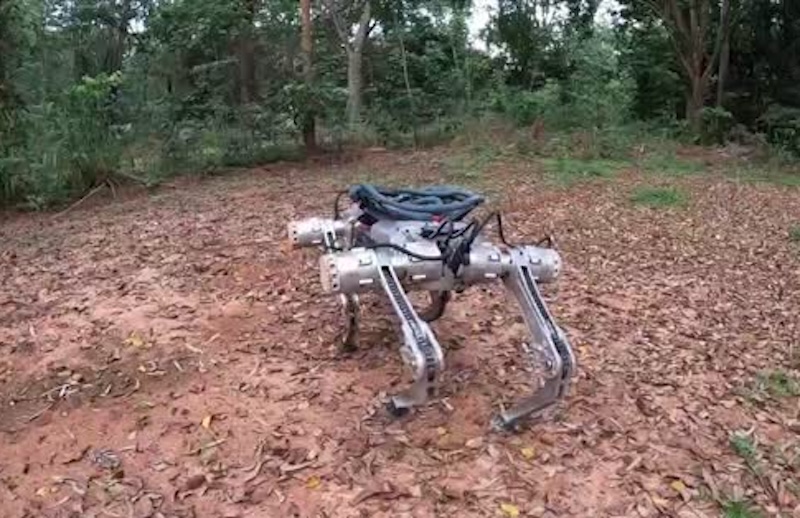
Strider Robotics, an Indian startup, has successfully demonstrated a quadruped robot capable of carrying a 40 kg payload across challenging terrains. This marks a significant step as the Bengaluru-based company transitions from prototype development to commercial deployment, with field pilots currently underway with a major oil and gas company and an automotive manufacturer. The importance of this development lies in Strider's focus on enhancing India's domestic robotics manufacturing capabilities, as over 80 percent of the robot's components are sourced locally. Quadruped robots are gaining traction in industries where traditional wheeled vehicles face limitations, such as energy, mining, and infrastructure inspection, due to their ability to navigate uneven surfaces and carry equipment. Looking ahead, Strider Robotics aims to solidify India's position as a key player in the development of intelligent legged robotic systems for industrial and defense applications. No further timeline was disclosed at the time of publication.

Robotics Robotics and Automation Robotics and Automation News Robotics News AI software artificial intelligence
RoboScience Unveils First Cloud-Based Large Model for Robotics at WAIC

RoboScience Unveils First Cloud-Based Large Model for Robotics at WAIC

At the WAIC, RoboScience showcased a groundbreaking cloud-based embodied large model named Visics, capable of controlling multiple robotic hands. This innovation allows for seamless switching between different robotic hands while maintaining operational efficiency, demonstrating the ability to recognize and grasp various objects autonomously within 30 seconds. The significance of this development lies in its potential to revolutionize robotic operations across diverse applications. By enabling a single model to adapt to various hand configurations, Visics enhances the versatility of robotic systems, allowing them to perform complex tasks without the need for extensive retraining when hardware changes occur. Looking ahead, the industry will be keen to observe how Visics performs in real-world scenarios and its ability to execute long-term tasks by integrating multiple actions. No further timeline was disclosed at the time of publication.

Robotics Cloud Computing AI Automation Object Recognition
ROBOTTODAY Weekly July 6 – 10, 2026

ROBOTTODAY Weekly July 6 – 10, 2026

This week in robotics: AI² Robotics raises $735M for wheeled humanoids, Unitree G1 performs first live surgery, Dexmal launches DexOS platform, Agility Robotics announces SPAC, and Ondas acquires DZYNE for $875.8M. July 6–10, 2026.

Physical AI Landscape: From Digital Intelligence to the Embodied Physical World

Physical AI Landscape: From Digital Intelligence to the Embodied Physical World

A comprehensive industry analysis of Physical AI — covering Embodied AI, Field AI, Factory AI, VLM, World Model, VLA, and the VLA vs WAM architecture debate. Includes 20+ companies, 28 references, and the RobotToday Physical AI Landscape diagram. July 2026.

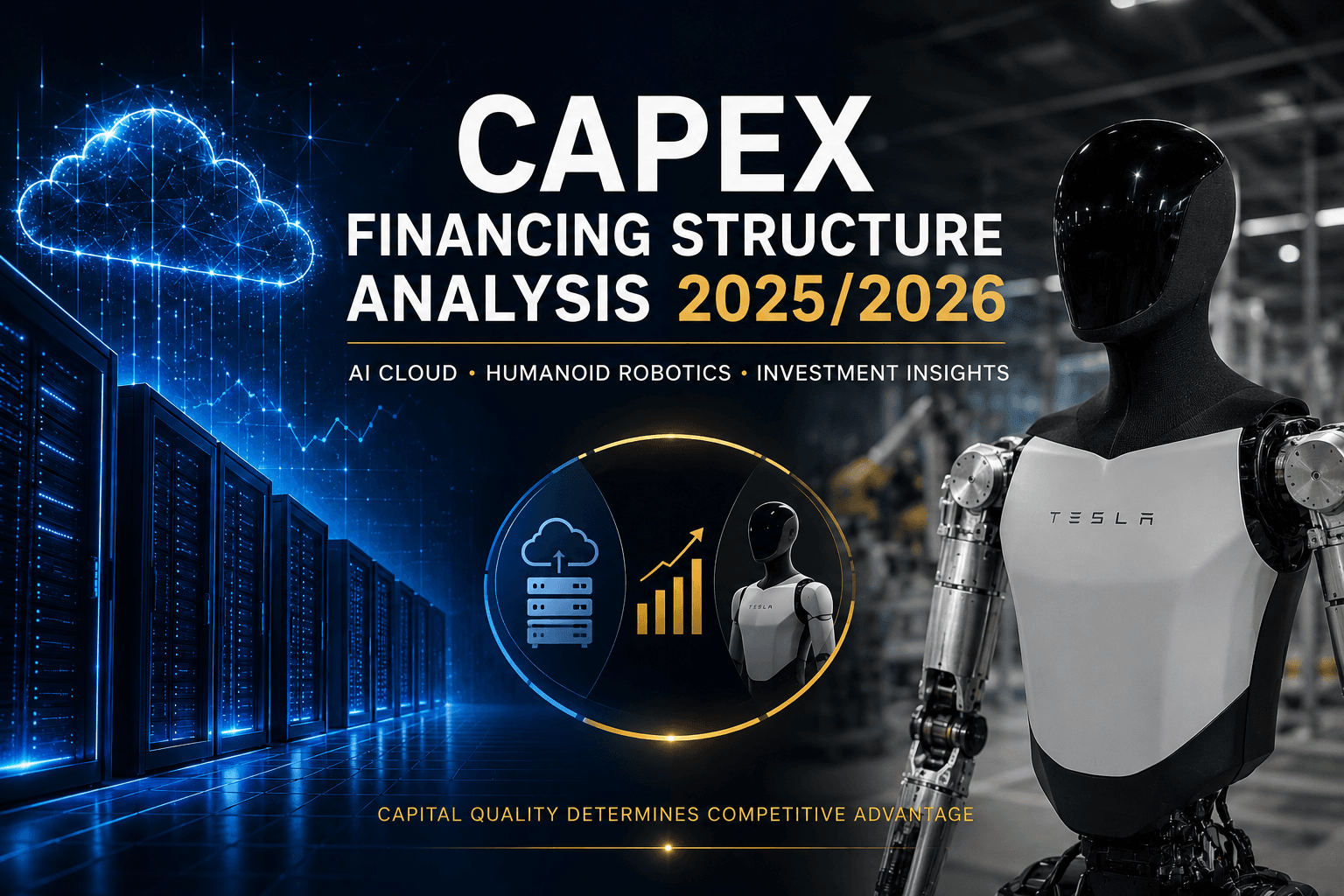
Capex Analysis 2025: AI Hyperscalers vs Humanoid Robots — Financing Risk Deep Dive

Capex Analysis 2025: AI Hyperscalers vs Humanoid Robots — Financing Risk Deep Dive

Compare how Microsoft, Google, Oracle, Tesla Optimus, Figure AI and UBTECH finance their Capex. Supply chain risk, ROIC analysis and a 3-dimension investment framework included.

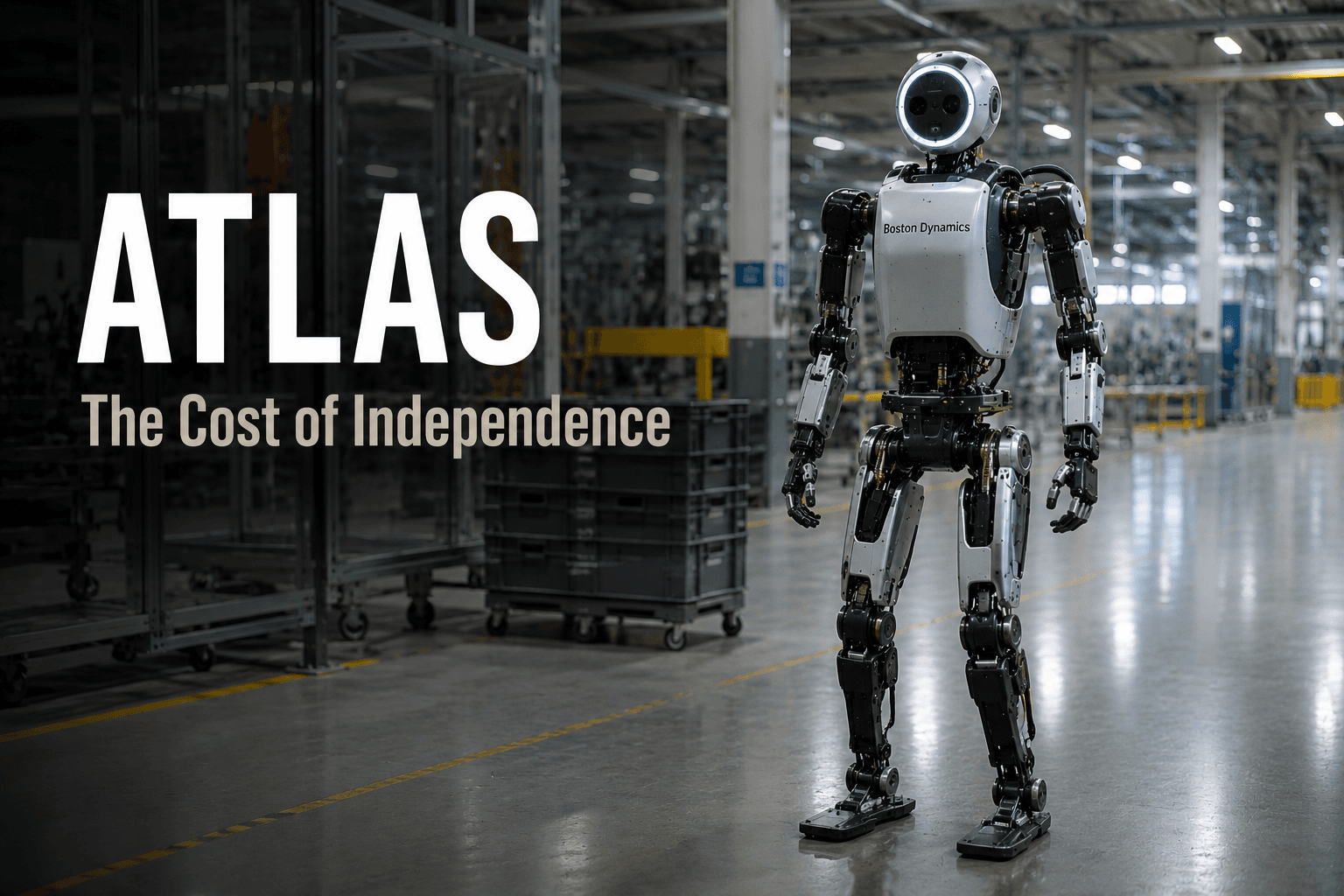
Supply Chain Reckoning: Can Boston Dynamics Avoid Becoming the Next iRobot?

Supply Chain Reckoning: Can Boston Dynamics Avoid Becoming the Next iRobot?

A data-driven analysis comparing Boston Dynamics Atlas and Tesla Optimus supply chain strategies in 2026. Examines actuator costs, production ramp speeds, and how Boston Dynamics can avoid iRobot's bankruptcy by adopting a tiered supply chain approach. Includes component cost tables, risk heat maps, and strategic frameworks.

Boston Dynamics: How a Put Option Ended Five Years of Shared Ownership

Boston Dynamics: How a Put Option Ended Five Years of Shared Ownership

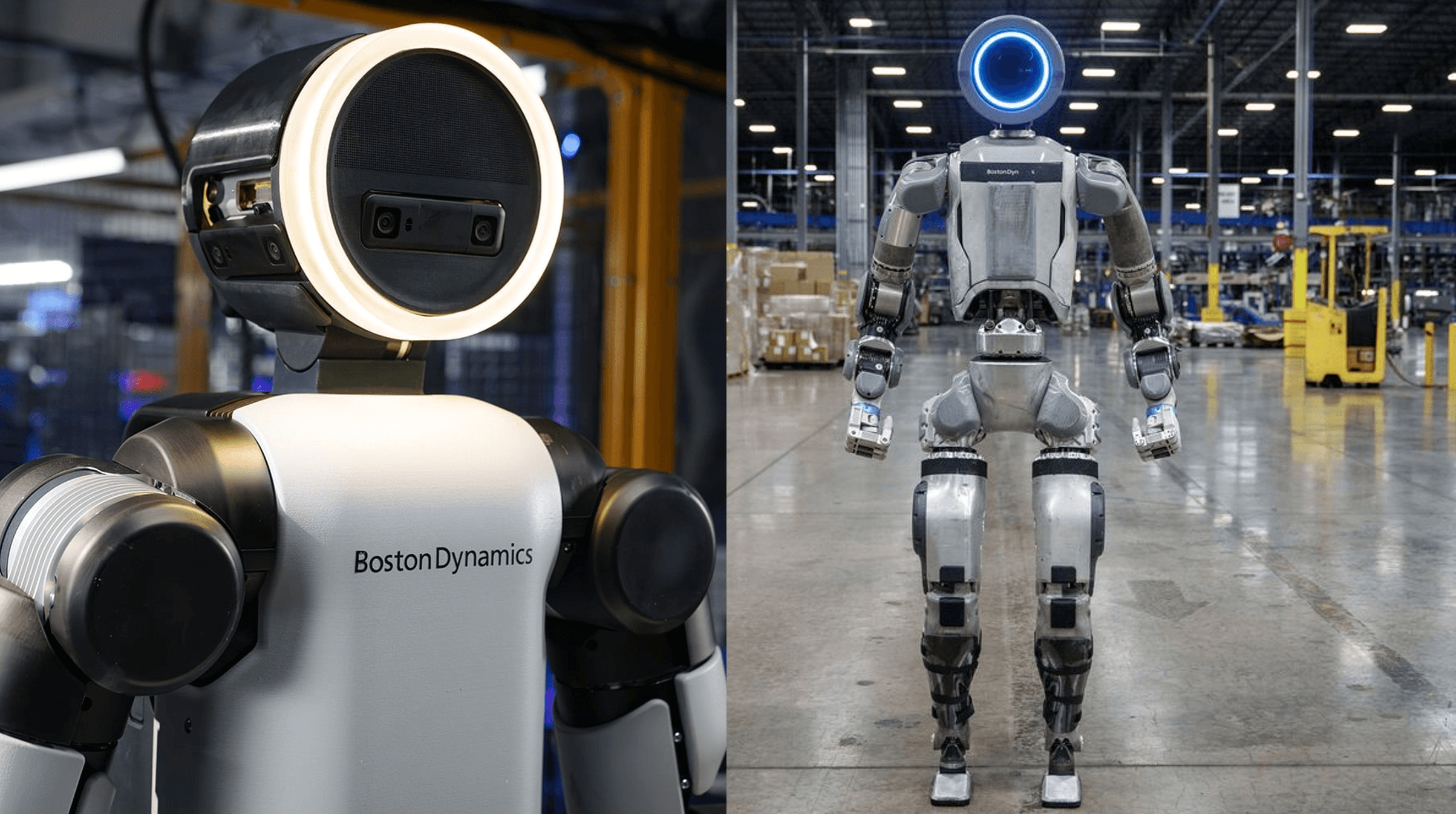
Hyundai Motor Group acquires SoftBank's remaining 9.65% stake in Boston Dynamics for $325 million, triggered by a 2021 put option. Analysis of ownership history, Atlas commercialization challenges, and what full control means for the humanoid robot industry.

ROBOTTODAY Weekly June 1 – 5, 2026

ROBOTTODAY Weekly June 1 – 5, 2026

This week in robotics: NVIDIA’s Jensen Huang visits Seoul to deepen physical AI ties, Generalist AI raises $400M at $2B valuation, Amazon upgrades Proteus with natural-language control, and UBTECH humanoid attracts 1,200 pre-orders. June 1–5, 2026.

ROBOTTODAY Weekly May 23 – 29, 2026

ROBOTTODAY Weekly May 23 – 29, 2026

This week in robotics: the Humanoids Summit debuts in Tokyo, China assigns every humanoid robot a digital ID, Figure signs a Catalyst Brands deployment deal, and Unitree heads to a June 1 IPO hearing. May 23–29, 2026.

Integrated Joint Actuators 2026: Technology, Global Suppliers & China's Leap Forward

Integrated Joint Actuators 2026: Technology, Global Suppliers & China's Leap Forward

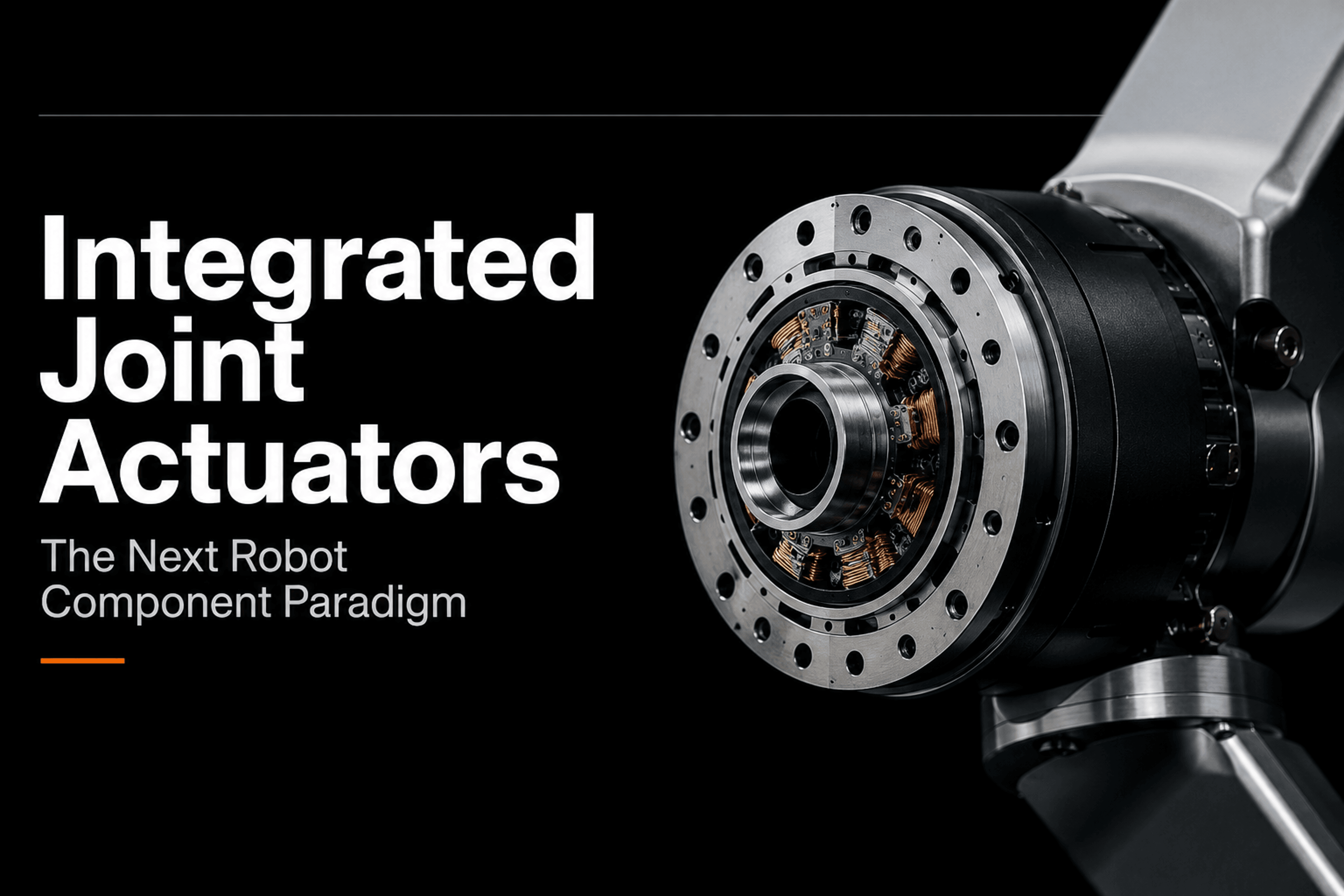
From rotary joints hitting 530 N·m+ to linear joints with planetary roller screws, integrated actuators are replacing the three-part drivetrain. Full supplier map: Tihu, PhyArc, RobStride, Schaeffler, maxon — and China's path from 1,000-RMB modules to global standard-setter.