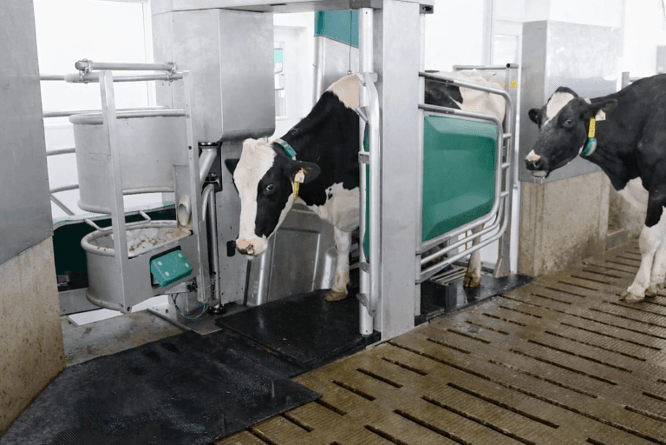
Afimilk

Dairy herd management system; collar-based sensors for activity, rumination, heat detection; real-time AI analytics, milk yield/protein/fat monitoring, parlor integration.

Share
Kibbutz Afikim
Afikim, IL 1514800
RobotToday Initiative

Robotics needs a service framework.

RSF defines a common language for robot service capability, lifecycle operations, certification pathways, and service-provider networks.

Share

Related Content

Texas Tech Surgeons Initiate Training with Advanced da Vinci Surgical System

Texas Tech Surgeons Initiate Training with Advanced da Vinci Surgical System

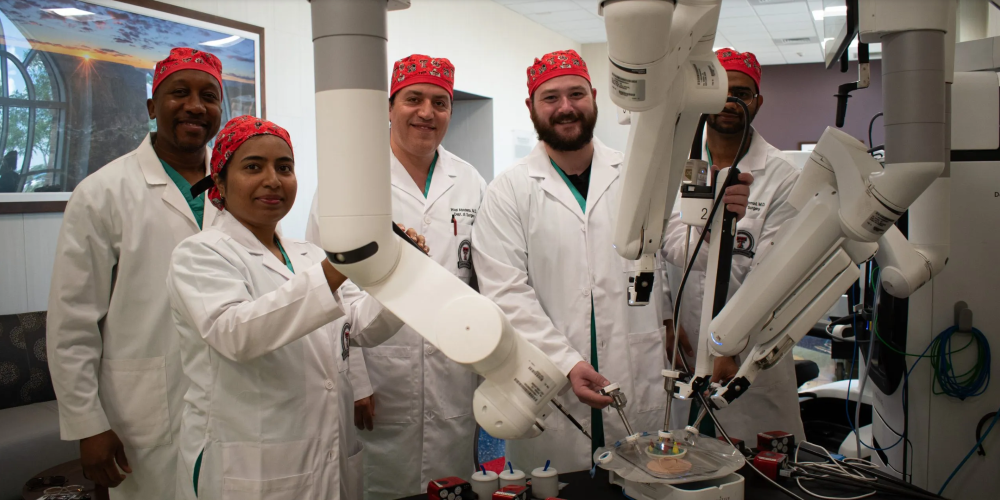
In July, Texas Tech University Health Sciences Center (TTUHSC) welcomed its first cohort of general surgery residents, who began their training with the da Vinci Surgical System. This innovative approach aims to equip new surgeons with skills comparable to those at leading institutions like Mayo Clinic and hospitals in Dallas and Houston. The training program, led by Dr. Izzy Obokare, emphasizes a systematic learning process over five years, allowing residents to master robotic surgery techniques. The da Vinci Surgical System, approved by the FDA in 2024, features a tactile feedback system that enhances the surgical experience by reducing tissue trauma and promoting quicker recovery. TTUHSC's initiative aims to provide high-quality surgical care in the Texas Panhandle, minimizing the need for residents to travel to larger cities for advanced procedures. The program also includes an open experience event for healthcare providers to witness the capabilities of robotic surgery firsthand, showcasing the arrival of cutting-edge surgical technology in rural Texas.

Robotic Surgery Medical Technology Surgical Training Healthcare Innovation
SK On's Solid-State Batteries Could Enable 8-Hour Robot Operation Despite Cost Increase

SK On's Solid-State Batteries Could Enable 8-Hour Robot Operation Despite Cost Increase

SK On has announced that solid-state batteries can allow industrial robots to operate for up to 8 hours, addressing a significant limitation of current lithium-ion batteries, which typically provide only 1 to 2 hours of runtime. This advancement could reduce downtime in 24-hour production lines, where frequent battery changes are necessary. However, the cost implications are substantial. Currently, lithium-ion batteries account for less than 2% of the total cost of industrial robots, but switching to solid-state batteries could increase this to approximately 8%, resulting in a fourfold rise in overall costs. For instance, Tesla's Optimus robot has a battery cost of about $300, which is only 0.5% of its total hardware cost. SK On has developed a total cost of ownership (TCO) model that factors in the costs of spare batteries, charging downtime, and additional backup machines, suggesting that solid-state batteries may be more economical in the long run for continuous operation scenarios. The company has completed a solid-state battery pilot plant in Daejeon, South Korea, and plans to commercialize two battery technologies by 2028 and 2029, respectively. No further timeline was disclosed at the time of publication.

Solid-State Batteries Industrial Robots Battery Technology Cost Efficiency
Medtronic Unveils Real-Time AI Platform for Hugo Surgical Robots to Rival Da Vinci

Medtronic Unveils Real-Time AI Platform for Hugo Surgical Robots to Rival Da Vinci

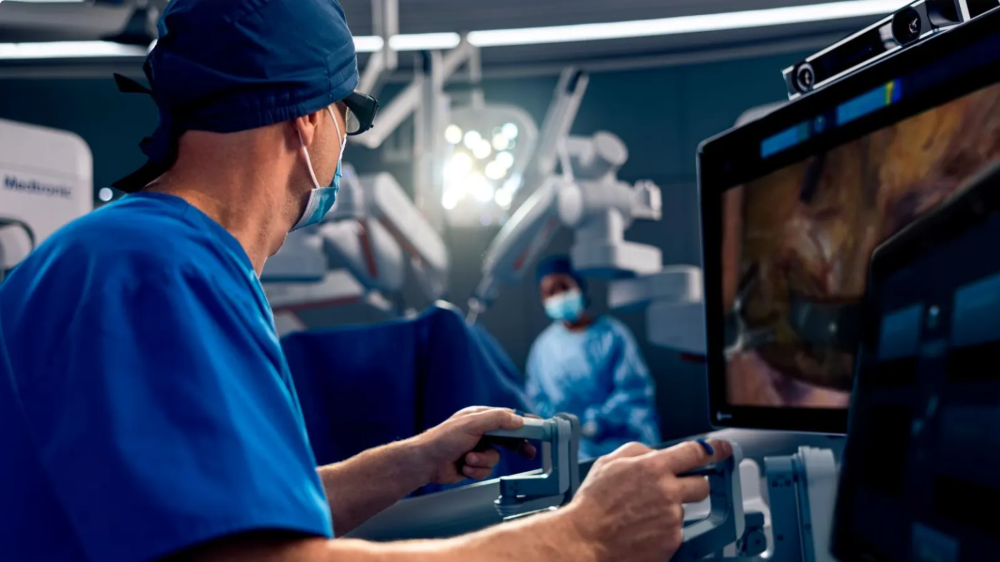
On July 21, Medtronic announced the development of a real-time AI computing platform, the Touch Surgery assistance platform, for its Hugo surgical robot. This platform integrates NVIDIA's computing infrastructure and runs Medtronic's FDA-approved AI application, Instrument Exit Point (IEP), which alerts surgeons when instruments are at risk of going out of view during procedures. This advancement is significant as it redefines safety boundaries in surgical procedures, allowing for enhanced real-time monitoring and decision-making. Medtronic's Chief Technology Officer, Jim Pecher, emphasized that real-time AI represents a fundamental evolution in surgical support, shifting from merely assisting surgeons to enabling smarter, faster actions that have a greater impact. Looking ahead, Medtronic plans to showcase the Touch Surgery platform at the upcoming robotic surgery conference in Florida. While IEP currently offers basic functionality, the company aims to expand its capabilities into laparoscopic surgery and integrate additional AI applications, marking a pivotal step towards cognitive assistance in surgical robotics.

Surgical Robots AI in Healthcare Robotic Surgery Medical Technology
Exploring Robotics' Path to Its 'GPT Moment' and the Need for Physical Experience

Exploring Robotics' Path to Its 'GPT Moment' and the Need for Physical Experience

Recent discussions at the 2026 World Artificial Intelligence Conference highlighted the challenges and opportunities in achieving a 'GPT moment' for robotics. Experts emphasized that while large language models have thrived on vast data, robotics lacks a comparable 'physical internet' for learning. The consensus is that the next phase of embodied intelligence must focus on creating systems that can continuously generate physical experiences and learn from failures. The conversation revealed differing opinions on when robotics might reach its 'ChatGPT moment,' with predictions ranging from two to five years. However, experts agree that the real challenge lies not in creating impressive demos but in scaling 'experience' rather than just data. Current embodied intelligence data is significantly less than that of leading language models, highlighting a critical gap in the field. As the industry evolves, the need for a robust data infrastructure akin to the internet for language models becomes apparent. Experts pointed out that achieving a high success rate in robotic tasks will require extensive data, potentially in the order of hundreds of millions of hours. This underscores the urgent need for the robotics sector to develop its own data ecosystem to foster growth and innovation.

Physical Intelligence Robotics AI Data Infrastructure
Avoiding the 'Hollowing Out' of AI Agents: Key Development Insights

Avoiding the 'Hollowing Out' of AI Agents: Key Development Insights

The article discusses strategies to prevent AI agents from becoming ineffective in organizations. It emphasizes the importance of creating functional AI agents that meet real-world needs, particularly through the use of Microsoft Copilot Studio. Key points include selecting appropriate tasks, designing for user interaction, and ensuring continuous improvement based on user feedback. Understanding why AI agents often fail to be adopted is crucial for organizations. The insights provided by Persol Business Process Design highlight the need for a structured approach to AI implementation, focusing on operational efficiency and user engagement. By addressing common pitfalls, organizations can enhance the effectiveness of their AI initiatives. Looking ahead, organizations should prioritize the integration of AI agents with existing workflows and data sources. Continuous adaptation and user education will be essential for maximizing the return on investment in AI technologies. No further timeline was disclosed at the time of publication.

Siléane and HBK Innovate Tactile Intelligence for High-Speed Cosmetics Packaging

Siléane and HBK Innovate Tactile Intelligence for High-Speed Cosmetics Packaging

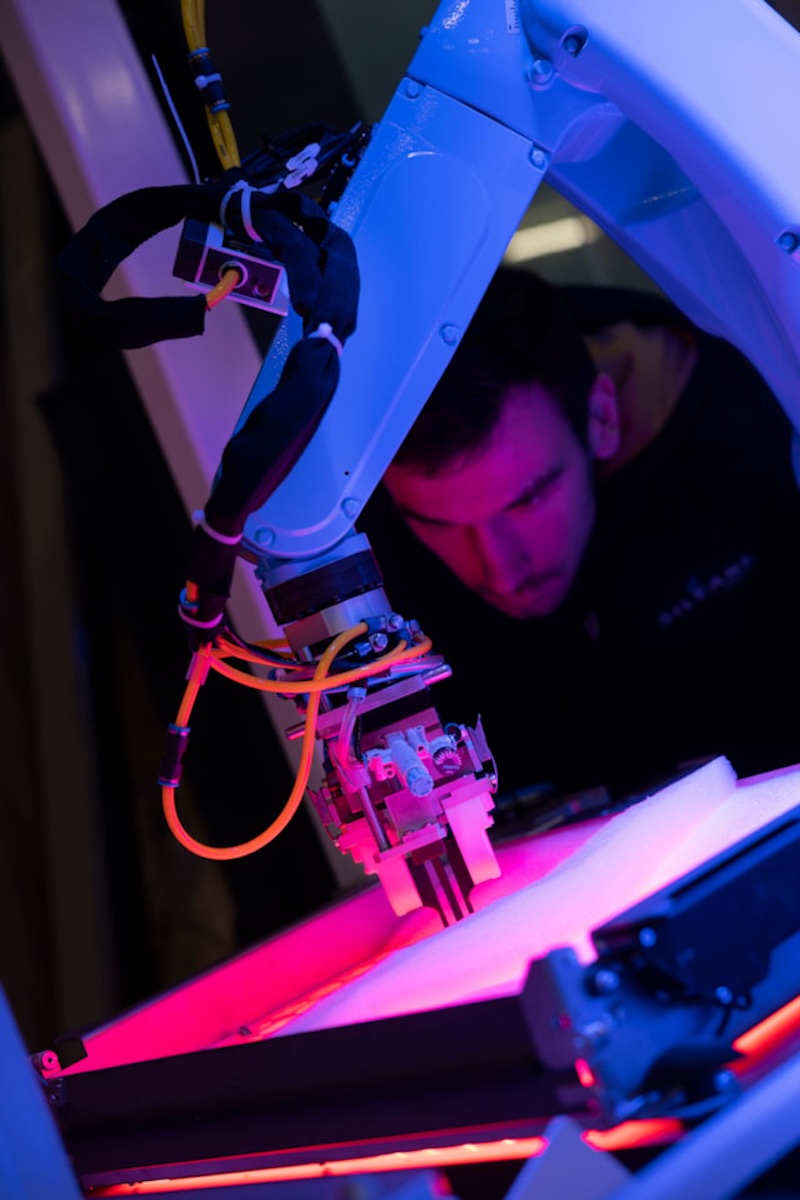
Siléane, a France-based advanced robotics specialist, has partnered with Hottinger Brüel & Kjær (HBK) to create an innovative automated gripping solution for a global cosmetics manufacturer. This solution incorporates smart sensing directly into the end-of-arm tooling, allowing for real-time grip quality validation in fast-paced, regulated packaging environments. The significance of this development lies in its ability to address the challenges faced by traditional robotic systems in handling lightweight and flexible components, such as deformable thermoformed trays. By embedding force measurement at the point of interaction, Siléane's approach enhances reliability and precision, reducing the risk of product loss and tray deformation during high-speed operations. Looking ahead, the integration of HBK's PW22i smart load cells into the robotic gripper marks a pivotal advancement in automation technology. This setup not only captures real-time force data but also allows for immediate responses to deviations, ensuring consistent performance. No further timeline was disclosed at the time of publication.

Engineering Features Manufacturing automation cosmetics manufacturing end-of-arm tooling
Gritt Secures $32.4 Million to Develop Physical AI for Infrastructure Projects

Gritt Secures $32.4 Million to Develop Physical AI for Infrastructure Projects

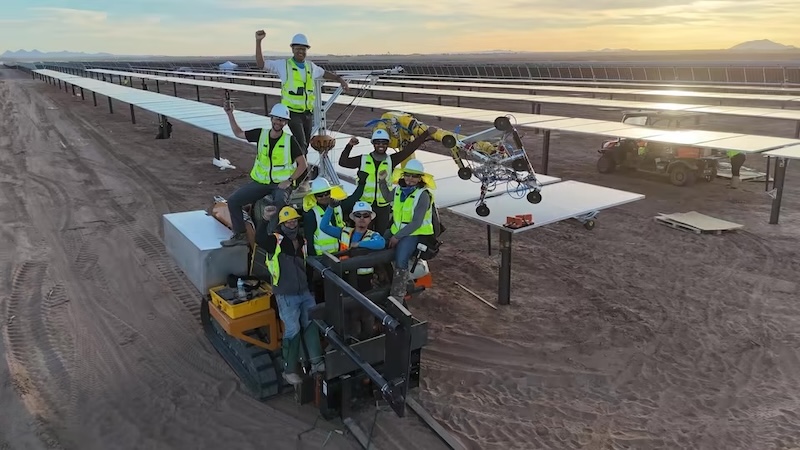
Gritt has officially launched with $32.4 million in funding to develop an intelligent system that integrates robotics and AI for infrastructure projects. The funding includes a $26 million Series A round led by Obvious Ventures, with contributions from Union Square Ventures and Active Impact Investments, among others. This initiative is significant as it addresses the labor shortages and productivity declines in the construction industry, which has seen a 46 percent drop in productivity. Gritt's technology allows robotic arms to connect with existing jobsite equipment, enabling precise material handling and decision-making in challenging outdoor environments. Looking ahead, Gritt's adaptable system is already deployed on large-scale construction sites, capturing real-time data to enhance operational efficiency. No further timeline was disclosed at the time of publication.

Construction Energy Infrastructure News ai for construction artificial intelligence
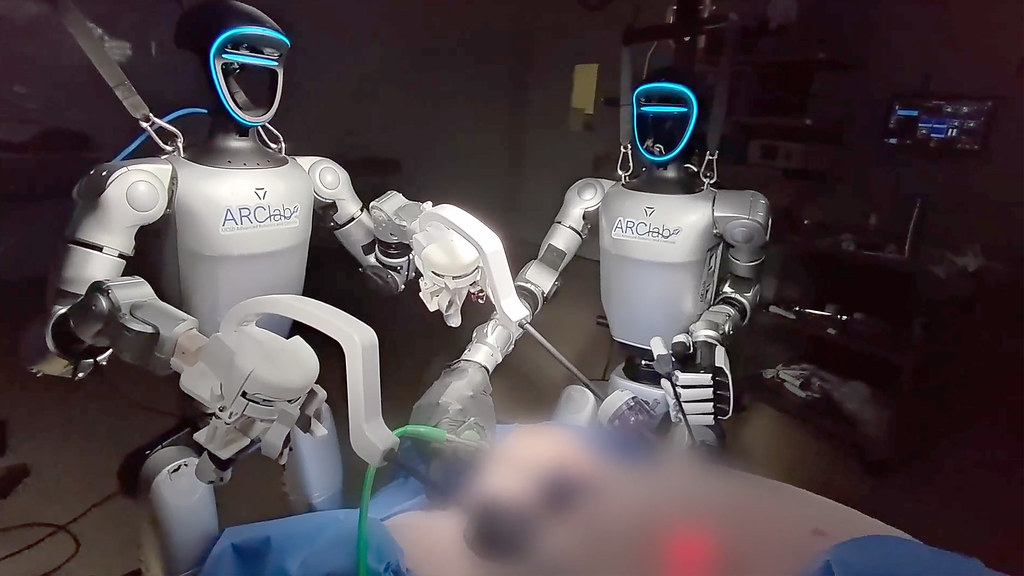
Yushu's Transformation: From Hardware to Intelligent Robotics with G1 Surgery

Yushu's Transformation: From Hardware to Intelligent Robotics with G1 Surgery

Yushu Technology has evolved from a hardware company into a model-driven enterprise, achieving significant milestones in robotics. On July 9, 2026, a surgeon at the University of California, San Diego, successfully performed the world's first live animal gallbladder removal using the Yushu G1 humanoid robot, showcasing its advanced capabilities. This operation, which involved a real pig and took under two hours, highlights the robot's precision and understanding of biological tissues. The transformation is underscored by Yushu's rapid registration on the Science and Technology Innovation Board, taking just 104 days, the fastest in its history. The G1 robot has previously demonstrated its ability to perform tasks like screwing, pouring, and sorting, but the surgical procedure required a higher level of precision and real-time feedback. Yushu defines its embodied intelligence model as a technology enabling robots to achieve high stability and complex motion control, akin to a robot's small brain. Investors are taking notice, with the embodied intelligence sector seeing a 4.2% increase from July 10 to 17, and Yushu-related stocks rising by an average of 7.8%. The company plans to allocate 2.022 billion for intelligent robot model research, part of a total fundraising of 42.02 billion. Future developments include the UnifoLM-WMA-0 model, which predicts actions and world states, marking a significant advancement in robotics technology.

Humanoid Robots Robotic Surgery AI Robotics Innovation
Skypuzzler Proposes Mathematical Algorithms for Airspace Safety Amid Drone Traffic Surge

Skypuzzler Proposes Mathematical Algorithms for Airspace Safety Amid Drone Traffic Surge

As the FAA seeks effective management of low-altitude airspace due to rising UAV traffic, Skypuzzler, a Copenhagen-based technology firm, offers a solution based on mathematical algorithms rather than AI. Their air traffic management system integrates strategic and tactical deconfliction to prevent airspace conflicts, allowing real-time traffic management without requiring additional drone hardware. Skypuzzler collaborates with major aerospace and logistics companies, including Thales Group and DSV, to implement its platform in Europe, notably at the Port of Rotterdam. With nearly 100 drone operators in the port, the company addresses the complexities of coordinating diverse drone missions in shared airspace, emphasizing the need for effective deconfliction strategies. Recently, United Airlines Ventures invested in Skypuzzler, facilitating its entry into the U.S. airspace management market, particularly in the Dallas-Fort Worth area. Skou warns that existing U.S. coordination models may not sustain as drone and manned aviation traffic increases, advocating for Skypuzzler's software integration into current UTM systems to enhance airspace safety and scalability.

Applications DL Exclusive Drone News Drone News Feeds Europe Drone Industry News
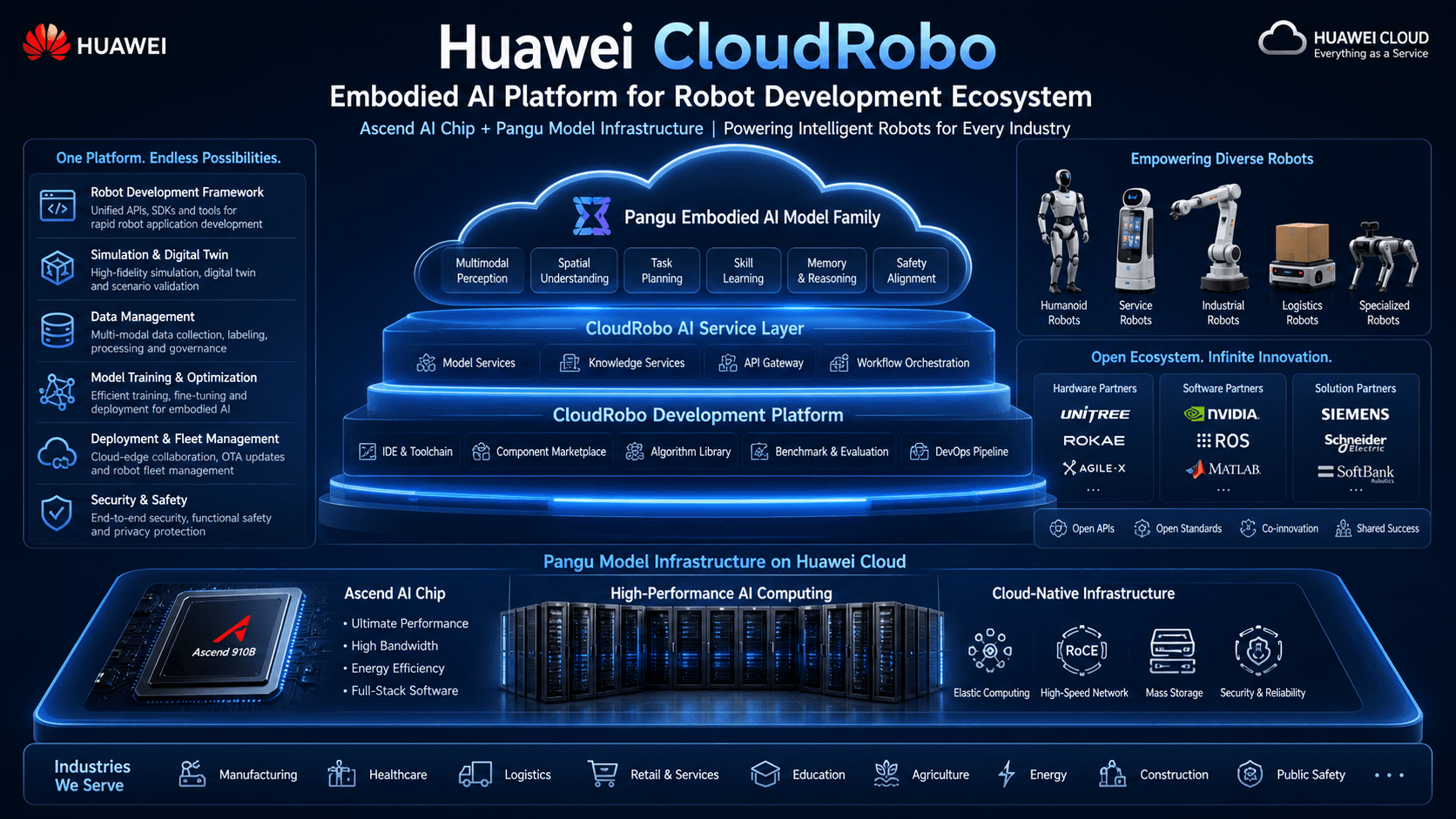
Huawei Launches CloudRobo, a Comprehensive Embodied AI Development Platform

Huawei Launches CloudRobo, a Comprehensive Embodied AI Development Platform

Huawei Cloud has introduced CloudRobo, a comprehensive platform for embodied AI development that encompasses data production, model development, simulation, and robot deployment. This initiative is supported by partnerships with over 20 companies, including Youibot. The launch of CloudRobo is significant as it marks Huawei's entry into the embodied AI sector, potentially replicating the success seen with its SERES smart car initiative. By providing a full-stack solution, Huawei aims to streamline the development process for companies venturing into AI-driven robotics. Looking ahead, industry observers will be keen to see how CloudRobo evolves and whether it can achieve similar milestones as Huawei's previous ventures. No further timeline was disclosed at the time of publication.

Technology
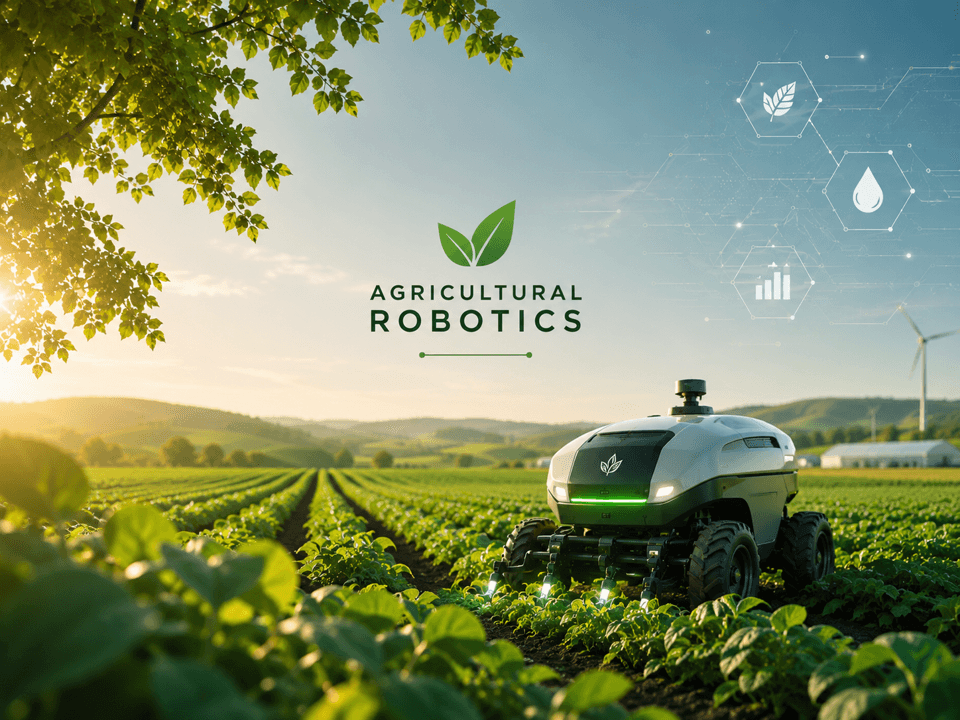
AGRICULTURAL ROBOTICS SERIES — Company Directory 2026

AGRICULTURAL ROBOTICS SERIES — Company Directory 2026

Access the definitive 2026 directory of 150+ agricultural robotics companies. A comprehensive reference guide covering autonomous tractors, harvest automation, precision weeding, and AI data platforms across the global agtech ecosystem.

Agricultural Robotics | Dairy & Livestock Automation: Where Robots Already Lead

Agricultural Robotics | Dairy & Livestock Automation: Where Robots Already Lead

Dairy robots hold 37% of the global agricultural robotics market — yet US farm penetration is just 5%. This deep-dive covers the $3.2B milking robot market, ROI economics, competitive profiles of Lely, DeLaval, GEA, and Afimilk, and why EU, North America, Japan, and Israel each follow a different adoption path to 2030.