Top News

Industry Briefing

A single destination for timely, editor-curated robotics news from around the world.
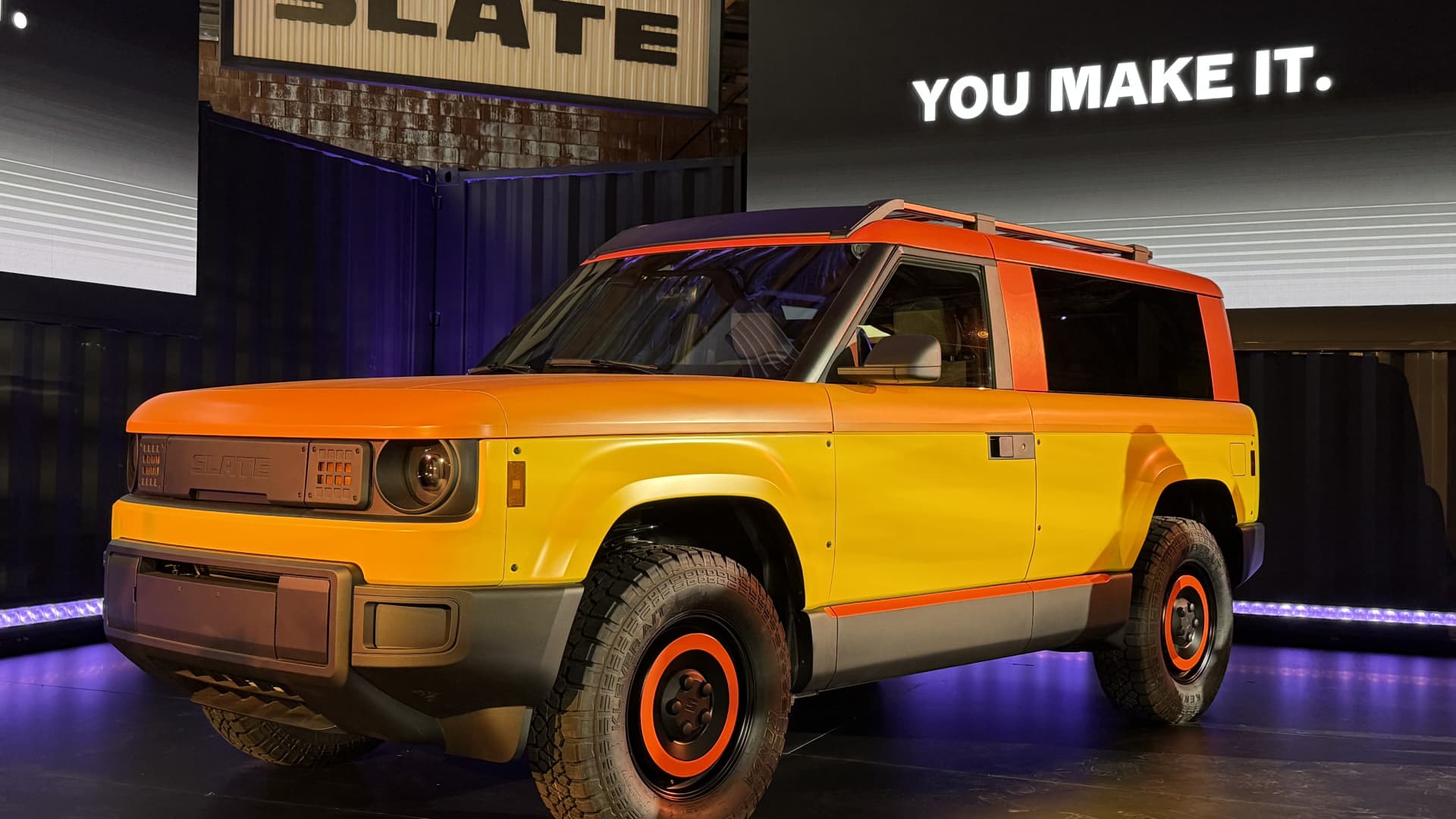
Slate Auto says each $24,950 electric pickup truck will be profitable as it aims to be cash-flow positive next year

Slate Auto says each $24,950 electric pickup truck will be profitable as it aims to be cash-flow positive next year

Slate Auto, an electric vehicle startup, has announced that all of its upcoming vehicle models will achieve gross margin positivity, according to CEO Peter Faricy in a recent interview with CNBC. This strategic decision underscores the company's commitment to financial sustainability and profitability as it navigates the competitive EV market. By ensuring that each vehicle produced contributes positively to the company's gross margins, Slate Auto aims to strengthen its position in the industry and attract potential investors. Faricy's comments reflect a broader trend among EV manufacturers to focus on profitability amidst rising production costs and market challenges.

Jeff Bezos rep leaves Slate Auto’s board

Jeff Bezos rep leaves Slate Auto’s board

Melinda Lewison's recent departure from her role has sparked speculation regarding Jeff Bezos' level of support and engagement with the startup. This development comes as the Amazon founder shifts his attention to robotics through his latest venture, Project Prometheus. The timing of Lewison's exit raises concerns about the future direction of the startup and whether Bezos will continue to play an active role in its operations. As he invests his efforts into new technological pursuits, the implications of this transition for the startup's leadership and strategy remain uncertain.

Transportation Exclusive jeff bezos melinda lewison slate auto
Argonne National Laboratory launches ChemGraph framework for automated chemistry simulations

Argonne National Laboratory launches ChemGraph framework for automated chemistry simulations

Researchers at Argonne National Laboratory have introduced ChemGraph, an open-source framework that automates complex computational chemistry simulations using AI agents. Built on the Aurora exascale supercomputer, ChemGraph simplifies the simulation process by allowing users to describe scientific problems in plain language, which the system then translates into computational tasks. This innovation aims to enhance research in materials science, battery design, and combustion systems by streamlining workflows and reducing the need for specialized expertise. The significance of ChemGraph lies in its ability to combine large language models with agent-based automation, enabling researchers to conduct simulations without manually navigating every technical step. By distributing tasks among AI agents, the framework enhances efficiency and reduces costs associated with computational resources. This approach not only improves the accuracy of simulations but also allows for the integration of various scientific software and libraries, ensuring that results are physics-based rather than solely reliant on language model outputs. Looking ahead, ChemGraph's open-source nature has already led to adaptations for other applications, such as X-ray absorption spectroscopy and high-throughput materials screening. The research team envisions further educational applications, providing a platform for professors to teach advanced computational techniques while simplifying the exploration of research questions for students. No further timeline was disclosed at the time of publication.

AI and Robotics
TechCrunch Mobility: It doesn’t matter that people hate the Ferrari Luce

TechCrunch Mobility: It doesn’t matter that people hate the Ferrari Luce

TechCrunch Mobility has re-emerged as a leading source for insights into the future of transportation, particularly focusing on the increasing role of artificial intelligence in the sector. With advancements in technology and data analysis, the platform aims to provide comprehensive coverage and analysis of how AI is transforming various aspects of mobility. This renewed emphasis comes at a time when the transportation industry is rapidly evolving, making it essential for stakeholders to stay informed about the latest trends and innovations. By leveraging data up to October 2023, TechCrunch Mobility seeks to equip its audience with the knowledge needed to navigate the changing landscape of transportation.

Transportation Ferrari jony ive Waymo Rivian robotaxis
SpaceX Proposes 1 Million AI Satellites to Address Ground Data Center Constraints

SpaceX Proposes 1 Million AI Satellites to Address Ground Data Center Constraints

On January 30, 2026, SpaceX filed with the FCC to launch up to 1 million AI compute satellites, positioning orbital data centers as a solution to the increasing demand for AI computing power. Ground data centers are facing significant challenges, with energy consumption projected to reach approximately 1,050 TWh in 2026, making them the fifth-largest electricity consumer globally. The demand for new data center capacity is outpacing the growth of power generation infrastructure, leading to a critical bottleneck in the grid system. The significance of this initiative lies in the structural constraints faced by ground data centers, including power delivery limitations, high water consumption, and local opposition to new projects. The Uptime Institute's 2026 outlook identifies power as the primary constraint on data center growth, with capacity clearing prices in the PJM grid skyrocketing to $329.17/MW, driven by data center expansion. Additionally, cooling requirements are becoming increasingly unsustainable, with facilities consuming vast amounts of water, further complicating their operational viability. Looking ahead, SpaceX's orbital AI compute initiative aims to circumvent these challenges by leveraging the advantages of space, such as continuous solar power and minimal local opposition. The first AI prototypes are expected to launch in early 2027, with operational deployments planned for 2028. No further timeline was disclosed at the time of publication.
Interview with Clearpath Robotics co-founder Ryan Gariepy: ‘Most industries in Canada are under-automated’

Interview with Clearpath Robotics co-founder Ryan Gariepy: ‘Most industries in Canada are under-automated’

Canada is acknowledged for its significant contributions to robotics research, boasting prestigious universities, groundbreaking startups, and advanced technologies utilized in various sectors such as manufacturing, logistics, agriculture, mining, and defense. However, despite this robust technical foundation, experts suggest that the country has struggled to effectively translate its research capabilities into widespread industrial applications. This gap raises concerns about the potential for Canada to fully leverage its innovations in the competitive global robotics landscape.

Automation Economy Features Industry amrs automation news
ABB and Salzburg researchers patent AI system to cut energy use in industrial robots

ABB and Salzburg researchers patent AI system to cut energy use in industrial robots

Salzburg University of Applied Sciences has partnered with ABB’s Machine Automation Division, B&R, to enhance energy efficiency in industrial automation through the application of artificial intelligence. This collaboration is centered at the Josef Ressel Center for Intelligent and Secure Industrial Automation (JRZ ISIA), where the two entities aim to translate cutting-edge research into viable solutions for industrial drive systems. By leveraging AI technologies, the initiative seeks to optimize energy consumption and improve operational efficiency in manufacturing processes, addressing the growing demand for sustainable industrial practices.

Industrial robots News abb ai in manufacturing AI optimization automation news
Employee Handbook Translation Services Are No Longer Optional for Modern Workplaces

Employee Handbook Translation Services Are No Longer Optional for Modern Workplaces

In an effort to enhance workplace communication and ensure compliance with safety standards, a mid-sized manufacturing company has updated its employee handbook to include translated versions for its multilingual workforce. The initiative, spearheaded by the HR manager, aims to clarify workplace expectations and policies, thereby fostering a more inclusive environment for all employees. Recognizing that automated translation tools often produce inaccuracies, the company prioritized the use of professional translation services to ensure that the wording in the handbooks is precise and accessible. This strategic move not only supports better understanding among employees but also reinforces the company's commitment to safety and compliance. The updated handbooks are expected to improve employee engagement by making essential information readily available in multiple languages. By maintaining consistency across teams, the company hopes to create a cohesive workplace culture that values clear communication and inclusivity. This proactive approach reflects a growing trend among businesses to address the needs of diverse workforces and enhance overall operational efficiency.

Business Technology automation news business communication compliance training construction workforce
Watch: New wearable converts robot movements into music to improve workplace safety

Watch: New wearable converts robot movements into music to improve workplace safety

Researchers at Georgia Tech have unveiled an innovative wearable audio system designed to enhance the interaction between humans and robots. This groundbreaking technology translates the movements of nearby robots into sound, allowing users to perceive the robots' actions through auditory cues. The development aims to improve safety and awareness in environments where humans and robots coexist, such as factories and warehouses. The system was introduced during a recent technology showcase held at the Georgia Institute of Technology, where experts demonstrated its capabilities. By providing real-time audio feedback, the wearable device enables users to better understand the dynamics of their robotic counterparts, potentially reducing accidents and improving collaboration. The motivation behind this research stems from the increasing integration of robots into everyday workspaces, where clear communication and awareness of robotic movements are essential for effective teamwork. The audio system operates through a combination of sensors and algorithms that interpret robot actions and translate them into distinct sounds, creating an intuitive interface for users. This advancement not only represents a significant step forward in human-robot interaction but also highlights Georgia Tech's commitment to pioneering research in robotics and audio technology. As industries continue to evolve with automation, such innovations are crucial for ensuring safe and efficient operations in shared environments.

AI and Robotics
Chinese AI company offers a new solution for physical AI in the uncertain trillion-dollar market.

Chinese AI company offers a new solution for physical AI in the uncertain trillion-dollar market.

In 2026, the field of physical AI is set to emerge as a transformative force, following a consensus reached by industry leaders at the CES in Las Vegas, where NVIDIA's CEO Jensen Huang heralded the arrival of "physical AI's ChatGPT moment." Over the past two years, significant advancements have been made in five key areas: brain models, imagination engines, training environments, ontology, and commercial ecosystems, laying the groundwork for real-world applications. In the first half of 2026, global investment in physical AI surged, with over $6.4 billion raised in just the first quarter, including notable funding rounds from AMI Labs and World Labs. The industry is witnessing a clear technological divergence, with three primary paths emerging: Visual Language Models (VLM), Visual Language Action (VLA), and world models. The anticipated future architecture for physical AI is expected to integrate VLA's decision-making capabilities with world models' predictive simulations. Despite the rapid growth, the competitive landscape remains uncertain, with various companies pursuing different strategies, including those focusing solely on VLA or world models, and others exploring hybrid approaches. The ultimate goal is to develop AI that can effectively navigate and understand the complexities of the physical world, moving beyond mere reactive capabilities to proactive, autonomous decision-making. As the physical AI market is projected to expand significantly, reaching an estimated $3.26 trillion by 2040, the industry faces the challenge of ensuring that technology translates into tangible business value. Companies like Om AI are pioneering innovative models that prioritize continuous perception and spatial understanding, aiming to redefine how AI interacts with its environment. The ongoing evolution of physical AI emphasizes the importance of real-world applications and the need for AI systems that can adapt and respond to dynamic physical spaces.

RoboScience launches Visics, a versatile embodied model for cross-ontology, cross-object, and cross-task applications.

RoboScience launches Visics, a versatile embodied model for cross-ontology, cross-object, and cross-task applications.

On June 24, RoboScience, a company specializing in embodied intelligence, unveiled its self-developed Visics large model, introducing the innovative VLOA (Vision-Language-Object-Action) architecture. This announcement marks a significant advancement in the field, demonstrating the model's applications in real-world scenarios such as furniture assembly, dexterous grasping, and dynamic assembly lines. The current landscape of embodied intelligence lacks a universally accepted foundational representation unit, which hampers data collection, model learning, and the transfer of knowledge to new contexts. Traditionally, models have focused on replicating specific robotic movements tied to particular tasks, limiting their adaptability to new robots, objects, or environments. Founder and CEO Tian Ye highlighted three major challenges in robotic operations: poor generalization, difficulty in precise manipulation, and cumulative errors in long-range tasks. To address these issues, RoboScience has developed a new foundational representation unit from the ground up. The Visics model employs a dual-engine architecture, consisting of an embodied world model and a universal operation model, each operating independently. The embodied world model utilizes vast amounts of internet video data to learn the physical dynamics of objects, while the operation model translates object trajectories into actionable commands for robots. This layered design enhances the model's generalization capabilities across various robotic platforms and tasks. RoboScience's innovative approach also includes a high-precision simulation engine, RoboMirage, which, combined with automated video data annotation, significantly reduces data acquisition costs. The company aims to build a comprehensive dataset of over 1 terabyte of high-quality manipulation trajectories by 2026. Since its inception, RoboScience has garnered support from multiple investors and established research and production centers in major Chinese cities. The company plans to collaborate with various sectors, including retail and logistics, to standardize robotic products for industrial and commercial applications by the end of this year.

TARS Brings Real-Life Embodied AI to ICRA 2026 Robotics Conference

TARS Brings Real-Life Embodied AI to ICRA 2026 Robotics Conference

TARS has unveiled its latest innovation, the DexHand, which promises to revolutionize hand-brain integration. The launch took place in October 2023, showcasing the device's advanced capabilities in enhancing human-computer interaction. This cutting-edge technology is designed to interpret hand signals and translate them into digital commands, aiming to improve efficiency in various fields, including robotics and virtual reality. The motivation behind the development of DexHand stems from the growing need for seamless communication between humans and machines, particularly as industries increasingly rely on automation and smart technologies. By utilizing sophisticated sensors and machine learning algorithms, the DexHand interprets a wide range of hand gestures, allowing users to control devices with precision and ease. The introduction of this device marks a significant step forward in the field of human-computer interaction, potentially transforming how users engage with technology in everyday tasks and specialized applications. As TARS continues to push the boundaries of innovation, the DexHand stands out as a pivotal advancement in bridging the gap between human intention and machine response.

Three Illusions and One Reality of Embodied Intelligence

Three Illusions and One Reality of Embodied Intelligence

The embodied intelligence industry is grappling with several misconceptions that could hinder its growth and effectiveness. A recent analysis reveals that many stakeholders mistakenly believe that simply having advanced hardware will lead to market success. Additionally, there is an overreliance on large models that lack adequate real-world training, which can result in suboptimal performance. The report also points out the flawed assumption that merely entering a scene will automatically create value, emphasizing that this approach is misguided. To address these challenges, experts advocate for a shift towards sustainable deployment practices and the necessity of continuous value generation. By focusing on these areas, the industry can better align its technological advancements with practical applications, ensuring that innovations translate into tangible benefits. The discussion highlights the importance of a more nuanced understanding of the factors that contribute to success in embodied intelligence, urging stakeholders to rethink their strategies for future development.

Embodied Intelligence Robotics AI Models Industrial Automation
Real‐Time Detection and Robotic Picking of Stropharia Rugoso‐Annulata Using Enhanced YOLOv11s

Real‐Time Detection and Robotic Picking of Stropharia Rugoso‐Annulata Using Enhanced YOLOv11s

In a recent study published in the Journal of Field Robotics, researchers explored advancements in robotic navigation systems, focusing on their application in complex environments. The findings, released in May 2026, highlight innovative algorithms that enhance the ability of robots to navigate through challenging terrains, such as urban landscapes and disaster-stricken areas. The research team, composed of experts in robotics and artificial intelligence, conducted extensive field tests to assess the performance of these new navigation systems. By integrating machine learning techniques, the robots demonstrated improved decision-making capabilities, allowing them to adapt to unforeseen obstacles and dynamic surroundings. This study is significant as it addresses the growing need for efficient robotic solutions in various sectors, including search and rescue operations, urban planning, and environmental monitoring. The enhanced navigation systems could lead to more effective deployment of robots in critical situations, ultimately saving lives and resources. The researchers emphasized that the successful implementation of these technologies relies on ongoing collaboration between academia and industry, ensuring that advancements in robotics can be effectively translated into real-world applications. As the demand for autonomous systems continues to rise, this research represents a crucial step toward more intelligent and adaptable robotic solutions.

RESEARCH ARTICLE
Back to school: robots learn from factory workers

Back to school: robots learn from factory workers

Czech startup RoboTwin is revolutionizing the way robots are trained for factory work by enabling workers to teach them new skills through demonstration rather than complex coding. This innovative approach allows factory employees to perform tasks once, after which RoboTwin's technology captures the movements and translates them into actionable instructions for the robots. By simplifying the training process, RoboTwin aims to enhance efficiency and safety in manufacturing environments, particularly for dirty and dangerous jobs. The initiative reflects a growing trend in automation, where human expertise is leveraged to improve robotic capabilities, ultimately transforming the landscape of industrial labor.

PBSA and Hai Robotics to Deliver South Africa’s First HaiPick System for Masterparts

PBSA and Hai Robotics to Deliver South Africa’s First HaiPick System for Masterparts

PBSA is preparing to implement South Africa's inaugural HaiPick System for Masterparts, representing a major leap forward in the logistics of automotive spare parts. This innovative automation solution, created in collaboration with Hai Robotics, is designed to increase storage density and enhance picking accuracy while tackling existing operational challenges within the automotive aftermarket. The project is slated to commence operations in the fourth quarter of 2025, reflecting a commitment to modernizing the industry and improving efficiency in supply chain management.

Warehouse Automation Supply Chain Management Automotive Logistics Robotics Logistics Technology
RobotToday Initiative

Robotics needs a service framework.

RSF defines a common language for robot service capability, lifecycle operations, certification pathways, and service-provider networks.