

Industry Briefing
A single destination for timely, editor-curated robotics news from around the world.

Maximo's Nick Hegeman Discusses 180,000 Solar Panel Installations and Automation Challenges
AES has successfully deployed its AI-powered robotic system, Maximo, on utility-scale solar construction sites, achieving over 180,000 solar module installations. This innovative technology automates the physically demanding task of lifting and installing photovoltaic modules, operating effectively in dynamic environments where conditions frequently change. The system has demonstrated impressive performance, with robots completing more than 500 installations daily and crews installing up to 24 modules per person per shift hour. The significance of Maximo lies in its ability to address labor shortages and the increasing weight of solar modules, which makes automation essential in the construction sector. Developed through AES Next, the platform provided unique access to live solar construction projects, enabling real-world testing and refinement of the technology. Nick Hegeman, the chief commercial officer for Maximo, emphasizes the importance of field validation and integration with existing processes to ensure the technology's success in the industry. Looking ahead, AES is exploring further automation opportunities in renewable energy construction and site logistics. As customer attitudes shift positively towards robotics, the potential for broader commercial adoption of Maximo appears promising. No further timeline was disclosed at the time of publication.
Construction Features aes aes next Autonomous robots construction automation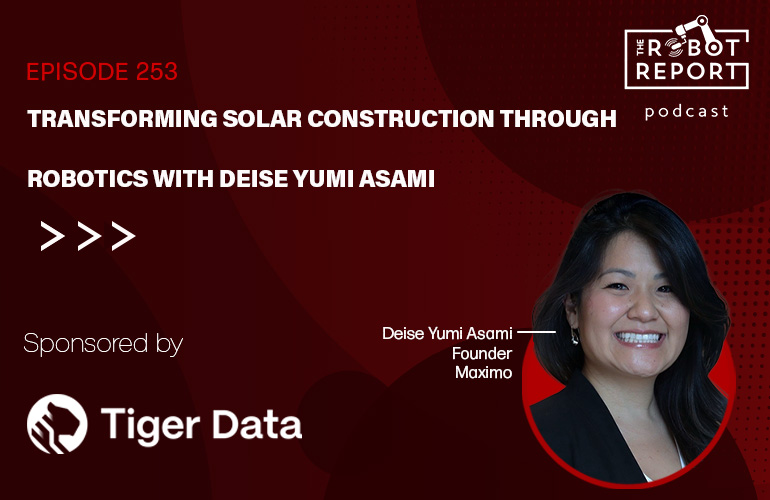
Maximo's Founder Discusses Robotics Advancements in Solar Panel Installation
In Episode 253 of The Robot Report Podcast, Deise Yumi Asami, founder of Maximo, discusses how her AI-enabled robotics startup is enhancing solar panel installation. By integrating robotics, AI vision, and smart field deployment, Maximo aims to make the process faster, safer, and more efficient, significantly impacting renewable energy infrastructure. This innovation is crucial as it addresses the growing demand for renewable energy solutions. Yumi Asami's insights highlight the role of advanced technologies in transforming utility-scale solar construction, showcasing how automation can streamline operations and improve safety in the energy sector. Listeners should watch for further developments from Maximo and AES Corp as they continue to pioneer energy solutions. No further timeline was disclosed at the time of publication.
6-Axis Artificial Intelligence Autonomous Mobile Robots (AMRs) Energy / Solar / Renewables News Opinion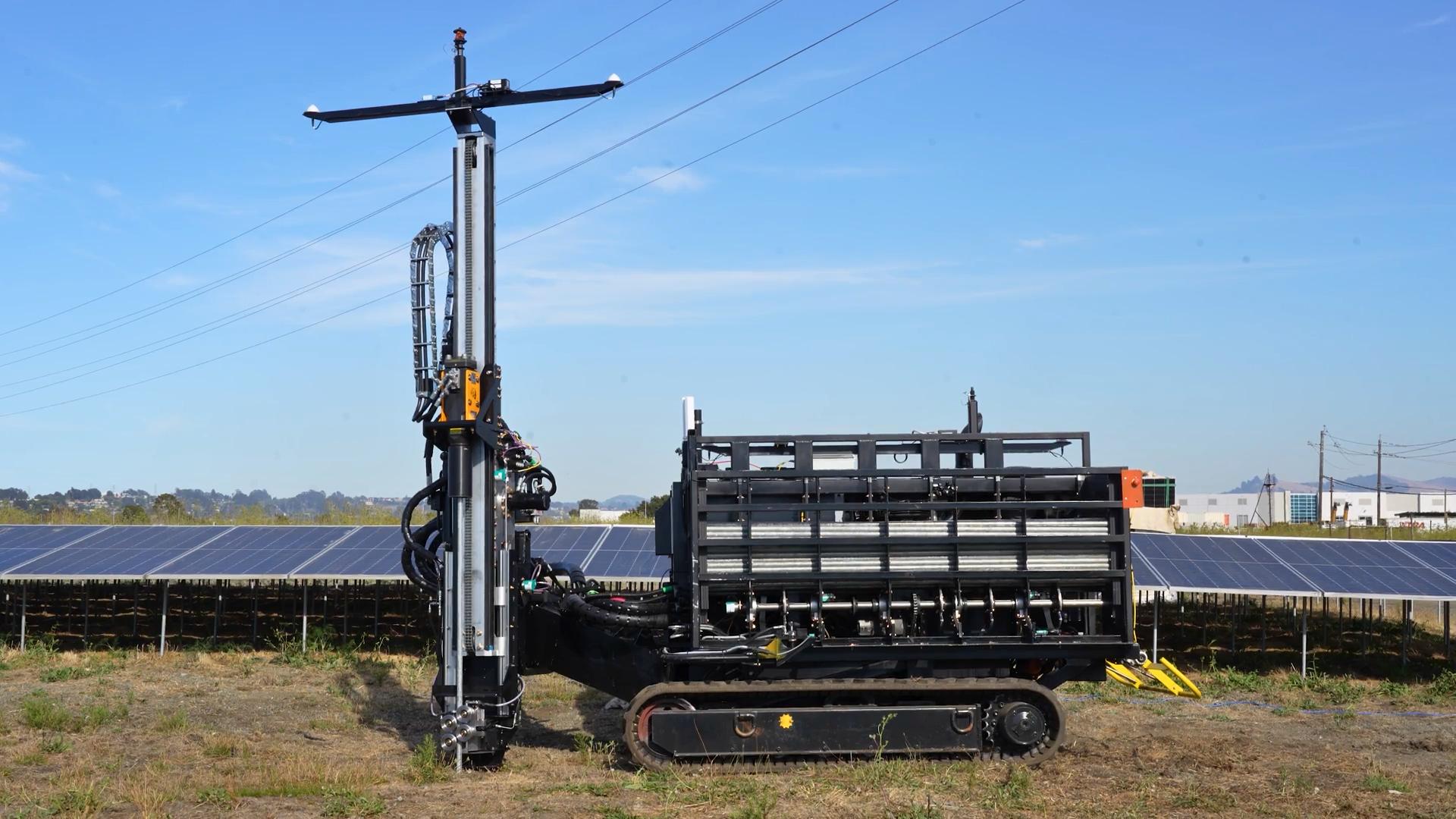
Planted Secures $31.8 Million to Enhance Robotic Solar Project Deployment
Planted has successfully raised $31.8 million to expand its fleet of autonomous construction robots and introduce Sage, a next-generation system aimed at enhancing solar project deployment. Sage is anticipated to be operational by late 2026, promising to deliver over double the productivity of Planted's current robots. This funding round, co-led by Piva Capital and RA Capital Management Planetary Health, with contributions from notable investors such as Google and Khosla Ventures, will enable Planted to scale its robotic fleet and meet growing demand. The company’s innovative solar construction system is designed to operate on challenging terrains and significantly increase energy production compared to traditional systems. Looking ahead, Planted's project pipeline exceeds 20 gigawatts, with plans to deploy 100 megawatts in 2026 alone. The introduction of Sage units will further enhance capacity as they are rolled out. No further timeline was disclosed at the time of publication.
AI AI Funding & Investment Robotics autonomous construction Breakthrough Energy Ventures funding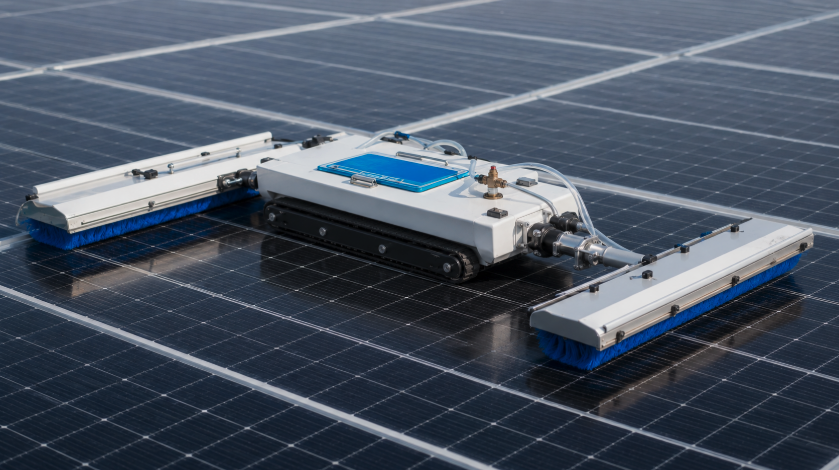
Selecting Roller Brushes for Effective Robotic Solar Panel Cleaning Systems
Solar panel cleaning robots are evaluated based on their dust removal efficiency, but the brush roller's design is crucial for effective cleaning. It must balance cleaning action with controlled contact and serviceability, considering the specific conditions of photovoltaic modules. Real-world environments often present challenges such as loose dust, bird droppings, and mineral deposits, making the selection of roller brushes complex. The choice of roller brush is not solely based on softness; it must align with the module specifications, site conditions, cleaning methods, and robot interfaces. For OEMs and replacement projects, it is essential to review brush assemblies in relation to module requirements and planned service cycles. The term 'soiling' encompasses a variety of contaminants, from light dust to compacted particles, each requiring different cleaning approaches. As moisture can significantly affect cleaning effectiveness, understanding the interaction between dust and moisture is vital. In water-scarce areas, robotic dry cleaning can be beneficial, but care must be taken to avoid abrasive damage from trapped hard particles. No further timeline was disclosed at the time of publication.
Energy Environment Robotics brush rollers cleaning robots industrial brushes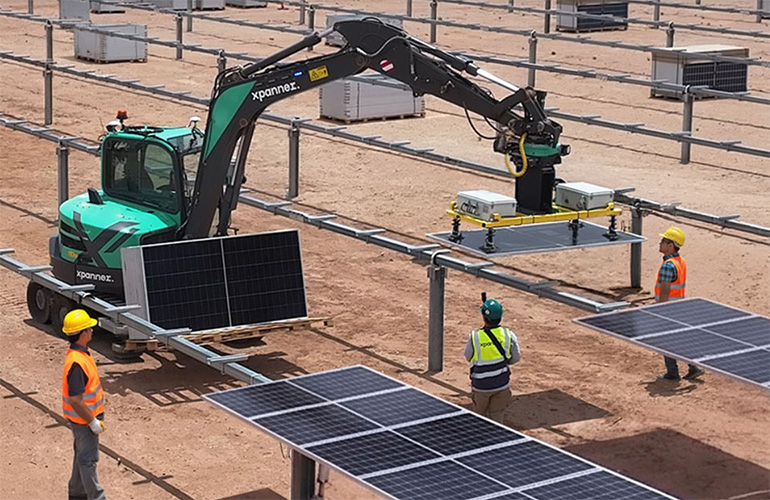
Xpanner Launches X1 Panel Lift to Automate Solar Panel Installation Processes
Xpanner Global has introduced the X1 Panel Lift system, aimed at alleviating the skilled labor shortage in the solar industry. This innovative platform, previously used for solar pile-driving, now facilitates automated lifting and replacement of solar panels using excavators. By automating repetitive material handling tasks, the X1 Panel Lift allows installation crews to focus on more critical activities such as aligning and fastening panels. The significance of the X1 Panel Lift lies in its potential to transform solar installation workflows, which have traditionally relied on large teams and complex setups. Henri Lee, co-founder and CEO of Xpanner, emphasized that this solution simplifies operations, enabling any operator to manage the system from day one. The introduction of this technology could lead to increased efficiency and reduced labor costs in utility-scale solar projects. Looking ahead, Xpanner plans to enhance the X1 Panel Lift's capabilities through software updates, allowing for the automation of additional workflows without necessitating new equipment purchases. No further timeline was disclosed at the time of publication.
Arms / Manipulators Artificial Intelligence Construction Energy / Solar / Renewables News Safety & Security
Burns & McDonnell and Gritt Collaborate to Implement AI Robotics in Solar Construction
Burns & McDonnell has partnered with Gritt to assess and deploy AI-driven robotics technology for utility-scale solar projects. This collaboration aims to enhance safety, improve project predictability, and support construction teams amid rising demand for new energy infrastructure. The integration of Gritt's AI and robotics technology into construction processes is significant as it addresses labor challenges and boosts efficiency in solar construction. Gritt's systems can autonomously perform tasks such as assembling solar arrays and pouring concrete, which are typically labor-intensive and repetitive. Looking ahead, the partnership is set to continue evaluating robotic technologies in real-world environments. No further timeline was disclosed at the time of publication.
Construction Energy Infrastructure News ai robotics autonomous construction equipment
Hyperscale Data Initiates Installation of OPR-R2 Robots at Michigan AI Facility
Hyperscale Data, Inc. has commenced the installation of OPR-R2 robots at its Michigan AI data center. This marks a significant step in the company's efforts to enhance its visual data collection and physical AI training capabilities. The installation of 143 OPR-R2 robots is crucial for Hyperscale Data as it aims to bolster its artificial intelligence initiatives. The first unit was assembled on July 16, 2026, indicating the start of a comprehensive program designed to improve AI training processes. Looking ahead, the deployment of these robots will be pivotal in advancing Hyperscale Data's operational efficiency and data processing capabilities. No further timeline was disclosed at the time of publication.
US robotics installations rebounded in 2025, on track for more growth: IFR
Global demand for robotics is surging, particularly driven by the automotive and electronics sectors, with significant deployments occurring primarily in China, Japan, and South Korea. Meanwhile, the United States is experiencing an increase in robotics applications, particularly in food production and supply chain services. This trend highlights the growing reliance on automation across various industries, as companies seek to enhance efficiency and productivity in response to evolving market needs.

GameChange Solar Partners with Raptor Maps to Deliver First Integrated Solar Tracker Monitoring + Robotic Inspection System
GeniusVision and Raptor Maps have announced a strategic integration aimed at enhancing the efficiency of solar asset management. This collaboration, revealed in October 2023, seeks to significantly reduce operational costs while simultaneously improving the long-term performance of solar energy systems. By combining their advanced technologies, the two companies aim to provide solar operators with more comprehensive data analytics and insights, enabling better decision-making and optimized asset performance. The integration is expected to streamline operations, making it easier for solar energy providers to monitor and manage their assets effectively. This initiative reflects a growing trend in the renewable energy sector, where innovative partnerships are increasingly seen as essential for driving down costs and maximizing the potential of solar energy.
Robotics needs a service framework.
RSF defines a common language for robot service capability, lifecycle operations, certification pathways, and service-provider networks.
Join the RobotToday community on LinkedIn
Daily robotics news, in-depth analysis, conference highlights, and discussions with professionals worldwide.







