

Industry Briefing
A single destination for timely, editor-curated robotics news from around the world.

Greensea IQ Launches Bayonet Sweep, an Autonomous Robot for Hull Inspections
Greensea IQ has unveiled Bayonet Sweep, an autonomous underwater robot designed for inspecting ship hulls and underwater structures. This innovative solution aims to enhance maritime force protection by allowing navies, security teams, and port authorities to conduct inspections without the need for divers, thereby improving safety and efficiency. The significance of Bayonet Sweep lies in its ability to transform traditional hull inspection methods, which often focus on maintenance, into a proactive security measure. Built on Greensea IQ Core software, the robot not only autonomously inspects hulls but also provides comprehensive data for threat assessment and mitigation, ensuring that operators receive detailed intelligence on potential anomalies. Looking ahead, the Bayonet Sweep is part of Greensea IQ's broader Bayonet mission suite, which includes various autonomous systems for marine operations. As the technology continues to evolve, it will be crucial to monitor its deployment and effectiveness in enhancing port and harbor security. No further timeline was disclosed at the time of publication.
greensea iq bayonet sweep augv autonomous hull inspection robot maritime force protection
US Air Force's Collaborative Combat Aircraft Program Needs New Focus on HVAA Protection
The U.S. Air Force's next-generation Collaborative Combat Aircraft (CCA) program must prioritize the protection of high-value airborne assets (HVAA) to ensure air superiority in potential conflicts with China. Current air combat strategies emphasize firepower but overlook the vulnerabilities of AEW and refueling aircraft, which are critical for modern warfare. As the People's Liberation Army Air Force (PLAAF) enhances its capabilities, the U.S. risks falling behind if it does not adapt its approach. The Air Force's traditional focus on fighter superiority may leave HVAA exposed, undermining long-range air-to-air kill chains and ceding advantages to the PLAAF. A shift towards integrating CCAs that can defend HVAA could mitigate these risks and enhance overall combat effectiveness. Looking ahead, the Air Force's strategy must evolve to address the firepower-versus-protection dilemma. By developing CCAs that prioritize endurance and missile payloads for HVAA defense, the U.S. can better position itself against the growing threat from the PLAAF. No further timeline was disclosed at the time of publication.
Air Warfare Opinion Air Force Asia CCA China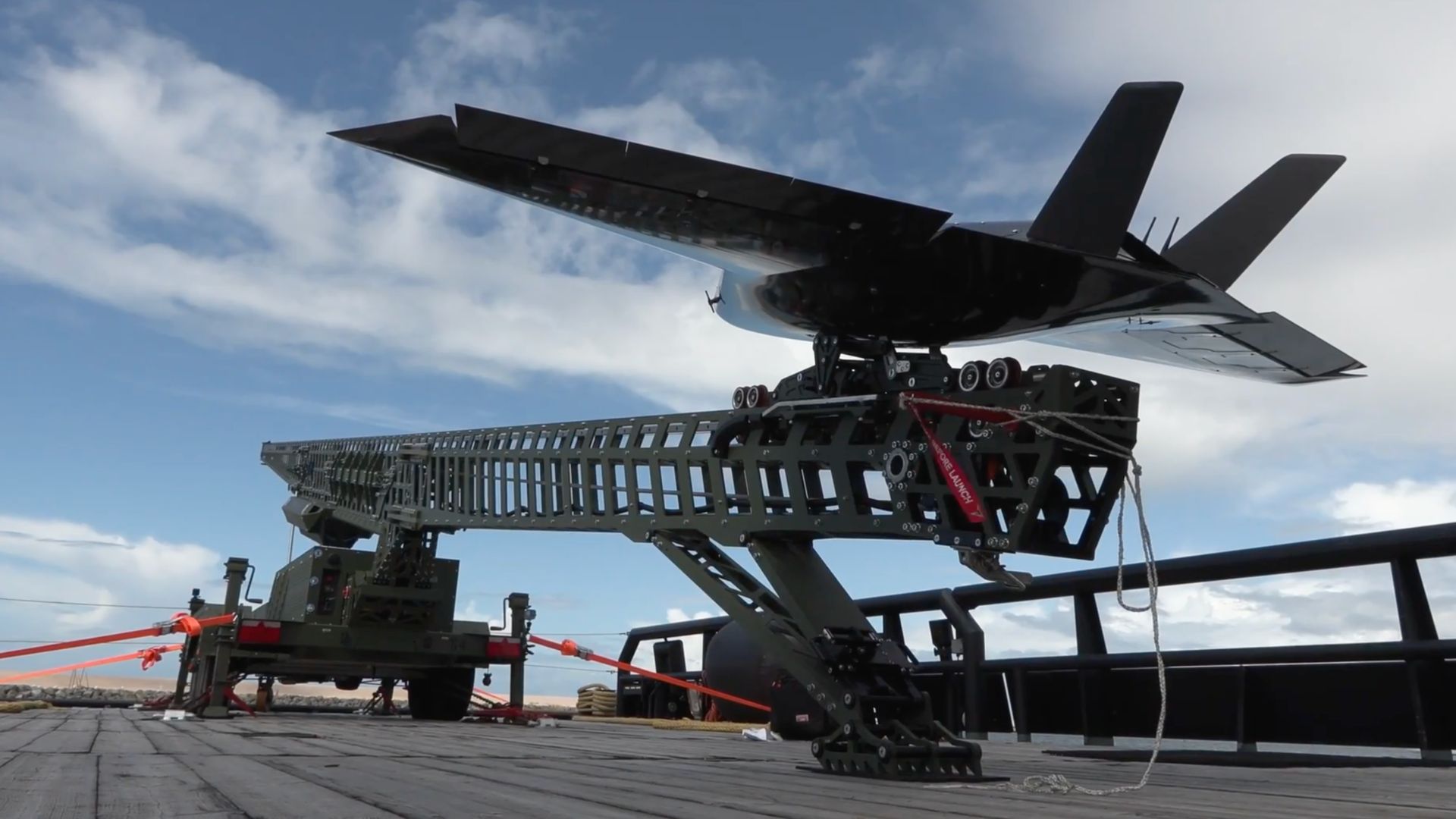
British forces’ new strike drone system tested for battlefield and maritime missions
The Royal Navy and British Army have successfully conducted their first extensive trials of a new advanced military system designed to enhance operational capabilities. These trials took place over the past week at various locations across the UK, aiming to assess the effectiveness and integration of the system within existing military frameworks. The initiative is part of a broader effort to modernize the armed forces and ensure they remain at the forefront of technological advancements in defense. The trials involved rigorous testing scenarios that simulated real-world conditions, allowing military personnel to evaluate the system's performance and reliability under pressure. This development underscores the UK’s commitment to maintaining a robust defense posture in an increasingly complex global security environment.
Military
FLANQ Launches Q-RECON: Europe's Newest Expeditionary USV for Maritime Surveillance and Special Forces Operations
FLANQ, a maritime defense solutions provider based in Germany, has unveiled its latest innovation, the Q-RECON, an Uncrewed Surface Vessel (USV) designed specifically for operations in coastal areas. The launch, which took place today, addresses an urgent operational need expressed by a European customer. The Q-RECON is a lightweight, two-meter-long vessel that can be easily transported by two personnel. It is engineered for a range of critical functions, including intelligence gathering, surveillance, reconnaissance, and tactical interdiction, enhancing maritime operational capabilities in the region.
flanq q-recon usv maritime surveillance special forces operationsRobotics needs a service framework.
RSF defines a common language for robot service capability, lifecycle operations, certification pathways, and service-provider networks.
Join the RobotToday community on LinkedIn
Daily robotics news, in-depth analysis, conference highlights, and discussions with professionals worldwide.







