

Industry Briefing
A single destination for timely, editor-curated robotics news from around the world.
DeepOcean Finalizes Subsea Construction for Teal West Development Project
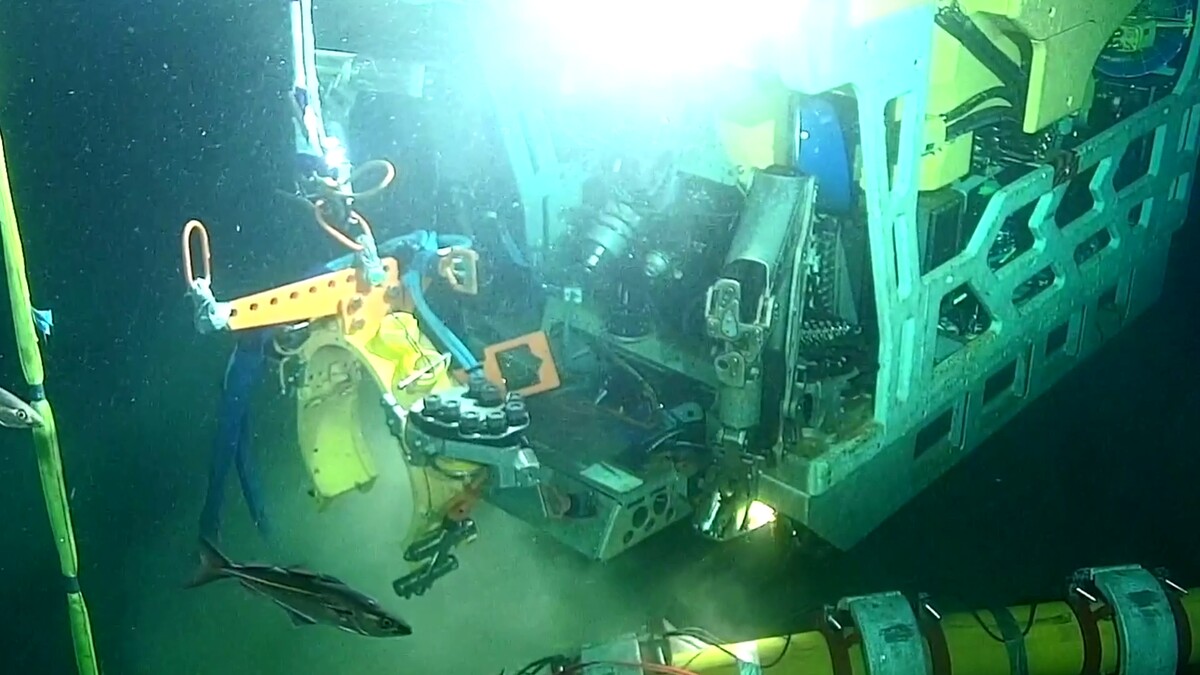
DeepOcean has successfully completed the subsea construction and tie-in work for the Teal West development, located on the UK Continental Shelf, for Anasuria Operating Company. This project involved the installation of a flexible production riser, flowline, and umbilical to connect the Teal West subsea Christmas tree to the Anasuria FPSO. The completion of the Teal West project is significant as it showcases the collaboration between operators, contractors, and service companies in the UK North Sea, particularly during uncertain times for the industry. Richard Beattie, CEO of Anasuria, emphasized the importance of such projects in maximizing the value of existing infrastructure and supporting domestic energy production. Looking ahead, the Teal West development includes two production wells and a water injection well, with the first production well connected to the Anasuria FPSO via approximately three kilometers of subsea flowlines. No further timeline was disclosed at the time of publication.

SpaceX IPO Provides Indirect Investment Opportunity in Starmind Project
Starmind does not have a standalone stock or ticker; investors can gain exposure through SpaceX (ticker: SPCX), which began trading on Nasdaq after its IPO on June 12, 2026. Starmind is integrated within SpaceX, contributing to the company's AI and space initiatives, and its performance directly influences SPCX shares. The significance of Starmind lies in its role as a division of SpaceX, which encompasses other projects like Starlink and Starship. As of early July 2026, SPCX shares are trading between $149 and $150, significantly lower than their 52-week high of $225.64. The project’s milestones, such as AI1 prototype updates, can impact SpaceX's stock performance, making it essential for investors to monitor these developments closely. Looking ahead, the early 2027 launch of AI1 prototype satellites is a critical milestone that could provide verifiable data affecting Starmind's valuation and, consequently, SPCX stock. No further timeline was disclosed at the time of publication, but the upcoming events will be pivotal for investors tracking the relationship between Starmind and SpaceX's stock performance.
ATLAS ELEKTRONIK Leads Innovative GhostPlay@SEA Project
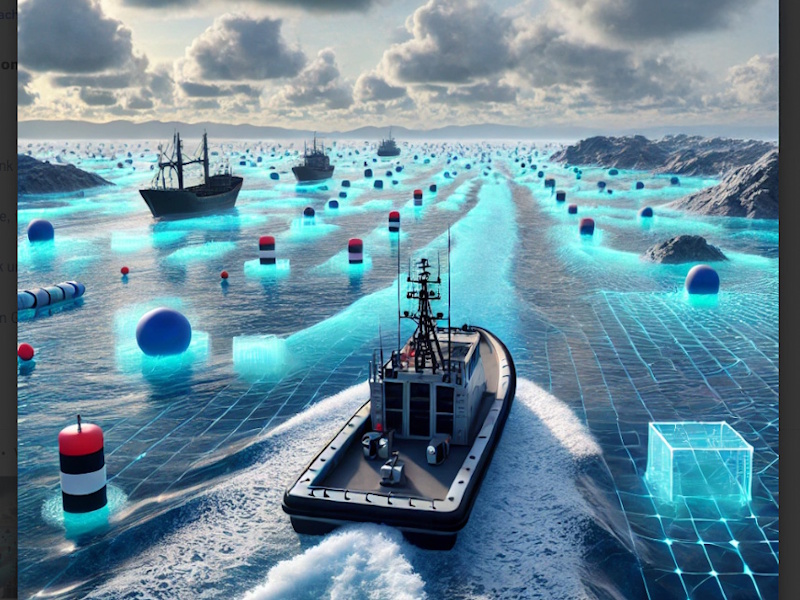
Thyssenkrupp Marine Systems’ marine electronics division, ATLAS ELEKTRONIK, has been appointed as the consortium leader for the GhostPlay@SEA research project, which focuses on advancing artificial intelligence (AI) tactics for maritime defense. This initiative aims to enhance the capabilities of the maritime defense sector through innovative AI solutions. By leveraging its extensive expertise in maritime technology, ATLAS ELEKTRONIK is set to play a pivotal role in developing tactical AI applications that could significantly improve defense strategies at sea. The project underscores the growing importance of AI in modern defense systems and reflects the company's commitment to leading advancements in this critical area.
atlas elektronik ghostplay@sea project
MIT's Julia Language Transforms Scientific Programming with High Performance and Ease of Use
In 2009, a group of MIT researchers initiated a project to develop Julia, a high-performance programming language aimed at simplifying complex mathematical operations for scientists and engineers. This initiative arose from frustrations with existing programming languages that were slow and inflexible, requiring extensive rewrites for efficiency. Julia has since gained over 1 million users globally, being utilized in diverse fields from aerospace to astronomy. The significance of Julia lies in its ability to facilitate scientific applications without requiring users to be expert programmers. Its unique just-in-time compilation method enhances performance, making it a preferred choice among multidisciplinary teams. JuliaHub co-founder Viral Shah emphasizes the goal of empowering scientists and engineers to express their ideas effectively while achieving optimal software performance. Recently, JuliaHub launched Dyad 3.0, an AI platform designed to expedite the development of complex physical systems. This tool allows engineers to automate the design process, exemplified by its capability to design aircraft based on uploaded data and documents. The ongoing evolution of Julia and its applications continues to address the needs of researchers and engineers in various industries.
Programming Software Startups Artificial intelligence Innovation and Entrepreneurship (I&E) Computer Science and Artificial Intelligence Laboratory (CSAIL)
MIT Researchers Selected for Funding in US Department of Energy’s Genesis Mission Phase I
MIT researchers have been chosen to participate in the U.S. Department of Energy’s Genesis Mission, with 15 collaborative projects receiving funding under Genesis Phase I. This national initiative aims to create a powerful integrated science discovery platform that leverages AI, supercomputing, and quantum systems to drive advancements in energy and scientific discovery. The Genesis Mission is significant as it fosters collaboration between universities, industry, and national laboratories, aligning research efforts with national priorities. Ian A. Waitz, MIT’s vice president for research, emphasized the importance of this initiative in catalyzing innovation for the benefit of both the nation and the world. Looking ahead, projects that demonstrate promising pathways for transformative capabilities may receive further funding from the DOE. Six projects will be led by MIT principal investigators, while MIT researchers will also contribute to nine additional projects led by other institutions, showcasing a robust collaborative effort in advancing scientific capabilities.
Funding Artificial intelligence Quantum computing Laboratory for Nuclear Science Plasma Science and Fusion Center Research Laboratory of Electronics
Starmind's Satellite Technology Achieves 880 Billion Liters in Annual Water Savings
Starmind has announced that its satellite technology can save approximately 880 billion liters of cooling water annually at full scale. This figure is equivalent to the annual household water use of around 6.5 million Americans. The technology operates by utilizing a closed-loop liquid cooling system that eliminates the need for water during its operational life, contrasting sharply with traditional ground data centers that consume vast amounts of water for cooling. The significance of this achievement lies in the growing water consumption crisis faced by data centers, particularly as AI expansion drives demand. In 2025, U.S. data centers consumed nearly one trillion liters of water, highlighting the urgent need for sustainable solutions. Starmind's approach not only addresses direct water usage but also avoids indirect water consumption associated with electricity generation, marking a substantial shift in how computing can be conducted in a resource-efficient manner. Looking ahead, Starmind's deployment strategy includes a projected buildout of 100 GW of orbital compute per year, which could displace an additional 735 billion liters of ground water demand annually. The first tranche of 10,000 satellites is already operational, offsetting approximately 8.8 billion liters of water per year. No further timeline was disclosed at the time of publication.

Next Geosolutions and Rana Subsea Integrate Contracts Under the Bouri Gas Utilization Project with Saipem
Next Geosolutions (NextGeo), a prominent international company specializing in marine geoscience and offshore construction support services for the energy sector, has announced a significant update regarding its contracts with Saipem S.p.A. These contracts, originally awarded for the Bouri Gas Utilisation (BGUP) project in North Africa and valued at over €70 million, have undergone a contractual amendment. The changes reflect ongoing developments in the project, although specific details regarding the nature of the amendments have not been disclosed. This adjustment highlights the dynamic nature of offshore energy projects and the need for flexibility in contractual agreements within the sector.
next geosolutions rana subsea contracts bouri gas utilization project saipem
Joint Industry Project to Introduce Next Generation Subsea Flowlines
TotalEnergies, Equinor, Aker BP, DeepOcean, Tenaris, and LS Cable & System have collaborated to develop and commercialize a groundbreaking subsea flowline heating technology. This innovative solution aims to significantly lower manufacturing and installation costs by as much as 35%, while also achieving a 30% reduction in carbon emissions. The technology accomplishes this by separating the pipeline installation from the heating installation process, enhancing efficiency and sustainability in subsea operations. The initiative marks a significant step forward in the energy sector's efforts to adopt greener technologies and reduce environmental impact.
subsea flowlines totalenergies equinor aker bp deepocean tenaris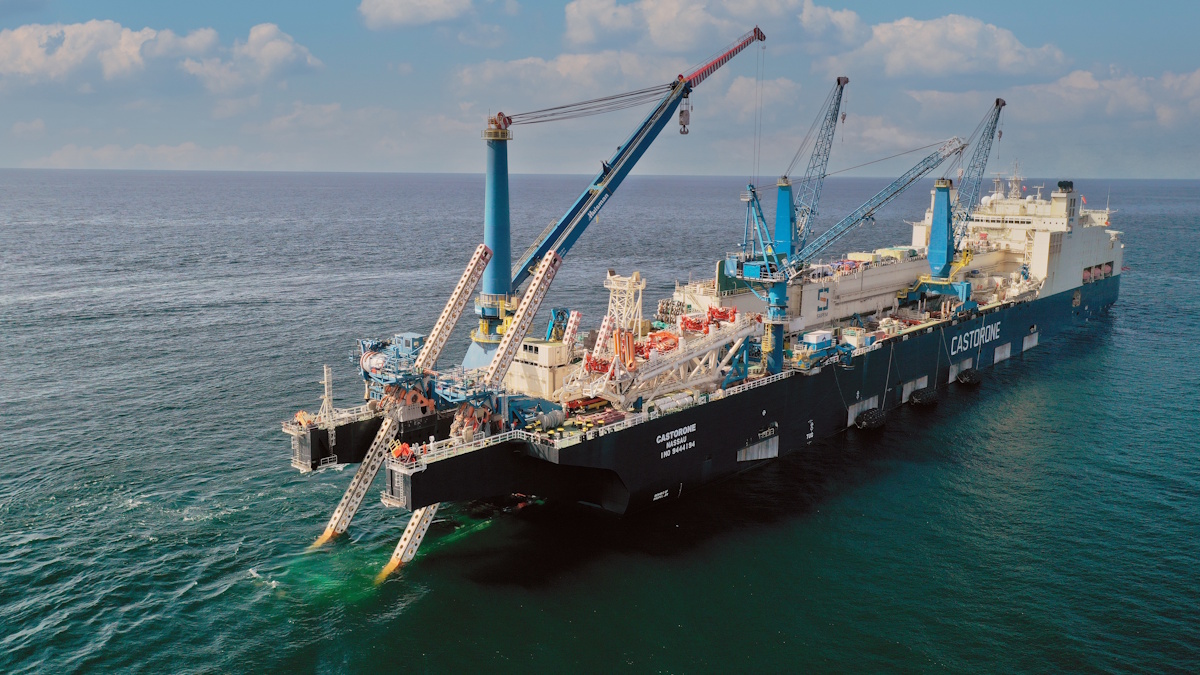
Saipem Successfully Completes Pipeline Installation for Equinor's Irpa Project in the Norwegian Sea
Saipem has announced the successful installation of a subsea pipeline for the Irpa project, which is being developed by Equinor in the Norwegian Sea. The offshore operations were executed using the Castorone, a flagship pipelay vessel operated by Saipem. This milestone marks a significant advancement in the project's development, contributing to the growing energy infrastructure in the region. The completion of the pipeline installation underscores Saipem's expertise in subsea engineering and its commitment to supporting major energy projects.
saipem pipeline installation equinor irpa project norwegian sea
Sonardyne Awarded Contract for Seabed Monitoring Landers and Associated Services for NEP Project
Sonardyne has been awarded a contract to provide baseline environmental monitoring services for the United Kingdom's inaugural offshore carbon capture and storage (CCS) site. This decision follows a competitive bidding process, highlighting Sonardyne's expertise in the field. The project aims to ensure the effective monitoring of environmental conditions as the UK moves forward with its CCS initiatives, which are crucial for reducing carbon emissions and combating climate change. The monitoring services will play a vital role in assessing the environmental impact of the CCS operations, ensuring compliance with regulatory standards, and supporting the overall success of this pioneering project.

Discovery Beneath the Waves of Saint-Pierre and Miquelon During the SEAMAP Project
On May 22, 2025, a scientific team participating in the SEAMAP mission made an unexpected detour during their expedition. Led by their seasoned boat captain, Karl, the crew was motivated by a longstanding maritime mystery—the disappearance of the Ravenel in 1962. This decision to explore the area surrounding the incident was fueled by curiosity and the desire to uncover new insights into the enigmatic case. The team diverted from their original mission plan to investigate the historical event, seeking to shed light on the circumstances surrounding the vessel's vanishing more than six decades ago.
seaber seamap project
Fugro Leads Large-scale Seafloor Mapping Project to Protect Florida’s Coast
Fugro is enhancing its involvement in the Florida Seafloor Mapping Initiative (FSMI), a long-term project led by the Florida Department of Environmental Protection (DEP) aimed at mapping the state’s seafloor to bolster coastal resilience, infrastructure planning, and environmental protection. Following its earlier contribution of 14,000 square kilometers of airborne lidar data, the company is now undertaking vessel-based surveys covering an additional 42,000 square kilometers off the coast of Florida. This expansion is part of a broader strategy to provide critical data that will support sustainable coastal management and environmental stewardship in the region.
fugro large-scale seafloor mapping florida coastRobotics needs a service framework.
RSF defines a common language for robot service capability, lifecycle operations, certification pathways, and service-provider networks.
Join the RobotToday community on LinkedIn
Daily robotics news, in-depth analysis, conference highlights, and discussions with professionals worldwide.







