

Industry Briefing
A single destination for timely, editor-curated robotics news from around the world.

Robbyant Launches LingBot-World 2.0 with Enhanced Real-Time World Generation Features
Robbyant, an embodied AI company under Ant Group, has released LingBot-World 2.0, an open-source interactive world model. This updated version supports hour-long real-time world generation, high-definition output, and enhanced interactive capabilities, marking a significant improvement over LingBot-World 1.0. The new model allows for continuous world generation sessions while maintaining visual quality and enabling real-time user interaction. It produces 720p video at 60 frames per second and is designed to generate, stream, and display content simultaneously, which reduces latency and enhances user engagement with the evolving environment. LingBot-World 2.0 features a dual-agent mechanism for dynamic interaction and supports multiple users in a shared virtual space. Additionally, Robbyant has open-sourced LingBot-Video, a video generation model aimed at robotics applications, which enhances efficiency and realism in AI-generated video for real-world robotic systems. No further timeline was disclosed at the time of publication.
Robot simulation AI models ai simulation Ant Group artificial intelligence embodied ai
Teradyne Unveils Magnum E2 to Meet Demands of Next-Gen Memory Testing for AI and HPC
Teradyne, Inc. has announced the launch of Magnum E2, a high-speed memory test system designed for advanced DRAM and NAND flash interfaces, including LPDDR6, DDR6, GDDR7, and NAND flash. Built on the Near-DUT Test architecture, Magnum E2 supports both production and engineering configurations, facilitating qualification through high-volume manufacturing on a unified platform. The introduction of Magnum E2 is significant as it addresses the increasing demands for high-speed memory testing driven by AI and high-performance computing. With the transition to faster DRAM and flash devices, the system is engineered to maintain signal integrity while accommodating higher pin counts and parallelism, essential for meeting the rigorous performance standards required in AI data centers. Looking ahead, Teradyne's Magnum E2 positions memory manufacturers to adapt to the evolving landscape of memory technology. As AI continues to influence advancements in memory devices, the ability to test at higher speeds and across a broader protocol range will be crucial for manufacturers aiming to stay competitive in the market. No further timeline was disclosed at the time of publication.
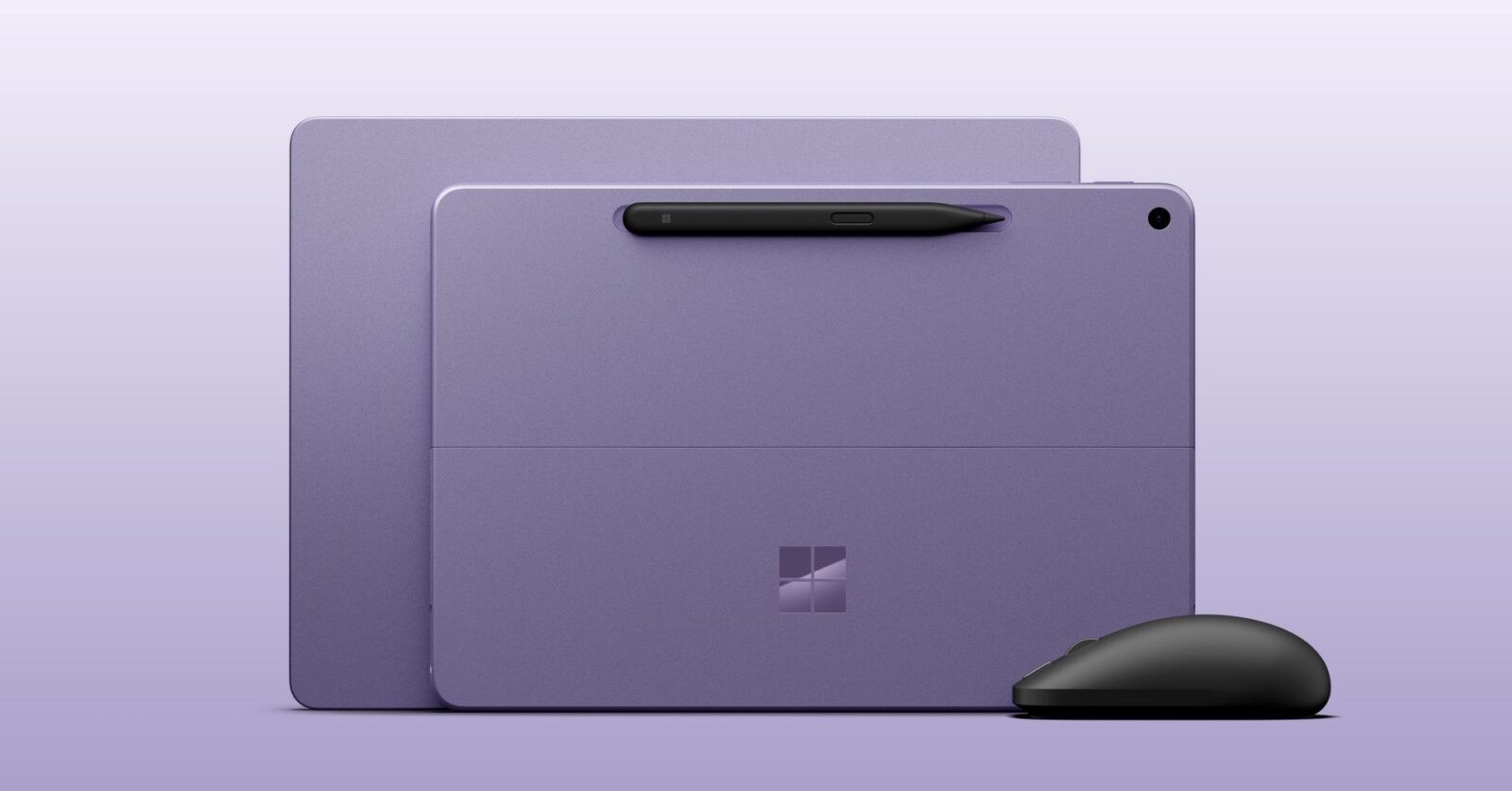
Microsoft Launches Second Generation of 12-Inch Surface Pro and 13-Inch Surface Laptop with Snapdragon X2 Plus
On September 23, Microsoft announced the second generation models of the 12-inch Surface Pro and 13-inch Surface Laptop, featuring the Snapdragon X2 Plus processor. The devices are set to be available for pre-order in Japan starting September 25, with prices starting at ¥195,580 for the Surface Pro and ¥157,050 for the Surface Laptop. These new models maintain their entry-level position within the Surface brand, with improvements including increased memory capacity up to 24GB and enhanced performance metrics. Microsoft claims productivity workloads can see up to a 17% increase, while graphics performance can improve by over 60% compared to previous models. Looking ahead, the devices will be available in new colors, including Black, and will support advanced connectivity options like Wi-Fi 7 and Bluetooth 5.4. No further timeline was disclosed at the time of publication.

RS South Africa Advances Edge AI with NVIDIA Jetson Orin Nano 2 Robotics Computer
RS South Africa is backing the NVIDIA Jetson Orin Nano 2, a compact robotics computer aimed at enhancing edge AI capabilities. This new entry-level platform is designed to provide advanced AI performance while maintaining power efficiency, making it suitable for intelligent machines and robotics applications. The introduction of the Jetson Orin Nano 2 is significant as it opens up new possibilities for robotics and vision AI, allowing developers to create more sophisticated and efficient intelligent systems. The compact design and power-efficient nature of this platform are expected to meet the growing demand for edge AI solutions in various industries. Looking ahead, the NVIDIA Jetson Orin Nano 2 is anticipated to be available in the first half of 2027. Stakeholders in the robotics and AI sectors should monitor its release closely, as it may influence the development of next-generation intelligent machines and applications.

D-Robotics Showcases Sunrise™ AI Chips at IFA 2026 for Home Robots
At IFA 2026 in Berlin, D-Robotics is highlighting its Sunrise™ AI chips, which power a variety of home robots. Notable products include TCL's hey AiMe companion robot, Vbot's SuperDog quadruped, and the xLean TR1 floor washer, showcasing the versatility of D-Robotics' technology. The significance of D-Robotics' contributions lies in its role as a leading provider of robotics development infrastructure. By equipping numerous robots with its AI chips, the company is influencing the evolution of home robotics, making advanced technology accessible to various manufacturers and enhancing consumer experiences. As IFA 2026 progresses, attention will be on how D-Robotics continues to innovate within the robotics sector. The impact of its Sunrise™ AI chips on the functionality and capabilities of home robots will be closely monitored, as the industry looks to the future of intelligent automation in domestic settings. No further timeline was disclosed at the time of publication.

AWS and NVIDIA Expand Collaboration with 2 Million Additional GPUs for AI Infrastructure
Amazon Web Services (AWS) and NVIDIA have announced a significant expansion of their partnership to address the increasing global demand for AI infrastructure. The companies plan to deploy an additional 2 million NVIDIA GPUs across AWS’s global infrastructure, enhancing their collaboration in AI factories, CPUs, networking, and robotics. This move aims to support the growing need for AI workloads, enabling customers to scale their operations in areas such as agentic AI and enterprise automation. This expansion is crucial as organizations transition from pilot projects to full-scale production, necessitating broader model choices and faster data processing capabilities. AWS and NVIDIA's joint efforts will provide customers with the confidence that their infrastructure can support innovative AI applications while maintaining security and reliability. The collaboration builds on 16 years of innovation, reflecting the increasing demand from various sectors, including frontier labs and governments. Looking ahead, AWS and NVIDIA's partnership is set to redefine AI compute capacity, with plans to introduce NVIDIA Blackwell Ultra GPUs and enhance networking performance for large-scale AI training. No further timeline was disclosed at the time of publication.

Aetina Enhances Edge AI with Support for NVIDIA Jetson Orin Nano 2 Platform
Aetina Corporation has announced its support for the NVIDIA Jetson Orin Nano 2, enhancing its edge AI capabilities. This new platform allows for higher-performance generative AI and multimodal inference, which are crucial for compact Physical AI systems. The introduction of the Jetson Orin Nano 2 marks a significant advancement in entry-level edge AI robotics computers. It enables developers to create sophisticated applications such as delivery and inspection drones, robots, and vision AI systems that can perceive their environment and respond in real time. Looking ahead, the integration of the Jetson Orin Nano 2 into Aetina's offerings is expected to drive innovation in the edge AI sector. No further timeline was disclosed at the time of publication.

Galileo Robotics Introduces Next-Generation Galileo X at WRC 2026 with Innovative Mobility System
Galileo Robotics has unveiled the Galileo X at the 2026 World Robot Conference, introducing a revolutionary 'Embodied Ground Mobility System'. This launch signifies a significant advancement in product design and technology, setting a new standard for future ground robots. The introduction of the Galileo X is crucial as it redefines the existing paradigms in robotics, particularly in ground mobility. This innovation positions Galileo Robotics as a leader in the field of embodied intelligence, potentially influencing the development of next-generation robotic solutions. Looking ahead, industry stakeholders will be keen to observe how the Galileo X performs in practical applications and its impact on the robotics market. No further timeline was disclosed at the time of publication.

LG to Launch Next-Generation Nvidia-Powered Humanoid Robot in Early 2027
South Korean electronics leader LG is set to unveil a new bipedal humanoid robot powered by Nvidia's Isaac GR00T in the first quarter of 2027. This development follows a memorandum of understanding signed on August 13 between LG and Nvidia, marking a significant step towards the execution of their collaborative efforts in robotics and AI technologies. The partnership aims to enhance LG's capabilities in AI factories and mobility solutions, leveraging Nvidia's advanced technologies. LG's chairman, Kwang Mo Koo, emphasized the clarity of their goals in AI Factory and Physical AI, while Nvidia's CEO, Jensen Huang, highlighted the transformative potential of physical AI in everyday life. This collaboration is expected to accelerate the integration of AI in various sectors. Looking ahead, LG plans to validate its LG CLOiD wheel-based robots at its washing machine manufacturing line in Tennessee this year. The results will inform further refinements and potential expansions of robot deployments across global production facilities and commercial spaces. No further timeline was disclosed at the time of publication.
Autonomous Vehicles Factories Humanoids News Robotics ai factories
LTX-2.5 Launches with Fast AI Video Generation and Open Weights Integration
LTX, a company spun out of Lightricks, has launched LTX-2.5, an advanced open-weights video model that can generate a 10-second video from an image in just 6.8 seconds using NVIDIA superchips. This model is now integrated into ComfyUI and available on Hugging Face, supporting organizations with under $10 million in annual revenue for free. The significance of LTX-2.5 lies in its innovative features, including a new diffusion video decoder that enhances video quality and native multishot generation for consistent outputs. LTX claims its model has surpassed 33 million downloads, making it the most popular open world model line, and it aims to provide flexibility and efficiency in video generation compared to closed API competitors. Looking ahead, LTX is focused on expanding its capabilities and refining its technology. The company emphasizes the importance of open weights for diverse use cases in video and world models, contrasting its approach with the trend towards closed models in the industry. No further timeline was disclosed at the time of publication.
Technology
AI-Powered Lead Generation Revolutionizes B2B Sales Prospecting Strategies
B2B sales teams are evolving their prospecting methods as they face challenges with outdated contact lists and low response rates. Traditional approaches are no longer sufficient, prompting a shift towards AI-powered lead generation tools that provide real-time insights and dynamic intelligence. Platforms like Lev8 are transforming how businesses identify qualified prospects by continuously monitoring buyer intent and updating contact information automatically. The importance of AI in B2B sales prospecting cannot be overstated, as it enables sales teams to focus on high-quality leads that align with their target customer profiles. By analyzing various business signals, AI tools help teams adapt to changing customer needs and market conditions, ultimately leading to more effective engagement strategies. This shift towards smarter prospecting methods is crucial in a fast-paced market where timely and accurate information is key to success. Looking ahead, the integration of AI in sales processes will likely continue to grow, with tools not only aiding in lead discovery but also enhancing lead qualification and outreach efforts. As companies increasingly adopt these advanced solutions, the landscape of B2B sales prospecting will evolve, making it essential for sales professionals to stay informed about the latest AI advancements and their applications in the field. No further timeline was disclosed at the time of publication.
Business Software Technology ai automation ai lead generation ai sales prospecting
Air Force Plans Next-Generation Engine Integration Activities by 2030
The Air Force anticipates that a next-generation engine will be ready for aircraft integration by the end of the decade, following years of delays. John Sneden, chief of the Air Force’s propulsion directorate, indicated that the Next Generation Adaptive Propulsion (NGAP) program will involve building and testing prototypes from GE Aerospace and Pratt & Whitney, with integration activities expected around 2030. This development is significant as the NGAP program aims to enhance military propulsion capabilities, potentially offering a more fuel-efficient and powerful engine for various aircraft, including the F-47. The program's platform-agnostic design allows for integration into existing aircraft, which could provide the Air Force with advanced propulsion options in the future. Looking ahead, the Air Force is requesting approximately $514 million for the NGAP initiative in fiscal 2027, with funding expected to peak at nearly $906 million in FY28. No specific aircraft has been confirmed for the NGAP engine, but the technology could lead to significant advancements in military aviation capabilities over the next decade.
Air Warfare Air Force Engine Core Upgrade (ECU) F-35 F-35 Block 4 modernization F-47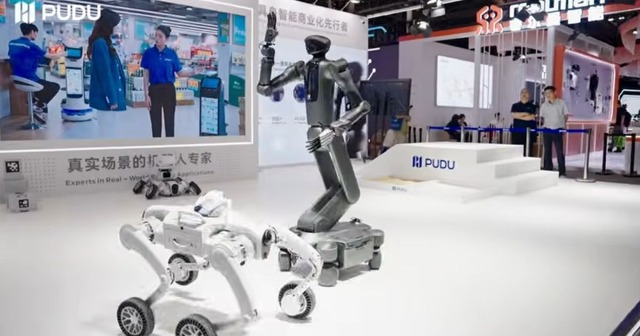
Pudu Robotics Unveils Next-Generation Semi-Humanoid Robot 'PUDU D7' at WAIC 2026 in Shanghai
Pudu Robotics showcased its entire product lineup at the 2026 World Artificial Intelligence Conference (WAIC 2026) held in Shanghai from July 17 to 20, including the world premiere of the next-generation semi-humanoid robot 'PUDU D7'. Attendees had the opportunity to take commemorative photos with 'PUDU D7' and receive unique snapshots from the robot's perspective. The event also featured a multi-robot cooperative demonstration with the quadruped robot 'PUDU D5', which autonomously navigated while avoiding pedestrians. The robots demonstrated their autonomous navigation capabilities on an obstacle course simulating gravel, steps, and slopes, achieving a maximum speed of 5 m/s during drift driving. Use cases for autonomous inspection in complex environments such as power substations and industrial parks were also presented. In addition to 'PUDU D7', Pudu Robotics exhibited various robots including the serving robot 'BellaBot', industrial transport robot 'PUDU T300', and commercial cleaning robots 'PUDU MT1 Max' and 'PUDU CC1 Pro', highlighting their applications across diverse industries such as food service, retail, manufacturing, and logistics. No further timeline was disclosed at the time of publication.
PixVerse Secures $439M in Series C Extension, Valuation Exceeds $2B
Singapore-based video-generation startup PixVerse announced the closure of its Series C extension, raising a total of $439 million. This funding has propelled its valuation past $2 billion, enabling the company to enhance its world model offerings and expand its customer base globally. The significance of this funding round lies in PixVerse's ambition to solidify its position in the competitive video generation market. Founded in 2023 by Wang Changhu and Jaden Xie, the company has already attracted notable investors, including Alibaba and Lollapalooza Capital, and boasts over 150 million registered users for its consumer product. Looking ahead, PixVerse plans to launch a new V-Series model for video generation and a new version of its world model within the year. The company is also focused on expanding its enterprise outreach and hiring additional researchers to support its growth strategy. No further timeline was disclosed at the time of publication.
AI Fundraising alibaba pixverse video generation
Dürr Unveils EcoRS Generation 2 Robot Platform for Paint Shop Applications
Dürr has launched the EcoRS Generation 2, a new robot platform tailored for diverse paint shop applications. This series features four distinct robot models, each designed to accommodate varying load capacities and reach requirements, ensuring high process quality while simplifying planning, operation, and service. The introduction of the EcoRS Generation 2 is significant as it addresses the need for efficient and versatile robotic solutions in paint shops. By combining advanced technology with user-friendly features, Dürr aims to enhance operational efficiency and reduce complexity for manufacturers in the automotive and industrial sectors. Looking ahead, industry stakeholders should monitor the adoption of the EcoRS Generation 2 in various applications, as it may set new standards for performance and ease of use in robotic systems. No further timeline was disclosed at the time of publication.

Black Forest Labs Introduces FLUX 3 for Image and Video Generation with Audio
Black Forest Labs (BFL) has launched FLUX 3, a multimodal model capable of generating images and 20-second audio/video clips from a single prompt. This model represents a significant expansion of BFL's FLUX family, emphasizing a unified approach to creative generation and robotic vision. The introduction of FLUX 3 is important as it positions BFL to compete in the growing market for multimodal AI applications, which combine various forms of media. The model is currently in a limited 'Early Access' phase, with no public API access yet available, which may affect enterprise adoption. Looking ahead, BFL plans to release additional features, including open-weight versions of FLUX 3 later this year. However, the absence of pricing and comprehensive benchmarking details at launch could hinder rapid adoption among enterprise users. No further timeline was disclosed at the time of publication.
Technology
Robbyant Upgrades and Open-Sources LingBot-VLA 2.0 as a Next-Generation Universal Brain for Embodied AI
While the embodied AI industry is witnessing rapid advancements in hardware and control systems, the lack of a truly universal brain remains a primary bottleneck for industrial-scale deployment. LingBot-VLA 2.0 addresses this critical gap by dramatically expanding its pre-training data and architectural capabilities.

Starmind's Satellite Technology Achieves 880 Billion Liters in Annual Water Savings
Starmind has announced that its satellite technology can save approximately 880 billion liters of cooling water annually at full scale. This figure is equivalent to the annual household water use of around 6.5 million Americans. The technology operates by utilizing a closed-loop liquid cooling system that eliminates the need for water during its operational life, contrasting sharply with traditional ground data centers that consume vast amounts of water for cooling. The significance of this achievement lies in the growing water consumption crisis faced by data centers, particularly as AI expansion drives demand. In 2025, U.S. data centers consumed nearly one trillion liters of water, highlighting the urgent need for sustainable solutions. Starmind's approach not only addresses direct water usage but also avoids indirect water consumption associated with electricity generation, marking a substantial shift in how computing can be conducted in a resource-efficient manner. Looking ahead, Starmind's deployment strategy includes a projected buildout of 100 GW of orbital compute per year, which could displace an additional 735 billion liters of ground water demand annually. The first tranche of 10,000 satellites is already operational, offsetting approximately 8.8 billion liters of water per year. No further timeline was disclosed at the time of publication.

SpaceX Unveils AI1 Satellite Specs for Starmind Constellation with Key Thermal Challenges
SpaceX has introduced the AI1 satellite, the inaugural component of its Starmind constellation, which stands 20 meters tall and has a wingspan of 70 meters. This orbital compute node is designed to deliver computing power equivalent to one NVIDIA GB300 server rack, utilizing a unique cooling system with deployable liquid radiators. The satellite's specifications were revealed during a presentation on June 8, 2026, ahead of SpaceX's IPO. The significance of the AI1 satellite lies in its role as a compute platform rather than a traditional satellite, focusing on running AI inference workloads. The satellite's cooling system, which is critical for its operation in the vacuum of space, is designed to reject heat through infrared radiation. However, independent engineers have raised concerns about the feasibility of the thermal and mass claims made by SpaceX, suggesting that the cooling requirements may exceed practical limits. Looking ahead, SpaceX plans to launch two AI1 prototypes in early 2027, with full-scale production expected to commence later that year at its Gigasat facility in Bastrop, Texas. The ongoing debate regarding the satellite's thermal management capabilities will be crucial to monitor as the project progresses, with no further timeline disclosed at the time of publication.

Flexiv to Unveil Next-Generation Adaptive Robots at Automate 2026
Enlight and MICO have made their international debut, showcasing advanced whole-body touch sensitivity and physical AI technology aimed at revolutionizing industrial automation. This significant event took place recently, highlighting the growing trend of integrating sophisticated AI solutions into manufacturing processes. The introduction of these technologies is driven by the need for increased efficiency and precision in industrial operations. By utilizing whole-body touch sensitivity, Enlight and MICO enable machines to interact more intuitively with their environments, enhancing productivity and safety. This innovative approach is expected to transform how industries operate, paving the way for smarter and more responsive automation systems.

OMRON Robotics to Demonstrate Next-Generation Autonomous Mobile Robots at Automate 2026
A leading technology company has unveiled its latest advancements in automated material handling with the introduction of the LD-150 and LD-300 autonomous mobile robots (AMRs). This launch took place in October 2023, showcasing the company's commitment to enhancing efficiency in logistics and warehouse operations. The new AMRs are designed to streamline material flow, addressing the growing demand for smarter and more flexible solutions in supply chain management. By integrating advanced navigation and sensing technologies, the LD-150 and LD-300 aim to optimize workflows, reduce operational costs, and improve safety in various industrial environments. This innovation reflects the company's strategy to leverage automation in response to evolving market needs and the increasing complexity of logistics operations.
ASELSAN at SAHA 2026: Introducing next-generation multi-domain defense systems
At the SAHA 2026 exhibition, ASELSAN introduced its latest defense portfolio, showcasing a comprehensive and integrated defense architecture. This innovative framework combines electronic warfare, counter-unmanned aerial vehicle (UAV) systems, and capabilities for both airborne and naval operations. The unveiling highlights ASELSAN's commitment to advancing military technology and enhancing operational efficiency in response to evolving security challenges. By integrating these diverse capabilities, the company aims to provide a unified solution that meets the complex demands of modern defense environments.
Global Naval Warfare Sponsored Post Air Force Army Aselsan
ARBOR Technology Unveils ARES-2100 Series for Next-Generation Edge AI with Intel Core Series 3 Processors
A new technology aimed at enhancing industrial automation has been introduced, focusing on machine vision and lightweight edge AI inference workloads. This innovation is set to facilitate the deployment of smart factory applications, allowing for more efficient operations in manufacturing environments. The development comes in response to the growing demand for advanced automation solutions that can improve productivity and reduce operational costs. By leveraging cutting-edge AI capabilities, the technology enables real-time data processing and decision-making at the edge, minimizing latency and enhancing overall system performance. This advancement is expected to significantly impact the manufacturing sector, providing businesses with the tools necessary to adapt to the rapidly evolving landscape of industrial automation.
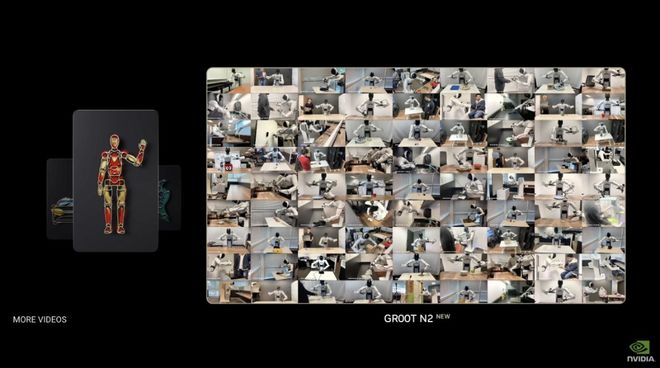
AGIBOT Showcases at GTC 2026, Deeply Empowering NVIDIA's Next-Generation Base Model
At the NVIDIA GTC 2026 conference, AGIBOT was highlighted as a key ecological partner, presenting its cutting-edge technology designed to enhance NVIDIA's latest base model. This partnership signifies AGIBOT's emergence as a prominent force in the global embodied intelligence sector, facilitating the widespread implementation of physical AI solutions. The collaboration underscores both companies' commitment to advancing AI technology and its applications across various industries.
Embodied Intelligence AI Technology Robotics NVIDIA Industrial Automation
AWE 2026: Tesla showcases third-generation humanoid robot
The Appliance & Electronics World Expo (AWE) 2026 commenced today in Shanghai, featuring a notable presentation by Tesla. The company unveiled its highly anticipated Cybertruck alongside a humanoid robot, which is generating significant buzz due to its innovative design. This humanoid model marks Tesla's first foray into large-scale mass production, with plans to initiate production by the end of 2026. The introduction of this robot aligns with Tesla's broader strategy to enhance automation and robotics within its operations, reflecting the company's commitment to advancing technology in everyday applications.
News Feed
NVIDIA RTX Accelerates 4K AI Video Generation on PC With LTX-2 and ComfyUI Upgrades
In 2025, advancements in artificial intelligence on personal computers reached a significant milestone, with small language models (SLMs) achieving nearly double the accuracy compared to the previous year. This improvement has notably narrowed the performance gap between these PC-class models and larger, cloud-based language models (LLMs). The surge in AI development is attributed to enhanced developer tools and techniques that have emerged, enabling more efficient training and deployment of SLMs. As a result, users can now access more powerful AI capabilities directly on their PCs, marking a pivotal shift in the landscape of AI technology.

Nortek Launches Generation 2 Vector Velocimeter
Researchers have unveiled the Generation 2 Vector, an advanced iteration of the original Vector technology, designed to enhance small-scale turbulence studies. This new model incorporates modern electronics and offers a range of innovative features, making it suitable for both fieldwork and experiments conducted in large flumes. The development aims to provide scientists with more reliable tools for understanding turbulent flows, which are critical in various environmental and engineering applications. By leveraging the trusted foundation of its predecessor, the Generation 2 Vector promises to facilitate more accurate and efficient research, ultimately contributing to advancements in the field of fluid dynamics.
nortek generation 2 vector velocimeter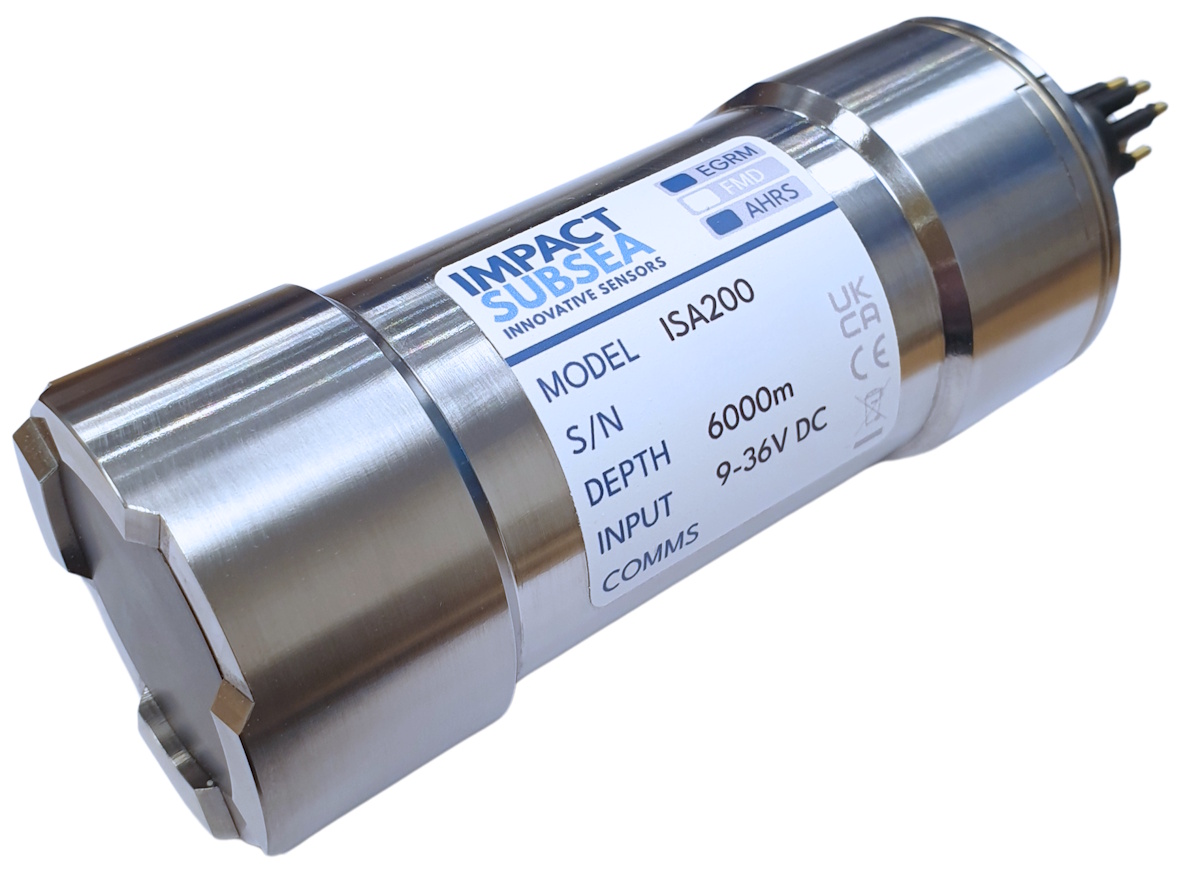
Impact Subsea Launches ISA200: Next-Generation Long Range Altimeter & Echosounder
Impact Subsea has announced the launch of the ISA200, a new underwater altimeter and single beam echosounder, expanding its advanced product line. This latest innovation aims to enhance underwater measurement capabilities, catering to the growing demand for precise data in marine applications. The ISA200 is designed to provide accurate depth measurements and improve operational efficiency for various underwater activities. The launch reflects Impact Subsea's commitment to advancing technology in the field, ensuring that users have access to cutting-edge tools for their underwater exploration and research needs.
impact subsea isa200 long range altimeter & echosounder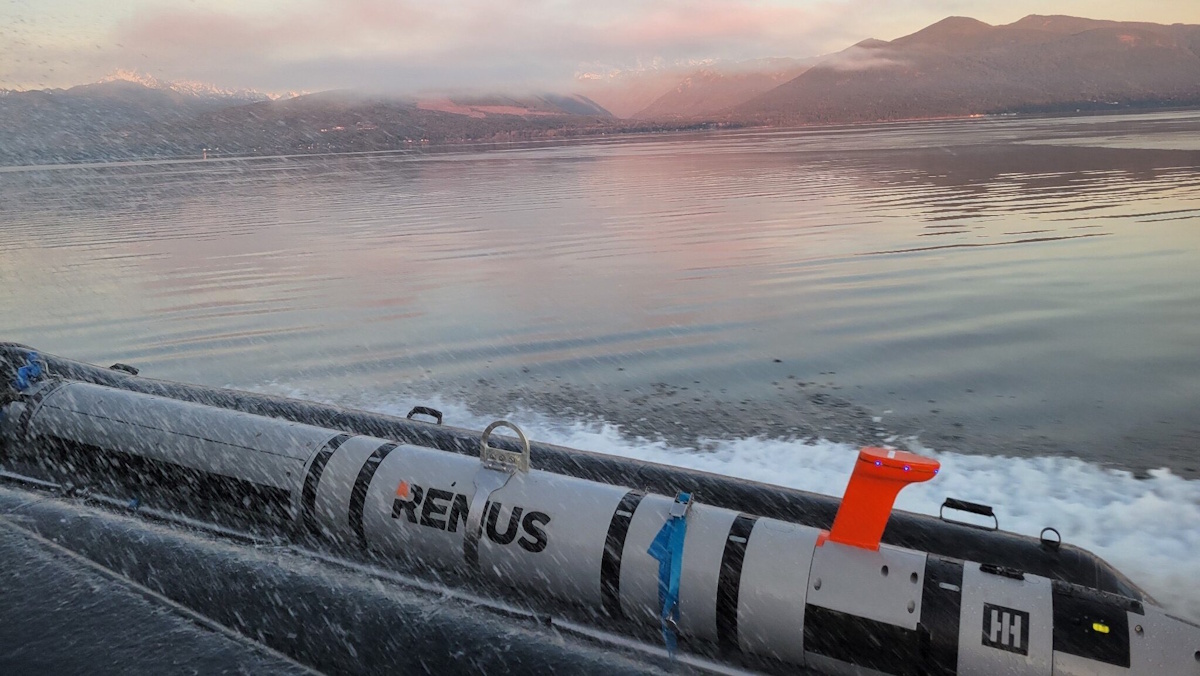
HII’s Mission Technologies Tests Next-Generation REMUS 620 UUV on US Navy Confidence Course
Uncrewed Systems, a division of HII’s Mission Technologies, showcased its next-generation medium-class unmanned underwater vehicle, the REMUS 620, during the U.S. Navy UUV Confidence Course held in Bangor, Washington. The vehicle was transported from its manufacturing facility in Pocasset, Massachusetts, to Keyport, Washington, where it successfully completed a series of pre-mission checks and ballasting procedures. This participation underscores the company's commitment to advancing underwater technology and enhancing the capabilities of unmanned systems for naval operations.
hii mission technologies test remus 620 uuv us navy confidence courseRobotics needs a service framework.
RSF defines a common language for robot service capability, lifecycle operations, certification pathways, and service-provider networks.
Join the RobotToday community on LinkedIn
Daily robotics news, in-depth analysis, conference highlights, and discussions with professionals worldwide.







