Industry Briefing
A single destination for timely, editor-curated robotics news from around the world.
Understanding the Necessity of End-of-Line Testing Equipment for Manufacturers
End-of-line testing is crucial for manufacturers to verify product quality before it leaves the production line. This testing serves as a final quality checkpoint, ensuring that products meet performance standards. Common tests include assessing balance, vibration, torque, pressure, electrical performance, dimensions, and functional operation. The significance of end-of-line testing lies in its ability to catch defects and ensure that products are reliable and safe for consumers. By implementing thorough testing protocols, manufacturers can reduce the risk of returns and enhance customer satisfaction. This process not only safeguards the brand's reputation but also contributes to overall operational efficiency. Looking ahead, manufacturers should focus on integrating advanced testing technologies to streamline their end-of-line processes. Continuous improvements in testing equipment and methodologies will be essential to meet evolving industry standards and consumer expectations. No further timeline was disclosed at the time of publication.
Engineering Manufacturing balance testing end-of-line testing eol testing factory automation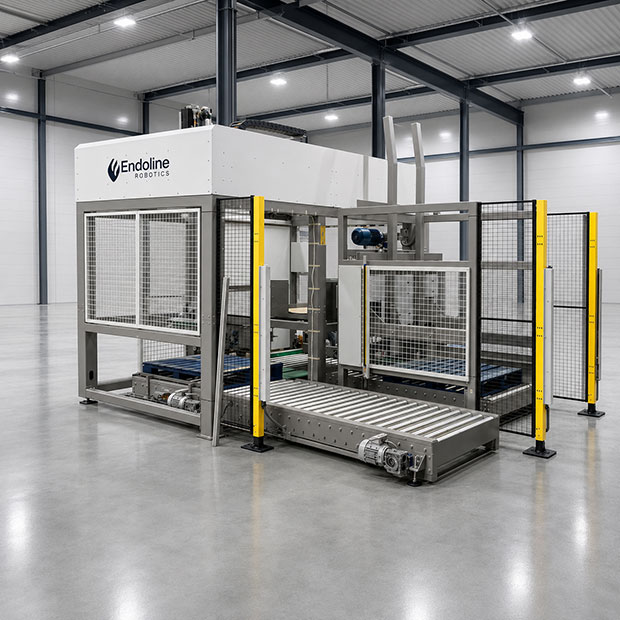
Endoline Automation Expands Robotics Capabilities for Tailored Solutions
Endoline Automation is enhancing its robotics capabilities to provide manufacturers with a wider array of end-of-line automation solutions tailored to specific production needs. This expanded offering will debut at the PPMA show in September, showcasing a fully integrated production line that combines case erecting, sealing, and palletizing. The significance of this development lies in Endoline's commitment to delivering customized, connected end-of-line solutions that adapt to each customer's operational requirements. By collaborating with Montech, Endoline has broadened its robotics portfolio to include both gantry and articulated robotic solutions, allowing for greater flexibility in automation project specifications. At the PPMA event, attendees will witness the integration of an Endoline Case Erector and case sealer with Montech’s palletizing system, demonstrating a scalable approach to automation. As the demand for automation increases, Endoline aims to support diverse applications while maintaining its reputation for bespoke engineering and reliable technical support.
Pallets & Containers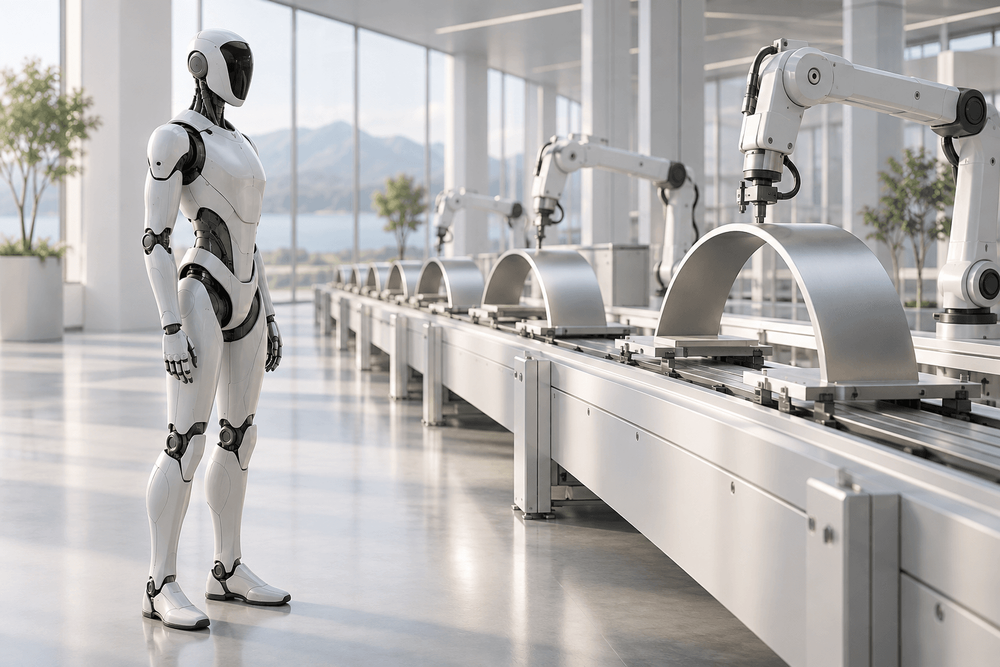
XPeng Launches Automated IRON Humanoid Production Line for 2026 Mass Production
XPeng has activated an automated production line for its IRON humanoid robot, achieving over 80% core automation. A notable milestone was reached as a finished robot successfully walked off the line under its own power. This development is significant as it marks XPeng's commitment to advancing humanoid robotics, with mass production slated for completion by the end of 2026. The company plans to initiate commercial deliveries in 2027, indicating a strategic move into the humanoid robot market. Looking ahead, industry observers should monitor XPeng's progress towards its production goals and the potential impact of its humanoid robots on various sectors. No further timeline was disclosed at the time of publication.

Development and Testing of a Cost-Effective Integrated Gripper-Shear End-Effector
A new integrated gripper-shear end-effector has been developed and validated, showcasing efficiency and cost-effectiveness. This innovation aims to enhance robotic capabilities in various applications by combining gripping and cutting functionalities into a single tool. The significance of this development lies in its potential to reduce operational costs while improving performance in tasks that require both gripping and shearing actions. By integrating these two functions, the end-effector can streamline processes in fields such as manufacturing and logistics, where efficiency is paramount. Looking ahead, the focus will be on further testing and optimization of the end-effector for specific applications. No further timeline was disclosed at the time of publication.
RESEARCH ARTICLE
Agility Robotics Proposes Six Key Recommendations for U.S. Humanoid Robot Policies
Agility Robotics has outlined six recommendations aimed at establishing a robust policy framework for humanoid robots in the U.S. According to CEO Peggy Johnson, these recommendations are essential for enhancing the regulatory environment and ensuring the successful integration of humanoids into the workforce. She emphasizes the need for domestic production of key components, as current reliance on international sources, particularly from China, poses risks to the U.S. industry. The importance of these recommendations lies in their potential to strengthen the U.S. humanoid robot market, which is currently challenged by foreign competition. Johnson highlights that China dominates the manufacturing of critical components, such as permanent magnets used in motors, which are vital for humanoid robots. By fostering domestic capabilities, the U.S. can reduce dependence on foreign suppliers and bolster its technological leadership in the sector. Looking ahead, the U.S. must develop a coordinated national strategy that unites federal agencies and industry stakeholders to support the humanoid robotics sector. Johnson warns that without proactive measures, the U.S. risks losing its technological edge and compromising national security. No further timeline was disclosed at the time of publication.
China Defense / Security Humanoids Logistics Manufacturing Markets / Industries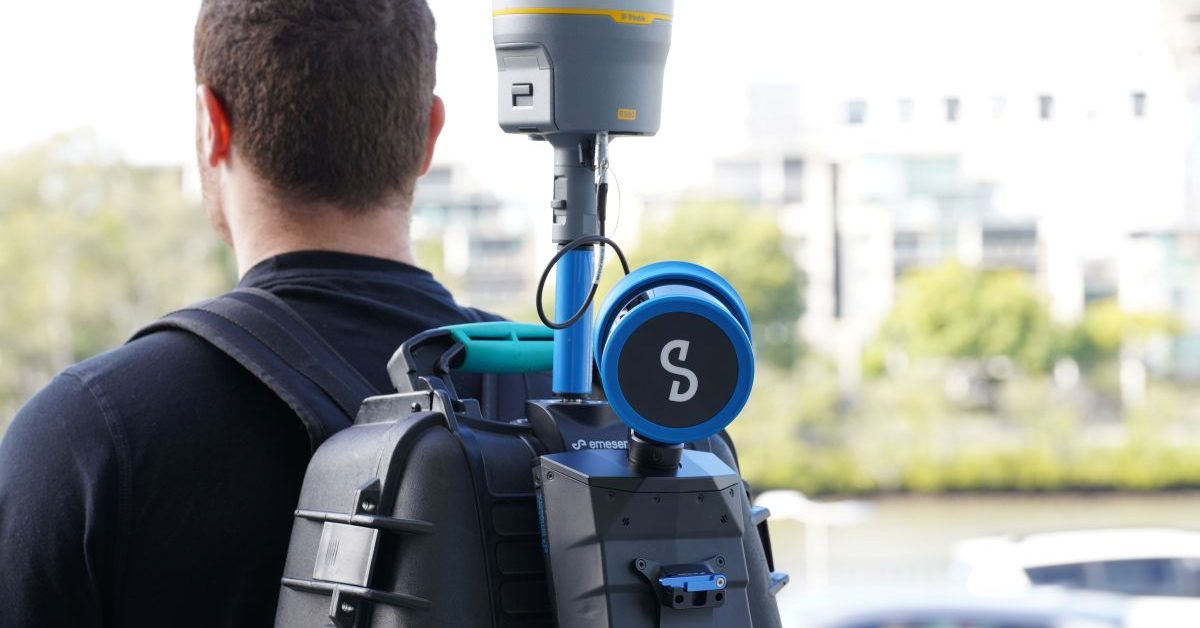
Emesent Integrates GX1 and Hovermap STX Scanners with Trimble for Streamlined Data Processing
Emesent has announced that its mobile SLAM scanners, the GX1 and Hovermap STX, can now directly send point cloud data into Trimble Connect and Trimble Business Center. This integration, revealed at Intergeo 2026 in Munich, aims to simplify the workflow from field scanning to construction deliverables. The significance of this development lies in its potential to enhance interoperability for US surveyors, engineers, and construction teams. By allowing point cloud data to transition smoothly into established project workflows, Emesent's technology can reduce the complexity typically associated with mobile LiDAR applications. Looking ahead, the integration will be showcased at Intergeo 2026 until September 17, highlighting the capabilities of the GX1 and Hovermap STX scanners. No further timeline was disclosed at the time of publication.
News
Transforming Backend Testing for AI: Ensuring Reliability at Scale
As artificial intelligence transitions from niche applications to widespread infrastructure, backend testing is experiencing significant changes. Customers are increasingly focused on the reliability and scalability of AI systems, prompting a reevaluation of testing methodologies to meet these new demands. This shift is crucial as organizations seek to integrate AI into their operations, ensuring that systems perform reliably under various conditions. The evolving landscape of AI requires that testing not only validates functionality but also assesses performance and resilience at scale, addressing the complexities introduced by AI technologies. Looking ahead, it will be important to monitor how testing frameworks adapt to these challenges. The industry must prioritize the development of robust testing strategies that can keep pace with the rapid advancements in AI, ensuring that systems are both reliable and efficient. No further timeline was disclosed at the time of publication.

Bulles Création Enhances Production Efficiency with Robotiq Cobot Palletizing Solution
Bulles Création, known for its flexible bottling services for local winemakers, faced production challenges as demand surged. The company's existing packaging line was limited to 1,500 bottles per hour, hindering its ability to scale operations effectively. The implementation of Robotiq's cobot palletizing solution is significant as it allows Bulles Création to automate its end-of-line processes. This move not only increases efficiency but also positions the company to better meet the growing demand for its products, including its own line of effervescent drinks. Looking ahead, the adoption of this automation technology could lead to further enhancements in production capacity and operational flexibility. No further timeline was disclosed at the time of publication.

SpaceX's $1.75 Trillion Valuation Driven by Starmind's Future Potential
Starmind is a pivotal element in SpaceX's estimated $1.75 trillion IPO valuation, despite currently generating no confirmed revenue. The stock price reflects optimistic projections regarding AI infrastructure growth, which Starmind has yet to substantiate. As of early July 2026, SpaceX's stock has decreased from its 52-week high of $225.64 to around $150, indicating market skepticism about future execution. The significance of Starmind lies in its potential to transform SpaceX's revenue model beyond traditional launch services. Goldman Sachs has shifted its focus from Starlink subscriber growth to the prospects of AI revenue, including orbital computing, as a cornerstone of SpaceX's long-term valuation. This marks a substantial change in how analysts view the company's growth trajectory, necessitating rates exceeding its historical 33% growth. Looking ahead, the credibility of Starmind as a growth narrative will be crucial for maintaining investor confidence. Analysts have noted a considerable divergence in price targets, reflecting uncertainty about the value of the Starmind and xAI initiatives. No further timeline was disclosed at the time of publication regarding specific milestones for these projects.

SpaceX's Starmind Targets AI Labs with $6.3 Billion Compute Contracts
SpaceX's Starmind is designed to provide wholesale AI compute services to businesses, particularly AI labs and cloud customers, rather than individual consumers. The service operates similarly to AWS, where users benefit from applications running on Starmind without direct subscriptions. The compute capacity of a single AI1 satellite is comparable to one NVIDIA GB300 rack, emphasizing its enterprise-grade capabilities. The significance of Starmind lies in its positioning as a potential fourth hyperscaler, joining the ranks of AWS, Microsoft Azure, and Google Cloud. The Reflection AI contract, valued at $150 million per month, exemplifies the enterprise-focused model, with total payments potentially reaching $6.3 billion through 2029. This contract highlights the growing demand for AI compute resources, particularly from AI-native startups and labs. Looking ahead, the focus will remain on securing additional enterprise contracts as Starmind expands its offerings. No consumer-facing products or subscriptions have been announced, and the current strategy is to cater to businesses with substantial AI workloads. No further timeline was disclosed at the time of publication.

SpaceX IPO Provides Indirect Investment Opportunity in Starmind Project
Starmind does not have a standalone stock or ticker; investors can gain exposure through SpaceX (ticker: SPCX), which began trading on Nasdaq after its IPO on June 12, 2026. Starmind is integrated within SpaceX, contributing to the company's AI and space initiatives, and its performance directly influences SPCX shares. The significance of Starmind lies in its role as a division of SpaceX, which encompasses other projects like Starlink and Starship. As of early July 2026, SPCX shares are trading between $149 and $150, significantly lower than their 52-week high of $225.64. The project’s milestones, such as AI1 prototype updates, can impact SpaceX's stock performance, making it essential for investors to monitor these developments closely. Looking ahead, the early 2027 launch of AI1 prototype satellites is a critical milestone that could provide verifiable data affecting Starmind's valuation and, consequently, SPCX stock. No further timeline was disclosed at the time of publication, but the upcoming events will be pivotal for investors tracking the relationship between Starmind and SpaceX's stock performance.

Tesla's Optimus Robots to Support Starmind Satellite Production, Not Maintenance
Tesla's Optimus robots will not be used to repair Starmind satellites in orbit, as confirmed by recent statements from Elon Musk. Instead, these robots are intended to assist in the construction and operation of the Terafab chip manufacturing facility in Texas. The AI1 satellites, designed to disintegrate upon reentry, highlight the company's swap-and-replace strategy rather than traditional maintenance practices. This approach is significant as it reflects a broader trend in satellite management, where mass-produced satellites are replaced rather than repaired. The economics of servicing missions are prohibitive, with the cost of launching a replacement satellite being significantly lower than conducting a repair mission. This model aligns with SpaceX's operational history, where rapid replacement of satellites is more efficient than attempting to maintain them in orbit. Looking ahead, the focus will remain on the production capabilities of the Gigasat factory, which is expected to support the continuous replacement of satellites. No further timeline was disclosed at the time of publication, but the demand for rapid satellite turnover suggests a robust future for Optimus robots in terrestrial manufacturing rather than in-space servicing.

SpaceX's Starmind Project: Supplier Strategy and Chip Manufacturing Plans for 2026
SpaceX's Starmind project, aimed at deploying up to 1 million AI satellites, was filed with the FCC on January 30, 2026. The initiative is designed to minimize reliance on external suppliers, with CEO Elon Musk stating that current chip production capabilities only meet 2% of the projected needs. The first satellite, AI1, is set for prototype launches in early 2027, featuring a 70-meter wingspan and a modular payload system that allows for interchangeable chips from various suppliers. The significance of Starmind lies in its ambitious supply chain strategy, which seeks to transition from external hardware suppliers to a fully integrated Musk-owned facility by 2028. The Gigasat manufacturing site in Bastrop, Texas, is expected to be operational by the end of 2027, with plans for high-volume production of the D3 chip, specifically designed for space applications. This approach aims to consolidate chip manufacturing processes under the Terafab joint venture, which has an estimated initial investment of $55 billion. Looking ahead, the next milestone for Starmind is the launch of AI1 prototypes in early 2027, while the full-scale chip production at Terafab is projected to ramp up significantly thereafter. However, analysts express skepticism regarding the feasibility of achieving Musk's ambitious compute goals, which may require substantial investment and time to establish the necessary manufacturing capabilities.
SpaceX's Starmind Faces Feasibility Challenges for 1 Million Satellite Deployment
On January 30, 2026, SpaceX submitted a request to the FCC to launch up to 1 million satellites as part of its Starmind orbital compute constellation. This ambitious plan is unprecedented, as the total number of satellites ever launched globally is in the low tens of thousands. The proposal seeks a waiver from standard deployment milestones, citing reliance on the Starship's full reusability for success. The significance of this request lies in the technical and logistical challenges it presents. Experts warn that low Earth orbit may not support the proposed number of active satellites without risking a debris cascade. SpaceX's own IPO prospectus acknowledges unresolved dependencies related to Starship's launch cadence and reusability, which are critical for the orbital AI compute strategy. Looking ahead, the timeline for achieving the necessary launch cadence and manufacturing capacity remains uncertain. SpaceX's Gigasat facility in Texas aims for volume production by late 2027, but this would require unprecedented output levels. No further timeline was disclosed at the time of publication, leaving the feasibility of the Starmind project in question.

SpaceX Unveils AI1 Satellite Specs for Starmind Constellation with Key Thermal Challenges
SpaceX has introduced the AI1 satellite, the inaugural component of its Starmind constellation, which stands 20 meters tall and has a wingspan of 70 meters. This orbital compute node is designed to deliver computing power equivalent to one NVIDIA GB300 server rack, utilizing a unique cooling system with deployable liquid radiators. The satellite's specifications were revealed during a presentation on June 8, 2026, ahead of SpaceX's IPO. The significance of the AI1 satellite lies in its role as a compute platform rather than a traditional satellite, focusing on running AI inference workloads. The satellite's cooling system, which is critical for its operation in the vacuum of space, is designed to reject heat through infrared radiation. However, independent engineers have raised concerns about the feasibility of the thermal and mass claims made by SpaceX, suggesting that the cooling requirements may exceed practical limits. Looking ahead, SpaceX plans to launch two AI1 prototypes in early 2027, with full-scale production expected to commence later that year at its Gigasat facility in Bastrop, Texas. The ongoing debate regarding the satellite's thermal management capabilities will be crucial to monitor as the project progresses, with no further timeline disclosed at the time of publication.
SpaceX Launches Starmind Project for 1 Million AI Satellites by 2028
SpaceX has officially named its orbital AI infrastructure project 'Starmind,' which aims to deploy a constellation of up to 1 million satellites. This initiative, confirmed by Elon Musk on June 22, 2026, will enable AI inference directly in space, utilizing solar energy rather than terrestrial power sources. The first satellite, designated AI1, was unveiled on June 8, 2026, and is designed to operate in sun-synchronous orbits. The significance of Starmind lies in its potential to overcome the limitations faced by ground-based data centers, such as land, power, and water constraints. By running AI computations in orbit, Starmind can provide a more efficient solution to the growing demand for AI computing power. The project leverages the existing Starlink infrastructure for data transmission, distinguishing its function from Starlink's internet relay capabilities. Looking ahead, SpaceX plans to begin hardware deployment with the AI1 satellite, while full-scale production and deployment of the satellite constellation are targeted for 2028. As of now, no Starmind satellites have been launched, and further engineering challenges remain to be addressed, particularly regarding the scalability of the satellite design.
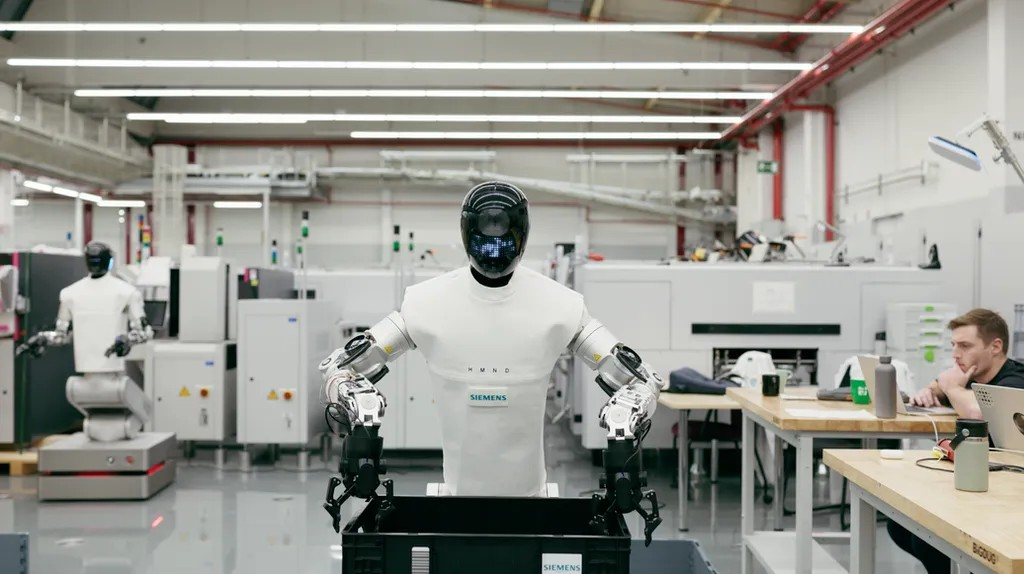
"Physical AI First Implemented in Real Production Line: Siemens Partners with Humanoid to Complete Testing of Humanoid Robot Factory"
Siemens has successfully implemented physical artificial intelligence in a real production line by partnering with Humanoid to complete testing of a humanoid robot factory. This milestone was achieved recently as part of Siemens' ongoing efforts to enhance automation and efficiency in manufacturing processes. The collaboration aims to integrate advanced robotics into production environments, showcasing the potential for humanoid robots to perform complex tasks alongside human workers. By leveraging cutting-edge technology, Siemens and Humanoid are addressing the growing demand for innovative solutions in the manufacturing sector, ultimately seeking to improve productivity and reduce operational costs. This development marks a significant step forward in the evolution of industrial automation, paving the way for future advancements in AI-driven manufacturing.
Robotics Automation AI
Hellbender Secures $12.5M Seed Round to Accelerate Domestic Manufacturing of Physical AI and Launch Its On-Edge Camera Line
A robotics engineering and hardware firm has positioned itself as a key player in the realm of Physical AI by developing a foundational platform that enhances on-edge computer vision capabilities for autonomous systems. This innovative approach utilizes a robust portfolio of intellectual property to advance the field of robotics. The firm aims to revolutionize how autonomous systems perceive and interact with their environments, thereby improving their functionality and efficiency. By harnessing cutting-edge technology and data-driven insights, the company is set to make significant strides in the integration of AI within robotics, paving the way for more sophisticated and capable autonomous solutions.

NVIDIA's Jim Fan Discusses Robotics Strategy and the Future of Autonomous Research
At Sequoia Capital’s AI Ascent 2026, Jim Fan, head of NVIDIA's Embodied Autonomous Research group, outlined a clear technical roadmap for robotics, marking the 'end game' as a near reality. He emphasized the ongoing 'Great Parallel' in robotics, mirroring the rapid evolution of Large Language Models (LLMs) and aligning robotic development with the four-stage GPT framework: pre-training, alignment, reasoning, and autonomous research. Fan highlighted the limitations of current Vision-Language-Action (VLA) models, such as GR00T N1.5, which excel at recognizing objects but struggle with physical interactions. He introduced the World Action Model (WAM), represented by NVIDIA’s DreamZero, which predicts physical states rather than just language outputs. This new approach aims to overcome the challenges of traditional teleoperation, which cannot scale effectively for generalist intelligence. Looking ahead, Fan discussed NVIDIA's shift towards sensorized human data and generative simulation, exemplified by EgoScale's pre-training on 20,854 hours of human video. He predicted that machines would pass the Physical Turing Test within 2–3 years and that by 2040, robots would autonomously design their successors, marking a significant evolution in robotics technology.
Dr Jim Fan NVIDIA
Oceanology International Extends Deadline for Industry Call for Content
Oceanology International, a premier global platform for ocean science, engineering, and technology, has announced an extension for submissions to its esteemed conference program for the upcoming event scheduled for next year. This decision aims to encourage industry leaders and professionals to share their innovative ideas and research, fostering collaboration and knowledge exchange within the oceanic community. By providing additional time for proposal submissions, the organizers hope to attract a diverse range of contributions that address pressing challenges and advancements in ocean-related fields. The event will take place in a yet-to-be-disclosed location, further details of which are expected to be revealed soon. This initiative underscores the commitment of Oceanology International to advance the dialogue on ocean sustainability and technological innovation.
oceanology international deadline extension call for content events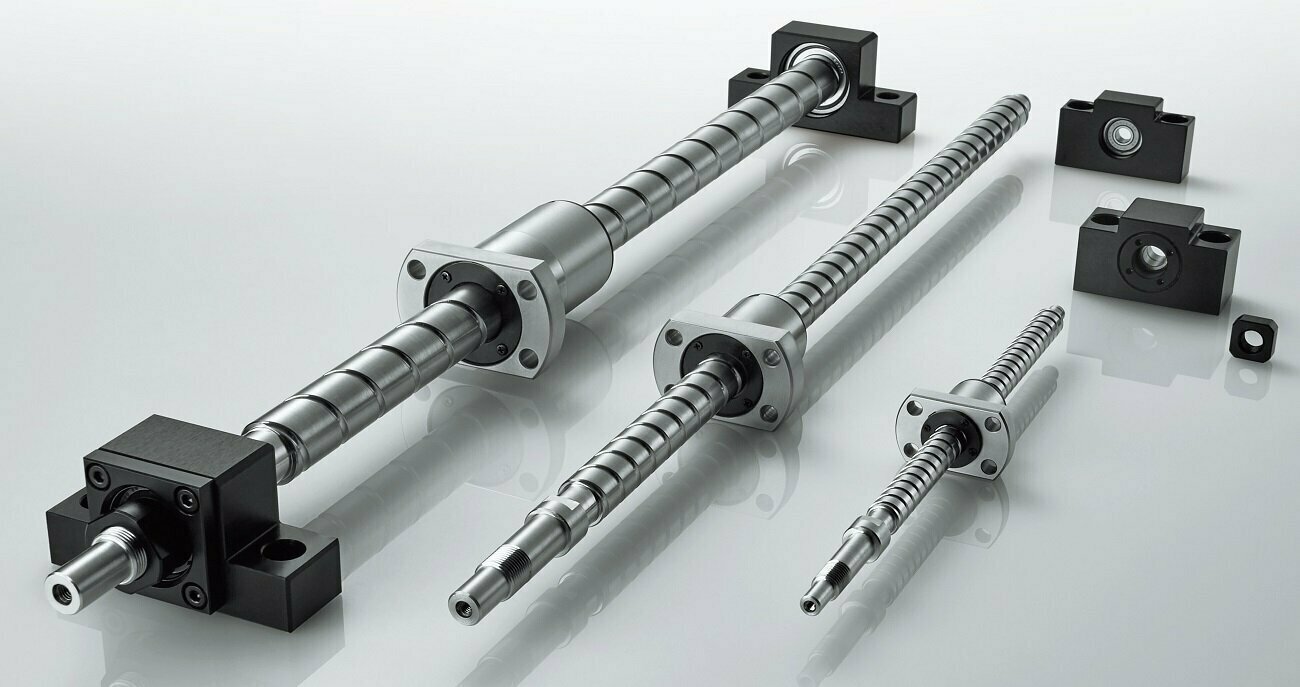
Precision Ball Screw with Finished Shaft Ends Model SDA-VZ Lineup
THK, a leading manufacturer of mechanical components, has announced its ongoing commitment to innovation and global distribution. The company specializes in products such as Linear Motion systems, LM Guides, Ball Splines, Ball Screws, and electric actuators, catering to a diverse clientele worldwide. In addition to these offerings, THK also develops and distributes a range of mechatronics products, automobile parts, and seismic isolation systems. This strategic focus on advanced manufacturing and product diversity positions THK as a key player in the mechanical engineering sector, responding to the evolving needs of industries around the globe.
THK Linear Motion LM Guides Linear bearing Linear Guide Ball SplinesRobotics needs a service framework.
RSF defines a common language for robot service capability, lifecycle operations, certification pathways, and service-provider networks.
Join the RobotToday community on LinkedIn
Daily robotics news, in-depth analysis, conference highlights, and discussions with professionals worldwide.