Industry Briefing
A single destination for timely, editor-curated robotics news from around the world.

NVIDIA Unveils Jetson Orin Nano 2 Robotics Computer for Entry-Level Edge AI
NVIDIA has introduced the Jetson Orin Nano™ 2, a robotics computer designed to enhance entry-level edge AI capabilities. This new device offers frontier-class generative AI performance, enabling developers to create autonomous systems that can understand context and act in real time. With its compact and energy-efficient design, the Jetson Orin Nano 2 is poised to revolutionize robotics applications across various sectors. The significance of the Jetson Orin Nano 2 lies in its impressive specifications, including 78 trillion operations per second of AI compute and 8GB of memory. It delivers double the inference performance of its predecessor while consuming 40% less power. This advancement allows developers to implement real-time reasoning in edge devices, making it a crucial tool for industries utilizing robotics, drones, and vision AI systems. Looking ahead, NVIDIA's Jetson Orin Nano 2 is expected to be adopted by numerous developers and companies, including Cognex, Doosan Bobcat, and Matic. These partnerships will facilitate the development of innovative edge AI applications, such as home robots and delivery drones, enhancing their performance and efficiency. No further timeline was disclosed at the time of publication.
NVIDIA Launches Jetson Thor Modules to Enhance Robotics and Edge AI Applications
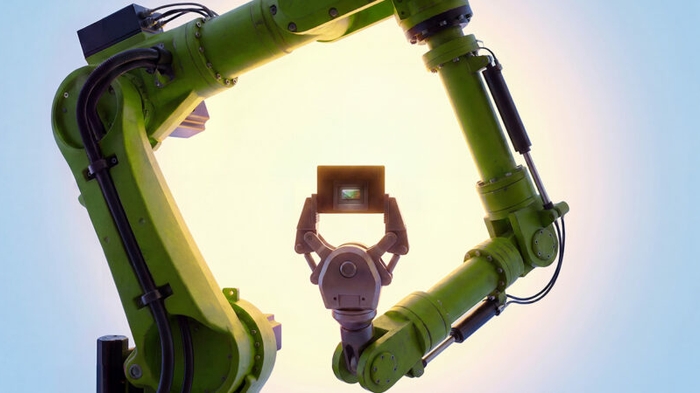
NVIDIA has unveiled the T3000 and T2000 modules based on the Thor architecture, designed to meet the growing demand for compact AI supercomputers in robotics and edge AI. These modules enable mass-market deployment of advanced humanoid and robotic systems, with notable adoption from leading companies such as Amazon Robotics and Boston Dynamics. The introduction of the Jetson T3000 and T2000 modules is significant as they provide high-performance AI compute capabilities in a smaller form factor, achieving up to 865 FP4 teraflops for the T3000. This advancement allows developers to optimize their systems while reducing costs, particularly in light of rising memory prices. The T2000 serves as an entry point for a wider range of edge AI applications, further expanding NVIDIA's scalable edge AI platform. Looking ahead, the new Jetson modules are expected to facilitate faster deployment and lower system costs across various industries. Companies like UBTech and Agile Robots have already reported substantial memory savings, indicating a trend towards more efficient development processes in robotics. No further timeline was disclosed at the time of publication.

Starmind's Orbital Compute vs. Terrestrial Data Centers: Analyzing Resource Advantages
Starmind's orbital compute technology presents a significant advantage over traditional ground-based data centers by eliminating constraints related to land, water, and grid permitting. While terrestrial data centers are currently cheaper and faster to construct, with U.S. data center spending reaching $85.3 billion in 2026, Starmind's approach focuses on addressing the growing resource limitations faced by hyperscale facilities. The significance of Starmind's technology lies in its ability to sidestep the increasing challenges of land and water usage. For instance, a 100 MW data center can consume approximately 530,000 gallons of water daily for cooling, while Starmind's AI1 utilizes deployable liquid radiators that require no water. This structural advantage could resonate with investors as the demand for AI computing continues to escalate, potentially leading to annual water withdrawals of up to 1.7 trillion gallons by 2027. Looking ahead, Starmind's next milestones include the launch of AI1 prototypes scheduled for early 2027. However, the technology's claims regarding cooling efficiency and operational reliability remain unverified until real flight data is available. As the industry evolves, the competition between orbital and terrestrial solutions will become increasingly relevant, particularly in the context of resource management and sustainability.

Aetina Demonstrates Edge AI Platforms for Robotics, Vision AI and Enterprise Automation at COMPUTEX 2026
NVIDIA is set to showcase its cutting-edge edge AI systems, robotic automation, lightweight VLM deployment, and agentic AI workflows through live demonstrations. These events will highlight the capabilities of real-time AI processing at the edge, illustrating the potential applications and advancements in technology. The demonstrations are scheduled to take place in the coming weeks, providing attendees with a firsthand experience of the latest innovations in AI. By presenting these technologies, NVIDIA aims to emphasize the importance of edge computing in enhancing efficiency and performance across various industries. The demonstrations will allow participants to observe how these systems operate in real-time, showcasing their practical applications and benefits.
Robotics needs a service framework.
RSF defines a common language for robot service capability, lifecycle operations, certification pathways, and service-provider networks.
Join the RobotToday community on LinkedIn
Daily robotics news, in-depth analysis, conference highlights, and discussions with professionals worldwide.