

NVIDIA Launches Jetson Thor Modules to Enhance Robotics and Edge AI Applications
- Published
- Source
- NvidiaNews
NVIDIA has unveiled the T3000 and T2000 modules based on the Thor architecture, designed to meet the growing demand for compact AI supercomputers in robotics and edge AI. These modules enable mass-market deployment of advanced humanoid and robotic systems, with notable adoption from leading companies such as Amazon Robotics and Boston Dynamics.
The introduction of the Jetson T3000 and T2000 modules is significant as they provide high-performance AI compute capabilities in a smaller form factor, achieving up to 865 FP4 teraflops for the T3000. This advancement allows developers to optimize their systems while reducing costs, particularly in light of rising memory prices. The T2000 serves as an entry point for a wider range of edge AI applications, further expanding NVIDIA's scalable edge AI platform.
Looking ahead, the new Jetson modules are expected to facilitate faster deployment and lower system costs across various industries. Companies like UBTech and Agile Robots have already reported substantial memory savings, indicating a trend towards more efficient development processes in robotics. No further timeline was disclosed at the time of publication.
Original report
NVIDIA Introduces New Jetson Thor Computers to Advance Mainstream Robotics and Edge AI
NvidiaNews · NVIDIAThis briefing is an independently written summary based on publicly available reporting and is provided for industry information and news discovery. The original report and source publication are credited and linked where applicable. RobotToday does not claim ownership of third-party source material.
Rights concerns? Contact [email protected] with the relevant URL and details. We will review the matter and take appropriate action where warranted.
More related news
- 1
- 2
- 3
- 4
- 5
- 6
- 7
- 8
- 9
- 10
- 11
-
12
RoboDEX 2027 – Tokyo, Feb 17–19, 2027 RobotToday · 2 days ago
Related Suppliers

NVIDIA Robotics
United States
NVIDIA robotics division delivering Isaac simulation and training tools, Jetson edge compute modules, and Omniverse digital twin frameworks for physical AI.

Deci AI (Acquired by NVIDIA)
Israel
Israeli deep learning optimization startup acquired by NVIDIA in May 2024 for ~$300M; known for AutoNAC neural architecture search technology.

Amazon Robotics
United States
Amazon's robotics division, formerly Kiva Systems (founded 2003, acquired 2012), in North Reading, MA, developing AMRs and automation for Amazon fulfilment.

Boston Dynamics
United States
Iconic US robotics firm (MIT spin-off, 1992); Spot quadruped, Atlas humanoid, Stretch warehouse robot; owned by Hyundai; ~$21B valuation.
EverFocus Electronics Corp. 慧友電子股份有限公司
Taiwan
Taiwanese provider of NVIDIA/Qualcomm edge-AI computing platforms, robotic controllers, vision-AI cameras and commercial-vehicle safety systems.
Palit Microsystems
Taiwan
Taipei-based Palit has manufactured NVIDIA-based graphics cards since 1988 and now also builds Jetson Orin edge-AI compute modules for robotics.
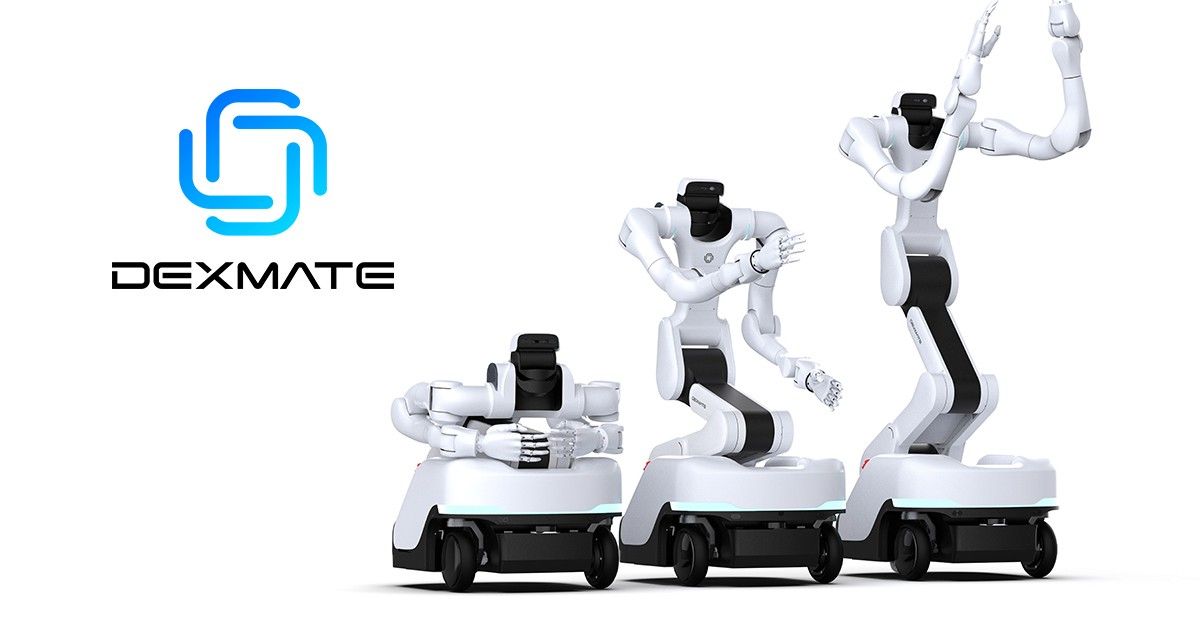
Dexmate
United States
Santa Clara maker, founded 2024, of Vega, a foldable wheeled bimanual humanoid on Jetson Thor listed from USD 83,000, plus grippers and a teleop exoskeleton.

CoastIPC, Inc.
United States
Hingham, Massachusetts industrial-PC distributor founded 2009 as Coast Automation, rebranded CoastIPC in 2017; resells Advantech and Neousys hardware.
Aetina Corporation
Taiwan
Taiwan-based NVIDIA Elite Partner making industrial-grade edge AI computing platforms, GPU accelerators, and inference systems for robotics and vision AI.
Basis Robotics
United States
US robotics software company in Somerville, MA developing an open-source pub-sub framework for deterministic testing and production robotics deployment.

Microsoft Corporation (Robotics)
United States
Microsoft provides robotics developers ROS-on-Windows support, the AirSim open-source simulation platform, and Azure cloud services for robot fleets and AI.

Rockchip Electronics Co., Ltd. 瑞芯微电子股份有限公司
China
Fuzhou, China fabless semiconductor company founded 2001; designs ARM-based SoCs for AI vision, tablets, IoT, automotive, and industrial applications.
Robotics needs a service framework.
RSF defines a common language for robot service capability, lifecycle operations, certification pathways, and service-provider networks.
Join the RobotToday community on LinkedIn
Daily robotics news, in-depth analysis, conference highlights, and discussions with professionals worldwide.


