

Industry Briefing
A single destination for timely, editor-curated robotics news from around the world.

Zhejiang Humanoid Robot Innovation Center Expands Global Reach with 2,000-Unit NAVIAI Order
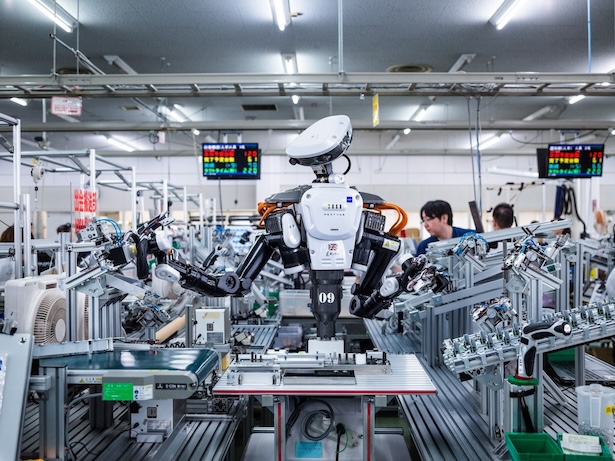
The Zhejiang Humanoid Robot Innovation Center has successfully deployed NAVIAI robots at SUPCON JACK GREE and FOTILE. This deployment marks a significant step in the center's expansion efforts. The center has signed a substantial order for 2,000 NAVIAI robots with Jack Technology, highlighting the growing demand for humanoid robots in the apparel industry. This order is a testament to the increasing integration of robotics in manufacturing processes. Additionally, the center is expanding its operations internationally, with deployments planned in BEKO Turkey and KION Germany. This move signifies a strategic effort to enhance global partnerships and broaden the application of humanoid robotics in various sectors. No further timeline was disclosed at the time of publication.
Industry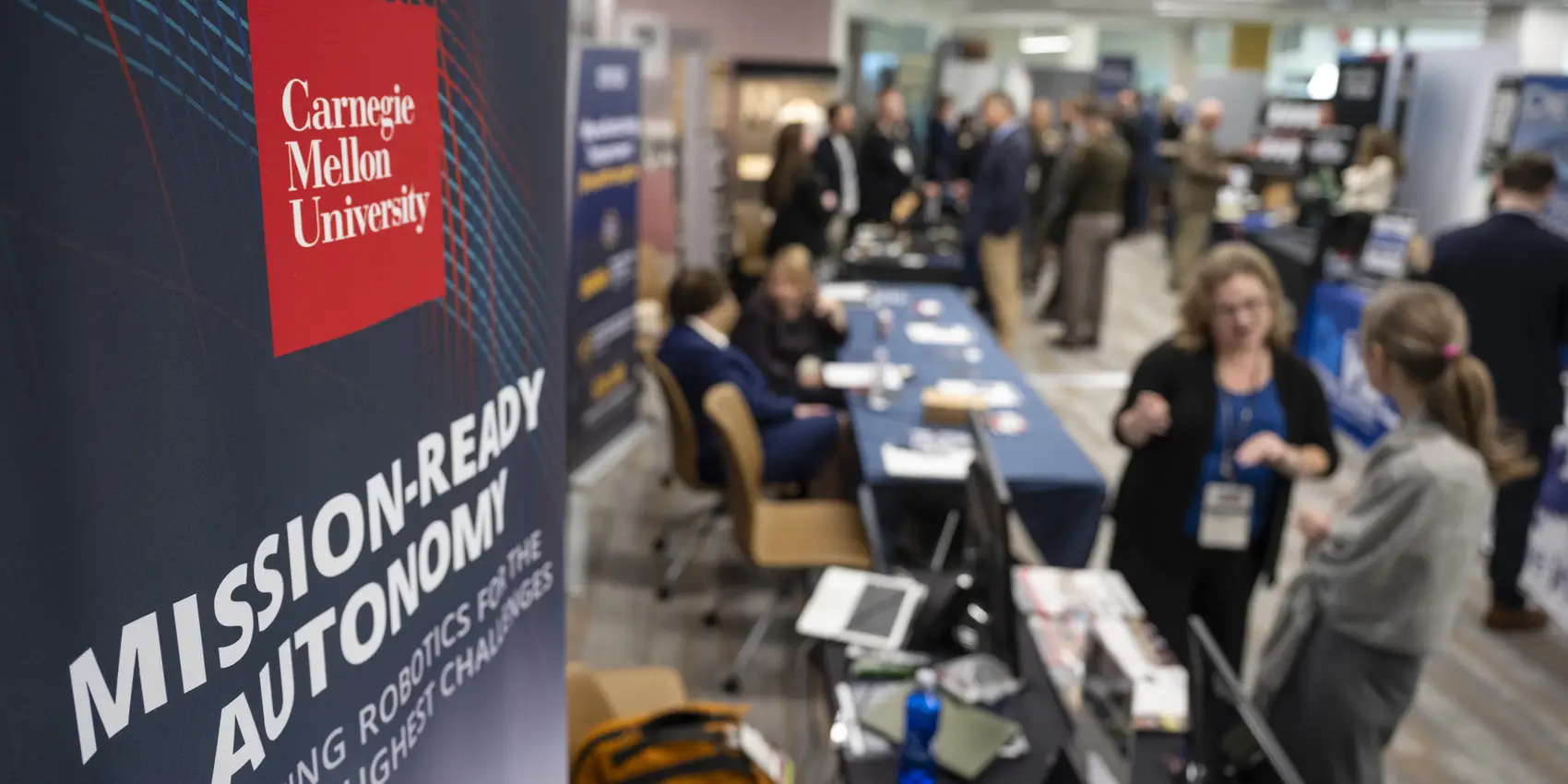
Carnegie Mellon University Showcases Innovations in Defense Manufacturing at 2026 Summit
Carnegie Mellon University (CMU) presented several new partnerships and technologies at the 2026 Pennsylvania Defense and Innovation Summit. This event took place from July 14-15 at the U.S. Army War College in Carlisle, Pennsylvania, and was hosted by U.S. Senator David McCormick. The summit highlighted CMU's commitment to advancing defense manufacturing and military education through innovative research and collaboration. These efforts are crucial for enhancing the capabilities of the defense sector and ensuring that military personnel are equipped with the latest technologies. Looking ahead, stakeholders in the defense industry should monitor CMU's ongoing initiatives and partnerships that may emerge from this summit. No further timeline was disclosed at the time of publication.
Announcements
Japan Plans Defense Subsidies to Boost Domestic Drone and Ammunition Production Capacity
Japan is set to introduce defense subsidies aimed at enhancing domestic production capabilities for critical items such as drones and ammunition. This initiative is part of a broader strategy to ensure that the country can meet its national security needs in times of crisis, particularly in light of increasing regional threats. The significance of these subsidies lies in their potential to attract new suppliers and support existing ones, thereby strengthening Japan's defense industrial base. As the geopolitical landscape evolves, the ability to produce essential military supplies domestically becomes increasingly vital for national security. Looking ahead, stakeholders will be monitoring the implementation of these subsidies and their impact on Japan's defense capabilities. No further timeline was disclosed at the time of publication.

US Defence Innovation Unit Successfully Tests GPS-Free Magnetic Navigation System for Aircraft
The US Defence Innovation Unit (DIU) has completed a successful flight test of a magnetic navigation system designed to guide aircraft without reliance on GPS. This advancement marks a significant step in developing navigation technologies that can operate in environments where GPS signals are weak or unavailable. The ability to navigate aircraft across open oceans without GPS is crucial for enhancing operational capabilities in military and commercial aviation. This technology could provide a reliable alternative for navigation in remote areas, potentially improving safety and efficiency in flight operations. Looking ahead, the implications of this successful test could lead to further developments in navigation systems that enhance aircraft autonomy. No further timeline was disclosed at the time of publication.
News
ARM Institute Issues Project Call for U.S. Defense Manufacturing Technology Innovations
The ARM Institute has launched Project Call 27-01, inviting proposals for technologies aimed at enhancing U.S. defense manufacturing capabilities. This initiative seeks innovations in areas such as metalwork, drones, munitions, and shipbuilding, with a focus on dual-use technologies that can benefit both military and civilian sectors. This project call is significant as it aligns with the U.S. Department of War's (DoW) objectives to improve defense manufacturing efficiency and reduce costs. The ARM Institute emphasizes the importance of validated transition plans that include government stakeholders, which can facilitate smoother integration into the DoW's commercial industrial base and organic industrial base. Looking ahead, concept papers must be submitted by September 16, 2026, with a series of deadlines leading up to the final project execution beginning February 1, 2027. The ARM Institute aims to foster collaboration and innovation within its community of over 500 members, addressing funding and engineering challenges in defense technology development.
Artificial Intelligence Autonomous Mobile Robots (AMRs) Collaborative Robots Defense / Security Drones Manufacturing
WAIC 2026: Turing Award and Unicorns Unite at Tsinghua Innovation Night on July 17
The WAIC 2026 event is set to feature a unique convergence of Turing Award winners and unicorn startups at Tsinghua Innovation Night on July 17. This gathering aims to showcase groundbreaking advancements in technology and innovation, highlighting the intersection of academic excellence and entrepreneurial success. This event is significant as it represents a platform for collaboration between leading researchers and emerging companies, fostering an environment where innovative ideas can flourish. The participation of Turing Award laureates underscores the importance of academic contributions to the tech industry, while unicorns bring practical applications and market insights. Looking ahead, attendees can expect engaging discussions and networking opportunities that could lead to future collaborations. No further timeline was disclosed at the time of publication.
Artificial Intelligence Innovation Technology Events Startups
Cellula Robotics USA Inc. Selected to Deliver Autonomous Underwater Vehicle Prototype Under the CAMP Defense Innovation Unit Project
Cellula Robotics USA Inc. has announced its involvement in the development of a long-endurance Autonomous Underwater Vehicle (AUV) following a contract awarded by the Defence Innovation Unit (DIU). This initiative is part of the Combat Autonomous Maritime Platform (CAMP) program, aimed at enhancing national defense capabilities. The collaboration underscores Cellula's dedication to providing reliable solutions for defense while emphasizing the importance of strategic partnerships that integrate commercial innovation with military requirements.
cellula robotics usa autonomous underwater vehicle prototype camp defense innovation unit (diu)
U.S. Robotics Sector Seeks National Strategy for Innovation and Manufacturing
U.S. robotics researchers and industry leaders are advocating for a cohesive national strategy to enhance basic research and boost domestic production of robots. Recent advancements, such as Boston Dynamics' Atlas performing complex movements, underscore the U.S.'s role as a leader in technological innovation. However, critics warn that without a focus on manufacturing robotic hardware domestically, the U.S. risks losing economic benefits from its innovations. The U.S. has historically relied on a free-market approach to drive technological advancements, significantly contributing to its GDP and leadership in artificial intelligence. The Department of Defense has emerged as a key player in funding robotics, with a proposed $13.4 billion budget for autonomous systems in 2026, reflecting the growing importance of robotics in military applications. Despite these investments, the U.S. faces challenges in competing in physical manufacturing, which requires substantial capital and long-term commitment. As the U.S. ranks third in industrial robotics consumption, the reliance on foreign imports for manufacturing poses a risk to national security. The lack of domestic infrastructure for robotic production contrasts sharply with countries like Japan, which has a minimal dependency on imports. Moving forward, the U.S. must address these vulnerabilities to maintain its competitive edge in the global robotics landscape. No further timeline was disclosed at the time of publication.
SpaceX's Starship V3 Plans for 1 Million Starmind Satellites by 2030
SpaceX's Starship V3 is set to revolutionize satellite deployment, aiming to launch 1 million Starmind satellites by 2030. The spacecraft can carry over 100 tonnes to low Earth orbit (LEO), significantly more than the Falcon 9's capacity. As of May 2026, Starship has completed 12 flights, with the next mission scheduled for late July 2026, focusing on operational payloads including AI1 prototypes in early 2027. This ambitious plan is crucial for expanding orbital compute capacity, targeting an annual addition of 100 GW through a million tonnes of satellite hardware. SpaceX's strategy hinges on achieving a launch cadence of approximately 12,000 flights, equating to about three launches per day. The company has invested over $15 billion in the Starship program, with expectations to begin payload deliveries in the second half of 2026, starting with Starlink V3 satellites. Looking ahead, the successful deployment of the Starmind constellation will depend on Starship's ability to meet its cost targets of $10–20 million per flight. If achieved, this would make launching satellites more economical than building ground data centers. The next significant milestone will be the launch of AI1 prototypes in early 2027, with full-scale deployments commencing in 2028 from the new Gigasat factory in Texas.

Tesla's Optimus Robots to Support Starmind Satellite Production, Not Maintenance
Tesla's Optimus robots will not be used to repair Starmind satellites in orbit, as confirmed by recent statements from Elon Musk. Instead, these robots are intended to assist in the construction and operation of the Terafab chip manufacturing facility in Texas. The AI1 satellites, designed to disintegrate upon reentry, highlight the company's swap-and-replace strategy rather than traditional maintenance practices. This approach is significant as it reflects a broader trend in satellite management, where mass-produced satellites are replaced rather than repaired. The economics of servicing missions are prohibitive, with the cost of launching a replacement satellite being significantly lower than conducting a repair mission. This model aligns with SpaceX's operational history, where rapid replacement of satellites is more efficient than attempting to maintain them in orbit. Looking ahead, the focus will remain on the production capabilities of the Gigasat factory, which is expected to support the continuous replacement of satellites. No further timeline was disclosed at the time of publication, but the demand for rapid satellite turnover suggests a robust future for Optimus robots in terrestrial manufacturing rather than in-space servicing.

SpaceX IPO Provides Indirect Investment Opportunity in Starmind Project
Starmind does not have a standalone stock or ticker; investors can gain exposure through SpaceX (ticker: SPCX), which began trading on Nasdaq after its IPO on June 12, 2026. Starmind is integrated within SpaceX, contributing to the company's AI and space initiatives, and its performance directly influences SPCX shares. The significance of Starmind lies in its role as a division of SpaceX, which encompasses other projects like Starlink and Starship. As of early July 2026, SPCX shares are trading between $149 and $150, significantly lower than their 52-week high of $225.64. The project’s milestones, such as AI1 prototype updates, can impact SpaceX's stock performance, making it essential for investors to monitor these developments closely. Looking ahead, the early 2027 launch of AI1 prototype satellites is a critical milestone that could provide verifiable data affecting Starmind's valuation and, consequently, SPCX stock. No further timeline was disclosed at the time of publication, but the upcoming events will be pivotal for investors tracking the relationship between Starmind and SpaceX's stock performance.

SpaceX's Starmind Targets AI Labs with $6.3 Billion Compute Contracts
SpaceX's Starmind is designed to provide wholesale AI compute services to businesses, particularly AI labs and cloud customers, rather than individual consumers. The service operates similarly to AWS, where users benefit from applications running on Starmind without direct subscriptions. The compute capacity of a single AI1 satellite is comparable to one NVIDIA GB300 rack, emphasizing its enterprise-grade capabilities. The significance of Starmind lies in its positioning as a potential fourth hyperscaler, joining the ranks of AWS, Microsoft Azure, and Google Cloud. The Reflection AI contract, valued at $150 million per month, exemplifies the enterprise-focused model, with total payments potentially reaching $6.3 billion through 2029. This contract highlights the growing demand for AI compute resources, particularly from AI-native startups and labs. Looking ahead, the focus will remain on securing additional enterprise contracts as Starmind expands its offerings. No consumer-facing products or subscriptions have been announced, and the current strategy is to cater to businesses with substantial AI workloads. No further timeline was disclosed at the time of publication.

Starmind's Satellite Technology Achieves 880 Billion Liters in Annual Water Savings
Starmind has announced that its satellite technology can save approximately 880 billion liters of cooling water annually at full scale. This figure is equivalent to the annual household water use of around 6.5 million Americans. The technology operates by utilizing a closed-loop liquid cooling system that eliminates the need for water during its operational life, contrasting sharply with traditional ground data centers that consume vast amounts of water for cooling. The significance of this achievement lies in the growing water consumption crisis faced by data centers, particularly as AI expansion drives demand. In 2025, U.S. data centers consumed nearly one trillion liters of water, highlighting the urgent need for sustainable solutions. Starmind's approach not only addresses direct water usage but also avoids indirect water consumption associated with electricity generation, marking a substantial shift in how computing can be conducted in a resource-efficient manner. Looking ahead, Starmind's deployment strategy includes a projected buildout of 100 GW of orbital compute per year, which could displace an additional 735 billion liters of ground water demand annually. The first tranche of 10,000 satellites is already operational, offsetting approximately 8.8 billion liters of water per year. No further timeline was disclosed at the time of publication.

SpaceX Unveils AI1 Satellite Specs for Starmind Constellation with Key Thermal Challenges
SpaceX has introduced the AI1 satellite, the inaugural component of its Starmind constellation, which stands 20 meters tall and has a wingspan of 70 meters. This orbital compute node is designed to deliver computing power equivalent to one NVIDIA GB300 server rack, utilizing a unique cooling system with deployable liquid radiators. The satellite's specifications were revealed during a presentation on June 8, 2026, ahead of SpaceX's IPO. The significance of the AI1 satellite lies in its role as a compute platform rather than a traditional satellite, focusing on running AI inference workloads. The satellite's cooling system, which is critical for its operation in the vacuum of space, is designed to reject heat through infrared radiation. However, independent engineers have raised concerns about the feasibility of the thermal and mass claims made by SpaceX, suggesting that the cooling requirements may exceed practical limits. Looking ahead, SpaceX plans to launch two AI1 prototypes in early 2027, with full-scale production expected to commence later that year at its Gigasat facility in Bastrop, Texas. The ongoing debate regarding the satellite's thermal management capabilities will be crucial to monitor as the project progresses, with no further timeline disclosed at the time of publication.
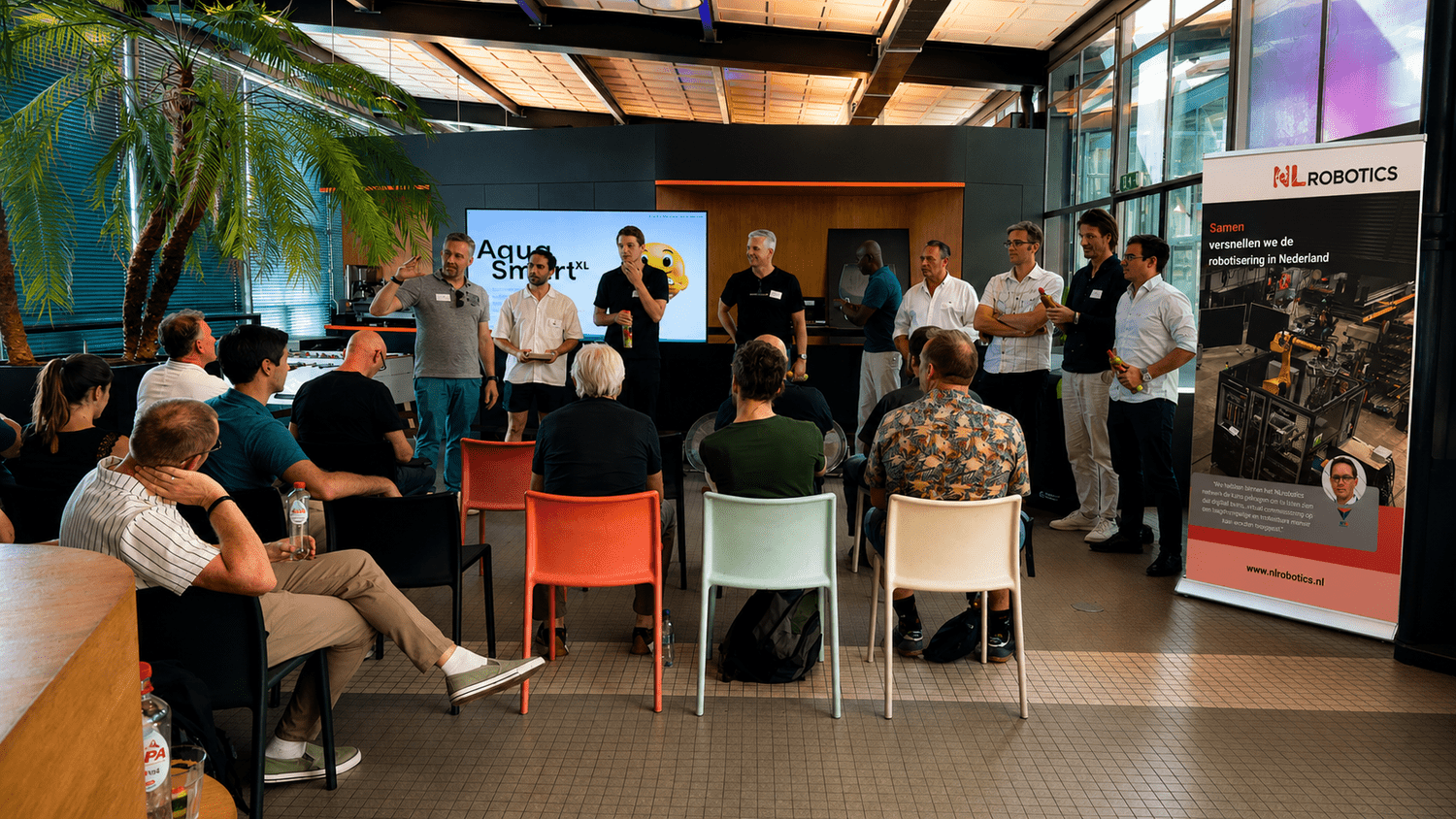
Tech Event Robotics Unites Innovation and Practice in Rotterdam
The Tech Event Robotics, organized by NLrobotics and Robodam in Rotterdam, focused on training robots to learn new skills and the role of AI in capturing work instructions. Industry professionals gathered for an afternoon of practical examples, knowledge sharing, and inspiration. This event highlighted the collaboration between companies, educational institutions, and end-users to explore the latest advancements in robotics and AI. Attendees gained insights into innovations currently being developed and applied within the Rotterdam robotics ecosystem. The event showcased the importance of quality data for training robots and autonomous systems, emphasizing the shift from teleoperation to autonomous robots. As the robotics sector continues to evolve, the collaboration fostered at this event is expected to contribute significantly to the growth of the Dutch robotics industry.
Nieuws algemeen AI NLrobotics Technologie
Defense Leaders Call for Faster Paths from Innovation to the Field
The 2026 Northeast National Security Conference, organized by the New Hampshire Tech Alliance, convened defense contractors, government officials, technology firms, investors, and researchers to address pressing national security challenges. Held recently, the conference emphasized the increasing need for rapid and commercially viable defense solutions. Leaders in the defense sector underscored the importance of accelerating the transition from innovative concepts to practical applications in the field, aiming to enhance national security readiness. The discussions highlighted the collaboration between various stakeholders to foster innovation and respond effectively to emerging threats.
Applications Defense defense DL Exclusive Drone News Drone News Feeds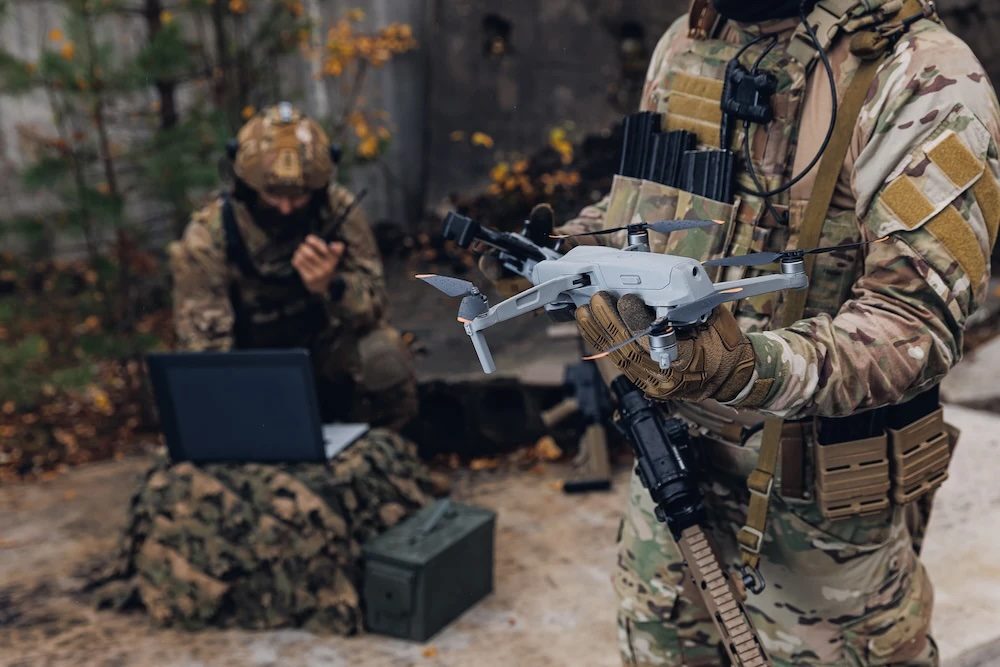
Battle-Tested Innovation Meets Manufacturing Scale in New Canada-Ukraine Defense Partnership
Volatus Aerospace, a Canadian drone and aerospace company, has entered into a Memorandum of Understanding (MOU) with UCan Brave Tech Centre, a defense innovation organization focused on Canada-Ukraine collaboration. This partnership, announced in May 2023, aims to facilitate the commercialization and deployment of advanced technologies that have been tested in the battlefield for use in allied defense applications. By leveraging the expertise and innovations developed in Ukraine, the collaboration seeks to enhance defense capabilities and foster technological advancements in the aerospace sector.
Applications Canada Canadian Drone Industry Defense Drone News Drone News Feeds
Marine Technology Society and Ocean Exchange Unite to Accelerate Innovation in Marine Technology
The Marine Technology Society (MTS) and Ocean Exchange, two prominent nonprofits in the marine technology field, have announced their merger aimed at fostering innovation and advancing emerging technologies to promote healthy oceans and resilient coastal systems. This strategic combination, revealed recently, is set to enhance the Blue Economy by expanding their geographic reach and utilizing their extensive industry networks to bolster the startup ecosystem. By pooling their expertise and resources, MTS and Ocean Exchange plan to create new business opportunities, facilitate connections between emerging technology leaders and seasoned professionals, and expedite the commercialization of innovative ocean solutions.
marine technology society ocean exchange innovation marine technologyRobotics needs a service framework.
RSF defines a common language for robot service capability, lifecycle operations, certification pathways, and service-provider networks.
Join the RobotToday community on LinkedIn
Daily robotics news, in-depth analysis, conference highlights, and discussions with professionals worldwide.







