

Industry Briefing
A single destination for timely, editor-curated robotics news from around the world.

Common Vector Robotics Secures $425,000 in Michigan's PitchMI Startup Competition
Common Vector Robotics, a manufacturer based in Detroit, has secured $425,000 in funding after winning the defense and aerospace semifinal of Michigan University's PitchMI Startup Competition. The funding includes $375,000 from the main competition and an additional $50,000 from 20Fathoms. This funding is significant for Common Vector Robotics, as it aims to enhance its development of ground-based robotic systems for both civilian and defense applications. The company focuses on in-house manufacturing of critical components, which supports its innovative platforms like Ghostrunner and the GL-1, designed for rugged environments and autonomous operations. Looking ahead, Common Vector Robotics plans to leverage this funding to scale its operations and further develop its robotic technologies. No further timeline was disclosed at the time of publication.
Business News Robotics 20fathoms autonomous mobile robots Autonomous robots
Arm Introduces Robotics Capability Framework for Intelligent Robot Descriptions
Arm, a semiconductor and software design company, has launched a Robotics Capability Framework aimed at providing a standardized language for the robotics industry. This initiative seeks to clarify ambiguous terms like 'autonomous' and 'intelligent' as AI becomes more integrated into robotic systems. The framework is designed to address the challenges posed by inconsistent terminology, which complicates the comparison and integration of robotic systems. As robots expand their roles beyond industrial settings into areas such as healthcare and agriculture, a common language is essential for developers, regulators, and users to assess capabilities and risks effectively. Arm's proposed framework outlines levels of robotic intelligence and the contexts in which these capabilities are applied. This dual approach allows for a more nuanced understanding of a robot's abilities, facilitating better differentiation between various types of robots, such as fixed industrial units and mobile manipulators that require advanced contextual awareness.
Computing Design Engineering Features arm arm total design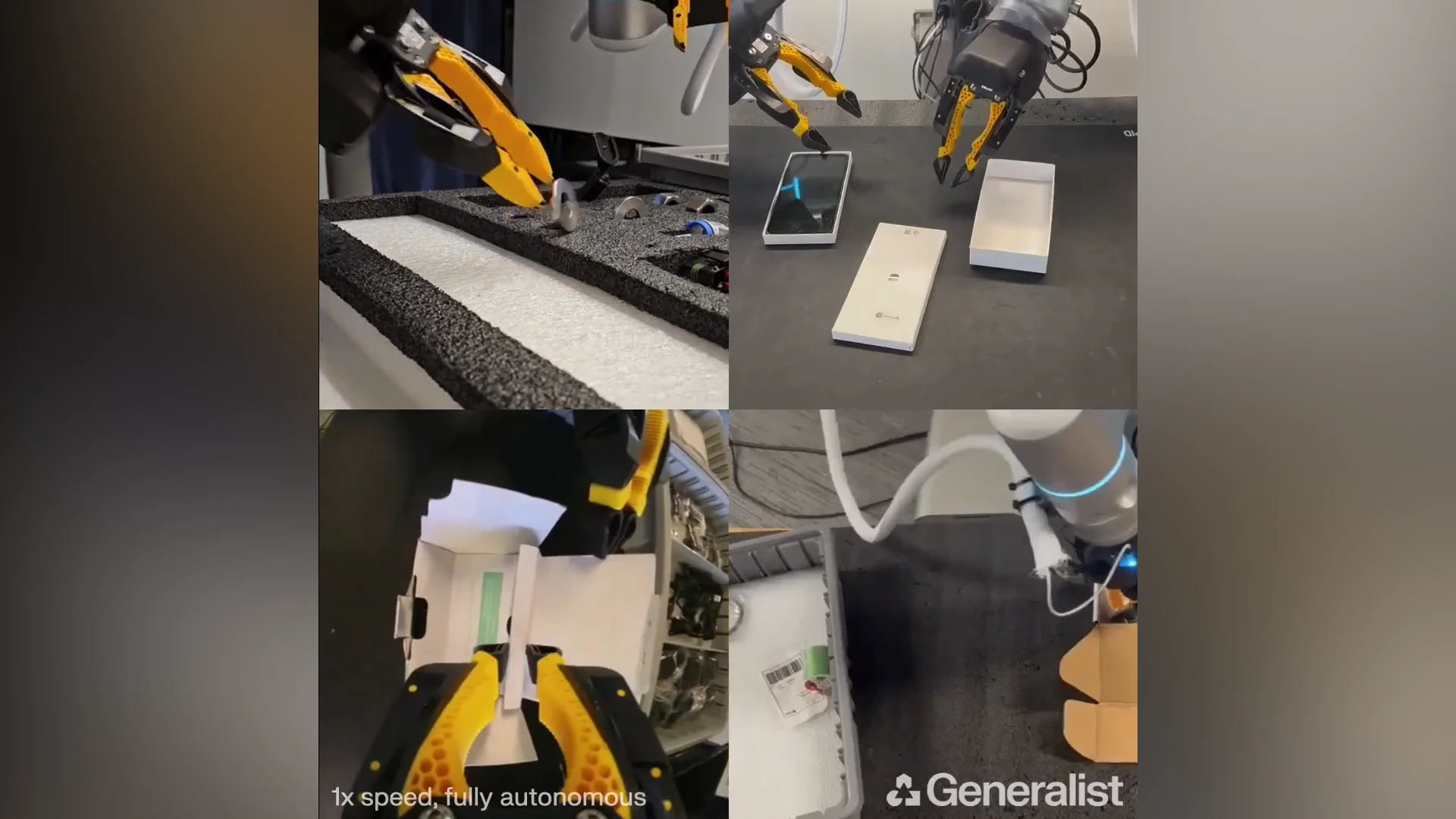
The Dark Matter of Robotics: Generalist AI’s Andy Zeng on the Quest for Physical Commonsense
The chief scientist of Generalist AI has emphasized that the future advancements in robotics will not stem from textual data available on the internet, but rather from enhancing the 'reflexive' intelligence associated with physical interactions. This statement highlights a shift in focus towards developing robots that can better understand and respond to their environments through direct engagement, rather than relying solely on pre-existing information. The insights were shared during a recent discussion on the evolution of artificial intelligence and its implications for robotic development. As the field progresses, experts are advocating for a more hands-on approach to training robots, suggesting that real-world experiences will be crucial in fostering their capabilities. This perspective underscores the importance of integrating sensory feedback and adaptive learning in robotic systems to achieve significant breakthroughs in the industry.
Generalist AI embodied-ai
Locus Robotics Achieves CE Certification for High-Payload Vector Robot, Enabling New Possibilities in Flexible Warehouse Automation
Locus Robotics has unveiled its latest innovation, the Locus Vector, which enhances the capabilities of its existing Locus Origin fleets. This new addition, powered by the advanced LocusONE™ platform, aims to optimize warehouse operations by improving efficiency and productivity in logistics. The announcement was made in October 2023, highlighting the company's commitment to advancing automation in supply chain management. By integrating Locus Vector with current systems, Locus Robotics seeks to address the growing demand for streamlined processes in the ever-evolving e-commerce landscape. The deployment of this technology is expected to transform how warehouses operate, ultimately leading to faster order fulfillment and reduced operational costs.
Robotics needs a service framework.
RSF defines a common language for robot service capability, lifecycle operations, certification pathways, and service-provider networks.
Join the RobotToday community on LinkedIn
Daily robotics news, in-depth analysis, conference highlights, and discussions with professionals worldwide.







