

Industry Briefing
A single destination for timely, editor-curated robotics news from around the world.
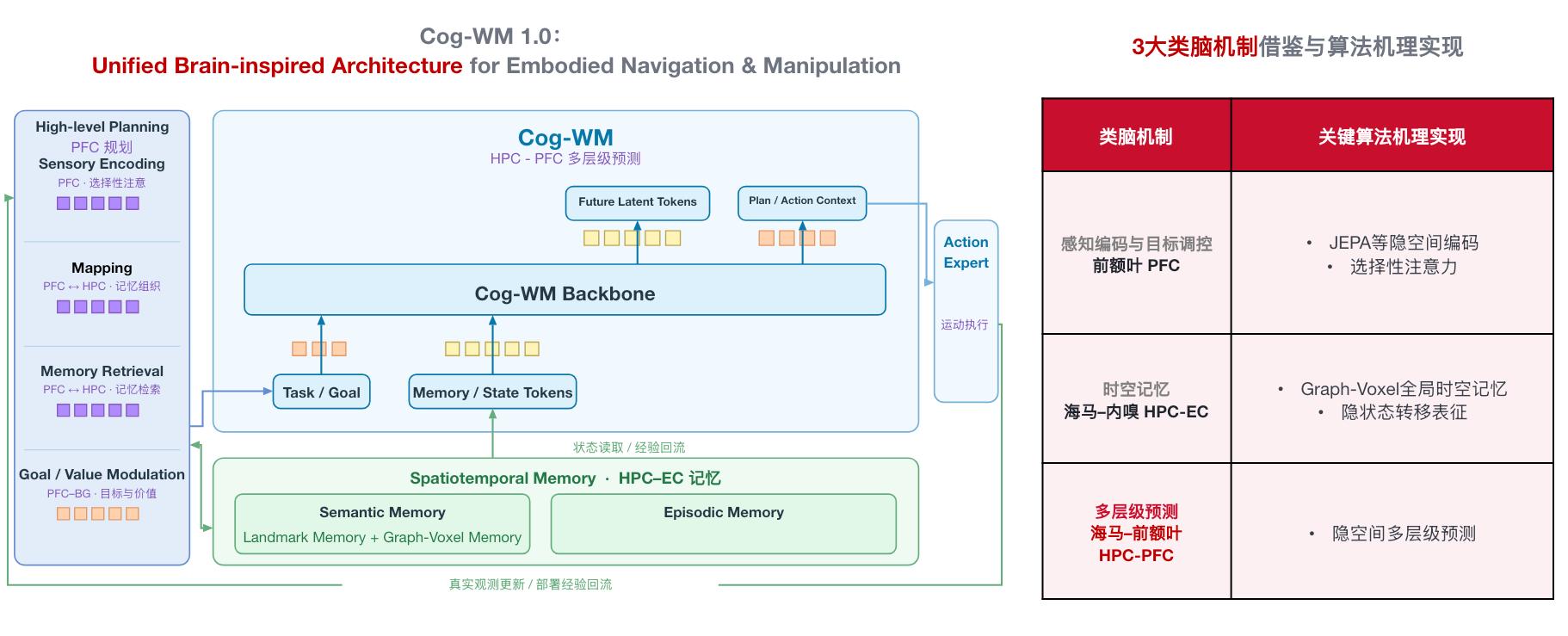
Cog-WM 1.0 Launches as the First Brain-Inspired Cognitive World Model for Robots
On September 14, Shanghai Juna Technology Co., Ltd. officially launched Cog-WM 1.0, the world's first brain-inspired cognitive world model, at the 2026 Pujiang Innovation Forum. This model, based on systematic brain-like neural mechanisms, has demonstrated capabilities in autonomous navigation and manipulation without relying on pre-built maps. Cog-WM 1.0's significance lies in its ability to enhance robotic autonomy in unfamiliar environments, achieving over a 10% improvement in navigation success rates compared to existing state-of-the-art models. It allows robots to perform tasks such as spatial memory retrieval and object searching, marking a significant advancement in embodied intelligence. Looking ahead, the focus will be on how Cog-WM 1.0 addresses key challenges in robotic cognition, such as reducing reliance on extensive data and improving long-term task completion. No further timeline was disclosed at the time of publication.
Cognitive Robotics Autonomous Navigation AI Technology Robotics Innovation
Chiba University Researchers Enhance Control System for Flapping-Wing Robots in Windy Conditions
Researchers from Chiba University in Japan have developed a new control method for flapping-wing micro aerial vehicles (FW-MAVs) that significantly improves stability in windy conditions. This method addresses the limitations of existing control systems, reducing X-axis position error by 53.1 percent, which is crucial for applications like inspection and search-and-rescue operations. The importance of this advancement lies in the unique flight capabilities of FW-MAVs, which are inspired by birds and insects. Their ability to hover and maneuver in confined spaces makes them ideal for various applications, but their susceptibility to disturbances such as wind gusts has posed challenges. The new control method enhances their performance, enabling more stable and accurate flight. Looking ahead, the research paper detailing these findings will be published in the October issue of Control Engineering Practice, following its online release on June 4, 2026. The study's insights into non-minimum-phase behavior and its impact on disturbance correction will be critical for future developments in the field of aerial robotics.
Features Science aerial robotics autonomous flight Autonomous robots bio-inspired robotics
Enhancing Stability and Precision in Antagonistic Soft Robots Through Muscle-Inspired Stiffness Regulation
Researchers from Nanyang Technological University have developed a stiffness-driven control strategy for antagonistic soft robots, inspired by muscle coactivation. This approach improves the robots' stability, precision, and disturbance resistance without relying on complex analytical models or real-time stiffness measurements. The innovation lies in integrating stiffness regulation into motion control, allowing soft robots to maintain similar joint postures while adjusting overall stiffness. The study demonstrated that the bending stiffness of the robot could be increased from approximately 0.02 N·m/rad to 1.79 N·m/rad, an 88-fold enhancement, showcasing the potential for improved performance in various applications. Future developments will focus on refining this control strategy and exploring its applications in real-world scenarios. No further timeline was disclosed at the time of publication.
Soft Robotics Robotic Control Systems Stiffness Regulation Biomechanics Automation Technology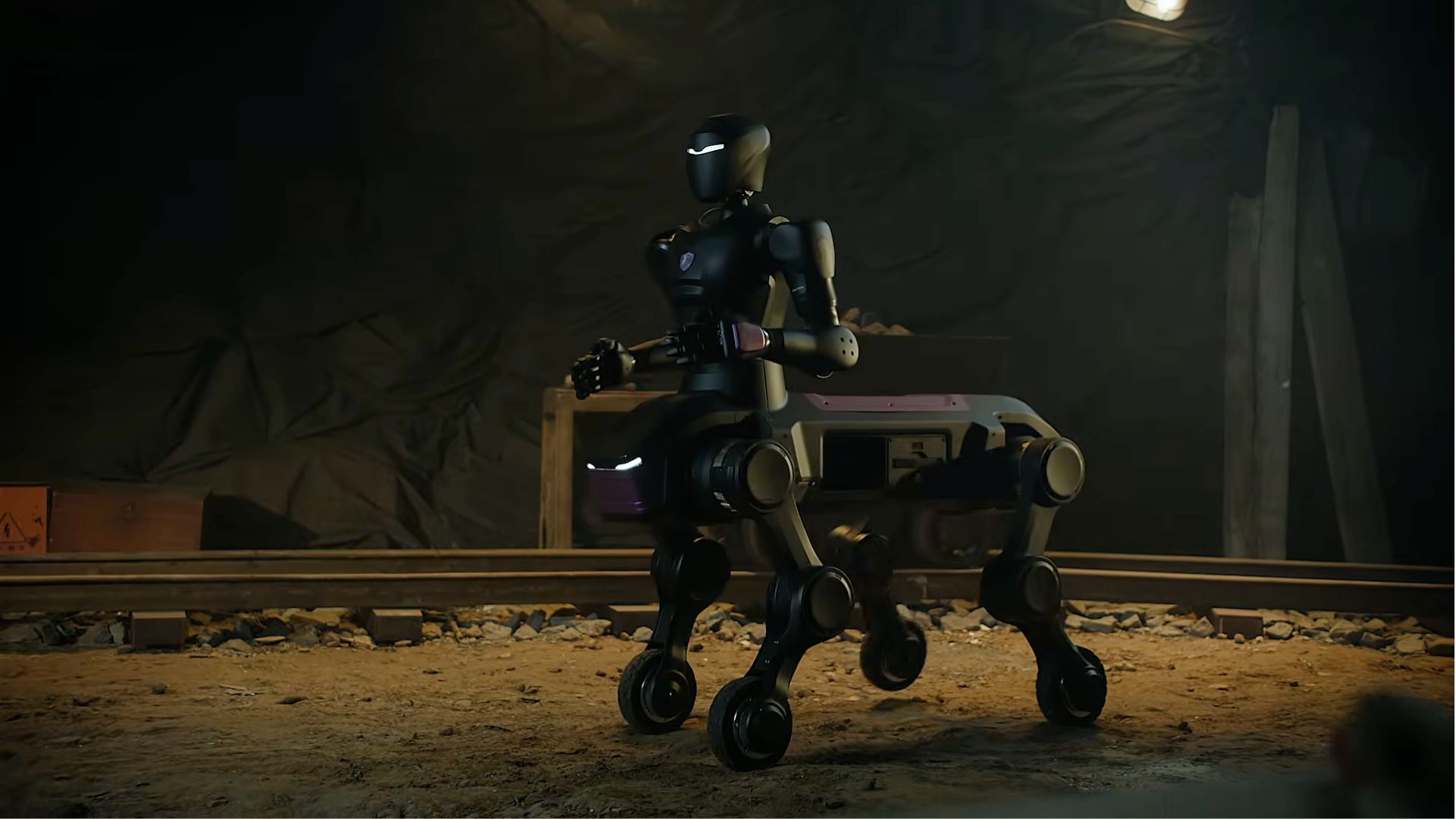
Advancements in Bioinspired Multimodal Robotics for Versatile Movement Capabilities
Bioinspired multimodal robots are advancing rapidly, aiming to match the versatility of animal movement by integrating flying, walking, swimming, and climbing capabilities. Researchers from Beihang University, Dalian University of Technology, and EPFL are addressing engineering challenges such as limited onboard space and the need for body transformations to facilitate seamless movement. The significance of this research lies in its potential to enhance robot adaptability in diverse environments, allowing for applications like search-and-rescue operations and environmental monitoring. The study proposes five performance metrics to evaluate these robots, focusing on improving overall performance rather than merely adding movement options. Looking ahead, the development of soft materials, flexible structures, and multirobot architectures may enhance future robots' capabilities. The researchers emphasize the importance of advanced algorithms for planning and control to enable effective transitions between movement modes, which is crucial for autonomous decision-making in complex scenarios. No further timeline was disclosed at the time of publication.
AI and Robotics
University of Stuttgart and Max Planck Institute Develop Magnet-Controlled Microscrolls for Robotics
Researchers at the University of Stuttgart and the Max Planck Institute for Solid State Research have created innovative microscrolls that can be magnetically controlled to unroll and roll up. Inspired by butterfly proboscises, these ceramic microscrolls represent a significant advancement in smart materials. This development is crucial for enhancing drive technologies in micro- and soft robotics, which are increasingly important in various economic sectors. The ability to manipulate these microscrolls with precision opens new avenues for efficient robotic applications, potentially transforming how tiny robots operate. Looking ahead, the implications of this research could lead to more sophisticated robotic systems that leverage these smart materials. No further timeline was disclosed at the time of publication.
Robotics
MIT and EPFL Develop Flapping-Wing Robot for Air and Water Navigation
Engineers from MIT and EPFL have created a flapping-wing aerial-aquatic vehicle (FAAV) inspired by puffins. Weighing under 300 grams, the robot features a central fuselage, flexible wings, and a steerable tail. Field tests in Lake Geneva demonstrated its ability to swim and then take flight, showcasing its dual-medium capabilities. This innovation is significant for oceanography and marine biology, as it allows for cost-effective data collection from both air and water. The FAAV can fly at speeds of 6 meters per second and swim at 1 meter per second, providing a versatile tool for researchers. The design mimics the natural mechanics of birds, which maintain similar physical dynamics in both environments by adjusting their speed. Looking ahead, the team aims to refine the robot's ability to breach the water's surface, a challenging transition requiring a precise 70-degree pitch. No further timeline was disclosed at the time of publication, but the potential applications for environmental monitoring and research are substantial.
AI and Robotics
Swarm Robots Inspired by Bees and Ants Could Transform the Future of Mining
Researchers at Adelaide University have unveiled an innovative robotic system modeled after the behaviors of bees and ants, aiming to enhance safety, efficiency, and sustainability in the mining industry. This development comes as part of ongoing efforts to address the challenges faced in mining operations, where traditional methods often pose risks to workers and the environment. By mimicking the collective intelligence and collaborative strategies of these insects, the new robotic system is designed to optimize resource extraction processes while minimizing ecological impact. The research team believes that this approach could revolutionize mining practices, making them more adaptable and less hazardous. The project highlights the potential of biomimicry in engineering solutions that align with environmental sustainability goals.

Swarm robots inspired by bees and ants could transform the future of mining
A team of researchers at Adelaide University has unveiled an innovative robotic system designed to enhance safety, efficiency, and sustainability in the mining industry. Drawing inspiration from the collaborative behaviors of bees and ants, this new technology aims to transform traditional mining practices. The development comes at a crucial time when the industry faces increasing pressure to adopt more environmentally friendly methods and improve worker safety. By mimicking the social structures and collective decision-making processes of these insects, the robotic system is expected to optimize resource extraction while minimizing environmental impact. This advancement not only highlights the potential for robotics in industrial applications but also underscores the importance of interdisciplinary research in addressing contemporary challenges in mining.
Robotics
7 animal-inspired robots solving real-world engineering challenges
Engineers are increasingly looking to nature for inspiration in developing innovative solutions for movement, efficiency, and survival. This trend reflects a growing recognition of the intricate designs and systems that have evolved over millions of years. By studying various organisms and their adaptations, researchers aim to apply these natural principles to create advanced technologies in fields such as robotics, transportation, and energy efficiency. This biomimicry approach not only enhances performance but also promotes sustainability by utilizing nature's time-tested strategies. As this movement gains momentum, it is expected to lead to groundbreaking advancements that could significantly impact various industries and improve human life.

Robots could learn to predict, plan navigation with new ‘bio-inspired’ framework
A recent study highlights the advanced capabilities of robot vacuums in home cleaning. Researchers observed that when placed in a living room, these devices effectively create detailed maps of their surroundings, allowing them to navigate and clean efficiently. This development comes as more households adopt smart home technology, seeking convenience and improved cleaning solutions. The study, conducted in various residential settings, demonstrates how robot vacuums utilize sensors and algorithms to optimize their cleaning paths. As the demand for automated home care increases, manufacturers are focusing on enhancing these technologies to meet consumer expectations for efficiency and thoroughness.
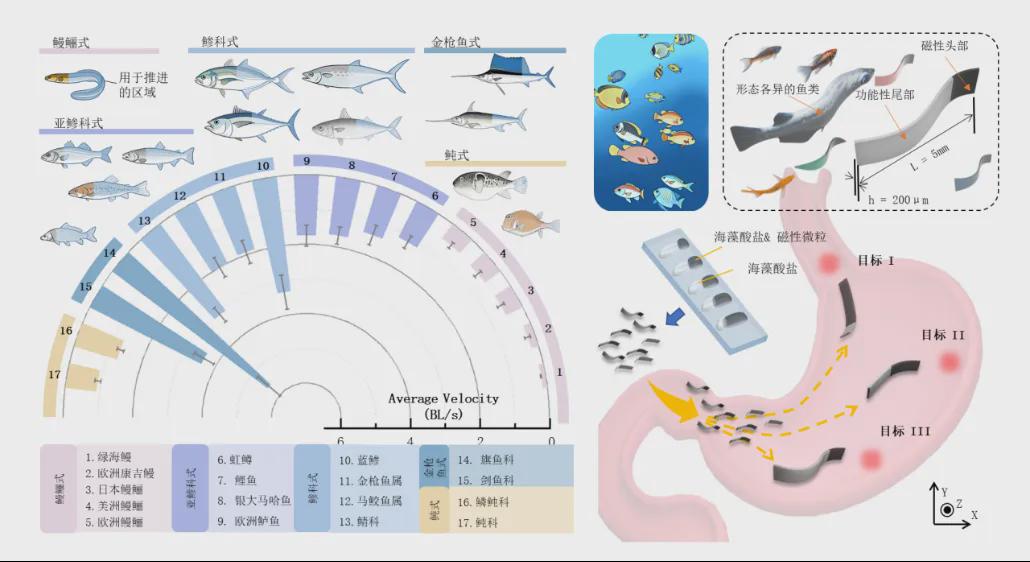
Inspired by Fish Diversity: Beijing Institute of Technology Team Develops Morphology-Encoded Soft Microrobots
A research team at the Beijing Institute of Technology has unveiled a groundbreaking system of soft microrobots that mimic the various swimming styles of fish. This innovative development allows for the selective control of the robots by adjusting their body proportions within a uniform magnetic field. The advancements in this technology hold significant promise for future applications in the biomedical field, potentially enhancing medical procedures and therapies.
Soft Robotics Biomedical Engineering Microrobots Control Systems
Cornell’s insect-inspired 3D model could allow flapping-wing robots to fly stably
Researchers at Cornell University have unveiled a groundbreaking 3D computational model designed to decode complex physical phenomena. This innovative model, which was developed over the past year, aims to enhance our understanding of various scientific processes by simulating intricate interactions within physical systems. The research team, led by a group of physicists and engineers, conducted extensive experiments and simulations to refine the model's accuracy and applicability. The development of this model is particularly significant as it addresses longstanding challenges in the field of physics, providing a tool that can potentially revolutionize how scientists approach problem-solving in areas such as material science, fluid dynamics, and even climate modeling. By leveraging advanced algorithms and high-performance computing, the researchers were able to create a more precise representation of physical interactions, which could lead to new discoveries and innovations. This work not only showcases the capabilities of modern computational techniques but also underscores the importance of interdisciplinary collaboration in advancing scientific knowledge. The findings of this research are expected to be published in a leading scientific journal, contributing to ongoing discussions and developments in the field.

Robot Talk Episode 153 – Origami-inspired robots, with Chenying Liu
In a recent discussion, Claire engaged with Chenying Liu, a Junior Research Fellow and Associate Member of Faculty in the Department of Engineering Science at the University of Oxford, to explore the significant role of a robot's physical form in enhancing its capabilities. Liu, who leads an independent research program, emphasized how the design and structure of robots can influence their ability to sense their environment, process information, make decisions, and execute movements effectively. This conversation sheds light on the intersection of robotics and engineering, highlighting the importance of physical attributes in advancing robotic technology.

Simple robots inspired by ants collectively build and excavate
Ants, known for their remarkable teamwork, exemplify effective collaboration in nature by constructing large, complex, climate-controlled nests without the need for blueprints or a designated leader. This behavior highlights the potential lessons humans can draw from the social insects regarding cooperation and collective effort. Observations of ant colonies reveal how these small-brained creatures manage to work together seamlessly, relying on instinctual communication and shared goals to achieve impressive architectural feats. As researchers continue to study these behaviors, they aim to uncover insights that could enhance human teamwork and organizational strategies.
Robotics
Bio‐Inspired Pneumatic Modular Soft Robots
A recent study published in the Journal of Field Robotics highlights advancements in autonomous robotic systems designed for agricultural applications. Researchers from various institutions conducted experiments to evaluate the efficiency and effectiveness of these robots in crop monitoring and management. The study, released in early October 2023, took place in diverse agricultural settings across the United States. The motivation behind this research stems from the growing need for sustainable farming practices and the increasing demand for food production. By integrating advanced robotics into agriculture, the aim is to enhance productivity while minimizing environmental impact. The researchers employed a combination of machine learning algorithms and sensor technologies to enable the robots to navigate fields, identify crop health issues, and optimize resource usage. Through rigorous testing and data analysis, the study demonstrated that these autonomous systems could significantly reduce labor costs and improve crop yields. The findings suggest that as technology continues to evolve, the role of robotics in agriculture will become increasingly vital, paving the way for smarter and more sustainable farming practices.
RESEARCH ARTICLERobotics needs a service framework.
RSF defines a common language for robot service capability, lifecycle operations, certification pathways, and service-provider networks.
Join the RobotToday community on LinkedIn
Daily robotics news, in-depth analysis, conference highlights, and discussions with professionals worldwide.







