Industry Briefing
A single destination for timely, editor-curated robotics news from around the world.

IEDD Dataset Enhances Physical Reasoning Capabilities for Autonomous Driving AI
The IEDD dataset integrates driving trajectories, physical interaction metrics, bird’s-eye-view videos, and language annotations to assess autonomous driving AI across four distinct reasoning levels. This comprehensive approach aims to improve the evaluation of AI systems in real-world driving scenarios. The significance of the IEDD dataset lies in its ability to provide a multifaceted evaluation framework for autonomous driving technologies. By incorporating various data types, it addresses the complexities of physical reasoning, which is crucial for the safe and effective operation of autonomous vehicles. Looking ahead, the development and application of the IEDD dataset will be pivotal in advancing the capabilities of autonomous driving AI. As the industry continues to evolve, the focus will be on how well these systems can interpret and respond to dynamic driving environments. No further timeline was disclosed at the time of publication.

Lockheed Martin's X-62A Achieves 27 Autonomous Intercepts Using Live Sensor Data
Lockheed Martin and the U.S. Air Force Test Pilot School have successfully conducted flight tests where an AI agent autonomously flew the X-62A fighter aircraft. Utilizing live sensor data, the AI executed 27 autonomous intercepts across eight sorties, marking a significant advancement in airborne autonomy systems. This achievement is crucial as it demonstrates the AI's capability to process real-time infrared search and track data, enhancing the operational effectiveness of military pilots. The integration of live sensor feeds allows the AI to make tactical decisions akin to those faced by human pilots during actual missions, potentially reducing pilot workload in complex scenarios. Looking ahead, the successful tests pave the way for future upgrades to the X-62A, including a Mission Systems Upgrade that will enhance integration between sensors and AI agents. This initiative reflects the U.S. military's strategy to incorporate AI as a supportive partner in air combat, improving response times and maneuver execution during critical operations.
AI and Robotics Military
Agtonomy Enhances Autonomy Stack with Multi-Point Turning and Data Collection Features
Agtonomy has introduced two significant updates to its autonomy stack, including a new autonomous multi-point turning capability and enhanced passive data collection across its fleet. This multi-point turning feature enables Agtonomy-enabled units to perform complex reversing maneuvers without human intervention, addressing challenges in tight headlands that have previously limited autonomous tractor usage. The importance of these updates lies in their potential to improve operational efficiency in various agricultural sectors, including vineyards, orchards, and crop management. By generating over two terabytes of data per hour from each vehicle, Agtonomy aims to leverage this data for faster system iterations and to provide valuable insights to agronomy and analytics partners, ultimately enhancing fleet optimization and operational analytics. Looking ahead, Agtonomy's platform now supports over 500 implements, with partnerships with OEMs like Kubota and Bobcat expanding its capabilities. The company emphasizes the need for autonomous fleets that not only operate effectively but also evolve over time to meet the practical challenges faced by growers. No further timeline was disclosed at the time of publication.
Autonomous/semi-autosteering systems autonomous system autonomy
51World Unveils New Data Collection Tools to Enhance Embodied AI for Robots
51World, a Beijing-based technology company, has introduced a new suite of data-collection devices aimed at overcoming the critical shortage of high-quality training data for embodied AI systems. CEO Li Yi emphasized that the lack of precise data is a significant barrier to developing stable and capable humanoid robots. The newly launched AperEgo headset features a multi-camera system and synchronized sensors to capture a comprehensive view of the environment, while additional devices for the wrist and fingers enhance data collection on hand movements. This integrated hardware and software approach is expected to improve data accuracy and efficiency significantly. Looking forward, 51World aims to enhance the efficiency of embodied AI in data collection and training. The Chinese humanoid robot market is projected to reach 15 billion yuan (approximately US$2.2 billion) by 2026, with significant growth anticipated in 2027 as production and applications expand. No further timeline was disclosed at the time of publication.
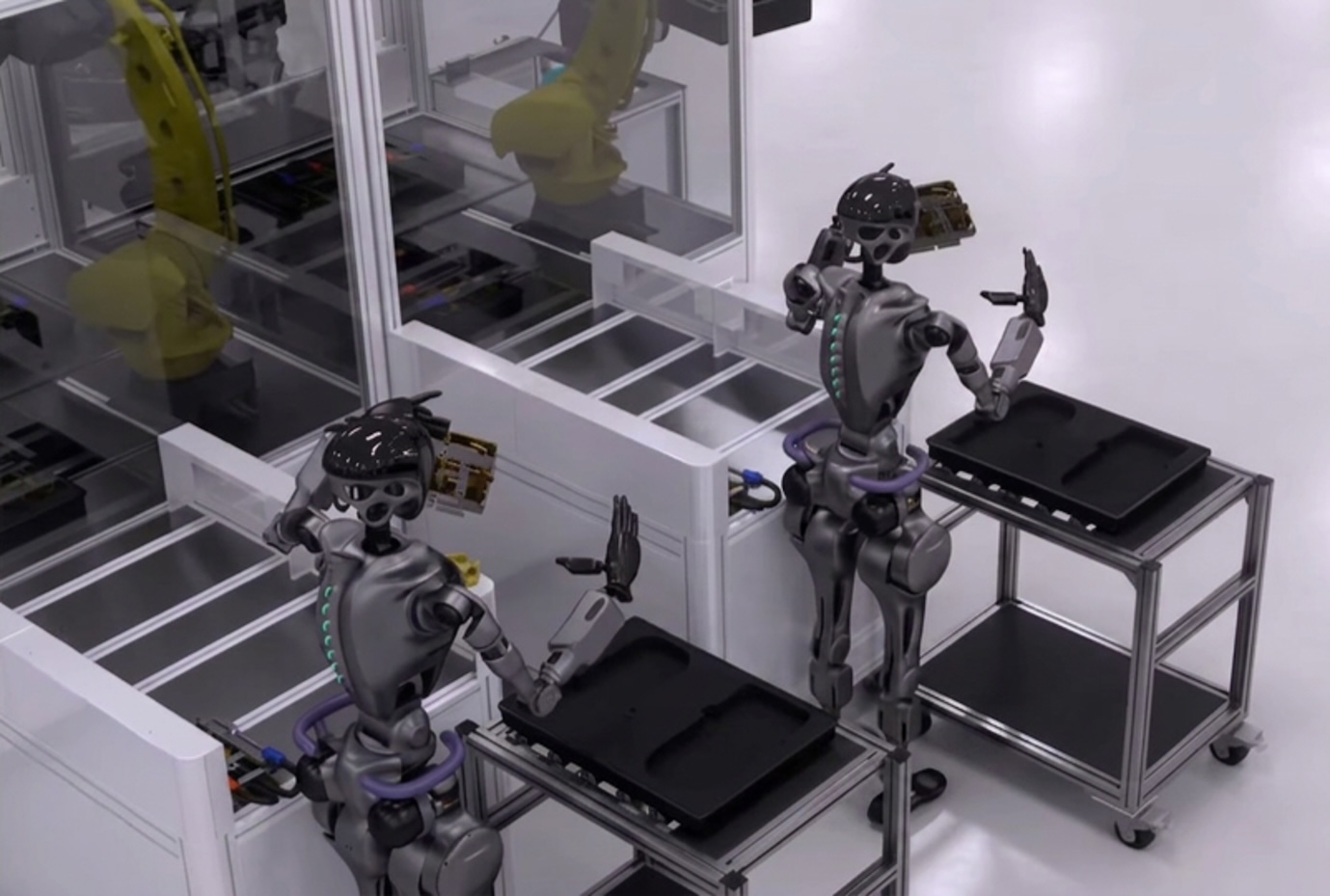
SpaceX Proposes 1 Million AI Satellites to Address Ground Data Center Constraints
On January 30, 2026, SpaceX filed with the FCC to launch up to 1 million AI compute satellites, positioning orbital data centers as a solution to the increasing demand for AI computing power. Ground data centers are facing significant challenges, with energy consumption projected to reach approximately 1,050 TWh in 2026, making them the fifth-largest electricity consumer globally. The demand for new data center capacity is outpacing the growth of power generation infrastructure, leading to a critical bottleneck in the grid system. The significance of this initiative lies in the structural constraints faced by ground data centers, including power delivery limitations, high water consumption, and local opposition to new projects. The Uptime Institute's 2026 outlook identifies power as the primary constraint on data center growth, with capacity clearing prices in the PJM grid skyrocketing to $329.17/MW, driven by data center expansion. Additionally, cooling requirements are becoming increasingly unsustainable, with facilities consuming vast amounts of water, further complicating their operational viability. Looking ahead, SpaceX's orbital AI compute initiative aims to circumvent these challenges by leveraging the advantages of space, such as continuous solar power and minimal local opposition. The first AI prototypes are expected to launch in early 2027, with operational deployments planned for 2028. No further timeline was disclosed at the time of publication.
AI agents enhance autonomous inspections, revamping manual approval processes for drones and ground robots by DataRobot, Chevron, and NVIDIA.
DataRobot has announced a collaboration with Chevron U.S.A. Inc., a subsidiary of Chevron Corporation, to implement agent-based AI in edge environments. This partnership aims to enhance autonomous patrol and inspection operations at Chevron facilities. By leveraging advanced AI technology, the initiative seeks to improve operational efficiency and safety in the company's infrastructure.

Orbbec Unveils Robot-Free Data Collection Hardware Platform to Help Customers Capture Real-World Demonstrations for Physical AI at Scale
Leveraging its deep expertise in and broad product portfolio of robotics and AI vision, Orbbec is one of the few industry providers that combines advanced multi-sensor calibration and synchronization technologies, a full-stack vision product portfolio, and global-scale manufacturing and delivery capabilities.
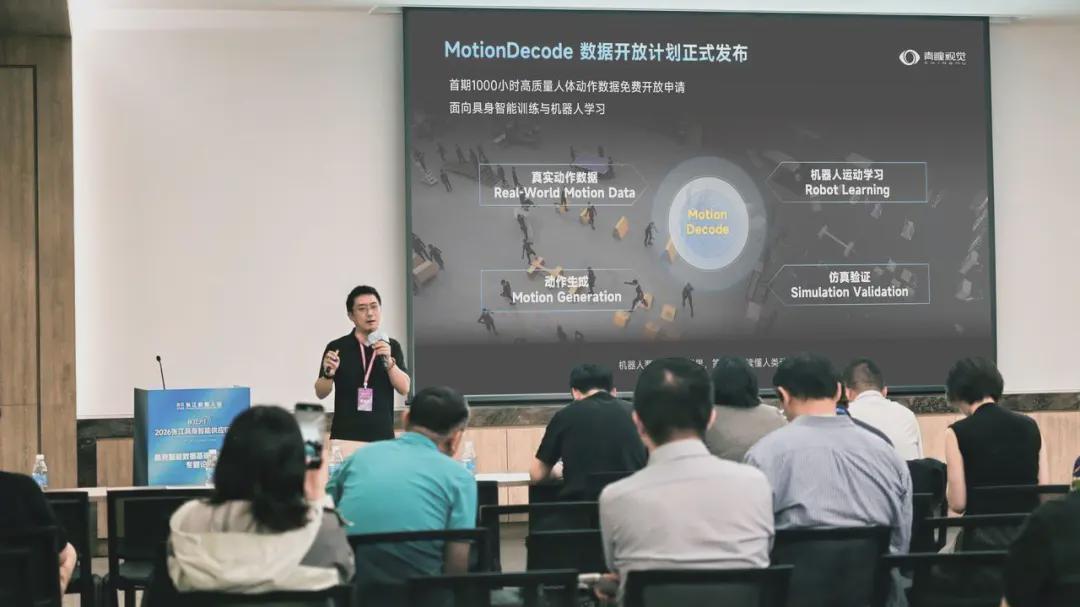
Qing Tong Vision Launches MotionDecode Data Open Plan: 1000-Hour Motion Capture Dataset Now Open Source
Qing Tong Vision has launched the MotionDecode Data Open Plan, offering free access to a comprehensive 1,000-hour high-quality human motion dataset. This initiative, announced recently, is designed to enhance the development of humanoid robots and promote embodied intelligence by reducing research barriers and encouraging collaboration within the data ecosystem. The program is expected to support a wide range of applications, including robot training and motion generation, representing a pivotal advancement in the industrialization of embodied intelligence.
Motion Capture Embodied Intelligence Humanoid Robots Data Open Source AI Training Data
Nyobolt Closes $60 M Series C Funding Round at $1B Valuation, to Power Autonomous Machines, Physical AI Applications and AI Data Centers
Nyobolt, a company specializing in ultra-fast charging and high-power battery systems, has successfully secured $60 million in Series C funding, pushing its valuation beyond $1 billion. The funding round, which took place recently, was led by Symbotic and included contributions from notable investors such as IQ Capital, Latitude, Scania Invest, and CBMM. This financial boost aims to facilitate the expansion of Nyobolt's technology, particularly for applications in autonomous robots and AI infrastructure. The company has reported a remarkable fivefold increase in revenue over the past year, highlighting its growth potential in the rapidly evolving battery market.
AI AI Funding & Investment Robotics autonomous batteries CBMM
The Biggest Impact of Autonomous Capture and AI
As the demand for autonomous capture technologies grows, industry experts predict that the ability to seamlessly integrate robots and agents will become essential for businesses. The focus is shifting towards identifying platforms capable of orchestrating these technologies in a cohesive, automated, and intelligent manner. This evolution is expected to significantly enhance operational efficiency and value creation across various sectors. With advancements in artificial intelligence and robotics, companies are urged to adapt quickly to remain competitive in this rapidly changing landscape. The race to develop and implement these integrated systems is intensifying, as organizations recognize the potential benefits of harnessing automation to streamline processes and improve productivity.
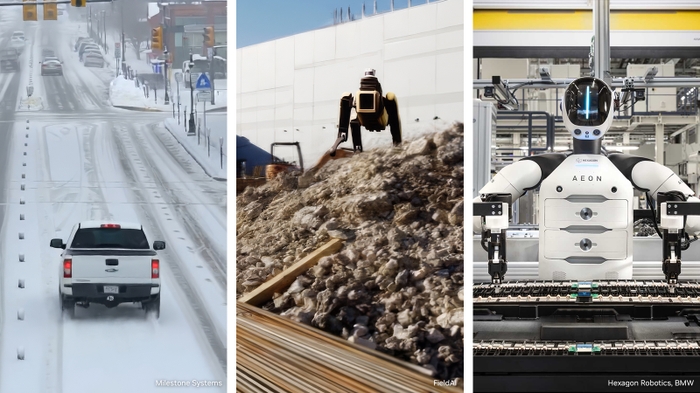
NVIDIA Announces Open Physical AI Data Factory Blueprint to Accelerate Robotics, Vision AI Agents and Autonomous Vehicle Development
NVIDIA has unveiled the NVIDIA Physical AI Data Factory Blueprint, an innovative open reference architecture designed to streamline the generation, augmentation, and evaluation of training data for physical AI applications. Announced today, this blueprint aims to significantly cut costs, time, and complexity associated with training AI models. By providing a unified and automated approach, NVIDIA seeks to enhance the efficiency of AI development processes, making it easier for organizations to implement and scale their AI initiatives. This initiative reflects NVIDIA's commitment to advancing AI technology and supporting developers in overcoming the challenges of data management in AI training.

Advances in Autonomous Vehicle Testing: The State of the Art and Future Outlook on Driving Datasets, Simulators, and Proving Grounds
A recent study published in the Journal of Field Robotics highlights advancements in autonomous robotic systems designed for agricultural applications. Researchers from a leading university conducted the study to explore how these robots can improve efficiency and sustainability in farming practices. The findings, released in early October 2023, indicate that the integration of advanced sensors and artificial intelligence allows these robots to perform tasks such as planting, monitoring crop health, and harvesting with greater precision. The research was conducted on various farms across the Midwest, where the team tested different robotic models under real-world conditions. The motivation behind this study stems from the increasing demand for food production and the need to reduce environmental impact. By employing autonomous technology, farmers can potentially decrease labor costs and enhance productivity while minimizing the use of pesticides and fertilizers. The study outlines the methodology used, including the development of algorithms that enable the robots to navigate complex terrains and adapt to changing environmental conditions. As agriculture faces challenges such as labor shortages and climate change, the implementation of these robotic systems could play a crucial role in the future of farming. The researchers emphasize the importance of continued innovation in this field to address global food security concerns effectively.
SURVEY ARTICLERobotics needs a service framework.
RSF defines a common language for robot service capability, lifecycle operations, certification pathways, and service-provider networks.
Join the RobotToday community on LinkedIn
Daily robotics news, in-depth analysis, conference highlights, and discussions with professionals worldwide.