Industry Briefing
A single destination for timely, editor-curated robotics news from around the world.

Roboteon Enhances Fleet Management and Orchestration for Manufacturing Robots and AGVs
Roboteon has announced an expansion of its capabilities, providing a powerful software platform designed to orchestrate automated material flows in manufacturing environments. This platform aims to improve visibility, control, productivity, and throughput for manufacturers by acting as a digital nervous system. The significance of this development lies in Roboteon's position as a leading innovator in intelligent warehouse and manufacturing robotics software. By enabling the integration and synchronization of mobile robots and autonomous guided vehicles (AGVs), manufacturers can optimize their operations and enhance overall efficiency on the shop floor. Looking ahead, industry stakeholders should monitor how Roboteon's advancements in fleet management and orchestration will influence manufacturing processes and the adoption of automated solutions. No further timeline was disclosed at the time of publication.

Integrating Automated Guided Vehicles in Hospitals: Key Considerations and Benefits
Aerocom, specialists in AGV systems, explore the integration of Automated Guided Vehicles (AGVs) into busy hospital environments. They emphasize the importance of thorough planning and staff buy-in to ensure successful deployment. The integration of AGVs can streamline operations, reduce labor costs, and improve patient care, making it a vital technology for modern healthcare facilities. The significance of AGVs in hospitals lies in their ability to enhance operational efficiency and patient safety. By automating routine tasks such as transporting medications and supplies, hospitals can allocate staff resources more effectively, ultimately leading to better patient outcomes. The successful integration of AGVs can also alleviate the burden on healthcare workers, allowing them to focus on critical care responsibilities. Looking ahead, stakeholders should monitor the ongoing developments in AGV technology and its applications in healthcare. As hospitals continue to seek innovative solutions to improve efficiency and patient care, the role of AGVs is expected to expand. No further timeline was disclosed at the time of publication.

B-and-Plus Launches New Lithium Battery for AGVs and AMRs with Standard Connectors
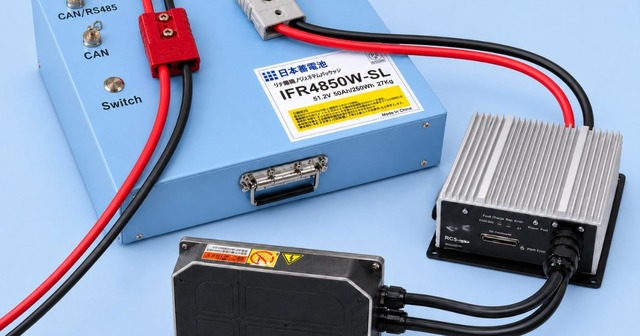
B-and-Plus, a company specializing in wireless power and charging technology, announced the launch of a new lithium battery for AGVs (Automated Guided Vehicles) and AMRs (Autonomous Mobile Robots) on August 12, 2026. This battery features pre-installed charging and discharging connectors and includes a standard CAN level gauge for monitoring battery status. The new battery, manufactured by Japan Storage Battery Co., integrates wireless charging-compatible connectors, simplifying the wiring typically required for charging and monitoring. With voltage options of 24V and 48V, it eliminates the need for series connections, thus enhancing space efficiency and ensuring cell balance. The CAN communication capability allows for seamless integration with external devices, making it suitable for electric equipment and control systems. Applications for this battery include electric mobility, AGVs, AMRs, and various electric equipment utilizing wireless charging systems. B-and-Plus is also developing higher-output wireless charging systems for AGVs and AMRs, aiming to address challenges in manufacturing and logistics through automated charging and reduced maintenance burdens.
B-and-Plus Launches New Lithium Battery for AGVs and AMRs with Standard Connectors
B-and-Plus announced the launch of a new lithium battery on August 12, 2026, designed for AGVs, AMRs, and industrial robots. This battery features pre-installed charging and discharging connectors and includes a CAN level gauge for monitoring battery status. The product aims to simplify wiring and enhance space efficiency in various applications. The introduction of this battery is significant as it addresses the complexities of traditional battery systems, which often require external devices for monitoring and wiring for charging and discharging. By integrating these features, B-and-Plus enhances operational efficiency and provides a reliable solution for electric mobility and industrial applications, where accurate battery status is crucial. Looking ahead, B-and-Plus is also developing higher-output wireless charging systems for AGVs and AMRs. The company is focused on automating charging processes and reducing maintenance burdens through its wireless power technology, which is expected to address challenges in manufacturing and logistics sectors. No further timeline was disclosed at the time of publication.

The Increasing Importance of Automated Guided Vehicles in Modern Manufacturing
Automated Guided Vehicles (AGVs) are becoming essential in manufacturing by enhancing material handling efficiency. They streamline logistics, ensuring timely delivery of components and improving production flow. As manufacturers face challenges like rising production demands and labor shortages, AGVs offer a solution by automating material transport, thus creating safer and more reliable operations. The deployment of AGVs allows manufacturers to maintain high safety standards while reducing costs associated with manual handling. Their predictable movements minimize accidents and product damage, contributing to a smoother operational environment. AGVs also provide consistency in processes, which is crucial for production performance, particularly in facilities where material availability directly impacts output. Looking ahead, manufacturers are increasingly recognizing the need for customized AGV solutions tailored to their specific operational requirements. These tailored systems can address unique challenges such as limited space and strict safety protocols, ensuring that AGVs integrate seamlessly into existing workflows. No further timeline was disclosed at the time of publication.
AMR and AGV Materials Handling AGVs in Advanced Manufacturing CTi Systems
Schindler Integrates Elevators and Digital Solutions for AGVs in Swiss Hospital
Hoch Health Ostschweiz in Switzerland is advancing its modernization program by integrating automated guided vehicles (AGVs) into its infrastructure. These AGVs are designed to enhance hospital logistics by transporting essential items such as laundry, food, medical equipment, and waste across the facility. Schindler is playing a crucial role in this transformation by incorporating its elevator technologies and digital solutions with robotic transport systems, particularly in the newly constructed Haus 07A/B. The modernization project at Hoch Health Ostschweiz is one of the largest in Switzerland, featuring 20 elevators in Haus 07A and an additional six in the under-construction Haus 07B. The integration of AGVs was a new requirement during the project, prompting Schindler to adapt its system design to ensure smooth operation. This collaboration aims to enhance safety, efficiency, and logistical reliability within the hospital environment. Looking ahead, the seamless coordination between Schindler's PORT transit management system and third-party software for AGVs will be critical. As more AGVs are deployed, the flexibility of Schindler's digital solutions will allow for scaling and adapting to future needs. No further timeline was disclosed at the time of publication.
Health News Service robots automated guided vehicles building automation healthcare robotics
Quick Take: Why Mobility Use Cases (AMRs, AGVs, etc.) Deliver Faster Payback than Stationary Applications
Private networks are increasingly being recognized for their potential in various sectors, with mobility emerging as a key entry point. This focus on mobility is seen as a strategic move, offering quick returns on investment for businesses looking to enhance their operational efficiency. As companies explore the benefits of private networks, the ability to leverage mobility solutions is becoming a critical factor in their decision-making processes. This trend highlights the growing importance of tailored network solutions in meeting the specific needs of organizations across different industries.
Factory / Mobility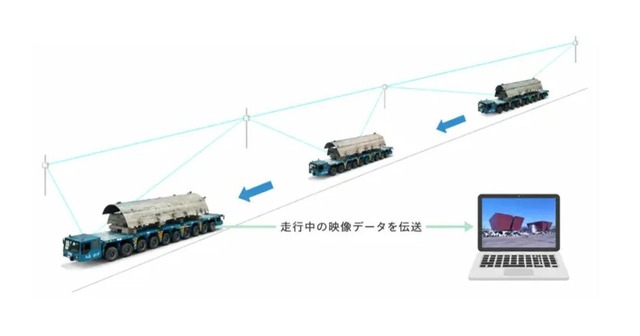
AiTrax tests mesh Wi-Fi for stable communication in AGVs and drone fleets at shipyard.
AiTrax Inc. has successfully achieved real-time video transmission via Wi-Fi access points mounted on large component transport vehicles. This milestone was reached during operations at the Imari facility of Namura Shipbuilding in Saga Prefecture. The demonstration took place from March 16 to March 18, 2026, showcasing the company's innovative technology aimed at enhancing logistics and operational efficiency in industrial settings. The successful implementation of this technology is expected to streamline processes and improve communication within manufacturing environments.
Beyond Cobots: Integrating Robotic Automation with AGVs and IIoT Systems
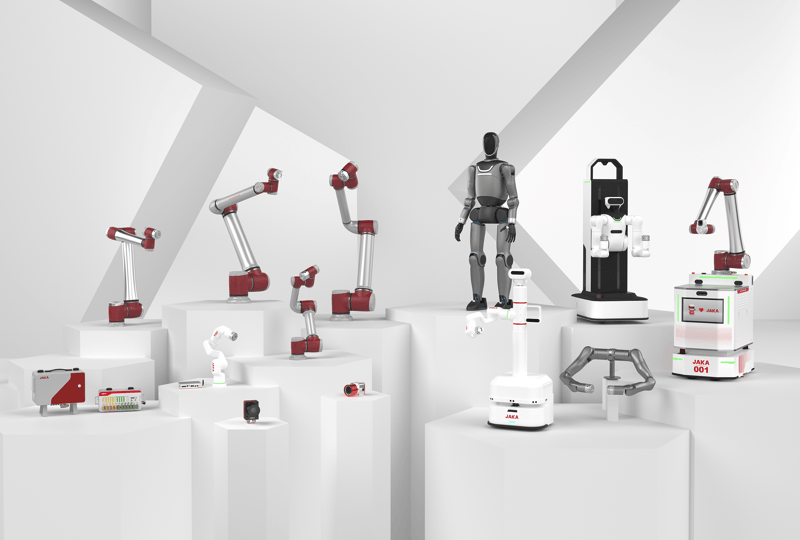
In recent years, manufacturing has experienced a significant transformation as companies shift from standalone automation to interconnected and flexible systems. JAKA, a leader in collaborative robot technology, has observed this evolution, where production environments are increasingly designed around coordinated robots, autonomous guided vehicles (AGVs), and Industrial Internet of Things (IIoT) platforms. This transition enables automation to adapt dynamically to real production conditions while ensuring safety and flexibility in workplaces that prioritize human interaction. Initially, collaborative robots were embraced for their ability to work safely alongside human operators, facilitating smoother automation processes. As their applications have matured, integrating these robots with AGVs and IIoT systems has become a logical progression. This integration allows for synchronized material handling and processing tasks, enhancing efficiency. IIoT connectivity further supports real-time data exchange, enabling predictive maintenance and improved process visibility, which is crucial for maintaining flexibility in production lines. AGVs play a pivotal role in extending automation beyond fixed workstations. When connected through IIoT infrastructure, these vehicles and robots can share crucial information, reducing idle time and manual interventions while enhancing workflow traceability. This coordination not only boosts operational efficiency but also increases transparency, allowing for continuous optimization and informed decision-making. To facilitate this integrated approach, JAKA has developed the Ai12, a collaborative robot designed for easy deployment through wireless teaching and graphical programming. This technology enhances safety and adaptability, allowing for seamless human-robot interaction. JAKA envisions a future where industrial robotic automation is not merely a collection of isolated machines but a cohesive system that evolves with production demands, fostering smarter and more responsive industrial environments.
Industrial Cobots vs. Automated Guided Vehicles (AGVs): Better for Assembly Logistics?
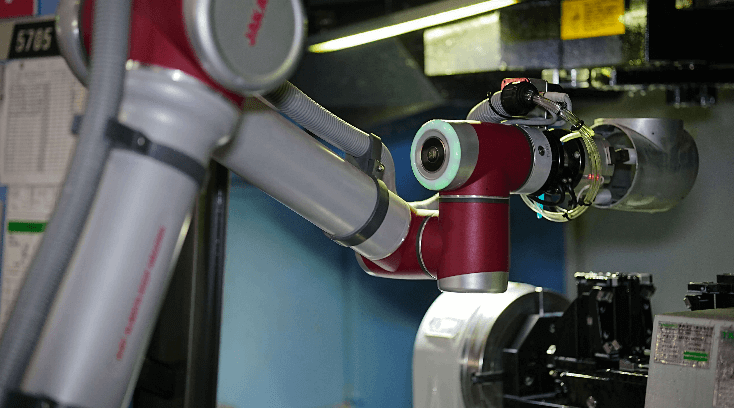
In the evolving landscape of modern manufacturing, JAKA is advocating for the adoption of industrial collaborative robots (cobots) over traditional Automated Guided Vehicles (AGVs) for assembly logistics. This shift is driven by the need for greater flexibility and efficiency in material handling, particularly as production demands change. While AGVs have long been utilized for point-to-point transport along fixed paths, they struggle to adapt to the dynamic requirements of assembly lines, which often necessitate rapid reconfiguration for different product variants. In contrast, a stationary cobot can easily manage hand-offs between multiple workstations and human operators, allowing for quicker reprogramming and less disruption during production adjustments. Moreover, cobots offer added value by performing tasks such as quality inspections or light assembly during the transport process, transforming logistics nodes into productive checkpoints. This capability not only reduces handling time but also shortens overall cycle times, a benefit that standalone AGVs cannot match. Additionally, the integration of cobots simplifies factory layouts by eliminating the need for dedicated navigation lanes and charging stations required by AGVs. Operating within existing workspaces, cobots streamline operations and reduce the complexity of managing multiple systems. Ultimately, while AGVs remain effective for long-distance transport of standardized loads, JAKA's cobots present a compelling alternative for intricate, variable tasks within compact assembly environments, enhancing both logistical efficiency and production value.
Robotics needs a service framework.
RSF defines a common language for robot service capability, lifecycle operations, certification pathways, and service-provider networks.
Join the RobotToday community on LinkedIn
Daily robotics news, in-depth analysis, conference highlights, and discussions with professionals worldwide.