Industry Briefing
A single destination for timely, editor-curated robotics news from around the world.
FBI Arrests Florida Man for Allegedly Using Malware in Steam Games to Steal Cryptocurrency
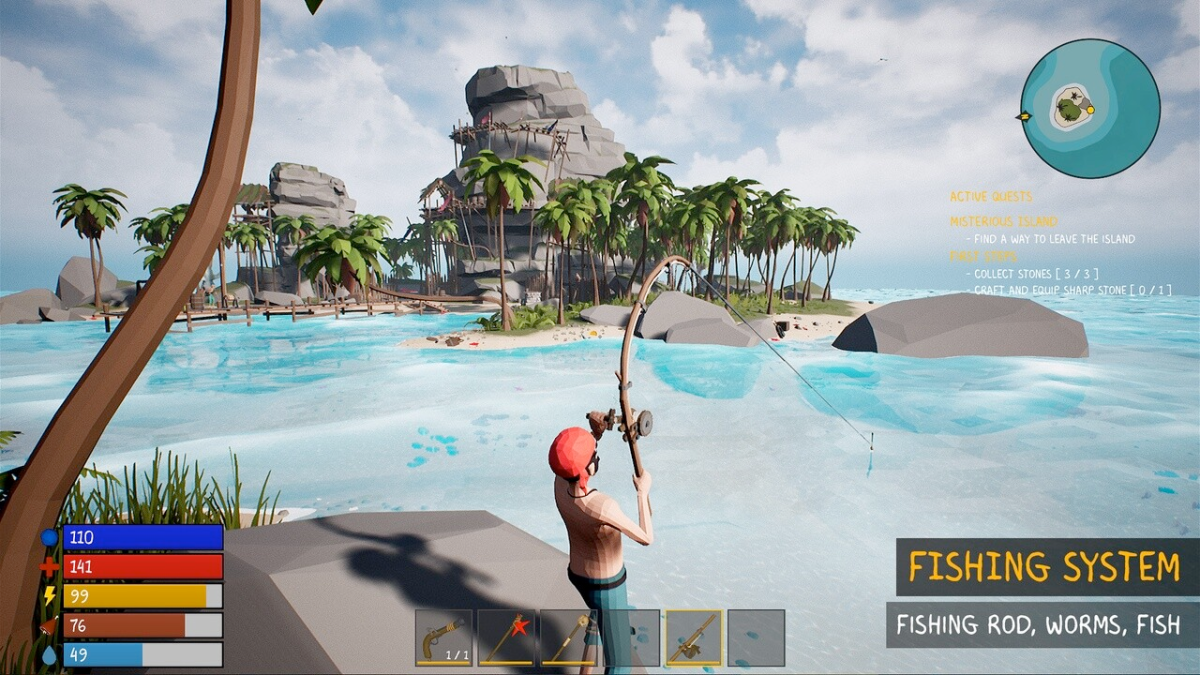
U.S. prosecutors have charged Zyaire Wilkins, a 21-year-old Florida resident, with uploading fake video games containing malware to Steam. The malware was designed to infect victims' computers, steal passwords, and drain cryptocurrency wallets. Authorities claim that Wilkins and his co-conspirators infected approximately 8,000 victims and hacked around 80 wallets, stealing at least $220,000 in cryptocurrency. This case highlights the growing threat of malware disguised as legitimate software, particularly in gaming platforms like Steam. The FBI's investigation revealed that Wilkins marketed these malicious games on platforms such as Discord, LinkedIn, and Telegram. The incident underscores the importance of cybersecurity awareness among gamers and the need for platforms to enhance their security measures against such threats. Looking ahead, the FBI continues to investigate the broader network involved in this scheme, as they have identified additional individuals linked to the marketing and funding of these malicious games. No further timeline was disclosed at the time of publication.
Gaming Security crypto cryptocurrency cybercrime hackers
The Ultimate Summer Sale Pairing: Steam Sale Meets GeForce NOW Discounts
This week, gamers can take advantage of significant savings during the Steam Summer Sale and enjoy discounts on GeForce NOW memberships, as part of the latest GFN Thursday event. The initiative aims to enhance the value of cloud gaming, providing users with more opportunities to save. Additionally, the popular title Dark Scrolls has been added to the expanding library of Devolver Digital games available on the platform. These promotions are designed to attract both new and existing users, making cloud gaming more accessible and affordable.

SoftBank Robotics Debuting Autonomous Cooking Robots ‘STEAMA’ and ‘FLAMA’ in the US
SoftBank Robotics is set to introduce its autonomous cooking robots, the “STEAMA” and “FLAMA” systems, to the U.S. market. This announcement comes as the company aims to expand its food automation business beyond Japan. The robots will make their debut at the National Restaurant Association Show 2026, scheduled to take place in Chicago later this month. The introduction of these innovative cooking systems reflects SoftBank's commitment to enhancing efficiency in the food industry and meeting the growing demand for automation in restaurant operations.
AI AI Use Cases Robotics autonomous cooking robots FLAMA Japan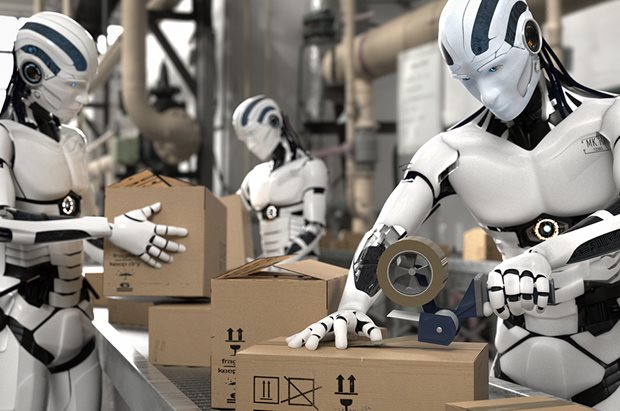
Norm-defying Chinese indie title Sultan’s Game hits 250,000 Steam sales in debut week
Chinese indie game Sultan’s Game has achieved remarkable success, selling 250,000 copies on Steam within its first week of release, according to an announcement made by developer Double Cross Studio on Tuesday. Launched on March 31, the game has rapidly gained popularity among gamers in China, becoming a trending topic in the gaming community. In conjunction with the sales milestone, the studio shared a celebratory illustration and outlined plans for long-term updates, indicating their commitment to enhancing the gaming experience. This swift rise in sales highlights the growing influence of indie games in the Chinese market and reflects a strong demand for innovative gaming content.
On the Cusp Content and entertainment E-commerce and New Retail Gaming Highlight News
Game Science reaches $1 billion in revenue, climbs to 10th place on Steam publishers list
Game Science, a Chinese video game developer, has achieved a significant milestone by becoming the 10th highest-grossing publisher on Steam, amassing one billion dollars in revenue. This accomplishment positions the company ahead of renowned industry giants such as Rockstar, known for the Grand Theft Auto series, 2K, the developer behind the NBA franchise, and Capcom, famous for the Monster Hunter games. The success is largely attributed to the anticipation surrounding their upcoming action role-playing game, Black Myth: Wukong, which has generated considerable excitement among gamers. This financial achievement highlights the growing influence of Chinese game developers in the global market, showcasing their ability to compete with established Western companies.
News Feed
The Steam Controller and an Industrial Robot: An Unexpected Intersection
ENCY Software has highlighted the significance of tactile, analog input in programming industrial robots and collaborative robots (cobots) through its innovative product, ENCY Hyper. This development underscores the relevance of standard wireless controllers, which may initially appear disconnected from the manufacturing environment. By integrating these controllers into robotic programming, ENCY Software aims to enhance the precision and efficiency of robotic operations. The initiative reflects a growing recognition of the importance of user-friendly interfaces in industrial automation, emphasizing how traditional input methods can still play a crucial role in modern technology.
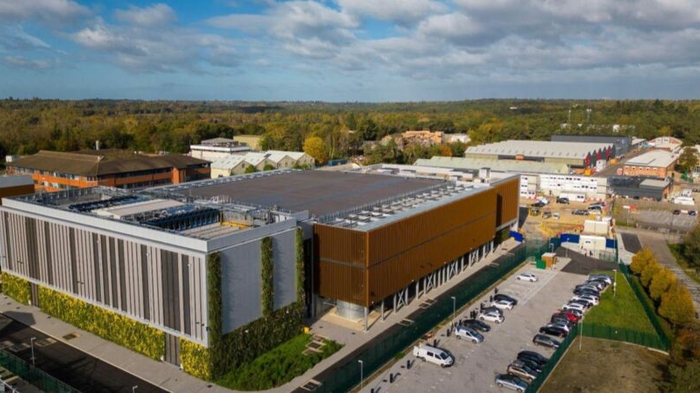
Blowing Off Steam: How Power-Flexible AI Factories Can Stabilize the Global Energy Grid
During the half-time break of the UEFA EURO 2020 round of 16 match between England and Germany, a significant number of viewers in the U.K. paused their viewing to prepare tea, resulting in a notable spike in electricity demand. National Grid reported that this collective action led to an increase of 2,000 megawatts in electricity usage as millions turned on their kettles simultaneously. This phenomenon highlights the cultural significance of tea in British society, particularly during major sporting events. The surge in demand was swiftly managed by the National Grid, showcasing their ability to adapt to sudden changes in energy consumption patterns.
IEEE Honors Robotics Pioneer Toshio Fukuda
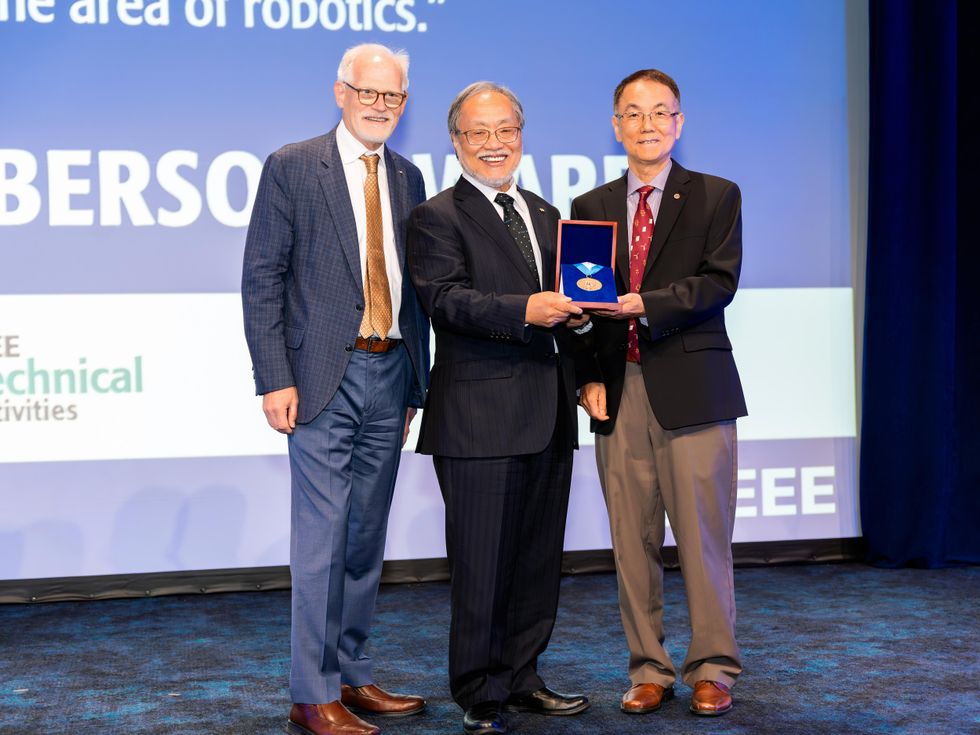
Toshio Fukuda has been blazing trails for most of his career. He is considered to be one of the most prolific scholars in robotics, writing more than 2,000 research papers and authoring several books on the field. He’s an influential figure thanks to his pioneering work developing biomedical robotic systems, industrial robots, micro-nano robotics, mechatronics, and AI-driven automation.Fukuda launched one of the first robotics conferences, the IEEE/RSJ International Conference on Intelligent Robots and Systems (IROS). It is still popular almost 40 years later.Toshio FukudaEmployerEgypt-Japan University of Science and Technology, in Alexandria TitleProfessor and vice president of research Member gradeLife Fellow Alma matersWaseda University, in Tokyo; University of Tokyo An IEEE Life Fellow, he is a professor emeritus in the department of micro-nano systems engineering and a visiting professor at Nagoya University, in Japan, where he taught for nearly 25 years. Currently, he is a vice president of research at the Egypt-Japan University of Science and Technology, in Alexandria, Egypt.Within IEEE, Fukuda has held top volunteer positions including the organization’s highest office: He served as IEEE president in 2020, becoming the first person of Asian descent to hold the role.He’s a former program director of Japan’s Moonshot program, which by 2050 intends to develop advanced AI robots.Born in Japan, Fukuda has been recognized by the country for his contributions to science with two of its highest awards: the Medal of Honor with a purple ribbon in 2015 and the Order of the Sacred Treasure in 2022.IEEE honored him with this year’s Richard M. Emberson Award for “distinguished service advancing the technical objectives of IEEE, especially in the area of robotics.” The IEEE Board-level award is sponsored by the IEEE Technical Activities Board. Fukuda received the award on 24 April at a ceremony in New York City.As a former IEEE president who has served as a master of ceremonies at several of the organization’s major award events, Fukuda noted that he is more accustomed to bestowing awards than receiving them.“It’s very interesting to be on the receiving end,” he says.The journey into robotics researchAs a teenager, Fukuda spent his summer breaks teaching himself how to build things including transistor radios and steam engines.“It was very nice to have a hands-on hobby and make these kinds of things myself,” he says. His experimentation led him to study engineering.He earned a bachelor’s degree in engineering in 1971 from Waseda University, in Tokyo. He says one of his professors there—Ichiro Kato, regarded as the father of Japanese robotics research—was a good mentor who made a positive impact.Fukuda’s research interests were robotics and mechatronics, a field that combines robotics, electronics, computer science, and control systems.He went on to earn a master’s degree and a doctorate in science from the University of Tokyo, in 1971 and 1977. During those years, he also attended Yale, where he conducted research on advanced control theory in 1973.He reflects fondly on his time at Yale: “It was a very nice environment and a kind of free-thinking atmosphere. It motivated me to study more.”“IEEE doesn’t care who you are, what you do, what country you are from, or whether you are male or female. IEEE accepts people who have energy and passion.”While at Yale, Fukuda served as an assistant to his advisor—which led him to consider a career in academia, he says, because he enjoyed the freedom that research work afforded him.But he realized that such freedom comes with a price. University researchers are expected to raise the money that funds their work. He compares researchers to small-business owners who have to bring in money to keep their enterprise afloat.That realization led him to select robotics as his field because he intended to develop technologies useful to industry, he says.After earning his doctorate, he returned to Japan in 1977 to work as a research scientist at the government’s Mechanical Engineering Laboratory, later renamed the National Institute of Advanced Industrial Science and Technology, in Tsukuba.“There was a lot of research going on at the lab, including practical robotics and theory,” he says.He left Japan in 1979 to become a visiting research fellow at the University of Stuttgart, in Germany. During his year there, he studied systems, software problems, and related topics.He returned to Japan and was hired as an associate professor of mechanical engineering at the Tokyo University of Science. He conducted research into practical uses for robots by visiting industrial plants. He decided to develop robots that inspect industrial equipment such as those used in assembly plants, oil refineries, and power stations—places that “can be hostile environments for humans,” he says.His work drew interest from chemical, oil, and utility companies.“I got a lot of money from them for this very practical application, which funded my research,” he says, laughing.Developing popular robotic systemsFukuda grew tired of making those robots, he says, so he switched to creating ones for scientific applications. He developed many techniques, but he probably is best known for his modular, cellular robotic systems (CEBOTs), which he introduced in 1985.He has described how CEBOTs work in numerous papers published in the IEEE Xplore Digital Library.The CEBOT system is composed of a number of autonomous robotic cells that stick together like interlocking Lego plastic bricks, he says.Each cell is a fundamental modular unit that has a function. When a simple task is given, the system can analyze it and generate the structure of the cellular manipulator. The cells connect to and detach from each other through connection mechanisms and cooperate mutually, creating complex structures and configurations.“You start developing from the component-wise to the cell-wise to a small functional unit—and then you come up with clusters that make bigger systems. We can make a society of robot beings like that,” he explained in his oral history published on the Engineering and Technology History Wiki. “It’s a distributed robotic system, a self-organized robotic system, and also an evolutionary robotic system.“It’s also a fault-tolerant robot system because if something is wrong, you just remove those things and make a new one. You keep the system working. That’s a great thing.”Today CEBOTs are used for a variety of tasks such as delivering medication in hospitals, assisting with planting crops, and transporting products in distribution centers. Check out IEEE Spectrum’s Robots Guide for news from the world of robotics.In 1989 Fukuda joined Nagoya University as a professor of mechanical engineering and micro-nano systems engineering. During his 24-year career there, he was director of the university’s Center for Micro-Nano Mechatronics. He developed a long list of technologies at the university, including many for medical applications. He also conducted groundbreaking research into intelligent robotic systems and micro- and nano-robotics.Another technology he is known for is brachiation robots, which he helped develop in 1988. He calls them monkey robots because they’re based on the pendulum-like movement of monkeys swinging from tree to tree. The gravity-based locomotion enables continuous movement.Brachiation robots now are inspecting high-voltage transmission towers and bridges, searching damaged buildings for survivors, and performing maintenance on pipelines and cables.Fukuda retired from the university in 2013 and was named professor emeritus.He didn’t stay retired for long, though. He next held a teaching appointment at Meijo University, in Nagoya, until he left in 2022 to join the Egypt-Japan University.A prominent volunteerHe joined IEEE in 1980 at the encouragement of one of his research advisors, Professor Fumio Harashima, now an IEEE Life Fellow. After attending conferences and reading the organization’s publications, Fukuda says, he looked forward to becoming more involved.“I wanted to know how to organize a conference and how to edit a paper for one of its Transactions,” he says. “I wanted to know what was going on from inside the organization, not just the outside.”In 1988 he was the founding chair and organizer of IROS, in Tokyo. The conference had 330 attendees that year, and was supported by Harashima. Today it is one of the largest and most prestigious conferences on the topic, attracting more than 9,000 people annually. Out of 120,000 conferences, it was the only conference in the Nature Index database for this year, Fukuda says.In 1996 he and other members launched IEEE Transactions on Mechatronics.He was the founding president of the IEEE Nanotechnology Council, which was established in 2002. He is considered a pioneer in nanotechnology research, particularly regarding how it relates to robotics.Over the years, he has held numerous volunteer positions on IEEE editorial boards and committees.He was the 1998–1999 president of the IEEE Robotics and Automation Society, becoming the first non-U.S. member to hold the title.He was director of IEEE Division X (2001–2002 and 2017–2018), which covers intelligent systems, biological engineering, robotics, control systems, and photonic technologies. He served as the 2013–2014 director of IEEE Region 10 (Asia-Pacific).As the 2020 IEEE president, Fukuda saw the organization through the early part of the COVID-19 pandemic. Because of travel restrictions, he realized IEEE should change how it offered its in-person services, specifically educational programs. He encouraged IEEE Educational Activities to develop an online learning platform. The IEEE Learning Network started with just three courses and now offers nearly 2,000 courses, webinars, and learning materials.An award-winning memberThe Emberson Award joins a slew of other recognitions Fukuda has received from IEEE. They include several from the IEEE Robotics and Automation Society: a 2004 Pioneer Award, a 2009 Saridis Leadership Award, and the 2011 Harashima Award for Innovative Technologies. He is also a recipient of the Board-level 2010 IEEE Robotics and Automation Technical Field Award.He says he feels strongly that IEEE should be a diverse organization that is welcoming to all. As IEEE president, he led efforts to devise a diversity, equity, and inclusion program. Several policies, procedures, and bylaws were revised to give members a safe, inclusive place for discourse.“It’s important for IEEE to make everyone feel comfortable,” he says. “DEI programs are important. All people should be equal. IEEE doesn’t care who you are, what you do, what country you are from, or whether you are male or female. IEEE accepts people who have energy and passion.“It accepted me, from the Far East. That’s why I like it.”You can learn more about Fukuda and his career from the oral history conducted by the IEEE History Center.
Robotics Robots Ieee-member-news Type-ti Ieee-awards Toshio-fukuda
It’s Gonna Be May: 16 Games Hit the Cloud This Month, With More NVIDIA GeForce RTX 5080 Power
As May approaches, GeForce NOW is set to enhance its gaming offerings by adding 16 new titles to its platform. This update includes several highly anticipated AAA games that will be available for streaming on their launch day. Members will have the opportunity to access their PC game libraries instantly from popular services such as Steam, Xbox, PC Game Pass, and GOG. This initiative aims to provide gamers with seamless access to a diverse range of games, enhancing the overall cloud gaming experience.

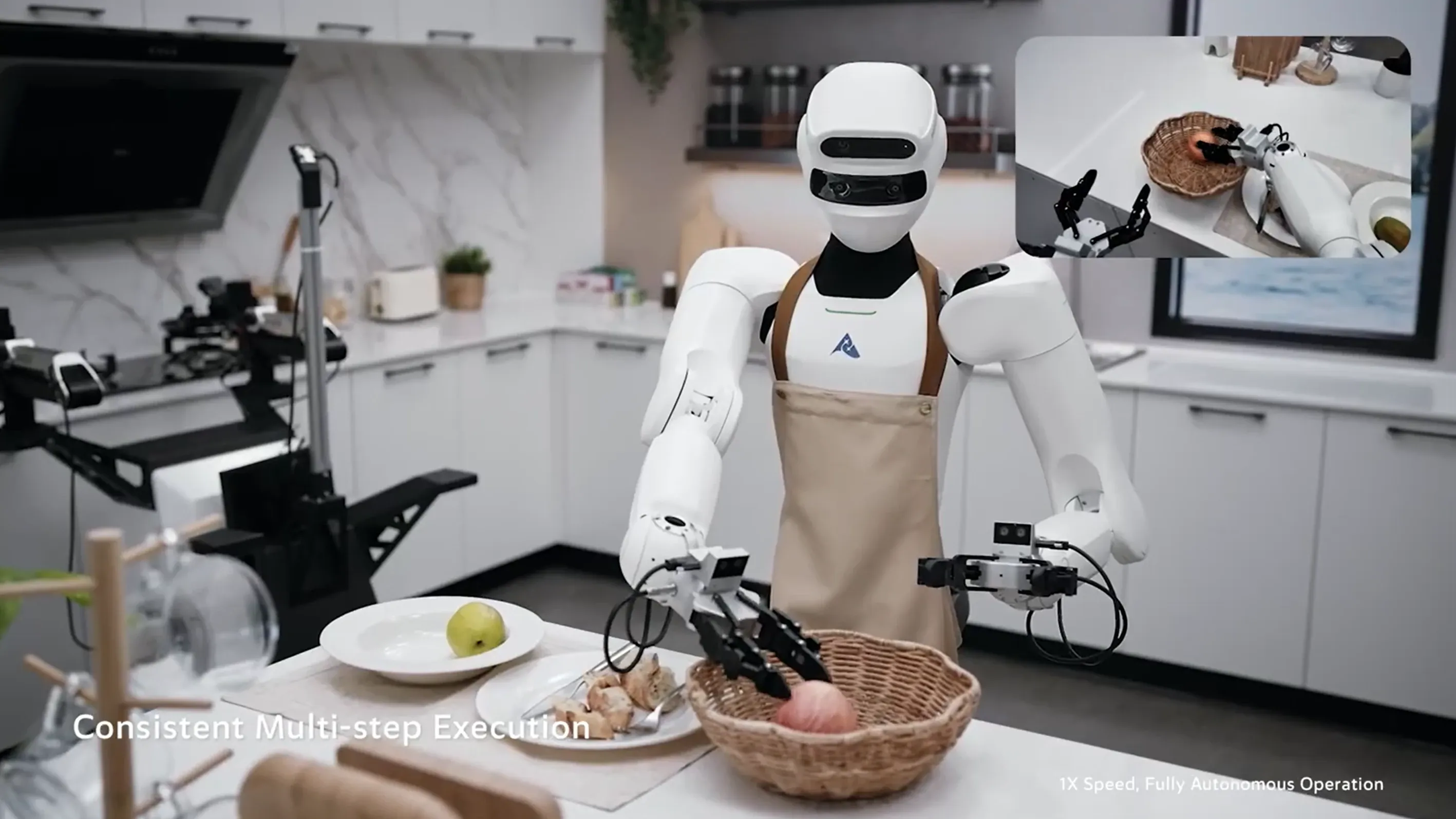
1X Unveils 1XWM: The Video-to-Action "Brain" That Lets NEO Imagine Its Chores
1X Technologies has successfully evolved its World Model from a mere simulation tool into an advanced generative "cognitive core." This innovative development enables the NEO humanoid to undertake a variety of new tasks, such as steaming shirts and operating toilet seats, by first visualizing these actions. This transition marks a significant advancement in robotics, showcasing the potential for humanoid robots to perform complex and practical tasks in everyday settings. The enhancement of the World Model is expected to broaden the capabilities of NEO, making it a more versatile assistant in both domestic and commercial environments.
1X-technologies embodied-ai NEO Bernt Børnich
Roborock F25 Ultra: A New Era of High-Temperature Wet & Dry Cleaning
Roborock has introduced the F25 Ultra, marking its entry into the handheld wet and dry vacuum market. This innovative device features steam and hot water cleaning modes, aimed at tackling tough stains and providing deep cleaning without the need for harsh chemicals. Equipped with advanced technologies such as VaporFlow and WaveFlow, the F25 Ultra not only promises superior cleaning performance but also incorporates self-maintenance capabilities. The launch of this product reflects Roborock's commitment to enhancing home cleaning solutions with effective and environmentally friendly options.
home cleaning robotics vacuum technology smart home innovation
Mecha BREAK launches globally, but faces widespread player criticism
Mecha BREAK, a new sci-fi mecha shooter game from Chinese developer Seasun Games, was released globally on Wednesday for PC, PlayStation 5, and Xbox platforms. The launch has been met with enthusiasm, as the game reached a peak of over 130,000 concurrent players on Steam within the first two days. This strong performance highlights the growing interest in high-quality Chinese mecha games, positioning Mecha BREAK as a significant entry in the AAA gaming market. The game's success reflects both the developer's ambition and the increasing global appetite for innovative gaming experiences.
On the Cusp Content and entertainment E-commerce and New Retail Gaming Highlight NewsRobotics needs a service framework.
RSF defines a common language for robot service capability, lifecycle operations, certification pathways, and service-provider networks.