Top News

Industry Briefing

A single destination for timely, editor-curated robotics news from around the world.

The Escalating AI Arms Race in Software Engineering Technical Interviews

The Escalating AI Arms Race in Software Engineering Technical Interviews

The landscape of software engineering job interviews is rapidly evolving due to the increasing use of AI by both candidates and employers. Applicants are employing AI assistants to enhance their performance during remote technical interviews, while companies are countering with AI tools designed to detect such assistance. This dynamic creates a competitive environment where the human element of hiring remains crucial despite the technological advancements. The rise of AI in hiring processes is largely driven by the current job market, which is characterized by a surplus of applicants and ongoing tech layoffs. Experts like AI hiring strategist Tatiana Teppoeva highlight that candidates often resort to AI tools as a response to automated hiring practices that may not favor them. This situation leads to a cycle where both parties leverage AI, potentially shifting the focus from genuine capability to algorithm optimization. As AI tools become more prevalent, concerns regarding their effectiveness and fairness have emerged. While some companies are embracing AI in interviews, others warn of the risks associated with bias and privacy. The need for human oversight in the hiring process is emphasized, as relying solely on AI could result in the exclusion of qualified candidates. No further timeline was disclosed at the time of publication.

Hiring-trends Interviews Ai-bias Software-engineering
Why AI Systems Fail Quietly

Why AI Systems Fail Quietly

Engineers developing distributed AI platforms are facing a new challenge known as "quiet failure," where systems appear operational but produce incorrect outcomes over time. This issue arises as autonomy in software systems increases, complicating traditional methods of monitoring and observability. In late-stage testing, engineers find that while monitoring dashboards indicate a healthy status, users report that the system's decisions are increasingly flawed. For instance, an AI assistant designed to summarize regulatory updates may continue to function technically but rely on outdated information due to a failure to update its document retrieval process. This disconnect highlights the limitations of conventional observability metrics, which focus on uptime and error rates rather than the ongoing alignment of system behavior with intended outcomes. As autonomous systems operate continuously and make decisions based on evolving contexts, engineers must shift their focus from merely ensuring component functionality to actively supervising overall system behavior. This requires the implementation of supervisory control architectures that can monitor and intervene in real-time, preventing behavior drift before it leads to significant issues. The growing prevalence of quiet failures calls for a rethinking of reliability in engineering, emphasizing the need for continuous behavioral monitoring and control. As AI systems become more autonomous, this new approach will likely extend across various domains, transforming how engineers ensure that systems not only function correctly but also remain aligned with their intended purposes over time.

Software-failure Software-reliability Software-engineering Cloud-computing Autonomous-systems
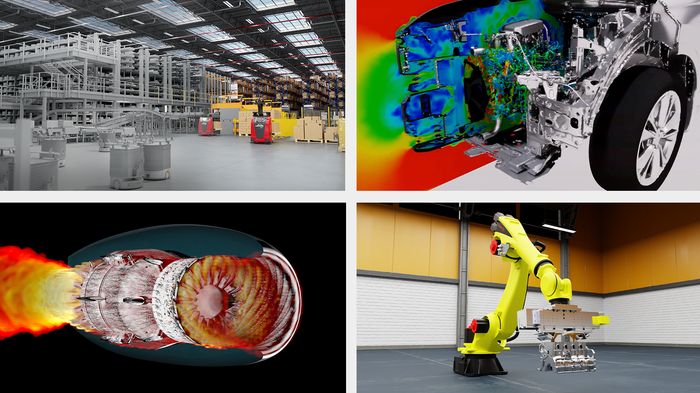
NVIDIA and Global Industrial Software Giants Bring Design, Engineering and Manufacturing Into the AI Era

NVIDIA and Global Industrial Software Giants Bring Design, Engineering and Manufacturing Into the AI Era

NVIDIA has partnered with leading global industrial software companies, including Cadence, Dassault Systèmes, PTC, Siemens, and Synopsys, to enhance industrial software and tools through its CUDA-X™ and Omniverse™ platforms. This collaboration aims to integrate GPU-accelerated technologies into the operations of major manufacturers such as FANUC and HD Hyundai. The initiative, announced today, seeks to drive innovation and efficiency in industrial processes by leveraging advanced computing capabilities. By combining NVIDIA's cutting-edge technology with the expertise of these software leaders, the partnership is set to transform the landscape of industrial automation and design, ultimately improving productivity and performance across various sectors.

Graitec outlines AI roadmap focused on accountability in engineering and construction

Graitec outlines AI roadmap focused on accountability in engineering and construction

Graitec, a software provider, has announced a comprehensive three-stage artificial intelligence strategy tailored for the architecture, engineering, construction, and operations (AECO) sector. The company emphasizes that the primary challenge facing the industry is not the creation of content through AI, but rather the reliability of these AI-generated results in practical applications. To address this concern, Graitec plans to integrate AI directly into various processes, including engineering, fabrication, and construction. This initiative aims to enhance trust and efficiency within the AECO industry, ultimately improving project outcomes.

Construction News Software AECO AI software architecture and engineering
Enterprise Software Leaders Build AI Agents With NVIDIA

Enterprise Software Leaders Build AI Agents With NVIDIA

NVIDIA has unveiled a series of new software solutions, open-source models, and strategic partnerships with prominent software platform providers aimed at developing autonomous AI agents tailored for various industries, including engineering, healthcare, and software development. This announcement, made today, underscores NVIDIA's commitment to advancing AI technology and its applications across diverse sectors. By collaborating with leading companies, NVIDIA seeks to enhance the capabilities of AI agents, enabling them to perform complex tasks and improve operational efficiency. The initiative reflects a growing trend in the tech industry to leverage AI for transformative solutions that address specific challenges faced by enterprises.

Oceaneering Expands Vision™ Platform with Subsea Module for Engineering‑Grade Integrity Visualization

Oceaneering Expands Vision™ Platform with Subsea Module for Engineering‑Grade Integrity Visualization

Oceaneering International, Inc. has unveiled Vision™ Subsea, a new module integrated into its cloud-based Vision™ 3D data visualization software platform, developed by its subsidiary GDi. Announced today, this innovative module provides engineers with access to engineering-grade point cloud data collected during remotely operated vehicle (ROV) operations. By offering a measurable and contextual view of subsea asset integrity, Vision™ Subsea enhances the ability to identify anomalies, conduct dimensional checks, and plan interventions effectively. This advancement aims to improve the safety and efficiency of subsea operations, addressing the growing need for precise monitoring and maintenance of underwater infrastructure.

oceaneering gdi vision™ platform subsea module integrity visualization
ANYbotics expands global presence with new engineering and AI hub in Barcelona

ANYbotics expands global presence with new engineering and AI hub in Barcelona

ANYbotics, a leader in AI-driven robotic inspection solutions, has inaugurated a new office in Barcelona, Spain, situated at the DFactory Barcelona campus. This marks the company’s third global location, joining its existing offices in Zurich and San Francisco. The expansion comes in response to the growing demand for ANYbotics' autonomous inspection technologies, particularly in asset-intensive and process-driven sectors. The new engineering and AI hub is expected to enhance the company’s capabilities and support its strategic growth in the region.

Infrastructure News ai robotics anybotics automation news autonomous inspection robots
Jiying Technology Launches First Zero-Shot Generalizable Physics Model for Engineering Simulations

Jiying Technology Launches First Zero-Shot Generalizable Physics Model for Engineering Simulations

Jiying Technology has unveiled its Jiying 2.0 physics foundation model, which is capable of zero-shot generalization across various geometries, materials, and boundary conditions. This model represents a significant advancement in physics AI, particularly for engineering simulations, and was announced in October 2023. The introduction of the Jiying 2.0 model is crucial as it allows engineers to simulate complex physical scenarios without the need for extensive retraining on specific datasets. This capability can enhance efficiency and reduce the time required for simulations, making it a valuable tool in engineering design and analysis. Looking ahead, industry professionals will be keen to observe how the adoption of the Jiying 2.0 model influences engineering practices and simulation accuracy. No further timeline was disclosed at the time of publication regarding additional features or updates to the model.

Technology
SPH Engineering and Vets to Drones Partner to Expand Career Paths for Military Veterans

SPH Engineering and Vets to Drones Partner to Expand Career Paths for Military Veterans

SPH Engineering has launched a new training initiative in collaboration with Vets to Drones, aimed at equipping military veterans with advanced flight planning skills essential for surveying, mapping, and inspection work in the commercial drone industry. This partnership responds to the growing demand for skilled drone operators capable of managing complex missions. By providing veterans with specialized training, the initiative seeks to expand their career opportunities in a rapidly evolving field. The program highlights the commitment of both organizations to support veterans in transitioning to civilian roles while addressing the industry's workforce needs.

Applications Drone News Drone News Feeds Drones in the News Mapping News
New UgCS 6.0 flight planning software solves a major headache for drone surveyors

New UgCS 6.0 flight planning software solves a major headache for drone surveyors

SPH Engineering has announced the launch of UgCS 6.0, a significant update to its enterprise drone flight planning platform, aimed at addressing a longstanding challenge faced by drone survey teams operating in extensive mining, oil pipeline, and remote geological sites. The update provides a solution for efficiently dividing large survey areas into manageable flight sections, thereby preventing alignment issues that can compromise data quality. This innovation is expected to enhance the operational efficiency and accuracy of drone surveys, which are crucial for various industries reliant on precise geographical data. The introduction of UgCS 6.0 marks a notable advancement in drone technology, responding to the needs of professionals in the field.

News
Industrial Software Leaders Build Secure, Autonomous AI Engineers With NVIDIA NemoClaw

Industrial Software Leaders Build Secure, Autonomous AI Engineers With NVIDIA NemoClaw

Accelerated computing has transformed the field of industrial engineering by significantly reducing simulation times from weeks to mere hours. Despite these advancements, experts indicate that challenges persist in the end-to-end workflow associated with simulations, which includes critical processes such as computer-aided design, meshing, and the simulations themselves. As industries continue to adopt these technologies, addressing these workflow issues is essential for maximizing efficiency and effectiveness in engineering practices. The ongoing developments in accelerated computing are expected to further streamline these processes, enhancing productivity and innovation in the sector.

BANNER ENGINEERING - RSio Remote Safe I/O Blocks

BANNER ENGINEERING - RSio Remote Safe I/O Blocks

Banner Engineering has introduced a new line of I/O blocks designed to enhance safety architectures in industrial settings. These innovative blocks support EtherNet/IP and CIP Safety™, allowing for configurable inputs for emergency stops, light curtains, and switches. The introduction of in-series diagnostics significantly reduces cable usage, enabling the connection of up to 192 safety devices per block while providing device-level status updates. The RSio series is characterized by its scalability and robustness, making it particularly suitable for large conveyor networks and modular machine designs. This development aims to streamline safety management and improve operational efficiency in manufacturing environments.

Agile Robots Acquires Europe and North American Assets of thyssenkrupp Automation Engineering

Agile Robots Acquires Europe and North American Assets of thyssenkrupp Automation Engineering

In a strategic move to enhance its capabilities, a leading technology firm has announced its acquisition of a company specializing in AI automation technology. This acquisition, revealed in a press release on October 15, 2023, aims to bolster the firm’s engineering and implementation expertise, positioning it for further growth in the competitive tech landscape. The integration of advanced AI solutions is expected to streamline operations and improve service offerings, ultimately benefiting clients and stakeholders alike. By combining resources and knowledge, the firm seeks to leverage innovative technologies to meet the evolving demands of the market and drive future expansion.

Factory / Robotics
All-in-one Engineering Suite for next-level digital manufacturing

All-in-one Engineering Suite for next-level digital manufacturing

The iiQWorks software platform has emerged as a pivotal tool in the automation sector, facilitating comprehensive support for the entire automation process and ensuring efficient data exchange throughout all phases of planning and production. By leveraging digital twin technology, the platform enhances the ease and speed of robot operations. This innovative approach includes features such as offline programming and virtual commissioning, which are designed to align with the principles of Industry 4.0. As industries increasingly adopt these advanced automation solutions, iiQWorks is positioned to play a crucial role in transforming manufacturing processes and improving operational efficiency.

How Modern Software Helps Construction Companies in Qatar Work Smarter and Safer

How Modern Software Helps Construction Companies in Qatar Work Smarter and Safer

Qatar is positioning itself as a leader in various industries by setting ambitious goals and achieving remarkable milestones. The nation is striving for excellence without limits, particularly in sectors such as construction, where it aims to establish higher standards than those found globally. Despite the inherent challenges associated with construction projects, Qatari companies are determined to meet and exceed these ambitious benchmarks. This drive for innovation and quality reflects Qatar's broader vision of becoming a hub for excellence across multiple fields, showcasing its commitment to progress and development on the world stage.

Construction Engineering Software automation in construction construction analytics construction automation
SpaceX Unveils AI1 Satellite Specs for Starmind Constellation with Key Thermal Challenges

SpaceX Unveils AI1 Satellite Specs for Starmind Constellation with Key Thermal Challenges

SpaceX has introduced the AI1 satellite, the inaugural component of its Starmind constellation, which stands 20 meters tall and has a wingspan of 70 meters. This orbital compute node is designed to deliver computing power equivalent to one NVIDIA GB300 server rack, utilizing a unique cooling system with deployable liquid radiators. The satellite's specifications were revealed during a presentation on June 8, 2026, ahead of SpaceX's IPO. The significance of the AI1 satellite lies in its role as a compute platform rather than a traditional satellite, focusing on running AI inference workloads. The satellite's cooling system, which is critical for its operation in the vacuum of space, is designed to reject heat through infrared radiation. However, independent engineers have raised concerns about the feasibility of the thermal and mass claims made by SpaceX, suggesting that the cooling requirements may exceed practical limits. Looking ahead, SpaceX plans to launch two AI1 prototypes in early 2027, with full-scale production expected to commence later that year at its Gigasat facility in Bastrop, Texas. The ongoing debate regarding the satellite's thermal management capabilities will be crucial to monitor as the project progresses, with no further timeline disclosed at the time of publication.

Built Robotics and Penn Engineering's xLAB Partner to Advance Physical AI in Construction

Built Robotics and Penn Engineering's xLAB Partner to Advance Physical AI in Construction

A new collaboration has emerged between xLAB and Built Robotics, focusing on enhancing safety in autonomous systems. This partnership aims to combine xLAB's extensive experience in developing high-performance, safety-critical technologies with Built Robotics' advanced edge AI model, which specializes in personnel detection and ensuring human safety. The initiative is designed to address growing concerns about safety in automated environments, particularly as the use of autonomous systems becomes more prevalent across various industries. By integrating their expertise, the two companies hope to create solutions that not only improve operational efficiency but also prioritize the well-being of individuals working alongside these technologies.

Smooth Motor Advances Across Robotics and Intelligent Automation Industries Through 30 Years of Rapid Engineering Response

Smooth Motor Advances Across Robotics and Intelligent Automation Industries Through 30 Years of Rapid Engineering Response

As product development cycles shorten and system complexity increases, the industry faces growing demands for efficient validation, long-term reliability, and cost control. This trend has emerged as companies strive to meet the evolving expectations of consumers and stakeholders. The pressure to innovate rapidly while ensuring quality and affordability has prompted organizations to adopt new strategies and technologies. By leveraging advanced data analytics and streamlined processes, businesses aim to enhance their product offerings and maintain competitiveness in a fast-paced market. The ongoing shift underscores the necessity for adaptability and efficiency in an environment where both time and resources are limited.

What It Takes to Make Humanoid Robots Move Like Humans: The Engineering Behind Joints, Hands, and Precision Control

What It Takes to Make Humanoid Robots Move Like Humans: The Engineering Behind Joints, Hands, and Precision Control

Recent advancements in humanoid robotics have highlighted a significant shift in design and manufacturing practices. Engineers and researchers are increasingly moving away from traditional discrete component assembly methods, opting instead for integrated joint modules. These innovative units combine motors, gearboxes, sensors, and drive electronics into compact systems, streamlining the production process and enhancing the functionality of humanoid robots. This transition is driven by the need for more efficient and versatile robotic systems capable of performing complex tasks in various environments. As this trend continues to evolve, it is expected to accelerate the development of more sophisticated humanoid robots, paving the way for broader applications in industries such as healthcare, manufacturing, and service sectors. The integration of these components not only simplifies assembly but also improves the overall performance and reliability of robotic systems, making them more adaptable to real-world challenges.

Into the Omniverse: How Industrial AI and Digital Twins Accelerate Design, Engineering and Manufacturing Across Industries

Into the Omniverse: How Industrial AI and Digital Twins Accelerate Design, Engineering and Manufacturing Across Industries

Companies across various industries are increasingly leveraging industrial AI, digital twins, AI physics, and accelerated AI infrastructure to enhance their design, simulation, and optimization processes. This technological shift allows organizations to refine products, processes, and facilities in a virtual environment before actual construction begins. By adopting these advanced tools, businesses aim to improve efficiency, reduce costs, and accelerate time-to-market for new innovations. The integration of these technologies is seen as a crucial step in staying competitive in a rapidly evolving market, enabling firms to make data-driven decisions and optimize their operations effectively.

Solving Today’s Toughest Test Challenges: A New Era of Engineering Productivity

Solving Today’s Toughest Test Challenges: A New Era of Engineering Productivity

Test engineers in the semiconductor industry are currently grappling with significant challenges due to the increasing complexity of chip designs and the rapid pace of product development. As of today, these professionals are adapting to advancements in technology such as advanced packaging and chiplet architectures, which are reshaping the landscape of semiconductor manufacturing. The integration of AI accelerators is further complicating the testing process, necessitating innovative approaches to ensure quality and performance. The industry's evolution demands that engineers not only enhance their technical skills but also adopt new methodologies to keep up with the fast-changing environment. This shift is crucial for maintaining competitiveness in a market that is continuously pushing the boundaries of what is possible in semiconductor technology.

Empowering STEM Education and Research in the Americas: Elephant Robotics Introduces Integrated Educational Robotics Solutions

Empowering STEM Education and Research in the Americas: Elephant Robotics Introduces Integrated Educational Robotics Solutions

In recent years, STEM education has seen significant growth, fueled by a rising demand for practical engineering skills, artificial intelligence literacy, and interdisciplinary innovation. Despite this progress, schools, universities, and research laboratories continue to face challenges in creating effective robotics environments. Educators often struggle to integrate various components such as robotic arms, mobile platforms, sensors, and open-source software from multiple sources, complicating the development of comprehensive robotics programs. This ongoing issue highlights the need for streamlined solutions that can enhance the teaching and learning of robotics in educational settings.

Design Research Robotics AI education americas automation news
Robotiq launches AI platform to automate robotic workcell integration

Robotiq launches AI platform to automate robotic workcell integration

Robotiq has launched IQ, an innovative AI-enabled platform aimed at streamlining the integration of robotic Workcells. This new technology is designed to accelerate the transition from traditional, manual integration processes that rely heavily on expert input to a more automated and efficient system. By capturing unstructured data from automation projects and coordinating engineering workflows, IQ facilitates the creation of validated Workcell designs that reflect actual customer needs and historical data. This advancement addresses the growing demand for scalable solutions in the robotics industry, making it easier for partners to implement effective automation strategies.

Industrial robots News Robotics AI in robotics AI-powered engineering automation integration
KISS Institute Launches BotBall to Enhance STEM Education with Student-Led Robotics

KISS Institute Launches BotBall to Enhance STEM Education with Student-Led Robotics

The KISS Institute for Practical Robotics (KIPR) has introduced BotBall, a robotics program designed to foster creativity and critical thinking among students. This initiative emphasizes student-led engineering, allowing participants from elementary to high school to engage in hands-on learning using a standardized kit. The program ensures a level playing field by providing all teams with the same materials, promoting accountability and project management skills without adult intervention during competitions. BotBall challenges traditional educational models by integrating real programming languages like C and Python into its curriculum, demonstrating that students can handle complex coding at an early age. The Junior Botball Challenge (JBC) further innovates by allowing up to five students to collaborate on a single robot, shifting the focus from competition to inquiry-driven problem solving. This approach encourages teamwork and a deeper understanding of both mechanics and software among participants. As the school year approaches, KIPR is expected to release more details about the upcoming competition schedule. The BotBall program represents a significant shift in STEM education, moving away from conventional roles and fostering a new generation of students who are well-versed in both engineering and programming disciplines. No further timeline was disclosed at the time of publication.

Autonomous Mobile Robots (AMRs) Educational News competition education workforce
Inside Momenta: Elon Musk-style CEO, AI obsession, and mass production machines.

Inside Momenta: Elon Musk-style CEO, AI obsession, and mass production machines.

Momenta, a Chinese autonomous driving company, has made significant strides in the industry, achieving a market capitalization of HKD 70 billion on its IPO debut on July 8. Founded by Cao Xudong, who frequently travels to the U.S. to experience Tesla's Full Self-Driving (FSD) technology, the company boasts over 50% market share in designated vehicle models and over 60% in mass-produced vehicles. Cao's strategic decision to focus on L2-level mass production, rather than the more commonly pursued L4 direction, has been pivotal in establishing Momenta's competitive edge. Despite initial skepticism and funding challenges, his commitment to engineering efficiency has driven the company to achieve a gross margin increase from 17.5% to 71.6% over three years, alongside a doubling of revenue and narrowing losses. As the market for L2 technology becomes increasingly crowded with competitors like Huawei and Horizon Robotics, Momenta faces mounting pressure. The company is also navigating rapid advancements in AI technology, with a focus on world models and robotics as future growth areas. Cao's vision includes integrating hardware and software to enhance cost-effectiveness and maintain a competitive advantage. Despite the challenges, Cao remains optimistic about Momenta's potential, emphasizing the importance of a passionate team dedicated to AI innovation. As the industry evolves, the company's past successes may serve as a foundation for navigating future uncertainties.

Waabi says its AI driver transferred to Volvo autonomous truck without retraining

Waabi says its AI driver transferred to Volvo autonomous truck without retraining

Waabi says it has demonstrated what it describes as a major advance in autonomous driving by transferring its AI-powered virtual driver from one autonomous truck platform to another without requiring additional training, engineering or new data. The company says its Waabi Driver software was integrated with the Volvo VNL Autonomous truck, developed in partnership with […]

Autonomous Vehicles News AI software artificial intelligence autonomous driving autonomous transport
Weeks after Huang visit, Nvidia expands Korea hiring into robotics, HPC

Weeks after Huang visit, Nvidia expands Korea hiring into robotics, HPC

Nvidia is expanding its engineering presence in South Korea, nearly a month after CEO Jensen Huang announced the company's plans to establish a research and development center in the country. Recent job postings on Nvidia's official careers website indicate a focus on key areas such as robotics simulation, high-performance computing, and automotive software, which are closely linked to South Korea's manufacturing, semiconductor, and automotive industries. This strategic move aims to strengthen Nvidia's involvement in these critical sectors, reflecting the company's commitment to innovation and collaboration within the region. The latest job listings, discovered by the Korea Herald, highlight Nvidia's intent to tap into local expertise and resources as it seeks to enhance its technological capabilities in Korea.

All News
BofA Highlights Pony AI (PONY) Robotaxi Expansion

BofA Highlights Pony AI (PONY) Robotaxi Expansion

Pony AI Inc. (NASDAQ:PONY), a key player in the autonomous mobility sector, is poised for significant growth as highlighted by BofA Securities, which reaffirmed its Buy rating and set a target price of $19 for the company. The announcement came on July 1, 2026, as Pony AI expands its robotaxi operations into challenging urban environments, including Tianhe, Huangpu, and Panyu Chimelong, where dense office buildings and heavy traffic present unique operational hurdles. Analyst Ming Hsun Lee noted that these new zones introduce complex challenges, but Pony AI is leveraging its proprietary PonyWorld and Virtual Driver systems to navigate these conditions. The company aims to enhance profitability through economies of scale and plans to increase its fleet to over 3,500 robotaxis across more than 20 cities by the end of 2026, with Singapore's Punggol district serving as a central hub following the recent public launch of its autonomous mobility service via the Zig app. While BofA acknowledges the potential of Pony AI as an investment, it suggests that other AI stocks may offer greater upside with less risk. The company continues to diversify its offerings, including software deployment, vehicle engineering, and logistics services, positioning itself as a significant player in the evolving autonomous vehicle landscape.

Greensea IQ is Awarded $18 Million Contract by the US Navy for the Bayonet Underwater Controller (BUC) Development and Sustainment

Greensea IQ is Awarded $18 Million Contract by the US Navy for the Bayonet Underwater Controller (BUC) Development and Sustainment

Greensea Systems, Inc., operating as Greensea IQ, has secured an $18.15 million Indefinite-Delivery/Indefinite-Quantity (IDIQ) contract to deliver hardware, software, and engineering technical services. This contract, awarded for an undisclosed duration, focuses on the development of underwater controllers essential for the operation of autonomous and remotely operated systems in maritime settings. The contract aims to enhance capabilities in underwater technology, reflecting the growing demand for advanced solutions in marine environments.

greensea iq u.s. navy new contract bayonet underwater controller (buc) development and sustainment
How Jaiveer Singh Is Helping Robots — and Developers — Move Faster

How Jaiveer Singh Is Helping Robots — and Developers — Move Faster

Jaiveer Singh, an expert in robotics, emphasizes the importance of foundational elements in robotics, such as the internal components of machines and the software that allows developers to access a robot's cameras. Rather than focusing on the flashy aspects of robots, he advocates for a deeper understanding of the engineering and infrastructure necessary for their development. This approach highlights the critical role that well-designed systems play in enabling robots to function effectively in various applications. Singh's perspective aims to shift the conversation towards the essential technical groundwork that supports the advancement of robotic technology.

OnLogic to Showcase Practical Physical AI and Full-Facility Workload Consolidation at Automate 2026

OnLogic to Showcase Practical Physical AI and Full-Facility Workload Consolidation at Automate 2026

OnLogic, a leader in industrial computing, is set to showcase its innovative edge solutions at the Automate 2026 show, taking place from June 22-25 at McCormick Place in Chicago, Illinois. Positioned at Booth 867, the company aims to highlight practical applications of Physical AI and advanced workload consolidation, moving beyond the prevalent cloud AI hype. As industries increasingly seek to implement artificial intelligence, many face challenges such as cloud latency and high bandwidth costs. OnLogic's VP of Product Engineering, Sheldon Sun, emphasizes the need for reliable edge computing to enable real-time operations in demanding environments. The company will demonstrate how its robust hardware can effectively bridge the gap between sophisticated software and the realities of modern industrial settings. Attendees can expect live demonstrations, including a forklift near-miss detection system powered by edge computing and an automated quality control inspection using advanced machine vision. OnLogic will also present a range of industrial and edge computing solutions, including the Helix 520 Series and the ultra-compact CL260 fanless computer, designed for various applications within the industrial sector. For more information on OnLogic's offerings and to engage with their team during the event, visitors are encouraged to stop by Booth 867 or visit their website.

How JPL Keeps the 13-Year-Old Curiosity Rover Doing Science

How JPL Keeps the 13-Year-Old Curiosity Rover Doing Science

The Curiosity rover, which has been exploring Mars for 13 years, continues to operate effectively despite the challenges of its hostile environment. Since its successful landing in August 2012 at the Jet Propulsion Laboratory (JPL) in Pasadena, California, Curiosity has traveled nearly 37 kilometers, drilled into 42 rocks, and captured approximately 763,000 images. JPL engineers, including assistant team chief Alexandra Holloway, have implemented ongoing software updates and innovative solutions to keep the rover functional, even as it faces wear and diminishing power. Holloway highlighted the rover's longevity, attributing it to robust engineering and continuous maintenance efforts. While Curiosity and the younger Perseverance rover share similar hardware, Perseverance features additional capabilities for autonomous navigation, reflecting their distinct mission objectives. Curiosity's operational challenges include wheel wear from sharp rocks and power consumption from its nuclear source, which decreases over time. Engineers have developed strategies to optimize power usage, such as reducing computer activation time and parallel processing tasks. Looking ahead, Holloway noted that while Curiosity's arm may eventually fail, the rover still possesses valuable remote sensing instruments that will contribute to future Mars exploration. With its power source expected to remain viable through at least 2035, Curiosity's mission continues to yield significant scientific insights, paving the way for future missions.

Curiosity-rover Mars Jpl
Materials Handling Group Power

Materials Handling Group Power

At LogiMAT, Bowe Group leaders discussed the company's evolution and future plans for integrated automation supported by advanced software intelligence. Founded 80 years ago, Bowe Group initially focused on manufacturing household goods before expanding into dry cleaning and car wash systems, and eventually document and paper management. The company's commitment to engineering innovation continues to drive its growth and adaptation in the materials handling sector.

AMR and AGV Automation Systems and Shuttles Conveying and Sortation Magazine Features Materials Handling WMS & SCM Software
Industrial Automation and Robotics for Educators: Training the Next Generation

Industrial Automation and Robotics for Educators: Training the Next Generation

The rapid evolution of industrial automation and robotics is reshaping global manufacturing, leading to an increased need for a skilled workforce adept at managing advanced machinery. As educators strive to connect theoretical engineering principles with the practical demands of modern smart factories, there is a pressing requirement for classroom tools that reflect real-world equipment. By 2026, the integration of robotics into STEM curricula is expected to be crucial for fostering critical thinking and technical literacy among students. Educational programs are shifting towards "Embodied Intelligence," where learners engage with sophisticated technologies like industrial robot arms, enhancing their understanding of vision systems, sensor feedback, and machine learning. This hands-on experience equips students with essential skills in industrial safety, workflow optimization, and predictive maintenance, preparing them for careers as automation engineers and technicians. However, challenges persist, including the high costs and complexities associated with traditional industrial robots, which often require specialized facilities and safety measures. To address these issues, educational institutions are exploring "all-in-one" solutions that prioritize safety and usability while maintaining industrial-grade performance. JAKA Robotics is stepping up to meet these educational needs by providing tools that facilitate a safe learning environment. Their JAKA Academy offers a comprehensive training platform with courses ranging from basic operations to advanced software development. The versatile JAKA Zu and S series robots are designed for both research and classroom use, allowing students to engage in practical tasks and develop innovative AI-driven workflows. By incorporating JAKA's technology into educational settings, students are empowered to become the next generation of leaders in industrial automation.

LG CNS enters physical AI race to coordinate rival robots

LG CNS enters physical AI race to coordinate rival robots

LG CNS, the IT services division of LG Group and a leading systems integrator in South Korea, has introduced a groundbreaking software platform designed to manage fleets of robots from various manufacturers under a unified control system. This launch took place on Thursday and addresses a longstanding challenge in the robotics industry that typically required extensive custom engineering for coordination. The new platform, named PhysicalWorks, consists of two key components: one module focuses on training robots utilizing simulation and video data, while the other facilitates real-time task assignment and reassignment across diverse robot fleets. This innovative solution aims to streamline operations and enhance efficiency in environments where multiple robotic systems operate concurrently.

All News
ABB Robotics launches PickMaster Lite to simplify & accelerate robotic picking

ABB Robotics launches PickMaster Lite to simplify & accelerate robotic picking

ABB Robotics has introduced PickMaster® Lite, a simplified version of its robotic picking software, aimed at packaging OEMs and system integrators. Launched on May 5, 2026, this new software is designed to accelerate the development of high-speed, vision-guided robotic picking solutions. By offering essential features for common picking tasks, PickMaster Lite reduces engineering efforts by 30% and commissioning time by 25%, while ensuring reliable performance. The motivation behind this launch stems from the increasing demand for automation in manufacturing, driven by labor shortages and consumer expectations for personalized products. Craig McDonnell, Business Line Managing Director at ABB Robotics, emphasized the need for quick and reliable automation solutions to enhance production flexibility. PickMaster Lite employs an intuitive, task-based interface with pre-configured templates, eliminating the need for specialized programming skills. It integrates seamlessly with existing machine control architectures, allowing for easy communication with PLC and HMI systems. This capability enables machine builders to manage key functions directly through their preferred control systems, thus minimizing development risks. The software is particularly suited for high-volume, cost-sensitive applications in sectors such as consumer goods, food and beverage, pharmaceuticals, electronics, and e-commerce. As part of the broader PickMaster family, it offers a scalable solution that can evolve alongside production needs, with options for more advanced functionalities through PickMaster and PickMaster Twin. For additional details, interested parties can visit ABB's robotics website.

Hai Robotics AMER and Maveneer Partner to Deliver Integrated Automation Built for Real-World Performance

Hai Robotics AMER and Maveneer Partner to Deliver Integrated Automation Built for Real-World Performance

Hai Robotics AMER has announced a partnership with Maveneer to develop a cutting-edge automation solution tailored for manufacturing and distribution operations. By integrating Hai Robotics' HaiPick System 3 technology with Maveneer's software and engineering capabilities, the collaboration seeks to improve operational performance, increase storage density, and enhance order fulfillment processes. This initiative, which is set to provide a scalable foundation for future growth, underscores the commitment of both companies to innovate within the logistics and automation sectors.

Automation Solutions Manufacturing Distribution Warehouse Technology
Hai Robotics AMER and Maveneer Partner to Deliver Integrated Automation Built for Real-World Performance

Hai Robotics AMER and Maveneer Partner to Deliver Integrated Automation Built for Real-World Performance

Hai Robotics AMER has announced a partnership with Maveneer to develop an innovative automation solution specifically designed for the manufacturing and distribution sectors. This collaboration merges Hai Robotics' cutting-edge HaiPick System 3 technology with Maveneer's engineering and software capabilities. The goal of this initiative, which was revealed recently, is to significantly improve operational performance, scalability, and efficiency in material handling and order fulfillment processes. By leveraging each company's strengths, the partnership aims to address the growing demand for advanced automation in the industry.

Automation Solutions Manufacturing Technology Warehouse Automation Logistics Software Integration
Sarang Gupta Builds AI Systems With Real-World Impact

Sarang Gupta Builds AI Systems With Real-World Impact

Sarang Gupta, a data scientist at OpenAI in San Francisco, has leveraged his childhood curiosity and engineering skills to make significant contributions to the field of artificial intelligence. From a young age, Gupta demonstrated a knack for problem-solving, fixing household items and later developing software solutions, including an online ordering system for a local restaurant. After earning dual degrees in industrial engineering and business management from the Hong Kong University of Science and Technology, he began his career at Goldman Sachs, where he automated trade reconciliation processes, enhancing operational efficiency. In 2020, Gupta earned a master's degree in data science with a focus on AI from Columbia University, where he collaborated on projects that aimed to improve journalism through technology. He then joined Asana as a product data scientist, leading the launch of AI-powered features to enhance user experience. His work gained momentum alongside the rise of generative AI, prompting him to transition to OpenAI in September 2025. At OpenAI, Gupta collaborates with the marketing team to develop data-driven models that optimize customer outreach and measure the effectiveness of various marketing channels. He emphasizes the transformative potential of AI across industries and plans to continue his work in this rapidly evolving field. Gupta, an IEEE member since 2024, values the organization for its resources and networking opportunities, which he believes inspire and enhance his professional journey.

Ieee-member-news Openai Generative-ai Chatgpt Careers Type-ti
6-Axis Robot Arms Explained: Kinematics and Terminology

6-Axis Robot Arms Explained: Kinematics and Terminology

JAKA, a leader in robotics, has unveiled its advanced 6-axis robot arm, the JAKA Zu, designed to enhance automation in modern manufacturing environments. This innovative system features interconnected joints that provide versatile movement and precise control in three-dimensional space, enabling it to perform complex tasks such as assembly, welding, and material handling. The robot's compact structure and lightweight design make it particularly suitable for factories with limited space, allowing it to efficiently manage multiple production lines and significantly reduce operational costs. The JAKA Zu excels in palletizing operations, automating tasks that traditionally required manual labor. By accurately stacking items across various production lines, the robot not only improves workflow and reduces operator fatigue but also enhances workplace safety. This automation leads to consistent throughput, freeing human workers from repetitive and ergonomically challenging tasks. JAKA emphasizes the importance of understanding kinematics and the terminology associated with the robot's joints to maximize productivity and minimize setup errors. The integration of hardware and software in the JAKA Zu ensures smooth operation and low maintenance, while its modular design allows for quick adjustments to accommodate different tasks without the need for specialized engineering support. Through these advancements, JAKA aims to optimize production schedules and maintain high-quality standards, ultimately creating a safer and more efficient working environment for operators.

Doosan Robotics Accelerates Push to Become an AI Robot Solutions Leader

Doosan Robotics Accelerates Push to Become an AI Robot Solutions Leader

Doosan Robotics is intensifying its efforts to become a leading global provider of intelligent robot solutions, with a comprehensive growth strategy that includes international acquisitions, talent recruitment, and organizational restructuring. On July 28, the company's board approved the acquisition of an 89.59% stake in ONExia, a Pennsylvania-based robotics system integrator, for approximately $25.9 million. Founded in 1984, ONExia specializes in end-to-end automation services across manufacturing, logistics, and packaging sectors, and has seen consistent annual sales growth of about 30%. This acquisition is seen as a pivotal move for Doosan Robotics, enabling it to enhance its competitiveness in the intelligent robotics market by shifting from a hardware-centric model to a more integrated approach focusing on AI and software solutions. ONExia's engineering expertise and extensive automation data are expected to significantly bolster Doosan's AI capabilities. In conjunction with the acquisition, Doosan Robotics is increasing its investments in research and development, actively recruiting specialists in robotics, AI, and software development, and reorganizing its R&D division to prioritize AI and humanoid technologies. A new R&D Innovation Center is also set to open by the end of the third quarter. CEO Kevin (Minpyo) Kim emphasized the importance of this acquisition in strengthening the company's global presence and internalizing AI technologies, aiming to position Doosan Robotics as a leader in the emerging Physical AI landscape.

Why Are Custom Harness Solutions Essential for Next Generation Technology?

Why Are Custom Harness Solutions Essential for Next Generation Technology?

In the realm of hardware development, a recurring issue has emerged where wiring is often considered an afterthought. Engineers invest significant time and resources into creating advanced electric powertrains and high-density sensor arrays, ensuring that the mechanical and software components are meticulously designed. However, a common oversight occurs when the physical connections fail to fit within the designated space, leading to potential setbacks in the project timeline. This problem is particularly pronounced when relying on off-the-shelf components that may not be compatible with innovative designs. As the industry continues to evolve, addressing these wiring challenges is crucial for the successful integration of new technologies.

Engineering Technology aerospace Cable assembly Cable management Custom harness solutions
General Motors Is Cutting Its Development Cycles in Half

General Motors Is Cutting Its Development Cycles in Half

General Motors is accelerating its vehicle development process to compete with fast-paced Chinese automakers like BYD, which can bring electric vehicles (EVs) to market in under two years. This initiative, led by Sterling Anderson, GM’s chief product officer and former Tesla executive, aims to leverage artificial intelligence (AI) and simulation technology to significantly reduce design and production timelines. In a recent video call, Anderson and Jason Fischer, GM’s executive director of virtual integration engineering, outlined how AI is reshaping automotive design. Traditionally, the development process involved lengthy empirical testing and siloed engineering efforts. However, GM's new approach integrates multiple functions into a single virtual tool, allowing engineers to simulate design changes in minutes rather than hours. This method has already halved the development time for the electric GMC Hummer, which went from concept to showroom in just two years. GM is applying these advanced techniques across various projects, including self-driving cars and NASA's lunar rover, enhancing their ability to simulate real-world conditions and improve vehicle performance before physical prototypes are built. By running thousands of simulations, GM can identify and address potential issues early in the design process, ultimately leading to more refined vehicles. This innovative strategy positions GM to keep pace with the rapidly evolving automotive landscape and meet consumer demands for faster, more efficient vehicle production.

Gm Simulations Engineering-design General-motors Physics-simulations Automotive-engineering
With a swipe of a magnet, microscopic “magno-bots” perform complex maneuvers

With a swipe of a magnet, microscopic “magno-bots” perform complex maneuvers

Researchers at the Massachusetts Institute of Technology (MIT) have developed an innovative fabrication technique capable of creating soft, microscopic structures featuring magnetically activated moving components. This breakthrough, announced in October 2023, aims to enhance the functionality of soft robotics and other applications that require precise movement at a small scale. By leveraging magnetic fields, the researchers enable these tiny structures to perform complex tasks, which could revolutionize fields such as medical devices and environmental sensing. The technique involves a novel approach to material design and assembly, allowing for greater control over the movement and behavior of the structures. This advancement not only showcases the potential of soft materials in engineering but also opens new avenues for research in robotics and automation.

Research Robotics 3-D printing Magnets Materials science and engineering Mechanical engineering
Managing traffic in space

Managing traffic in space

Associate Professor Richard Linares is addressing the growing challenge of satellite navigation in congested orbits. As the number of satellites in space continues to rise, the risk of collisions increases, making safe navigation crucial for space operations. Linares, an expert in aerospace engineering, is developing innovative strategies and technologies to enhance the safety and efficiency of satellite movements. His work is particularly timely, given the rapid expansion of satellite constellations and the increasing interest in space exploration and commercial ventures. By leveraging advanced algorithms and data analysis, Linares aims to create systems that can predict potential collisions and facilitate safer maneuvering of satellites in crowded orbital paths. This initiative not only aims to protect existing satellites but also to ensure the sustainability of space activities for future generations.

Profile Faculty Satellites Pollution Aeronautical and astronautical engineering automation
Light-activated gel could impact wearables, soft robotics, and more

Light-activated gel could impact wearables, soft robotics, and more

Researchers at the Massachusetts Institute of Technology (MIT) have made significant strides in the field of ionotronics, a burgeoning area of study focused on the transfer of data through ions. This innovative approach aims to create a seamless interface between electronic devices and biological tissues, potentially revolutionizing how data is communicated within and between living organisms. The advancements were reported recently, highlighting the ongoing efforts to enhance the integration of technology with biological systems. By harnessing the unique properties of ions, the team at MIT is exploring new pathways for data transmission that could lead to breakthroughs in medical devices and bioengineering. This work underscores the importance of interdisciplinary research in bridging the gap between traditional electronics and the complexities of biological functions.

Research Robotics Light Materials science and engineering Wearables Materials Research Laboratory
IEEE Honors Robotics Pioneer Toshio Fukuda

IEEE Honors Robotics Pioneer Toshio Fukuda

Toshio Fukuda has been blazing trails for most of his career. He is considered to be one of the most prolific scholars in robotics, writing more than 2,000 research papers and authoring several books on the field. He’s an influential figure thanks to his pioneering work developing biomedical robotic systems, industrial robots, micro-nano robotics, mechatronics, and AI-driven automation.Fukuda launched one of the first robotics conferences, the IEEE/RSJ International Conference on Intelligent Robots and Systems (IROS). It is still popular almost 40 years later.Toshio FukudaEmployerEgypt-Japan University of Science and Technology, in Alexandria TitleProfessor and vice president of research Member gradeLife Fellow Alma matersWaseda University, in Tokyo; University of Tokyo An IEEE Life Fellow, he is a professor emeritus in the department of micro-nano systems engineering and a visiting professor at Nagoya University, in Japan, where he taught for nearly 25 years. Currently, he is a vice president of research at the Egypt-Japan University of Science and Technology, in Alexandria, Egypt.Within IEEE, Fukuda has held top volunteer positions including the organization’s highest office: He served as IEEE president in 2020, becoming the first person of Asian descent to hold the role.He’s a former program director of Japan’s Moonshot program, which by 2050 intends to develop advanced AI robots.Born in Japan, Fukuda has been recognized by the country for his contributions to science with two of its highest awards: the Medal of Honor with a purple ribbon in 2015 and the Order of the Sacred Treasure in 2022.IEEE honored him with this year’s Richard M. Emberson Award for “distinguished service advancing the technical objectives of IEEE, especially in the area of robotics.” The IEEE Board-level award is sponsored by the IEEE Technical Activities Board. Fukuda received the award on 24 April at a ceremony in New York City.As a former IEEE president who has served as a master of ceremonies at several of the organization’s major award events, Fukuda noted that he is more accustomed to bestowing awards than receiving them.“It’s very interesting to be on the receiving end,” he says.The journey into robotics researchAs a teenager, Fukuda spent his summer breaks teaching himself how to build things including transistor radios and steam engines.“It was very nice to have a hands-on hobby and make these kinds of things myself,” he says. His experimentation led him to study engineering.He earned a bachelor’s degree in engineering in 1971 from Waseda University, in Tokyo. He says one of his professors there—Ichiro Kato, regarded as the father of Japanese robotics research—was a good mentor who made a positive impact.Fukuda’s research interests were robotics and mechatronics, a field that combines robotics, electronics, computer science, and control systems.He went on to earn a master’s degree and a doctorate in science from the University of Tokyo, in 1971 and 1977. During those years, he also attended Yale, where he conducted research on advanced control theory in 1973.He reflects fondly on his time at Yale: “It was a very nice environment and a kind of free-thinking atmosphere. It motivated me to study more.”“IEEE doesn’t care who you are, what you do, what country you are from, or whether you are male or female. IEEE accepts people who have energy and passion.”While at Yale, Fukuda served as an assistant to his advisor—which led him to consider a career in academia, he says, because he enjoyed the freedom that research work afforded him.But he realized that such freedom comes with a price. University researchers are expected to raise the money that funds their work. He compares researchers to small-business owners who have to bring in money to keep their enterprise afloat.That realization led him to select robotics as his field because he intended to develop technologies useful to industry, he says.After earning his doctorate, he returned to Japan in 1977 to work as a research scientist at the government’s Mechanical Engineering Laboratory, later renamed the National Institute of Advanced Industrial Science and Technology, in Tsukuba.“There was a lot of research going on at the lab, including practical robotics and theory,” he says.He left Japan in 1979 to become a visiting research fellow at the University of Stuttgart, in Germany. During his year there, he studied systems, software problems, and related topics.He returned to Japan and was hired as an associate professor of mechanical engineering at the Tokyo University of Science. He conducted research into practical uses for robots by visiting industrial plants. He decided to develop robots that inspect industrial equipment such as those used in assembly plants, oil refineries, and power stations—places that “can be hostile environments for humans,” he says.His work drew interest from chemical, oil, and utility companies.“I got a lot of money from them for this very practical application, which funded my research,” he says, laughing.Developing popular robotic systemsFukuda grew tired of making those robots, he says, so he switched to creating ones for scientific applications. He developed many techniques, but he probably is best known for his modular, cellular robotic systems (CEBOTs), which he introduced in 1985.He has described how CEBOTs work in numerous papers published in the IEEE Xplore Digital Library.The CEBOT system is composed of a number of autonomous robotic cells that stick together like interlocking Lego plastic bricks, he says.Each cell is a fundamental modular unit that has a function. When a simple task is given, the system can analyze it and generate the structure of the cellular manipulator. The cells connect to and detach from each other through connection mechanisms and cooperate mutually, creating complex structures and configurations.“You start developing from the component-wise to the cell-wise to a small functional unit—and then you come up with clusters that make bigger systems. We can make a society of robot beings like that,” he explained in his oral history published on the Engineering and Technology History Wiki. “It’s a distributed robotic system, a self-organized robotic system, and also an evolutionary robotic system.“It’s also a fault-tolerant robot system because if something is wrong, you just remove those things and make a new one. You keep the system working. That’s a great thing.”Today CEBOTs are used for a variety of tasks such as delivering medication in hospitals, assisting with planting crops, and transporting products in distribution centers. Check out IEEE Spectrum’s Robots Guide for news from the world of robotics.In 1989 Fukuda joined Nagoya University as a professor of mechanical engineering and micro-nano systems engineering. During his 24-year career there, he was director of the university’s Center for Micro-Nano Mechatronics. He developed a long list of technologies at the university, including many for medical applications. He also conducted groundbreaking research into intelligent robotic systems and micro- and nano-robotics.Another technology he is known for is brachiation robots, which he helped develop in 1988. He calls them monkey robots because they’re based on the pendulum-like movement of monkeys swinging from tree to tree. The gravity-based locomotion enables continuous movement.Brachiation robots now are inspecting high-voltage transmission towers and bridges, searching damaged buildings for survivors, and performing maintenance on pipelines and cables.Fukuda retired from the university in 2013 and was named professor emeritus.He didn’t stay retired for long, though. He next held a teaching appointment at Meijo University, in Nagoya, until he left in 2022 to join the Egypt-Japan University.A prominent volunteerHe joined IEEE in 1980 at the encouragement of one of his research advisors, Professor Fumio Harashima, now an IEEE Life Fellow. After attending conferences and reading the organization’s publications, Fukuda says, he looked forward to becoming more involved.“I wanted to know how to organize a conference and how to edit a paper for one of its Transactions,” he says. “I wanted to know what was going on from inside the organization, not just the outside.”In 1988 he was the founding chair and organizer of IROS, in Tokyo. The conference had 330 attendees that year, and was supported by Harashima. Today it is one of the largest and most prestigious conferences on the topic, attracting more than 9,000 people annually. Out of 120,000 conferences, it was the only conference in the Nature Index database for this year, Fukuda says.In 1996 he and other members launched IEEE Transactions on Mechatronics.He was the founding president of the IEEE Nanotechnology Council, which was established in 2002. He is considered a pioneer in nanotechnology research, particularly regarding how it relates to robotics.Over the years, he has held numerous volunteer positions on IEEE editorial boards and committees.He was the 1998–1999 president of the IEEE Robotics and Automation Society, becoming the first non-U.S. member to hold the title.He was director of IEEE Division X (2001–2002 and 2017–2018), which covers intelligent systems, biological engineering, robotics, control systems, and photonic technologies. He served as the 2013–2014 director of IEEE Region 10 (Asia-Pacific).As the 2020 IEEE president, Fukuda saw the organization through the early part of the COVID-19 pandemic. Because of travel restrictions, he realized IEEE should change how it offered its in-person services, specifically educational programs. He encouraged IEEE Educational Activities to develop an online learning platform. The IEEE Learning Network started with just three courses and now offers nearly 2,000 courses, webinars, and learning materials.An award-winning memberThe Emberson Award joins a slew of other recognitions Fukuda has received from IEEE. They include several from the IEEE Robotics and Automation Society: a 2004 Pioneer Award, a 2009 Saridis Leadership Award, and the 2011 Harashima Award for Innovative Technologies. He is also a recipient of the Board-level 2010 IEEE Robotics and Automation Technical Field Award.He says he feels strongly that IEEE should be a diverse organization that is welcoming to all. As IEEE president, he led efforts to devise a diversity, equity, and inclusion program. Several policies, procedures, and bylaws were revised to give members a safe, inclusive place for discourse.“It’s important for IEEE to make everyone feel comfortable,” he says. “DEI programs are important. All people should be equal. IEEE doesn’t care who you are, what you do, what country you are from, or whether you are male or female. IEEE accepts people who have energy and passion.“It accepted me, from the Far East. That’s why I like it.”You can learn more about Fukuda and his career from the oral history conducted by the IEEE History Center.

Robotics Robots Ieee-member-news Type-ti Ieee-awards Toshio-fukuda
Palladyne AI Executes $4.2 Million U.S. Air Force Contract to Advance Swarming Capabilities for Integrated Cross-Domain Operations

Palladyne AI Executes $4.2 Million U.S. Air Force Contract to Advance Swarming Capabilities for Integrated Cross-Domain Operations

Palladyne AI Executes $4.2 Million U.S. Air Force Contract to Advance Swarming Capabilities for Integrated Cross-Domain Operations Visit http://www.palladyneai.com for further information Palladyne AI’s SwarmOS™ platform to support satellite integration, marking a major expansion of its multi-domain autonomy and ISR capabilities across space, air, maritime, and land 07/07/26, 06:15 AM | Mobile Robots, Other Topics | Palladyne AI Corp. Palladyne AI Corp. (NASDAQ: PDYN and PDYNW) ("Palladyne AI"), a developer of artificial intelligence software for robotic platforms in the defense and commercial sectors, today announced that it has executed the previously announced contract awarded by the Air Force Research Laboratory (AFRL) to solve one of the most persistent challenges in modern defense operations—how to make different autonomous systems work together as one coordinated team. The "Hierarchical Adaptive Networked Game-Theoretic Integration of Multiple Echelons (HANGTIME)" contract will address this need. More Headlines A3's Automate 2026 Breaks Records as Demand for Robotics, AI and Automation Grows NVIDIA and Hugging Face Bring New Models and Frameworks to LeRobot for the Open Robotics Community ABB Robotics completes its AI-powered Visual SLAM AMR portfolio with new autonomous forklift UMA Unveils Its Vision for the Next Generation of Humanoid Robots Robbyant Unveils LingBot-Depth 2.0 and LingBot-Vision to Redefine Robotic Spatial Perception Articles Unleash AI Innovation: The Power of NVIDIA RTX PRO 6000 Blackwell Workstation Edition Fueled by PNY-Supplied GPUs Automate 2026 Q&A with DESTACO Automate 2026 Q&A with Roboteon Advances in Robots to See & Interpret within Warehouse Environments Building Resilient Fulfillment Networks with Robotics and Real-Time Logistics Data Today, drones, ships, and satellites often operate largely independently, limiting how quickly warfighters can see and respond to threats. HANGTIME will utilize Palladyne AI's patented SwarmOS™ software platform—the defense variant of the Palladyne™ Pilot embodied AI software—as the baseline technology to bridge that gap, connecting disparate systems so they can share intelligence, adapt to changing conditions, and act in sync across domains, including space, air, maritime, and land. By integrating satellites for the first time, this project also extends Palladyne AI's technology from the ground to orbit, enabling faster, more informed decision-making and coordinated mission execution, turning tactical commanders into strategic commanders by giving them more cross-domain intelligence, surveillance, and reconnaissance (ISR) capabilities than ever before. "Our collaboration with AFRL showcases what's next for autonomous operations," said Ben Wolff, President and CEO, Palladyne AI. "This isn't about replacing humans—it's about giving them sharper, faster insight. By connecting satellite, aerial, and ground systems using the patented SwarmOS embodied AI platform as a foundational technology, we're helping the warfighter make better decisions in real time and stay one step ahead on the battlefield." "The HANGTIME project is a breakthrough that unites high-altitude assets and situational unmanned systems into one coordinated sensor network—delivering a major advantage for the defense industry," said Dr. Denis Garagic, Chief Technology Officer, Palladyne AI. "For the first time, a single AI framework can coordinate assets across multiple domains, including satellites. That means these systems can now think and act together as a team, sharing what they see and learning as conditions change." "The HANGTIME effort represents a critical step in multi-domain autonomy for coordinated execution in challenging environments," said Caleb Williams, Program Manager, AFRL/RIEA. For more information on Palladyne AI and its patented collaborative autonomy software, including SwarmOS, please visit www.palladyneai.com. For more information about AFRL, please visit www.afrl.af.mil. About Palladyne AI Palladyne AI is a U.S.-based technology company developing patented embodied artificial intelligence, collaborative autonomy solutions, advanced avionics, autonomous systems, advanced UAV engineering services, and precision-manufactured components for defense and industrial markets. Palladyne AI delivers secure, American-developed and operated platforms designed to meet the stringent requirements of U.S. government and public-sector customers, including data sovereignty, security, and compliance. Palladyne AI's embodied AI is designed to operate in complex, contested, and high-risk environments, enabling distributed tasking, human-on-the-loop decision-making, degraded-communications resilience, and multi-domain coordination. Its platform-agnostic autonomy stack combines real-time sensor fusion, adaptive AI models, and edge-native orchestration—without vendor lock-in—to support autonomous and collaborative systems across air, ground, maritime, and industrial domains w

Japan Pioneered Humanoid Robots—Can It Now Catch China?

Japan Pioneered Humanoid Robots—Can It Now Catch China?

“In the future, the relationship between humans and robots will deepen, and the distinction between them will probably disappear.” This prediction, from one of the attendees at the recent Humanoids Summit in Tokyo, might have been unremarkable had it not come directly from an android that was first introduced to the world 20 years ago. Geminoid HI-6 is the sixth-generation of a robot originally designed in 2006. The mechanical twin of Osaka University professor Hiroshi Ishiguro, Geminoid HI-6 is now equipped with a large language model trained on Ishiguro’s own writings and interviews. It has advanced conversational skills and can even have a chat with its creator, an eerie spectacle. But at the Humanoids Summit, Geminoid was one of the few humanoid robots from Japan, the country that pioneered the form factor.While the event in Tokyo only had about 40 robots on display, Chinese systems outnumbered Japanese by roughly three to one. Some Japanese robotics firms were even using Chinese robots in their own technology demonstrations, something that would have been unthinkable in the recent past—one Japanese engineer described the situation as “sad.” The conference was a stark reminder of how Japan has ceded its early lead in humanoid robot development to overseas competitors, and the challenge it now faces to secure a place in an ecosystem increasingly dominated by general-purpose robots powered by AI. Twenty-five years ago, Japan was turning out groundbreaking humanoids that were showstopping in their abilities, but they were not commercialized as practical machines in any meaningful way. Heavily influenced by science fiction and lacking practical applications, they were mostly expensive technology demonstrations that were eventually mothballed. What Japan retains, however, is robotics design and know-how, which it must leverage to be a key player in the rapidly evolving humanoid ecosystem. Learning to Walk—Then Standing StillTo anyone who has seen recent videos of Chinese humanoids doing kung-fu and synchronized acrobatics, as well as half-marathon races, China’s remarkable progress in the field is nothing new. At the Humanoids Summit, Toyota showed a video of its latest basketball-playing robot, and Honda exhibited its latest robot hand, but the full-scale humanoids on the floor were mostly Chinese–the kid-size K1 machines from Booster Robotics of Beijing were dancing to Michael Jackson tunes. The full-scale G1 humanoid from Unitree Robotics of Hangzhou was also doing demos. “You cannot sell these bipedal systems in Japan for safety and compliance reasons,” says Shuichi Nagao, a frequent visitor to China as CTO of Omakase Robotics, a division of Zeals, a Japanese humanoid robot developer. Omakase was exhibiting a G1 modified with an external PC controller, a dextrous hand, a suction-cup manipulator and a sensor “hat” with an extra speaker, mic and camera. “In China, the government is pushing humanoid development. They didn’t have an industry 20 years ago. The people pushing it are young, in their 20s and 30s. It’s a really different mentality out there,” says Nagao. “Big players in Japan are still looking for use cases for humanoids. In China, they’re already doing mass production and reducing the cost, so other countries can’t compete with them anymore.”Another Japanese company showing off G1 bots was summit sponsor GMO AI & Robotics, a subsidiary of Japanese internet company GMO. It’s using the robots in partnership with Japan Airlines to load and unload cargo containers at Tokyo’s Haneda airport. The cargo project is a trial—like many other humanoid experiments—but the fact that Chinese machines have penetrated so far into Japan’s ecosystem upends a long history. In 1973, scientists at Waseda University in Tokyo built WABOT-1, considered the first full-scale humanoid robot and capable of slow bipedal locomotion, grasping objects and simple communication. It inspired Honda’s groundbreaking Asimo humanoid, but it was never commercialized. Asimo was eventually retired in 2022, the year ChatGPT was released. Two years later, Unitree’s G1 went on sale for US $16,000. China’s High Torque Technology Co. showed off its Mini Pi biped, customized with an anime-inspired head, at Humanoids Summit in Tokyo. The regular version is priced at $3,500. Tim HornyakSupply and DemandJapan’s development of humanoids happened before practical applications or widespread demand were in place, but bad timing is only part of the story—Japan also has a history of developing technologies that might appeal to domestic consumers but not necessarily those overseas. For example, decades after they first appeared, its highly engineered, multifunction toilets have only recently found a following abroad. Japan’s humanoid prowess was partly built on the back of its legendary industrial automation, yet even that stronghold has eroded. Ani Kelkar, a partner from McKinsey & Company in Boston who produces analytical reports about the robotics industry, told the summit audience that while Japan occupied the top spot in the world in manufacturing robot density (the number of multipurpose industrial robots in operation per 10,000 employees) from at least 1994 to 2009, it then slipped to second in 2014, third in 2019 and fifth in 2024. In that year, South Korea was at the top of the leaderboard with a robot density of 1,220 compared to Japan’s 446. The International Federation of Robotics estimates China now has the most operational industrial robots in the world, with around 2 million total units, approximately 4.5 times more than Japan. “The annual installation numbers are impressive too: 54 percent of all robots installed worldwide in 2024 were deployed in China,” the IFR said in a release in April 2026. “I think the loss of Japanese leadership is more to do with the rise of China as a manufacturing powerhouse including for sectors that Japan had high export levels,” Kelkar said in an email interview. “The recovery has not yet happened as Japan ‘missed’ the rapid acceleration in AI for robotics and is now playing catchup.”How Japan Can Adapt Kelkar believes Japan has a US $100 billion opportunity in general-purpose robotics, which are machines that can perform a wide variety of tasks, and it cannot rely on the slower-growing industrial robot market, which is centered on factory machines that do one simple and predictable task like welding car parts. He points to a McKinsey white paper suggesting that while Japan has much of the hardware and technology experience needed to support general purpose robot development, it must change its strategy to capture more share in AI, software, data collection and robotics platforms.Tetsuya Ogata is a professor of engineering and director of the Institute for AI and Robotics at Waseda University, the birthplace of humanoids in Japan. He briefed the summit on how a nonprofit he chairs, the AI Robot Association (AIRoA), is working with Toyota and other members to develop foundational technologies for collaborative use. For instance, AIRoA has collected some 80,000 hours of data on remote operation of mobile manipulators, and Ogata believes it’s the largest dataset of its kind. Using the data, it built and verified Vision-Language-Action (VLA) models, and it has also started data collection for dual-arm mobile manipulation. In an interview, Ogata acknowledged Japan’s struggle to find its place in the changing landscape. “The world of AI is inherently a game of scale,” says Ogata. “Therefore, Japan’s absolute prerequisite is to secure a competitive baseline of scale—in data, computing resources, and talent. Beyond that, what I consider most critical is a mindset shift: rather than trying to hoard scale within a single nation or company, we must grow stronger by collaborating with a diverse ecosystem of domestic and international players.” Specifically, this means creating a ‘collaborative domain’ to address data—the single biggest bottleneck—through industry-wide cooperation rather than data-siloing. By collectively nurturing a pre-competitive, shared data infrastructure and foundation model, individual companies can then compete on top of it with their own applications. “By offering this open ‘data ecosystem’ to the world, we can engage global players and establish a ‘third pole’ alongside the US and China,” says Ogata. “I believe this is how Japan can reclaim its global presence.”In 1999, Japan introduced the world’s first mobile internet services platform. But being first didn’t turn Japan into a smartphone manufacturing or design center—it’s now merely a supplier of parts to other countries who are leading the smartphone industry. If Japan can avoid a repeat of that experience and successfully deregulate, diversity, and commercialize its original humanoid dreams, it stands a better chance of influencing the direction of the industry and reaping billions in value. As automobiles and electronics were pillars of Japan’s industrial strategy in the last century, Japan could make humanoid robots one of its key value generators in the 21st century, an approach that would not only deliver economic benefits but give Japan greater clout in how the industry will evolve. Just like Japanese cars, electronics, and even toilets, Japanese humanoids could stand for craftsmanship and reliability. It’s a legacy that Japan can’t afford to give up.

Japan Robotics Humanoids Humanoid-robots
Robot Talk Episode 152 – Dexterous robot hands, with Rich Walker

Robot Talk Episode 152 – Dexterous robot hands, with Rich Walker

Claire recently spoke with Rich Walker, a key figure at Shadow Robot Company, regarding their innovative robotic hands designed for both research and industrial applications. Walker, who has been with the company since its inception, transitioned from a background in software and systems engineering to a management role, where he has played a pivotal part in the company's research and development initiatives. The discussion highlighted the advancements in robotic technology and the potential impact these developments could have across various sectors. Shadow Robot Company aims to enhance automation and precision in tasks traditionally performed by humans, showcasing the growing intersection of robotics and industry.

RobotToday Initiative

Robotics needs a service framework.

RSF defines a common language for robot service capability, lifecycle operations, certification pathways, and service-provider networks.