

Industry Briefing
A single destination for timely, editor-curated robotics news from around the world.

Research Indicates Animal and Anime Faces Enhance Emotional Appeal of Social Robots
Recent research suggests that equipping robot companions with animal-like or anime-style faces and voices can significantly enhance their emotional appeal to users. This finding is crucial as it provides insights into the design and development of social robots, which are increasingly being integrated into various aspects of daily life. The emotional connection users feel towards robots can influence their acceptance and interaction with these technologies. By focusing on aesthetic features that resonate emotionally, developers can create more engaging and relatable robotic companions. This research highlights the importance of emotional design in the evolving landscape of social robotics. As the field of social robotics continues to expand, it will be essential to monitor how these design choices impact user experiences and interactions. Future studies may explore the long-term effects of emotional appeal on user satisfaction and the potential for broader applications in healthcare, education, and companionship. No further timeline was disclosed at the time of publication.
Consumer & Gadgets
Study Shows Autonomous Service Robots Influence Social Behavior at Public Events
A recent study by ethologists at ELTE revealed that visitors at public events were more likely to notice an autonomous service robot than a human server. The experiment found that candy offered by the robot was taken more quickly, indicating a higher level of curiosity and engagement with the robotic server. This research highlights the potential impact of autonomous service robots on social interactions in public settings. The findings suggest that the presence of robots can alter human behavior, making them more receptive to engaging with technology in social contexts. Looking ahead, it will be important to monitor how the integration of autonomous service robots in various environments continues to shape social behaviors. No further timeline was disclosed at the time of publication.
Consumer & Gadgets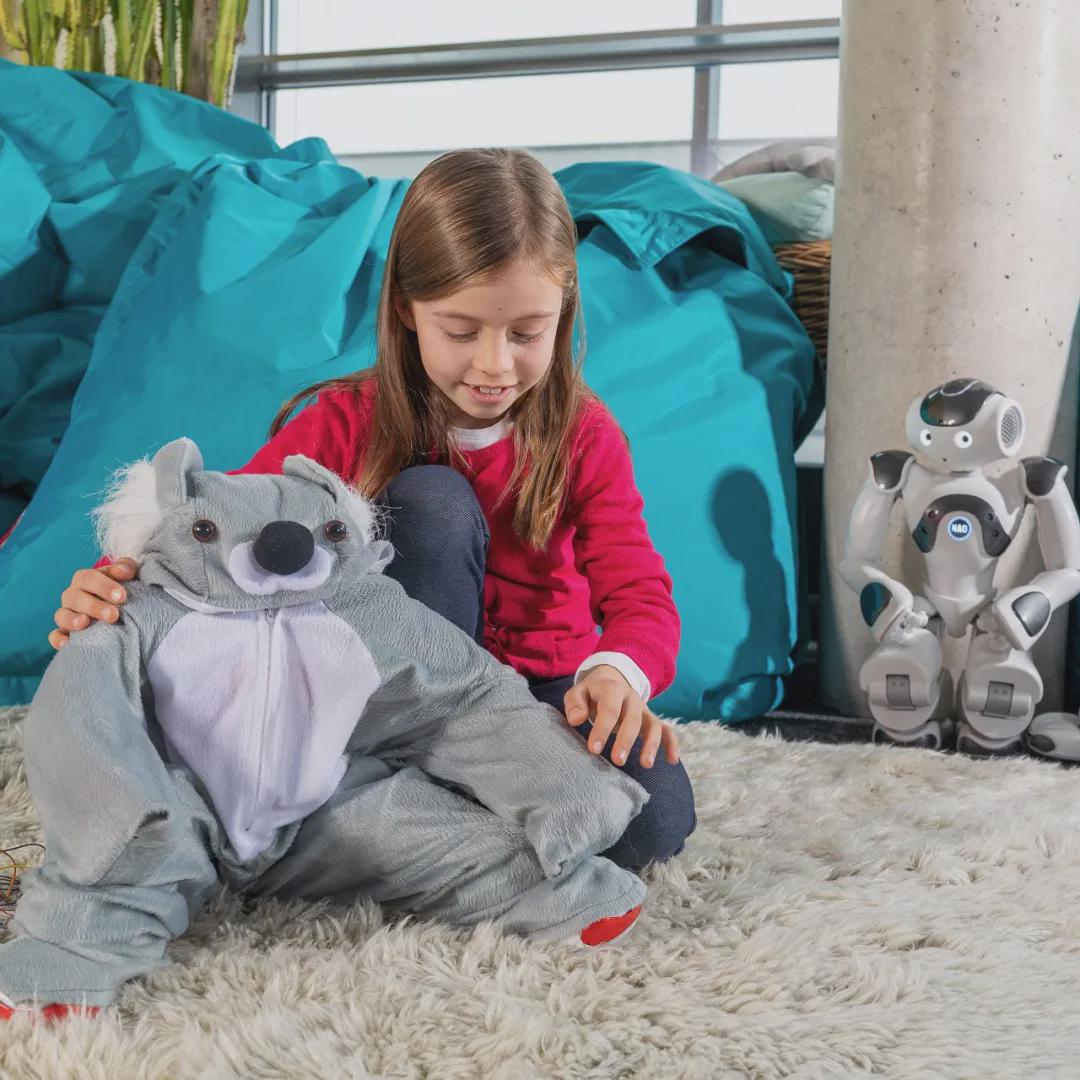
Affordable Touch Sensors Enhance Interaction in Social Robots with HERA Prototype
The HERA prototype, developed by the Max Planck Institute for Intelligent Systems in collaboration with the University of Tennessee and Fraunhofer IPA, integrates 16 custom flexible touch sensors into a modified koala pajama outfit for the NAO robot. This setup allows the robot to recognize five touch gestures and two pressure levels, enhancing its interactive capabilities. This advancement is significant as it addresses the limitations of existing social robots, which typically have few touch points and lack comprehensive tactile feedback. The HERA prototype's design prioritizes affordability and ease of manufacturing, making it a viable option for therapeutic applications, particularly for autism treatment, where durability and cost-effectiveness are crucial. Looking ahead, the research team has published their findings in the IEEE Transactions on Affective Computing, indicating a commitment to further development in this area. No further timeline was disclosed at the time of publication.
Touch Sensors Social Robotics Human-Robot Interaction AI Emotional Computing
Humanoid Robots' Social Expressiveness May Undermine Trust When Errors Occur
Research indicates that for effective deployment of robots in real-world settings, human trust is essential for cooperation. Roboticists are exploring whether socially expressive behaviors, like gestures and eye contact, enhance the perceived trustworthiness of robots. However, there are concerns that these expressive traits may backfire if the robots make mistakes, potentially leading to decreased trust among users. The significance of this research lies in understanding the balance between social expressiveness and reliability in robotic interactions. If robots are perceived as more trustworthy due to their expressive behaviors, they may be more readily accepted in various applications. Conversely, if errors occur, the initial trust established through expressiveness could be quickly eroded, impacting the overall effectiveness of robotic systems in critical environments. Looking ahead, it will be important to monitor how these findings influence the design and implementation of humanoid robots. Future studies may focus on identifying the thresholds of expressiveness that maintain trust while minimizing the risk of negative perceptions following mistakes. No further timeline was disclosed at the time of publication.
Consumer & Gadgets
AMX Launches HuRoC to Advance Social Implementation of Humanoid Robots in Ota City
AMX Corporation has established the HuRoC (Human-Robot Commons) co-creation platform aimed at exploring and creating a future where humans and robots coexist. Based in Ota City, Tokyo, HuRoC will focus on the social implementation of humanoid robots and the validation of use cases. An expo titled 'HuRoC EXPO 2026' is scheduled for July 17 at the Ota City Industrial Plaza PiO. The initiative is significant as it addresses the pressing question of how humanoid robots can be utilized in society, a topic that remains under-discussed globally. HuRoC aims to create a concrete vision for the future of humanoid robots, emphasizing their social integration rather than just the technology itself. The platform will facilitate collaboration among robot manufacturers, AI researchers, and testing environments to generate valuable AI training data through practical demonstrations. Looking ahead, HuRoC plans to incorporate additive manufacturing techniques to produce humanoid robots, thereby enhancing the manufacturing capabilities in Ota City. The expo will feature discussions on the future of humanoid robots, agricultural automation, and collaborative efforts among various stakeholders, including startups and universities. No further timeline was disclosed at the time of publication.

Friendly social robots may help ease a child's anxiety at the doctor's office
During a recent medical appointment at the UC Davis MIND Institute, 3-year-old Cameron encountered a delightful surprise in the waiting room: friendly AI robots visiting from Japan. Cameron's mother, Caroline Nguyen, expressed their immediate affection for the robots, stating, "We both melted when we saw them. They're so adorable, and the little sounds they make—I mean, she took to them right away." The visit aimed to provide a comforting and engaging experience for young patients, showcasing the potential of social robots in healthcare settings.
Robotics
iRobot Co-Founder Colin Angle’s New Startup, Familiar Machines & Magic, Emerges From Stealth to Make Consumer Social Interaction Robots
Colin Angle, co-founder of iRobot, has launched a new companion robotics startup named Familiar Machines & Magic, unveiling its first product, a four-legged robot designed for human interaction. The announcement took place on Monday during the Wall Street Journal’s Future of Everything conference. The company aims to create what it refers to as “Familiars,” which are physical AI companions intended to enhance human experiences. This initiative reflects a growing interest in robotics that fosters emotional connections and companionship, addressing the increasing demand for interactive technology in daily life.
AI AI Funding & Investment Robotics Ai Companion Robot Colin Angle Familiar Machines & MagicRobotics needs a service framework.
RSF defines a common language for robot service capability, lifecycle operations, certification pathways, and service-provider networks.
Join the RobotToday community on LinkedIn
Daily robotics news, in-depth analysis, conference highlights, and discussions with professionals worldwide.







