Industry Briefing
A single destination for timely, editor-curated robotics news from around the world.
The Secret to Marathon-Winning Humanoid Robots
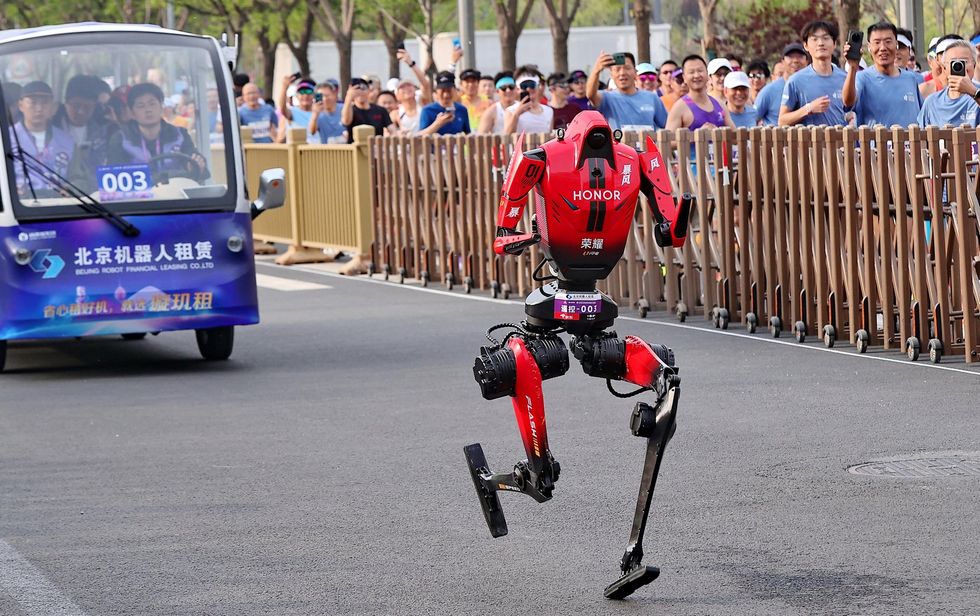
On April 19, 2026, the Honor Lightning humanoid robot set a remarkable record by completing a half-marathon in just 50 minutes and 26 seconds, surpassing the previous human world record by seven minutes and outperforming the best robot time from 2025 by nearly two hours. This achievement has sparked interest in the technology behind its performance, particularly in comparison to competitors like Unitree, which struggled with overheating issues during the race. The Lightning's success can be attributed to its innovative design, particularly its advanced liquid cooling system that prevents overheating during prolonged exertion. Unlike traditional air cooling methods, the robot utilizes capillary-like liquid cooling pipes that circulate over four liters of coolant per minute through its motors, allowing it to maintain optimal performance without succumbing to heat-related limitations. While the robot's motor specifications remain undisclosed, its engineering emphasizes an optimal gear ratio of 45:1, which balances torque and speed effectively for running. This design contrasts with other humanoid robots, which may be optimized for walking but struggle with the demands of running, resulting in higher power consumption and inefficiencies. Honor's achievement highlights not only the potential of humanoid robots in athletic endeavors but also the engineering trade-offs necessary for different tasks. While the Lightning excels in speed, it may not be as versatile for other applications, underscoring the importance of targeted engineering in robotics. The event has reignited discussions about the capabilities of machines versus humans, emphasizing that comparisons between the two should be approached with caution, as their strengths and limitations differ significantly.
Robotics Running-robots Robot-sports Humanoid-robotsRobotics needs a service framework.
RSF defines a common language for robot service capability, lifecycle operations, certification pathways, and service-provider networks.