

Industry Briefing
A single destination for timely, editor-curated robotics news from around the world.

Integrating Cameras, Grippers, Controllers, and Software for Advanced Robotics Deployment
The integration of cameras, grippers, controllers, and application software is crucial for effective robotics deployment. When these components are tailored for a specific workcell, adapting them for different tasks or products often requires extensive rework. This challenge highlights the need for more flexible and adaptable robotic systems in manufacturing environments. Addressing the integration issue is essential for enhancing productivity and efficiency in industrial automation. As companies seek to implement advanced robotics solutions, the ability to quickly adapt systems to new tasks can significantly reduce downtime and costs. This adaptability is vital for staying competitive in a rapidly evolving market. Looking ahead, companies will need to focus on developing modular and interoperable robotic systems that can easily transition between various applications. The ongoing evolution in robotics and AI research will play a key role in shaping these advancements. No further timeline was disclosed at the time of publication.

VA Imaging Launches New Industrial UVC Cameras for Robotics and Embedded Vision
VA Imaging has introduced a new line of industrial UVC cameras designed for applications requiring rapid integration, reliable hardware, and industrial usability. Assembled in the Netherlands, these cameras are specifically tailored for use in OEM systems, embedded vision, robotics, and industrial imaging. The strength of this product line lies in its use of the USB Video Class (UVC) standard, allowing for easy integration into systems running on Windows, Linux, and Android without the need for complex drivers. This feature makes the cameras particularly appealing to engineers and development teams looking to prototype quickly or expand existing systems without extensive software integration. Currently, the UVC cameras are available in two variants: a 3MP version for high-speed applications and a 12MP version for scenarios where resolution is critical. This differentiation enables users to select the appropriate camera based on specific application requirements, addressing the growing demand for flexible and quickly deployable vision solutions in industries increasingly reliant on automation and robotics.
Nieuws algemeen Technologie Automatisering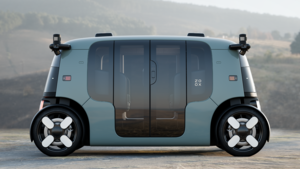
LG Innotek Expands Partnership with Zoox to Supply High-Resolution Camera Modules
LG Innotek is enhancing its collaboration with Zoox, Amazon's autonomous driving subsidiary, by providing high-resolution automotive camera modules for its robotaxis. This partnership has been in place since the early development stages of the robotaxi, and the latest agreement will see LG Innotek supply these advanced cameras over the coming years. The high-resolution cameras are integral to Zoox's sensor suite, offering 360-degree coverage through overlapping fields of view. LG Innotek's modules leverage precision optical design technology honed from years of experience in mobile device camera production. Designed to endure harsh weather conditions, these waterproof modules ensure stable performance in various environments. As Zoox ramps up its manufacturing capabilities with the opening of its first robotaxi production facility in California, LG Innotek's camera modules are being integrated into the vehicles. This collaboration marks a significant milestone in their ongoing partnership, positioning LG Innotek as a crucial supplier in the rapidly evolving autonomous vehicle sector. No further timeline was disclosed at the time of publication.
All News
Performance Evaluation and Improvement for RGB‐D Cameras on High‐Throughput Phenotyping Robots
In a recent study published in the Journal of Field Robotics, researchers have explored advancements in robotic technology aimed at enhancing agricultural efficiency. The study, which appears in the May 2026 issue, highlights innovative methods for deploying autonomous robots in crop management. Conducted by a team of experts in robotics and agriculture, the research took place over several months at various test sites across the Midwest. The motivation behind this research stems from the growing need for sustainable farming practices that can meet the demands of an increasing global population. By integrating advanced robotics into agricultural processes, the team aims to reduce labor costs and improve crop yields while minimizing environmental impact. The researchers utilized a combination of machine learning algorithms and sensor technology to develop robots capable of performing tasks such as planting, monitoring crop health, and harvesting. Through rigorous field tests, they demonstrated that these robots could operate efficiently in diverse conditions, adapting to changes in weather and soil quality. This groundbreaking work not only showcases the potential of robotics in transforming agriculture but also addresses critical challenges faced by farmers today. As the agricultural sector continues to evolve, the findings from this study could pave the way for more widespread adoption of robotic solutions, ultimately contributing to a more sustainable and productive future for farming.
RESEARCH ARTICLERobotics needs a service framework.
RSF defines a common language for robot service capability, lifecycle operations, certification pathways, and service-provider networks.
Join the RobotToday community on LinkedIn
Daily robotics news, in-depth analysis, conference highlights, and discussions with professionals worldwide.







