

Industry Briefing
A single destination for timely, editor-curated robotics news from around the world.

LG to Launch Next-Generation Humanoid Robot Utilizing NVIDIA Isaac GR00T Technology
LG has announced the development of a next-generation bipedal humanoid robot, leveraging NVIDIA's Isaac GR00T technology. This innovative robot is set for a public unveiling in the first quarter of next year. The collaboration between LG and NVIDIA signifies a shift from strategic planning to tangible execution in the robotics field. By utilizing NVIDIA's advanced humanoid foundation model, LG aims to enhance the capabilities of humanoid robots, potentially impacting various applications. As the unveiling approaches, industry watchers should keep an eye on the features and functionalities of this new robot. The integration of NVIDIA's technology could set new standards in humanoid robotics, making it a significant development to follow in the upcoming months.
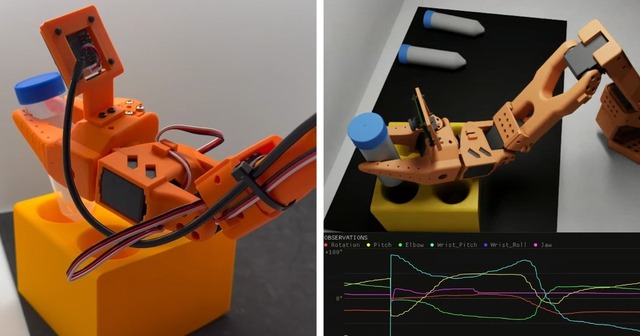
NVIDIA and Hugging Face integrate AI model "GR00T 1.7" into open-source robot development platform "LeRobot."
NVIDIA and Hugging Face have announced the integration of their cutting-edge technologies aimed at enhancing humanoid robots. The collaboration will see the incorporation of NVIDIA's visual language action (VLA) model, known as NVIDIA Isaac GR00T 1.7, along with the remote operation framework, NVIDIA Isaac Teleop, into Hugging Face's open-source robot development library, LeRobot. This initiative is set to advance the capabilities of humanoid robots, enabling more sophisticated interactions and functionalities. The announcement highlights a significant step in the ongoing evolution of robotics, reflecting both companies' commitment to fostering innovation in the field.

NVIDIA unveils its first open humanoid reference design, "Isaac GR00T."
NVIDIA has unveiled its first open-source humanoid robot reference design, named the NVIDIA Isaac GR00T Reference Humanoid Robot, aimed at advancing robotics research. This announcement was made recently, highlighting NVIDIA's commitment to fostering innovation in the field of robotics. The new design is expected to provide researchers and developers with a versatile platform to explore and develop robotic applications. By making the design open-source, NVIDIA aims to encourage collaboration and accelerate advancements in humanoid robotics, allowing a broader community to contribute to and benefit from this technology.
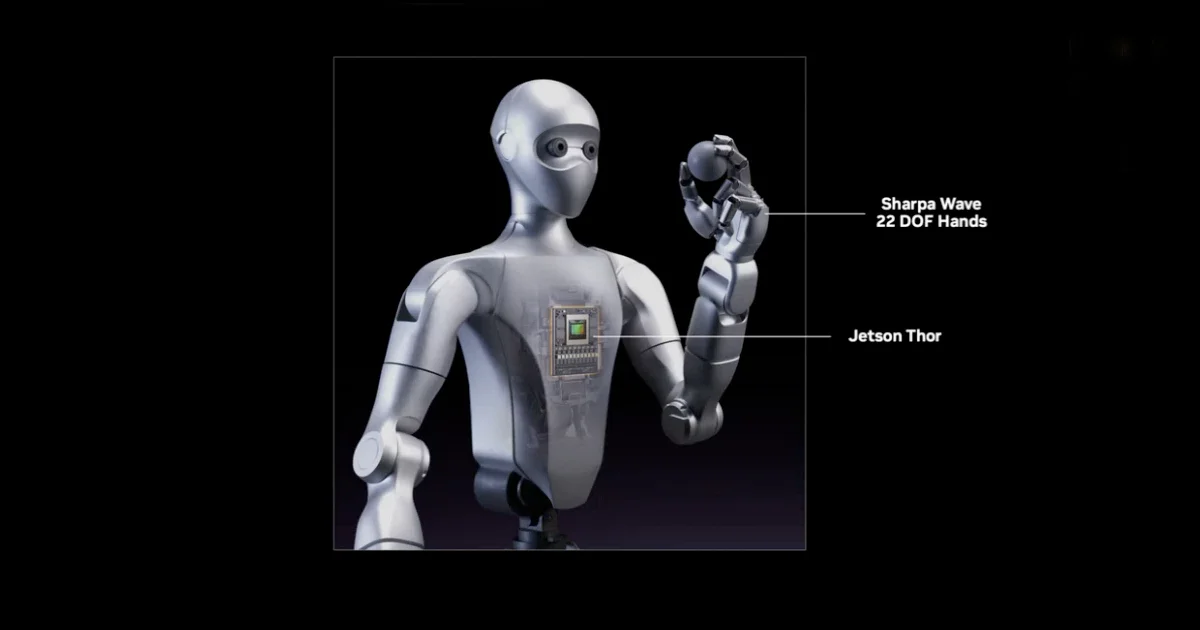
NVIDIA and Sharpa Introduce the NVIDIA Isaac GR00T Reference Humanoid Robot at GTC
At NVIDIA GTC Taipei, the NVIDIA Isaac GR00T Reference Humanoid Robot was unveiled, a collaborative project between NVIDIA and Sharpa, utilizing hardware from Unitree Robotics. This platform aims to address fragmentation in physical AI research by providing an integrated solution that combines advanced robotics with high-fidelity tactile capabilities. The significance of the NVIDIA Isaac GR00T lies in its design, which features 75 degrees of freedom across its hands and body, allowing for complex real-world skill training. According to Rev Lebaredian from NVIDIA, this reference design will enable research labs to focus on advanced training rather than basic hardware maintenance, streamlining the development process. Looking ahead, the NVIDIA Isaac GR00T Reference Humanoid Robot is expected to be available in October 2026, with a pilot program targeting food and beverage applications set to launch in the summer of 2026. This initiative reflects a growing integration of workflows among NVIDIA, Sharpa, and Unitree Robotics, enhancing the capabilities of humanoid robots in practical settings.
NVIDIA Unitree Robotics nvidia-gtc SharpaWave Sharpa Robotics H2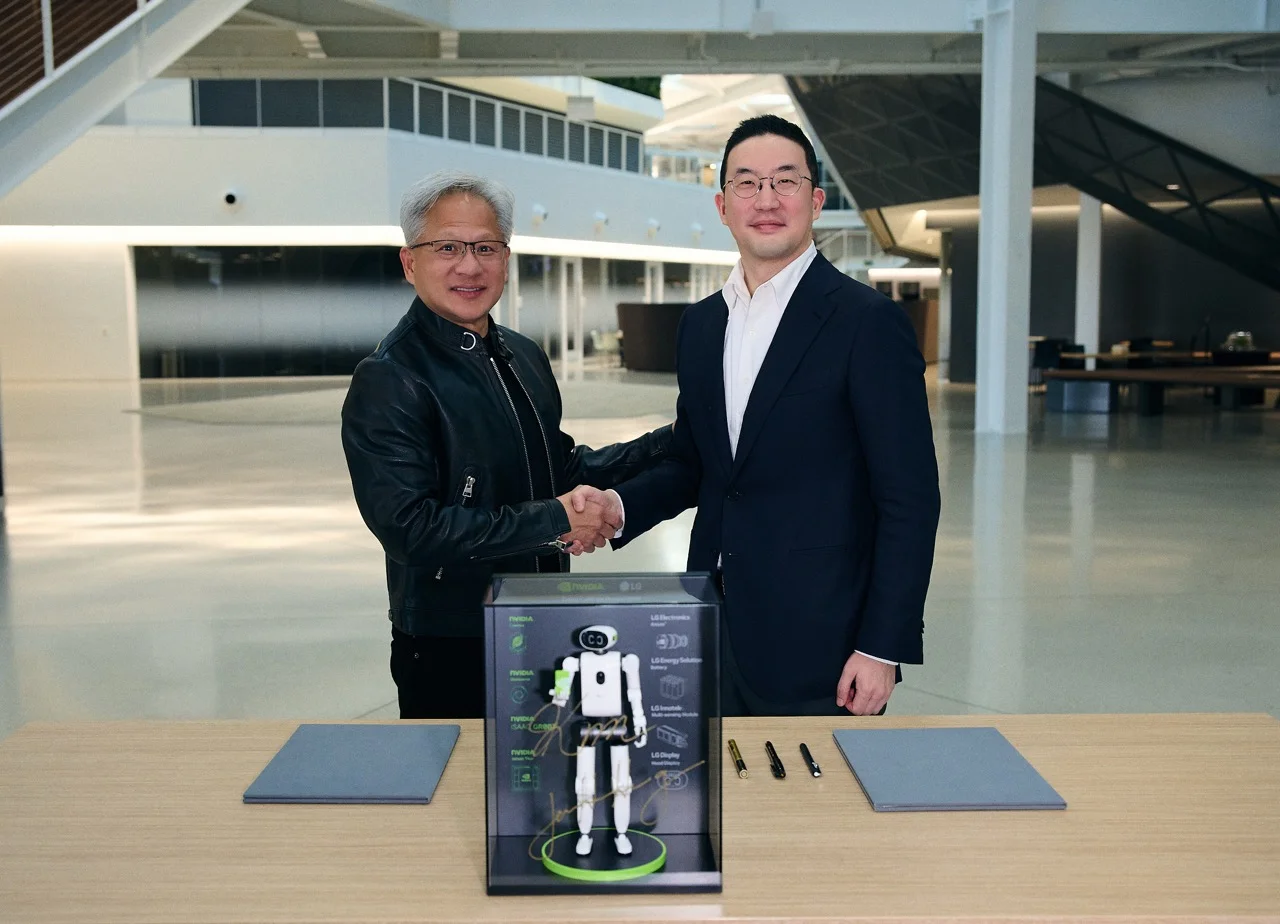
LG Partners with NVIDIA to Launch Next-Gen Humanoid Robot in Early 2027
LG Corp. has announced a partnership with NVIDIA to co-develop a next-generation bipedal humanoid robot, set to be unveiled in early 2027. This collaboration, formalized in a memorandum of understanding between LG CEO Kwang Mo Koo and NVIDIA CEO Jensen Huang, marks LG's transition from research to commercial execution in robotics. The new humanoid will leverage NVIDIA's Jetson Thor system-on-module for onboard computing and will be powered by the Isaac GR00T open humanoid foundation model. LG aims to utilize its extensive industrial capabilities by integrating components from its subsidiaries, which is expected to reduce the high costs associated with humanoid commercialization. In addition to the humanoid project, LG will deploy its CLOiD wheeled robots in Tennessee to collect operational data, which will enhance its proprietary Robot Foundation Model. This dual approach ensures LG's independence from a single software vendor while bolstering its AI infrastructure through significant investments in NVIDIA's DSX AI factory architecture. No further timeline was disclosed at the time of publication.
NVIDIA US South Korea LG
Unitree Announces H2 Plus, an NVIDIA Isaac GR00T Reference Humanoid Robot for Academic Research
Unitree Robotics has unveiled the H2 Plus, a groundbreaking humanoid robot designed for academic research, which integrates advanced technologies from NVIDIA. Announced on June 1, 2026, the H2 Plus combines the Unitree H2 chassis with Sharpa five-fingered hands and is powered by the NVIDIA Jetson Thor, utilizing the NVIDIA Isaac GR00T development platform. This innovative reference design aims to streamline humanoid robotics research by providing a comprehensive hardware and software solution that eliminates the need for proprietary systems. The H2 Plus stands nearly six feet tall and weighs 150 pounds, featuring 31 degrees of freedom in its body and 22 in its hands, allowing for sophisticated manipulation and interaction. Equipped with multi-view sensing capabilities, including a stereo camera and wrist cameras, the robot is designed for real-world applications, enhancing its utility in various industries. Unitree's CEO, Xingxing Wang, emphasized that the H2 Plus offers developers a validated starting point for creating robotic skills, while NVIDIA's CEO, Jensen Huang, highlighted the potential economic opportunities that humanoid robots could unlock. By unifying the development process, the H2 Plus aims to accelerate advancements in physical AI, enabling researchers to transition from initial setup to skill development and practical validation more efficiently.
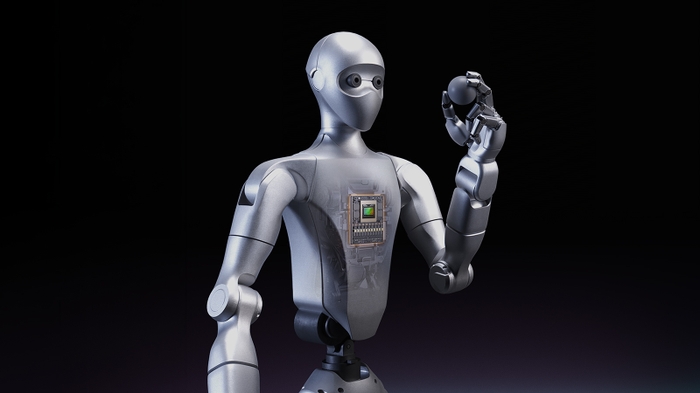
NVIDIA Announces NVIDIA Isaac GR00T Reference Humanoid Robot for Academic Research
NVIDIA has unveiled the NVIDIA Isaac™ GR00T Reference Humanoid Robot, marking a significant advancement in robotics technology. This innovative humanoid robot is the first of its kind to be built on the NVIDIA Jetson Thor™ platform and utilizes the NVIDIA Isaac GR00T open development framework. The announcement was made today, highlighting NVIDIA's commitment to pushing the boundaries of artificial intelligence and robotics. By providing an open reference design, NVIDIA aims to facilitate collaboration and innovation within the robotics community, enabling developers to create advanced applications for various industries. The introduction of the GR00T robot is expected to accelerate the development of humanoid robots capable of performing complex tasks, thereby enhancing automation and efficiency in multiple sectors.
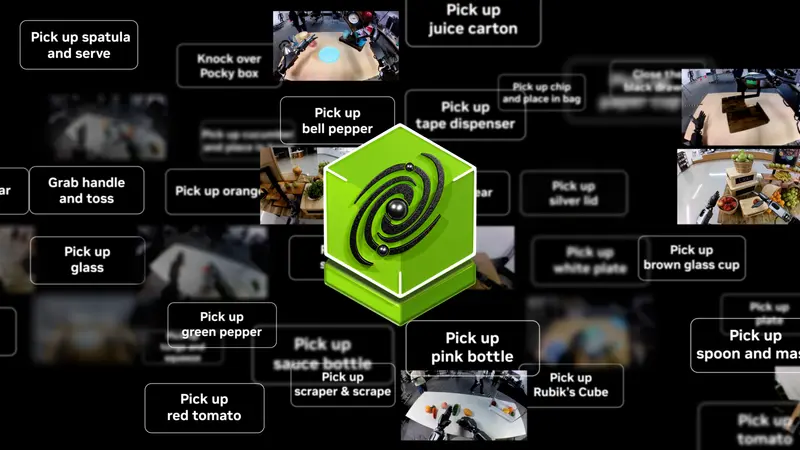
NVIDIA Advances Humanoid AI with GR00T N1.5, Eyeing a Future of Simulated Realities
NVIDIA has introduced its latest innovation, the Isaac GR00T N1.5, along with advanced simulation tools aimed at enhancing the learning capabilities of humanoid robots. This announcement, made during a recent tech conference, highlights the company's commitment to addressing the challenges associated with the 'Physical Turing Test' through the use of synthetic data generation. By leveraging these new tools, NVIDIA aims to improve the performance and adaptability of robots in real-world scenarios. The initiative reflects the growing demand for more sophisticated robotic systems that can seamlessly interact with their environments, ultimately pushing the boundaries of artificial intelligence and robotics.
NVIDIA GR00T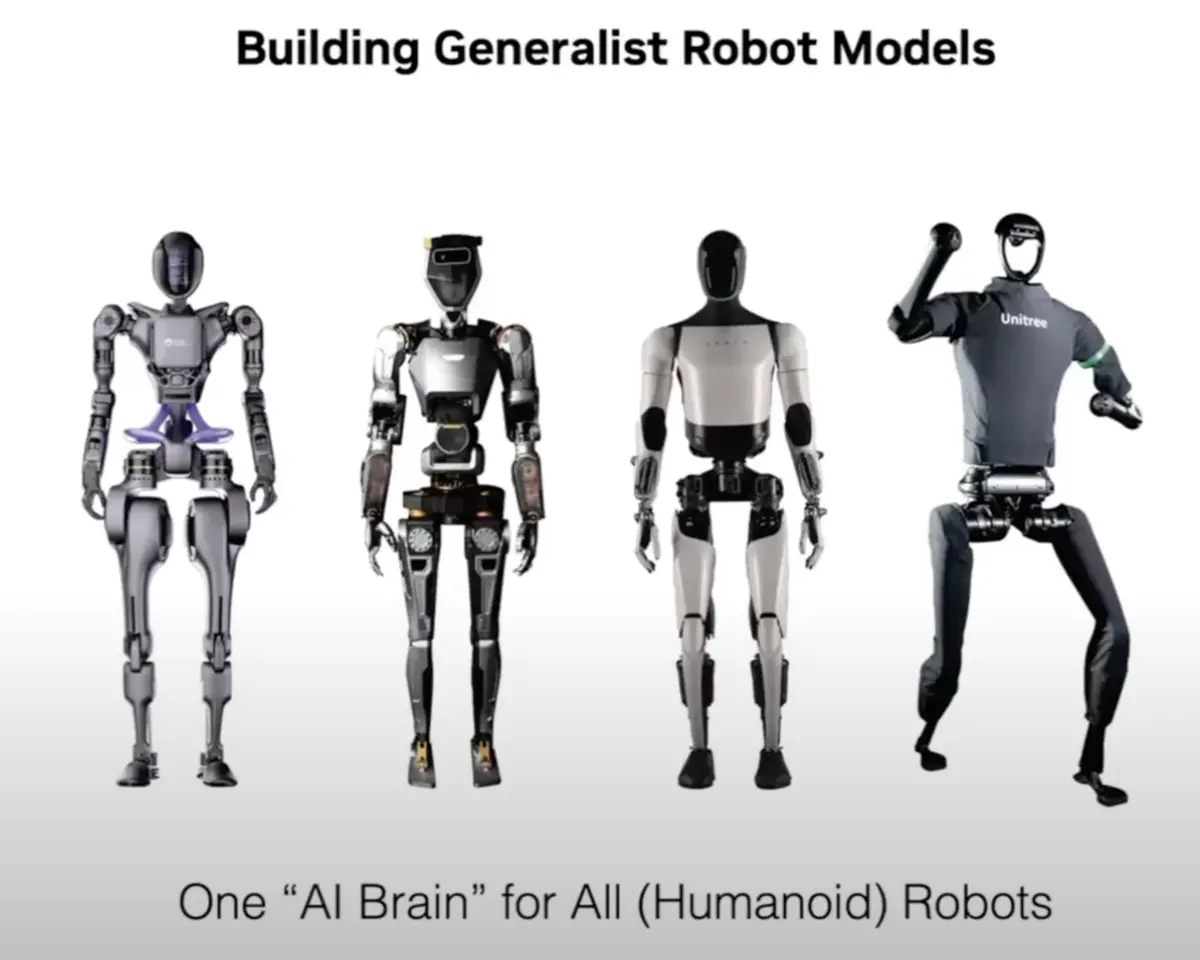
NVIDIA Details Open-Source GR00T N1 Foundation Model and Hover Controller for Humanoids
At the Marktechpost miniCON Open Source AI 2025, NVIDIA Research Scientist Yuke Zhu unveiled Project GR00T, which focuses on a simulation-first strategy for developing generalist foundation models tailored for humanoid robots. The initiative includes the launch of the open-source GR00T N1 multimodal model and the Hover whole-body controller. These innovations aim to enhance cross-embodiment capabilities and expedite development processes for NVIDIA's robotics partners. This presentation highlights NVIDIA's commitment to advancing robotics technology through collaborative and open-source efforts.
NVIDIA open-source hover GR00TRobotics needs a service framework.
RSF defines a common language for robot service capability, lifecycle operations, certification pathways, and service-provider networks.
Join the RobotToday community on LinkedIn
Daily robotics news, in-depth analysis, conference highlights, and discussions with professionals worldwide.







