Industry Briefing
A single destination for timely, editor-curated robotics news from around the world.
Video Friday: Do Robots Even Need Legs?
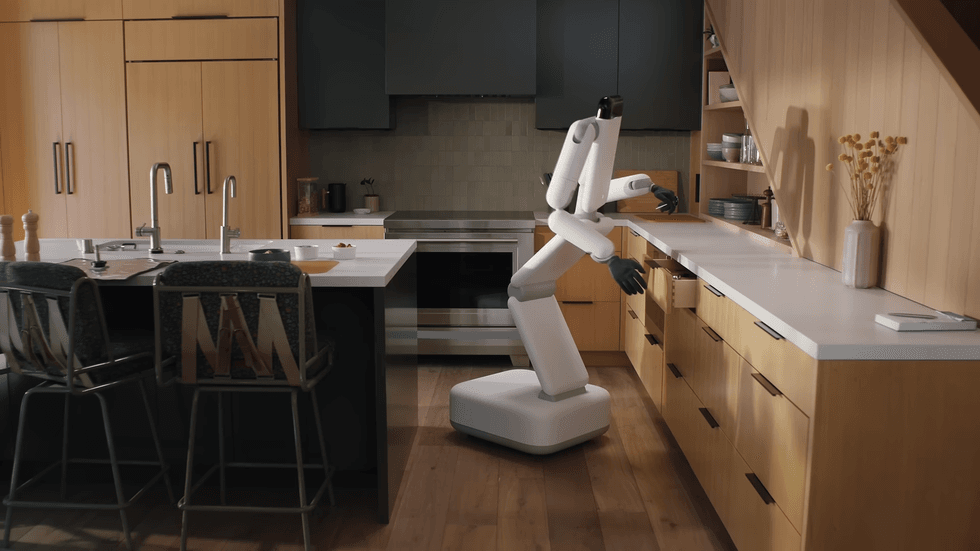
In the latest edition of Video Friday, IEEE Spectrum robotics showcases a variety of innovative robotics videos and announces upcoming events in the field. Notable events include RSS 2026 scheduled for July 13-17 in Sydney, the Summer School on Multi-Robot Systems from July 29 to August 4 in Prague, Actuate 2026 on August 18-19 in San Francisco, and IROS 2026 from September 27 to October 1 in Pittsburgh. Among the featured projects, Eno, an advanced AI and general-purpose robot developed by Genesis, exemplifies a new generation of robots designed to enhance human capabilities. Meanwhile, NASA's Jet Propulsion Laboratory is testing the ERNEST rover in California's Colorado Desert, which is being developed for future lunar missions and can operate autonomously over challenging terrain. Sony AI's Ace project demonstrates a robotic system capable of adapting to unpredictable scenarios in table tennis, while ANYbotics highlights the economic benefits of their quadruped robots in industrial inspections, preventing significant production losses. GITAI is preparing for a robotic satellite servicing demo, and Bi-AQUA is exploring underwater photography challenges for robots. Sanctuary AI has achieved impressive results in wire plugging tasks for a major automotive supplier, showcasing a success rate exceeding 99.5%. Additionally, various other robotics projects are highlighted, including a bipedal robot named GrowBot, which operates on a low-cost Raspberry Pi and aims to make physical AI accessible to a broader audience.
Video-friday Robot-videos Lunar-rover Inspection-robots Robot-hands Robot-ai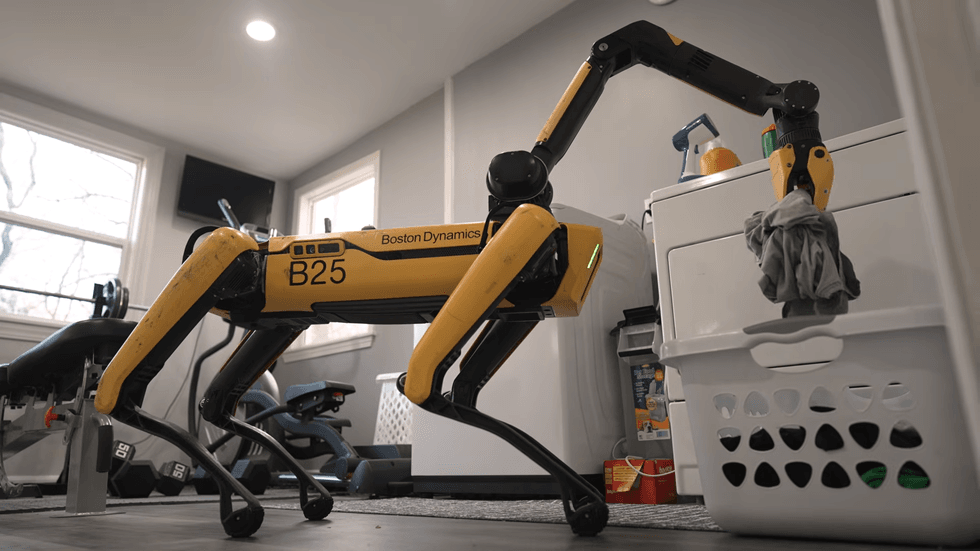
Boston Dynamics and Google DeepMind Teach Spot to Reason
Boston Dynamics has announced that its quadruped robot, Spot, is now equipped with Google DeepMind’s Gemini Robotics-ER 1.6, a high-level embodied reasoning model designed to enhance the robot's usability and intelligence for complex tasks. This development, revealed today, marks a significant advancement in the commercial deployment of legged robots, particularly in industrial inspections, where Spot will autonomously identify hazardous debris, read gauges, and utilize vision-language-action models for better environmental understanding. The collaboration aims to improve how robots interpret and interact with their surroundings, addressing the challenges of ensuring that robotic actions align with human reasoning. Marco da Silva, vice president of Spot at Boston Dynamics, emphasized that the new capabilities will allow Spot to autonomously navigate real-world challenges more effectively. Despite the progress, experts acknowledge ongoing challenges in achieving seamless human-robot interaction. Carolina Parada from Google DeepMind noted that while the Gemini model enhances visual recognition, it currently lacks integration with other sensory data, such as touch, which is crucial for reliable object manipulation. As part of the deployment, customers using Spot for inspections will need to share operational data with Boston Dynamics to further refine the technology. The introduction of Gemini Robotics-ER 1.6 is seen as a step toward creating safer and more reliable robots capable of performing everyday tasks, with the potential to apply these advancements to other robotic platforms in the future.
Boston-dynamics Spot-robot Google-deepmind Inspection-robots Quadruped-robotsRobotics needs a service framework.
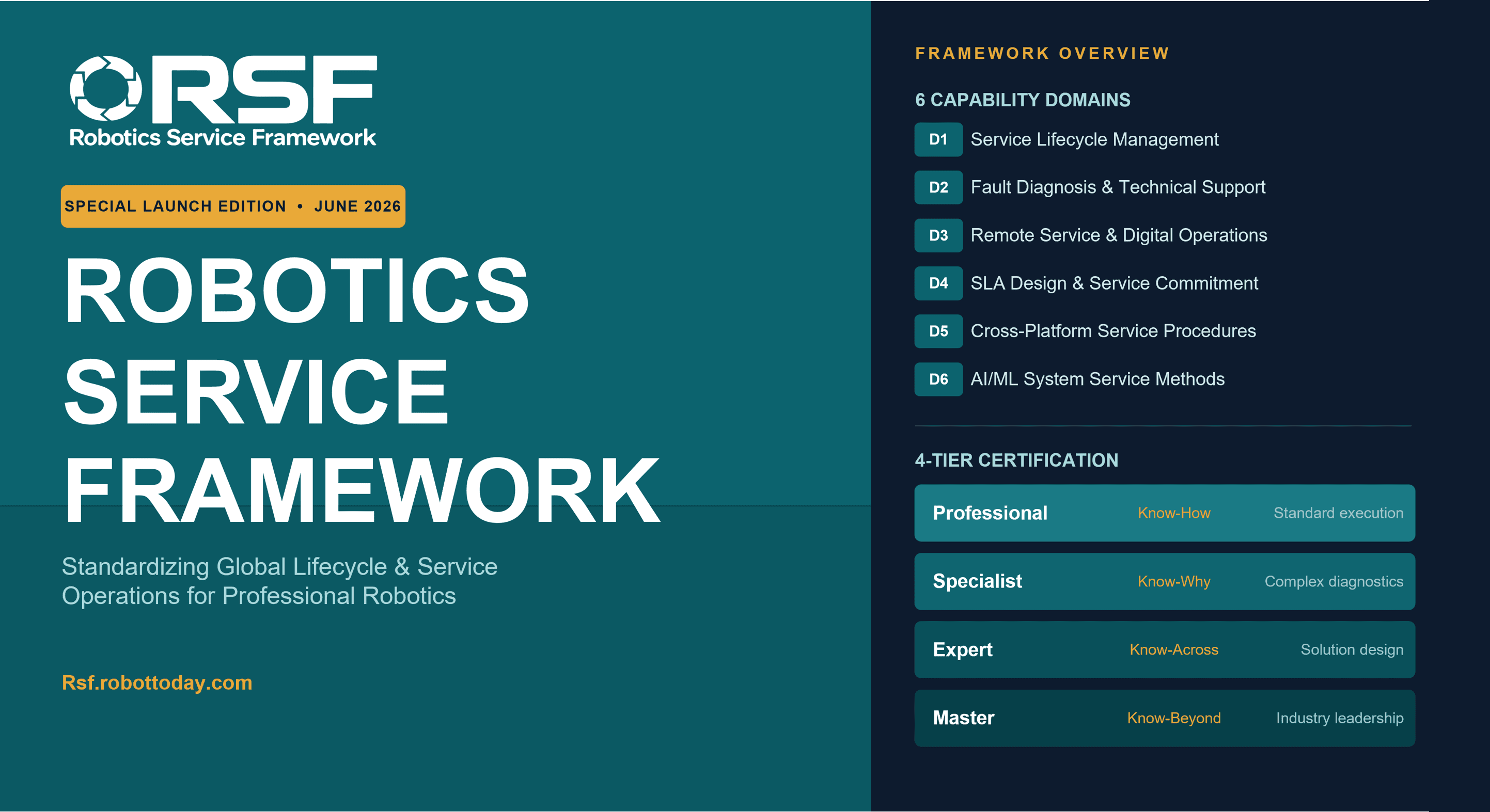
RSF defines a common language for robot service capability, lifecycle operations, certification pathways, and service-provider networks.