

Industry Briefing
A single destination for timely, editor-curated robotics news from around the world.

OmniHand Secures 7 Gold Medals at Robot Olympics Amid Factory Challenges
At the second World Humanoid Robot Games, OmniHand, developed by Shanghai Limiting Point Innovation Technology Co., Ltd., won seven gold medals in precision tasks such as powder weighing and bottle opening. These achievements highlight the importance of dexterity in robotics, particularly for applications in factories and everyday life. CEO Qiao Tianjie emphasized that for robots to effectively integrate into various sectors, they must possess hands capable of using human tools and completing real tasks. Traditional robotic grippers are often limited to simple functions, but as humanoid robots are expected to enter diverse industries, the development of dexterous hands becomes crucial. Challenges remain in translating these advancements into practical applications. Issues such as algorithm complexity, hardware maturity, and the need for cost-effective solutions in industrial settings must be addressed. The initial widespread use of dexterous hands may occur in robotic arms rather than humanoid robots, as they offer a more efficient system for many industrial tasks. No further timeline was disclosed at the time of publication.
Robotic Hands Industrial Automation Humanoid Robots AI Technology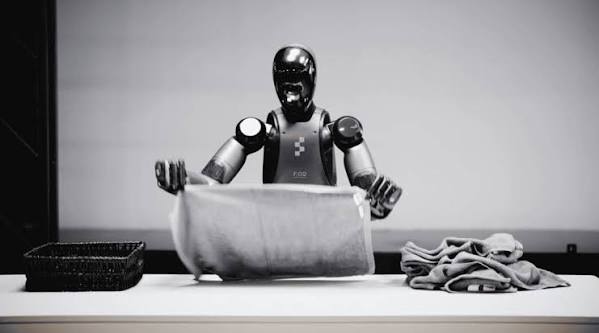
Over 70 Robot Training Facilities Established in China, Facing Sustainability Challenges
As of June 2023, China has established over 70 robot training facilities, with more than 40 additional sites planned or under construction. These facilities are primarily located in regions like the Yangtze River Delta, Beijing-Tianjin-Hebei, and the Pearl River Delta, with Zhejiang leading in numbers. The trend shows a shift from traditional AI hubs in major cities to smaller cities, reflecting a new collaborative approach to training. The significance of these training facilities lies in their role as 'robot schools,' where robots are trained for real-world applications. They facilitate connections between robot manufacturers and various industries, helping to identify suitable deployment scenarios. The National AI Application Pilot Base in Hangzhou exemplifies this collaborative model, providing resources for companies to develop application scenarios more efficiently. Looking ahead, the implementation of new industry standards for data quality on November 1 is expected to enhance training outcomes. However, many facilities struggle with sustainability, relying heavily on data sales for revenue. Experts suggest transitioning to a training-as-a-service model to diversify income streams and ensure operational viability, as the industry faces challenges in scaling and adapting to real-world applications.
Embodied Intelligence Robot Training AI Standards Data Quality Sustainable Business Models
Anthropic's Claude Fable 5 AI Challenges 87-Year-Old Jacobian Conjecture with Counterexample
Levent Alpöge, a mathematician at Anthropic, recently announced a counterexample to the Jacobian conjecture using the AI model Claude Fable 5. This significant breakthrough in algebraic geometry has garnered attention within the mathematical community, as it challenges a long-standing problem that has remained unproven for decades. The Jacobian conjecture, proposed in 1884 by Czech mathematician Ludwig Kraus and later generalized by German mathematician Ott-Heinrich Keller, posits that a certain type of polynomial function should always have a reversible counterpart if its Jacobian determinant is a non-zero constant. This conjecture has intrigued mathematicians for years, making Alpöge's discovery particularly noteworthy. As AI continues to play a role in mathematical research, it will be interesting to observe how further advancements in large language models like Claude Fable 5 may lead to additional breakthroughs in complex mathematical problems. No further timeline was disclosed at the time of publication.
Tesla's Optimus Robot Faces Manufacturing Challenges in Production Goals
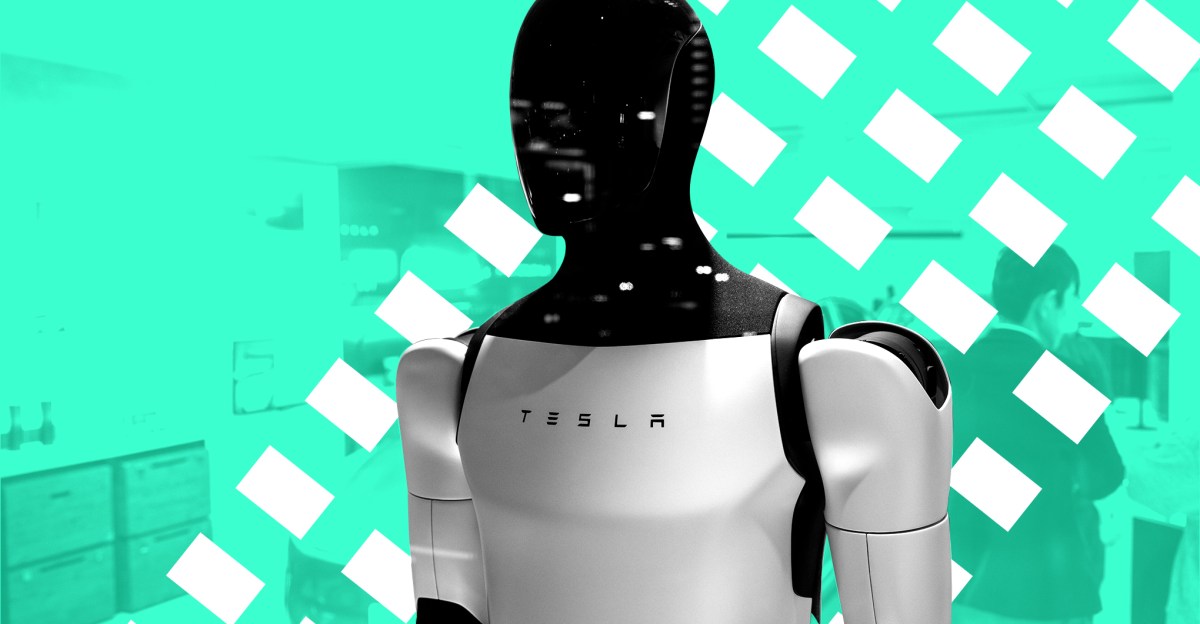
Tesla's humanoid robot, Optimus, is reportedly struggling with production challenges, requiring human assembly for its hands. The company aims to produce 20,000 units weekly but has only managed several hundred per week due to manufacturing snags, particularly in aligning smaller parts precisely. This situation is significant as it highlights the complexities involved in transitioning automotive production lines to robotics manufacturing. The Optimus robots, while lighter and equipped with more cameras, still rely on manual labor for assembly, indicating that Tesla has yet to overcome key hurdles in automation. Looking ahead, Tesla plans to lease the Optimus robots initially and gather training data to enhance their capabilities. However, the current reliance on human assembly and the slow production rate may hinder their broader deployment. No further timeline was disclosed at the time of publication.
Electric Cars News Robot Tech Tesla Transportation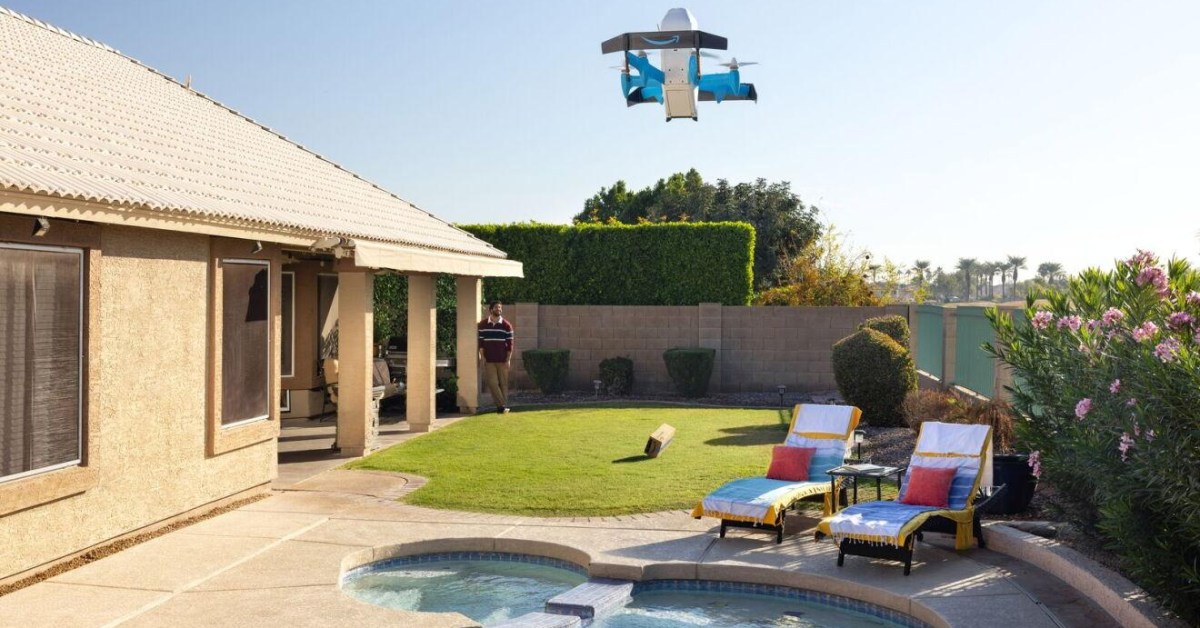
Amazon's Drone Deliveries Encounter Challenges with Water Landings in Texas
Amazon's Prime Air drone service recently delivered a package into a customer's pool in Texas, highlighting potential issues with delivery locations. As the service expands to 500 cities across the U.S., incidents of drones dropping packages into water bodies raise concerns about delivery accuracy and safety. Previous occurrences include packages landing near pools in Arizona and ponds, prompting questions about the drones' delivery protocols. The significance of these incidents lies in the implications for Amazon's drone delivery service as it scales. With the expansion to more cities, the likelihood of similar mishaps increases, potentially affecting customer satisfaction and operational efficiency. Amazon's commitment to ensuring safe deliveries is called into question, especially when packages end up in unintended locations like water. Looking ahead, it will be important to monitor how Amazon addresses these delivery challenges. The company has previously faced setbacks, including drone crashes and collisions, which could impact its reputation and operational plans. No further timeline was disclosed at the time of publication.
Amazon Drones News Tech Transportation
SpaceX Unveils AI1 Satellite Specs for Starmind Constellation with Key Thermal Challenges
SpaceX has introduced the AI1 satellite, the inaugural component of its Starmind constellation, which stands 20 meters tall and has a wingspan of 70 meters. This orbital compute node is designed to deliver computing power equivalent to one NVIDIA GB300 server rack, utilizing a unique cooling system with deployable liquid radiators. The satellite's specifications were revealed during a presentation on June 8, 2026, ahead of SpaceX's IPO. The significance of the AI1 satellite lies in its role as a compute platform rather than a traditional satellite, focusing on running AI inference workloads. The satellite's cooling system, which is critical for its operation in the vacuum of space, is designed to reject heat through infrared radiation. However, independent engineers have raised concerns about the feasibility of the thermal and mass claims made by SpaceX, suggesting that the cooling requirements may exceed practical limits. Looking ahead, SpaceX plans to launch two AI1 prototypes in early 2027, with full-scale production expected to commence later that year at its Gigasat facility in Bastrop, Texas. The ongoing debate regarding the satellite's thermal management capabilities will be crucial to monitor as the project progresses, with no further timeline disclosed at the time of publication.
SpaceX's Starmind Faces Feasibility Challenges for 1 Million Satellite Deployment
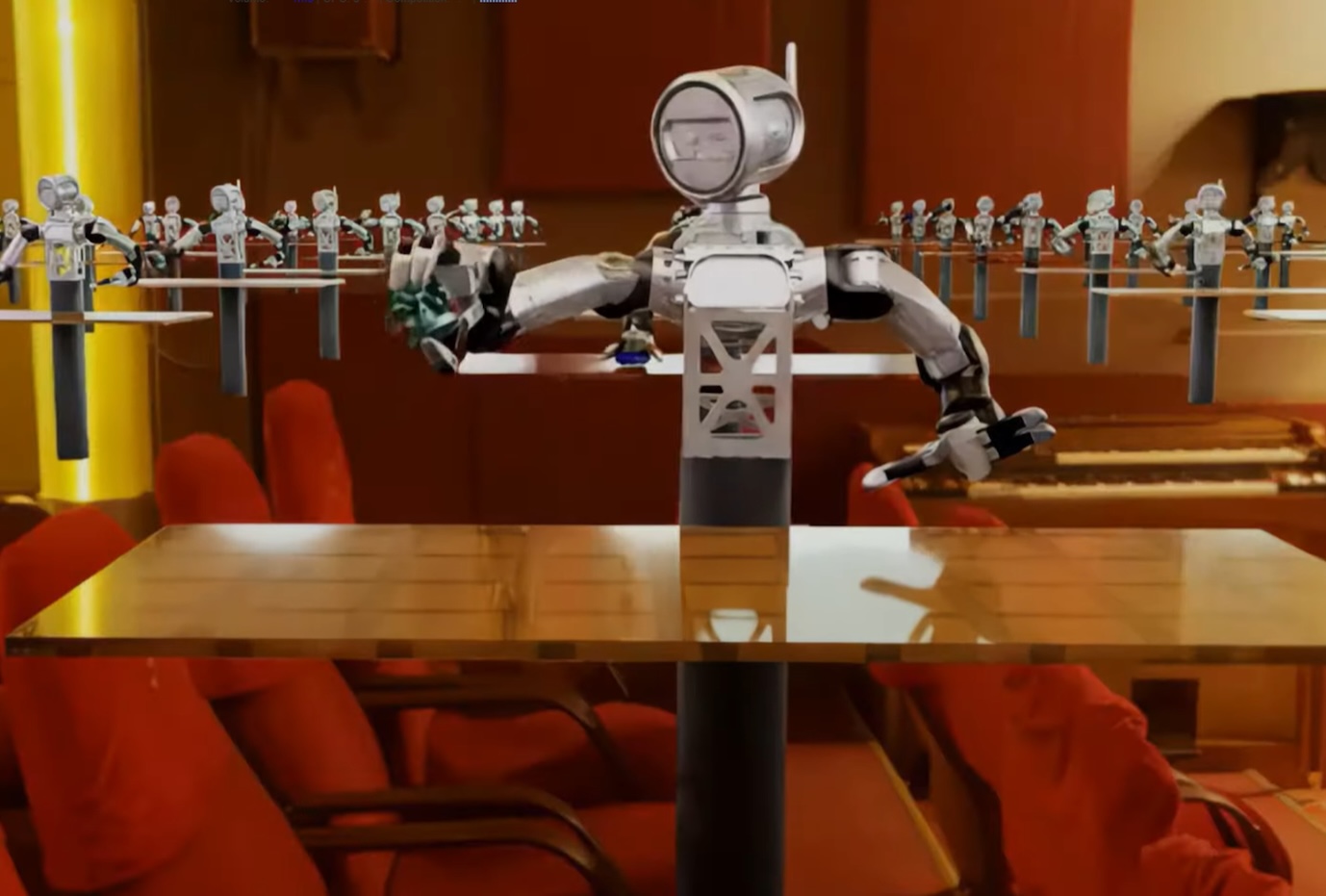
On January 30, 2026, SpaceX submitted a request to the FCC to launch up to 1 million satellites as part of its Starmind orbital compute constellation. This ambitious plan is unprecedented, as the total number of satellites ever launched globally is in the low tens of thousands. The proposal seeks a waiver from standard deployment milestones, citing reliance on the Starship's full reusability for success. The significance of this request lies in the technical and logistical challenges it presents. Experts warn that low Earth orbit may not support the proposed number of active satellites without risking a debris cascade. SpaceX's own IPO prospectus acknowledges unresolved dependencies related to Starship's launch cadence and reusability, which are critical for the orbital AI compute strategy. Looking ahead, the timeline for achieving the necessary launch cadence and manufacturing capacity remains uncertain. SpaceX's Gigasat facility in Texas aims for volume production by late 2027, but this would require unprecedented output levels. No further timeline was disclosed at the time of publication, leaving the feasibility of the Starmind project in question.

Starmind's Satellite Technology Achieves 880 Billion Liters in Annual Water Savings
Starmind has announced that its satellite technology can save approximately 880 billion liters of cooling water annually at full scale. This figure is equivalent to the annual household water use of around 6.5 million Americans. The technology operates by utilizing a closed-loop liquid cooling system that eliminates the need for water during its operational life, contrasting sharply with traditional ground data centers that consume vast amounts of water for cooling. The significance of this achievement lies in the growing water consumption crisis faced by data centers, particularly as AI expansion drives demand. In 2025, U.S. data centers consumed nearly one trillion liters of water, highlighting the urgent need for sustainable solutions. Starmind's approach not only addresses direct water usage but also avoids indirect water consumption associated with electricity generation, marking a substantial shift in how computing can be conducted in a resource-efficient manner. Looking ahead, Starmind's deployment strategy includes a projected buildout of 100 GW of orbital compute per year, which could displace an additional 735 billion liters of ground water demand annually. The first tranche of 10,000 satellites is already operational, offsetting approximately 8.8 billion liters of water per year. No further timeline was disclosed at the time of publication.

7 animal-inspired robots solving real-world engineering challenges
Engineers are increasingly looking to nature for inspiration in developing innovative solutions for movement, efficiency, and survival. This trend reflects a growing recognition of the intricate designs and systems that have evolved over millions of years. By studying various organisms and their adaptations, researchers aim to apply these natural principles to create advanced technologies in fields such as robotics, transportation, and energy efficiency. This biomimicry approach not only enhances performance but also promotes sustainability by utilizing nature's time-tested strategies. As this movement gains momentum, it is expected to lead to groundbreaking advancements that could significantly impact various industries and improve human life.
Robotics needs a service framework.
RSF defines a common language for robot service capability, lifecycle operations, certification pathways, and service-provider networks.
Join the RobotToday community on LinkedIn
Daily robotics news, in-depth analysis, conference highlights, and discussions with professionals worldwide.







