

Industry Briefing
A single destination for timely, editor-curated robotics news from around the world.

Near 100 Million RMB Angel Round: Company Aims to Standardize Affordable Six-Dimensional Force Sensors
Recently, Singularity Intelligent Control (Shanghai) Co., Ltd. secured nearly 100 million RMB in angel round financing, led by Yinfeng Capital, with participation from Zhangjiang Ke Investment, Pudong Venture Capital, Fourier, and two listed companies. The company is innovating six-dimensional force sensors using an optical approach, reducing the price from tens of thousands to thousands of RMB. This funding round is notable for its diverse investor structure, including market-oriented VCs, state-owned enterprises, equipment manufacturers, and listed companies. This combination signals a market shift, positioning six-dimensional force sensors, previously categorized as 'precision instruments,' as standard components for embodied intelligence applications. Looking ahead, Singularity Intelligent Control aims to leverage this funding for market promotion and product iteration, establishing a foundation for mass production. The optical sensors could significantly reduce costs for humanoid robots, potentially changing the decision-making process for manufacturers regarding the integration of force sensing technology into their designs. No further timeline was disclosed at the time of publication.
Six-Dimensional Force Sensors Optical Sensors Robotics AI Hardware Cost Reduction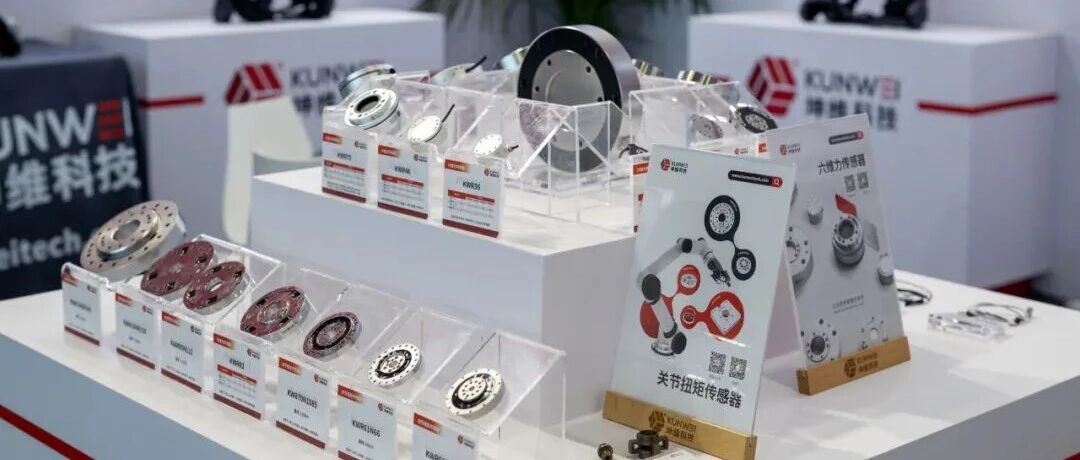
Kuwai Technology Showcases Six-Dimensional Force Sensors at 2026 World Robot Conference
Kuwai Technology made a significant appearance at the 2026 World Robot Conference (WRC) held in Beijing, showcasing its advancements in six-dimensional force sensors, joint torque sensors, and outdoor exoskeleton technology. This event, featuring over 300 global robotics companies, highlighted the importance of force control technology in humanoid robots, which is crucial for achieving stable interactions and precise operations. The rapid growth of the humanoid robot market has positioned China as a key player in the global six-dimensional force sensor market, with Kuwai Technology projected to capture over 40% of the overall market share by 2025. Their proprietary technology, developed over nearly two decades, allows for high precision and responsiveness, essential for the evolving demands of robotics in complex environments. Looking ahead, Kuwai Technology aims to extend its core technologies into joint torque sensors and explore applications in human-machine collaboration through its HiiBex outdoor exoskeleton. This strategic move signifies a shift from solely focusing on robotic components to providing comprehensive force control solutions across various sectors, enhancing the company's growth trajectory in both industrial and consumer markets.

New Soft Mechanical Force Sensor Enables Instant Touch Detection in Robotics
Researchers from the National University of Singapore have developed a soft mechanical force sensor, named ME-SOFS, which allows robots to detect touch and respond instantly without electronics. This innovation transforms applied force into fluid flow, activating soft robotic actuators and creating a fully mechanical sensing-to-action process. The ME-SOFS sensor, made entirely from flexible materials, eliminates the need for traditional electronic sensors, reducing complexity and potential failure points. Its design is particularly beneficial for soft robots operating in extreme environments, such as underwater or inside the human body, where electronic systems may fail. Future applications of the ME-SOFS sensor include integration into soft robotic systems, such as a glove that measures grasping forces and a haptic pad for touch feedback. This technology could significantly enhance prosthetics and human-machine interfaces. No further timeline was disclosed at the time of publication.
AI and Robotics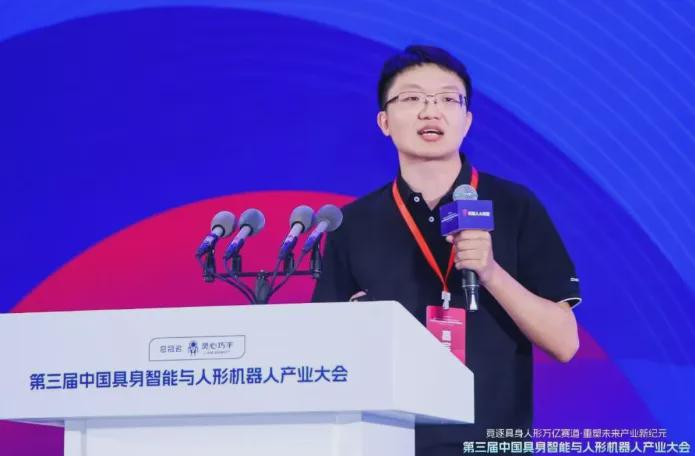
Innovative Breakthroughs in Robot Force Sensors by Xinghui Sensing
Xinghui Sensing, a new player in the six-dimensional force sensor market, is positioning itself to cater to the growing needs of humanoid robots by developing innovative, compact, and high-precision sensors. Co-founder Shen Xinxing emphasized the industry's increasing demand for advanced technology to enhance performance in robotic applications, addressing gaps that have yet to be filled. The company's efforts come at a time when the robotics sector is rapidly evolving, necessitating cutting-edge solutions to improve functionality and efficiency. By focusing on these unmet needs, Xinghui Sensing aims to establish itself as a key contributor to the future of robotics technology.
Force Sensors Humanoid Robots Robotics Technology Sensor Innovation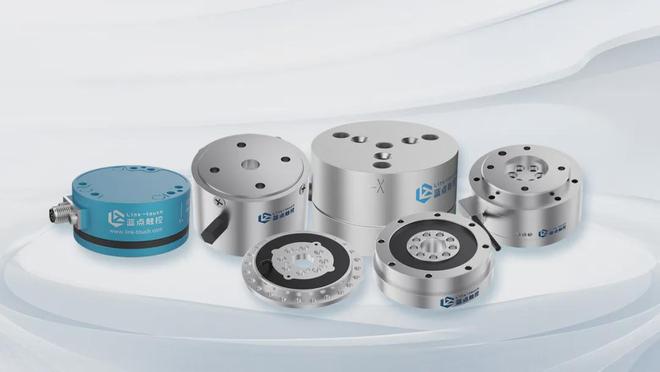
From Customers to Investors: Why CATL, Zhiyuan, and Galaxy General Invest Heavily in Blue Dot Touch Control's Six-Dimensional Force Sensors?
Blue Dot Touch Control has secured over 100 million RMB in a successful C+ round of financing, with significant backing from prominent investors including CATL and Zhiyuan Robotics. This substantial funding will be directed towards advancing product development and expanding market reach, thereby strengthening the company's foothold in the competitive six-dimensional force sensor market for humanoid robots. The investment reflects growing confidence in Blue Dot's innovative technology and its potential to lead in this emerging sector.
Force Sensors Humanoid Robots Investment Technology Development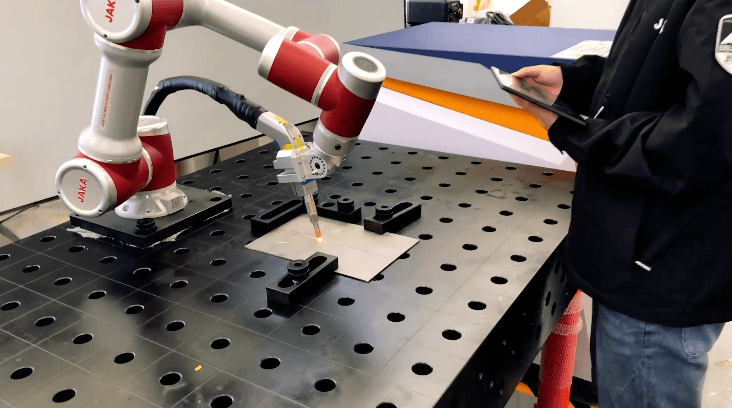
Integrating Force/Torque Sensors into the Flange of an Articulated Robot Arm
In the evolving field of automation, the integration of force/torque (F/T) sensors into robotic systems has become essential for enhancing precision and safety in industrial applications. Traditional robots, which operate on pre-programmed coordinates, are now being outpaced by articulated robots equipped with these advanced sensors. By embedding the sensors directly into the mounting flange—where the robot arm connects to its tool—manufacturers can achieve unprecedented levels of responsiveness to physical resistance in real-time. These 6-axis F/T sensors measure both linear forces and rotational torques, allowing for accurate data collection at the point of contact. This capability is particularly crucial in tasks such as delicate component insertion and high-precision screwdriving, where even minor deviations in force can lead to damage. Additionally, the integration of these sensors enhances the robot's operational intelligence, enabling features like active gravity compensation and improved collision detection, which contribute to a safer collaborative environment for human operators. JAKA has taken significant strides in this area with its S series robots, which feature built-in high-accuracy force sensors that eliminate the need for bulky external attachments. This design not only preserves the robot's agility but also enhances its sensitivity, facilitating smoother operation during complex tasks in sectors like electronics and industrial welding. With an accuracy of 1% FS and a distinguishability of 0.1N, JAKA's technology allows for real-time force monitoring and simplifies the debugging process, ultimately leading to more efficient and reliable production lines.

A Novel eXtreme Gradient Boosting‐Shapley Additive Explanation Calibration Method for Six‐Axis Force/Torque Sensors
In May 2026, the Journal of Field Robotics published a significant study highlighting advancements in robotic technology. This research, conducted by a team of engineers and scientists, focuses on the development of autonomous robots capable of performing complex tasks in unpredictable environments. The study emphasizes the importance of these innovations for various applications, including disaster response and environmental monitoring. The research team, based at a leading robotics institute, utilized advanced algorithms and machine learning techniques to enhance the robots' decision-making abilities. By simulating real-world scenarios, they demonstrated how these robots can adapt to changing conditions and navigate obstacles effectively. The findings are expected to contribute to the growing field of robotics, particularly in enhancing the efficiency and safety of operations in challenging situations. This work is driven by the increasing need for reliable robotic systems that can assist in emergencies, where human intervention may be risky or impossible. The study's implications extend beyond immediate applications, potentially influencing future designs and functionalities of autonomous machines. As the field continues to evolve, this research marks a critical step toward integrating sophisticated robotics into everyday use, paving the way for smarter, more responsive technologies in the years to come.
RESEARCH ARTICLE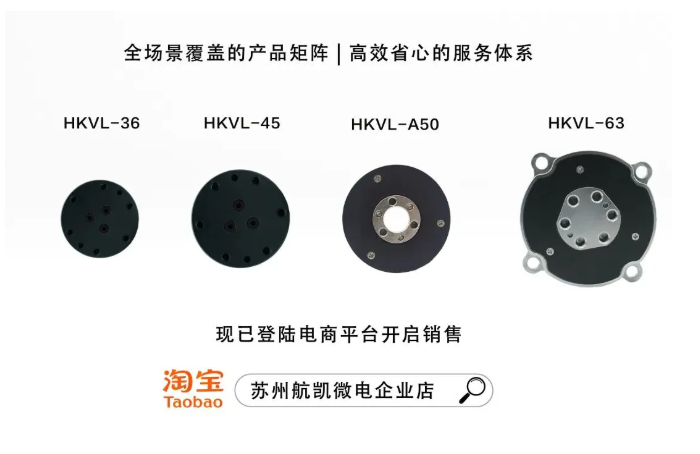
300% FS Safe Overload and 0.01N Resolution: Launch of HKVL Series Six-Dimensional Force Sensors by Hangkai Microelectronics
Hangkai Microelectronics has introduced its latest innovation, the HKVL series six-dimensional force sensors, aimed at enhancing robotic force control. The sensors have undergone rigorous testing, showcasing remarkable performance in extreme overload scenarios and micro-force detection. This advancement promises to significantly improve reliability and accuracy in various industrial automation and robotics applications. The launch of these sensors marks a pivotal step in the company's commitment to advancing technology in the field, addressing the growing demand for precision in automated systems.
Force Sensors Robotics Industrial Automation Precision ControlRobotics needs a service framework.
RSF defines a common language for robot service capability, lifecycle operations, certification pathways, and service-provider networks.
Join the RobotToday community on LinkedIn
Daily robotics news, in-depth analysis, conference highlights, and discussions with professionals worldwide.







