Education & Research Industrial Manufacturing Software & Algorithm Provider Cloud & Data
Nvidia Launches Cosmos 3 Edge AI Model and Expands Physical AI Ecosystem in Japan
Original from CNBCTechnology: Nvidia unveils new AI model and expands Japan’s physical AI ecosystem

Nvidia Launches Cosmos 3 Edge AI Model and Expands Physical AI Ecosystem in Japan

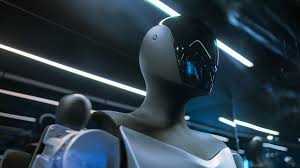
Nvidia has introduced its new AI model, Cosmos 3 Edge, aimed at enhancing physical AI applications in Japan. This model is designed to help systems perceive and navigate real-world environments, marking a significant step in Nvidia's strategy to penetrate the physical AI market.

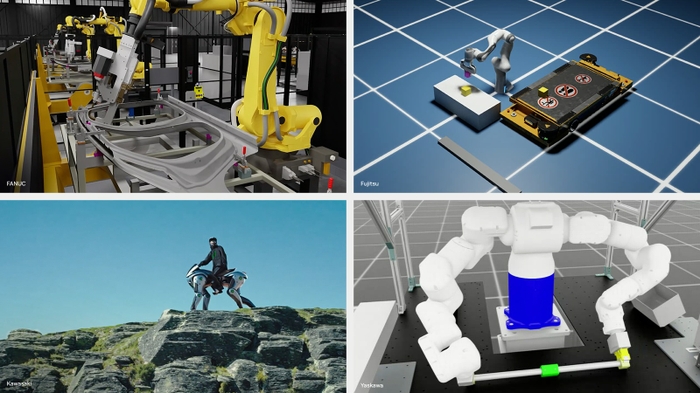
The expansion is part of CEO Jensen Huang's visit to Japan, where Nvidia is forming partnerships with local industrial leaders such as Fujitsu, Hitachi, and Kawasaki Heavy Industries. Huang emphasized the potential for Japan to reinvent its manufacturing sector for intelligent industries, highlighting the country's historical significance in modern manufacturing.

Looking ahead, Nvidia is also targeting Japan's healthcare and biotechnology sectors, collaborating on initiatives like the Tokyo-1 AI drug discovery consortium. With Japan's AI market projected to reach $27.9 billion by 2029, Nvidia's efforts could significantly influence the landscape of AI adoption in the region. No further timeline was disclosed at the time of publication.

Editor's Note

Nvidia's strategic move into Japan's physical AI ecosystem reflects the growing importance of AI in various sectors, including healthcare and industrial automation. As companies like Nvidia and Microsoft invest heavily in AI infrastructure, the competitive landscape in Japan is set to evolve rapidly, offering new opportunities for collaboration and innovation.

RobotToday Initiative

Robotics needs a service framework.

RSF defines a common language for robot service capability, lifecycle operations, certification pathways, and service-provider networks.

Share

Related Articles/News

Japan Plans Acquisition of 27,500 Nvidia Rubin Chips for Domestic AI Robotics Development

Japan Plans Acquisition of 27,500 Nvidia Rubin Chips for Domestic AI Robotics Development

Japan is set to purchase 27,500 next-generation Rubin chips from Nvidia Corp. to develop a foundational AI model tailored for robotics. This initiative aims to enhance Japan's capabilities in creating sovereign AI systems that can be integrated into various robotic applications. The acquisition of these chips is significant as it represents Japan's commit...

Fujitsu Leads Initiative to Integrate Nvidia Technology in Japanese Robotics and AI

Fujitsu Leads Initiative to Integrate Nvidia Technology in Japanese Robotics and AI

Fujitsu, a prominent Japanese communications company, is spearheading an initiative to integrate Nvidia's technology into artificial intelligence applications. This collaboration aims to merge Japan's advanced manufacturing capabilities in robotics with cutting-edge AI solutions. The significance of this initiative lies in its potential to enhance the eff...

Robotics
Japan's Leading Robot Manufacturers Collaborate with Nvidia on AI-Enabled Hardware

Japan's Leading Robot Manufacturers Collaborate with Nvidia on AI-Enabled Hardware

Nvidia Corp. has announced an expanded collaboration with four prominent Japanese industrial automation companies to enhance robot development. This partnership aims to support Jensen Huang's initiative to advance AI-enabled hardware in the robotics sector. The collaboration is significant as it underscores the growing importance of integrating AI capabil...

Kawasaki Heavy and Nvidia Collaborate on AI-Driven Shipyard in Japan

Kawasaki Heavy and Nvidia Collaborate on AI-Driven Shipyard in Japan

Kawasaki Heavy Industries and Nvidia have announced a partnership to create a cutting-edge shipyard in Japan that will utilize artificial intelligence. This initiative aims to enhance productivity and address labor shortages in the shipbuilding sector by leveraging Nvidia's digital twin technology. The collaboration is significant as it represents a strat...

Japan's Leaders in Robotics and Manufacturing Leverage NVIDIA Cosmos for Physical AI Advancements

Japan's Leaders in Robotics and Manufacturing Leverage NVIDIA Cosmos for Physical AI Advancements

NVIDIA has announced that Japan's leaders in physical AI are utilizing the NVIDIA Cosmos™, Isaac™, Metropolis, and Jetson™ platforms to enhance the deployment of intelligent machines across various sectors including manufacturing and robotics. The introduction of Cosmos 3 Edge aims to provide advanced capabilities for real-time reasoning and action predic...

NVIDIA Launches Jetson Thor Modules to Enhance Robotics and Edge AI Applications

NVIDIA Launches Jetson Thor Modules to Enhance Robotics and Edge AI Applications

NVIDIA has unveiled the T3000 and T2000 modules based on the Thor architecture, designed to meet the growing demand for compact AI supercomputers in robotics and edge AI. These modules enable mass-market deployment of advanced humanoid and robotic systems, with notable adoption from leading companies such as Amazon Robotics and Boston Dynamics. The introd...

NVIDIA Discusses Evaluating General-Purpose Robot Policies for Real-World Applications

NVIDIA Discusses Evaluating General-Purpose Robot Policies for Real-World Applications

NVIDIA has highlighted the challenges in evaluating general-purpose robot policies as their capabilities advance. The company emphasizes that while current robotics models can follow natural language instructions to manipulate various objects, rigorous evaluation remains a significant hurdle due to the limitations of existing benchmarks. Real-world testin...

Artificial Intelligence Artificial Intelligence / Cognition Design / Development
Microsoft Edge 150 Launches with Google Account Sign-In and OpenAI Unveils GPT-5.6

Microsoft Edge 150 Launches with Google Account Sign-In and OpenAI Unveils GPT-5.6

On July 2, Microsoft released version 150.0.4078.48 of Microsoft Edge for desktop, introducing support for Google account sign-ins on both Windows and macOS. This update allows users to log in using either a Microsoft or Google account, enhancing accessibility for users. IT administrators can manage this feature through a new policy called 'NonMicrosoftAc...

ROBOTTODAY Weekly July 6 – 10, 2026

ROBOTTODAY Weekly July 6 – 10, 2026

This week in robotics: AI² Robotics raises $735M for wheeled humanoids, Unitree G1 performs first live surgery, Dexmal launches DexOS platform, Agility Robotics announces SPAC, and Ondas acquires DZYNE for $875.8M. July 6–10, 2026.

RobotToday Weekly
FORT Robotics Enhances AI Safety with Nvidia Halos at Automate Conference

FORT Robotics Enhances AI Safety with Nvidia Halos at Automate Conference

FORT Robotics has joined the Nvidia Halos for Robotics ecosystem to enhance safety for autonomous robots. The company will showcase its agentic safety application, developed using the Nvidia Halos Outside-In Safety Blueprint, at the Automate conference in Chicago. This innovative solution utilizes external infrastructure sensors and visual AI agents to pr...

Artificial Intelligence Industry ai
OpenAI Launches GPT 5.6 as Preferred Model for Microsoft 365 Copilot Integration

OpenAI Launches GPT 5.6 as Preferred Model for Microsoft 365 Copilot Integration

OpenAI has announced that its latest model, GPT 5.6, will serve as the preferred AI model for Microsoft 365 Copilot, enhancing productivity applications like Word, Excel, and PowerPoint. This announcement came amid reports of Microsoft increasingly utilizing its in-house models, known as MAI, to reduce costs. The launch event took place on Thursday, reinf...

AI Copilot gpt-5.6
Physical AI Landscape: From Digital Intelligence to the Embodied Physical World

Physical AI Landscape: From Digital Intelligence to the Embodied Physical World

A comprehensive industry analysis of Physical AI — covering Embodied AI, Field AI, Factory AI, VLM, World Model, VLA, and the VLA vs WAM architecture debate. Includes 20+ companies, 28 references, and the RobotToday Physical AI Landscape diagram. July 2026.

Artificial Intelligence

Related Suppliers

Deci AI (Acquired by NVIDIA)

NVIDIA's product suite encompasses advanced GPU architectures, including the Ampere and Ada Lovelace series, designed for high-performance computing and AI workloads. The CUDA parallel computing platform enables developers to leverage GPU acceleration for complex algorithms. Additionally, NVIDIA's deep learning frameworks, such as TensorRT, optimize inference performance across diverse applications, enhancing computational efficiency in data centers and edge devices.

NVIDIA Robotics

NVIDIA's architecture leverages parallel processing capabilities through CUDA cores, optimizing performance for AI and deep learning applications. The platform integrates Tensor Cores for enhanced matrix operations, facilitating efficient neural network training. Additionally, real-time ray tracing technology improves rendering quality in graphics applications. The ecosystem supports various APIs, including DirectX and Vulkan, ensuring compatibility across diverse software environments.

Core Component Supplier Software & Algorithm Provider

Fujitsu

Fujitsu provides integrated solutions across various sectors, including manufacturing, public sector, and retail. Key offerings include enterprise resource planning (ERP) modernization, cloud-based services, and AI-driven analytics. The company emphasizes digital transformation through hybrid IT infrastructures and cybersecurity measures. Fujitsu's Uvance initiative focuses on sustainable technology solutions, enhancing operational efficiency while addressing societal challenges through innovation and co-creation.
COSMOS Bionics

Cosmos Bionics develops lightweight robotic exoskeletons for lower limb mobility impairments in clinical rehabilitation. Key product: COSMOS Exoskeleton (physiological gait device, 13.5 kg clinical / 9.5 kg personal version, modular 5-piece design), controlled via Cosmos Care App for assisted walking in patients with muscle weakness or paralysis.

Healthcare & Senior Care Robot Manufacturer Mobile Manipulator

ExoAtlet (RU)

ExoAtlet (operating as Cosmo Robotics) develops wearable exoskeleton robots for rehabilitation, elderly assistance, and industrial use. Products support gait therapy in children and adults and musculoskeletal protection in industrial workplaces.

Gideon Brothers (CR)

Gideon Brothers develops autonomous mobile robots for heavy-duty material handling in manufacturing, logistics, and warehousing. The TREY autonomous forklift performs trailer loading/unloading, integrating NVIDIA Isaac AI models for logistics automation.
Logistics & Supply Chain Mobile Robot (AGV/AMR) System Integrator

Buildroid

Buildroid develops a simulation-first robotics platform for construction automation using NVIDIA Omniverse-based digital twins and BIM integration. It transforms specialized and general-purpose robots (compatible with >40 types) into AI agents for multi-robot workflow orchestration, testing scenarios in simulation prior to on-site deployment. Flagship application targets masonry/block-laying with block-laying robot (BLR) and AMRs, achieving up to 30 m²/day throughput and automating ~80% of blockwork/partition-wall tasks via proprietary orchestration software and RaaS model.

Construction Mobile Robot (AGV/AMR)

Quanser (Can)

Quanser is a Canadian company partnering with universities worldwide to deliver advanced laboratory ecosystems for control systems, robotics, and autonomous systems education, supporting physical AI and reinforcement learning research.

Education & Research Robot Manufacturer Control & Software Systems

Deplace AI

The product focuses on deploying Physical AI solutions in industrial environments, specifically factories and warehouses. It evaluates various AI models based on performance metrics and real-world applications. The platform facilitates task automation by analyzing specific use cases, providing data-driven insights, and ensuring alignment with key performance indicators (KPIs) to optimize return on investment (ROI) in robotic deployment scenarios.

Tokyo U Info & Robot Tech Research Initiative

The JSK Robotics Laboratory at the University of Tokyo is one of Japan's foremost robotics research groups, developing humanoid robots, whole-body manipulation, and advanced robot software frameworks. It produced the HRP series and open-source robot middleware.

Education & Research Robot Manufacturer Humanoid

U of Tokyo

The University of Tokyo hosts globally influential robotics labs including JSK Lab, which develops full-body humanoid robots, whole-body manipulation, and robot learning systems. The university also conducts research in surgical robotics and wearable assistive devices.

Via Automation

Via Automation develops Agentic AI platforms for semiconductor manufacturing including AI Copilot with RAG/Graph/DB agents, digital twins, real-time telemetry, anomaly detection, predictive maintenance, and tool health monitoring.

Software & Algorithm Provider Industrial Robot Manufacturer