Industry Briefing
A single destination for timely, editor-curated robotics news from around the world.

How Musicians Can Get Paid for Training AI
In response to the challenges posed by generative AI on the music industry, startups like Sureel and SoundVerse are developing innovative solutions to ensure musicians are compensated fairly for their work. Following Warner Music Group's acquisition of Sureel, the company has partnered with the Swedish copyright agency STIM to create a system that tracks how music is used in AI training. This software allows creators to specify the terms of use for their music, ensuring they receive royalties based on its influence in AI-generated outputs. The ongoing debate centers on how to accurately attribute the contributions of various training data to the outputs produced by AI systems. SoundVerse advocates for a model that rewards artists continuously throughout the AI lifecycle, rather than through one-time payments. This approach aims to maintain the economic incentives that drive creativity while addressing concerns about AI's potential to undermine cultural vibrancy and artist livelihoods. As copyright lawsuits give way to negotiated agreements between major music labels and AI companies, there is a growing opportunity to establish fair compensation practices. Experts emphasize the need for transparent and equitable attribution systems that reflect the complex relationship between training data and AI outputs. Ultimately, the success of these initiatives may depend on collaboration across disciplines, including musicology, law, and economics, to create policies that support a sustainable creative sector in the age of AI.
Copyright Training-data Generative-ai Music
German court rules in favour of Teradyne Robotics and issues preliminary injunction against Elite Robots Deutschland in copyright infringement case
A German court has issued a preliminary injunction against Elite Robots Deutschland GmbH, prohibiting the company from offering or distributing infringing software and related products in Germany. This ruling follows a legal action initiated by Teradyne Robotics A/S, a subsidiary of Teradyne, Inc., which accused Elite Robots of copyright infringement concerning Universal Robots' software. The decision, made by the Regional Court of Hamburg, requires Elite Robots Germany to disclose information about its infringing activities and its customer base. Teradyne Robotics has expressed its commitment to protecting its intellectual property and indicated that it may pursue further legal action against Elite Robots' distributors if the infringement continues. Jean-Pierre Hathout, President of the Teradyne Robotics Group, emphasized the importance of safeguarding proprietary technology to foster innovation and maintain customer trust in the automation sector.
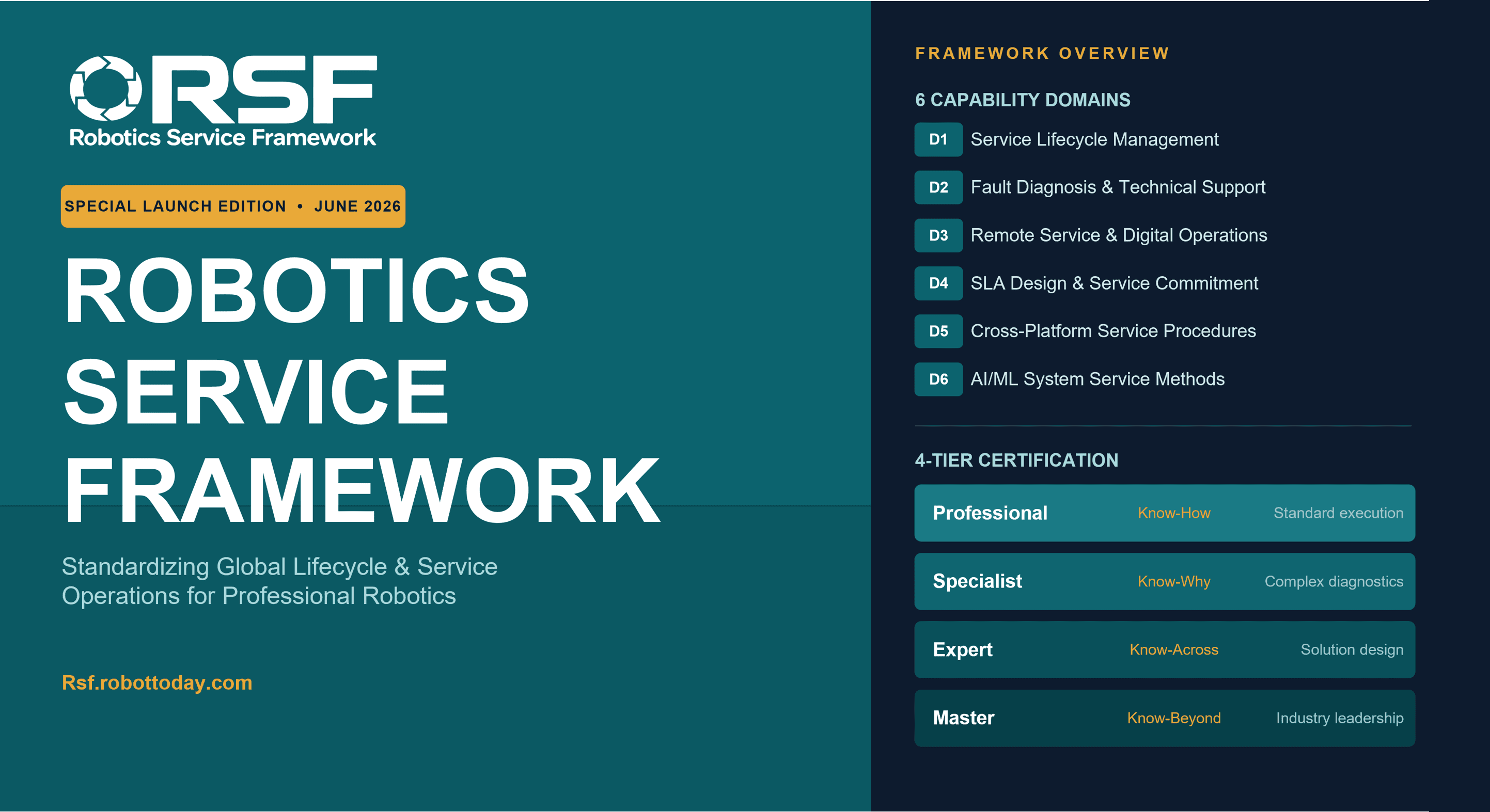
Robotics needs a service framework.
RSF defines a common language for robot service capability, lifecycle operations, certification pathways, and service-provider networks.