Industry Briefing
A single destination for timely, editor-curated robotics news from around the world.

Archer Aviation Launches Halo Autonomous VTOL for Long-Range Cargo Transport
Archer Aviation has introduced Halo, an autonomous hybrid-electric VTOL aircraft designed for long-range cargo missions. This innovative aircraft can take off like a helicopter and fly long distances like an airplane, making it suitable for operations in areas where traditional aircraft cannot operate. The significance of Halo lies in its dual-use platform, developed in collaboration with Anduril, which allows for both commercial logistics and defense applications. The aircraft features a series hybrid-electric powertrain and dual tiltrotors, optimizing efficiency and reducing noise, making it ideal for suburban environments. Looking ahead, Halo's modular cargo bay and flexible deployment options promise to enhance operational efficiency. The aircraft can be transported in standard shipping containers, facilitating easy assembly at various locations. No further timeline was disclosed at the time of publication.
News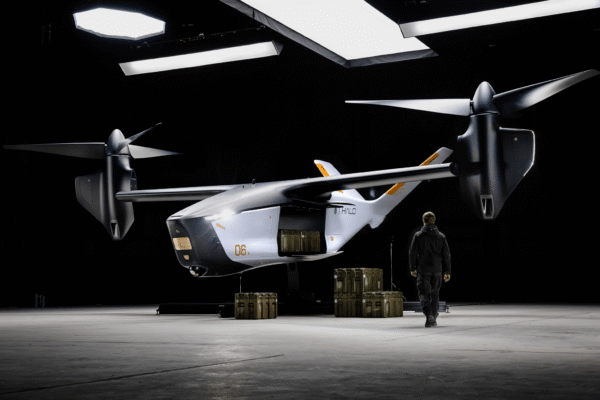
Archer Launches Halo, a Commercial Autonomous VTOL Developed with Anduril
Archer Aviation has introduced Halo, a commercial variant of its dual-use autonomous VTOL platform, developed in collaboration with Anduril Industries. The announcement was made on July 22, 2026, during the Farnborough International Airshow, following Anduril's unveiling of the defense variant, Thunder. Halo is designed for both defense and commercial markets, featuring a hybrid powertrain and configurable payloads. The significance of Halo lies in its innovative design and capabilities, which combine long range, high speed, and heavy modular payloads. Archer's eight years of eVTOL development have culminated in this platform, which utilizes a series hybrid-electric powertrain and dual tiltrotors for efficiency and noise reduction. The aircraft is engineered for low-cost, high-volume production, leveraging commercial supply chains and existing manufacturing partnerships. Looking ahead, Archer has named Marubeni Aerospace Corporation as its first strategic partner for Halo, focusing on market research and use case identification. The platform targets various commercial logistics segments, including offshore energy resupply and humanitarian missions. No further timeline was disclosed at the time of publication.
Advanced Air Mobility Drone News Drone News Feeds Dual Use Hybrid Powertrains NewsRobotics needs a service framework.
RSF defines a common language for robot service capability, lifecycle operations, certification pathways, and service-provider networks.
Join the RobotToday community on LinkedIn
Daily robotics news, in-depth analysis, conference highlights, and discussions with professionals worldwide.