Top News

Industry Briefing

A single destination for timely, editor-curated robotics news from around the world.
Nvidia’s AI Hardware Comes to Windows in RTX Spark PCs

Nvidia’s AI Hardware Comes to Windows in RTX Spark PCs

At Computex 2026 in Taipei, Taiwan, Nvidia unveiled its highly anticipated RTX Spark superchip for Windows PCs, marking a significant development in the tech industry. This announcement, which comes a year later than initially expected, was made in collaboration with Microsoft, which introduced two new devices powered by the RTX Spark: the Surface Laptop Ultra and the Surface RTX Spark Dev Box. Major PC manufacturers, including Asus, Dell, Lenovo, HP, and MSI, also showcased their Windows PCs featuring the new chip. The RTX Spark is based on Nvidia's Blackwell GB10 architecture, boasting 20 Arm CPU cores, 6,144 GPU cores, and support for up to 128 gigabytes of LPDDR5X memory. While the chip is designed to consume less power than its predecessor, the DGX Spark, it is expected to maintain strong performance, particularly in gaming and professional applications. Analysts suggest that Nvidia's established presence in the GPU market, with over 90% share, will enhance the software ecosystem for RTX Spark, setting it apart from previous attempts by Qualcomm and Microsoft with their AI-focused Copilot+ PCs. As Nvidia and Microsoft aim to position RTX Spark as a viable alternative to traditional x86 chips from Intel and AMD, they face the challenge of proving its effectiveness as a general-purpose PC. The launch is seen as a strategic move to leverage AI capabilities while appealing to both creators and gamers, with Nvidia emphasizing the importance of robust software support alongside hardware advancements. RTX Spark desktop workstations are expected to be available in the third quarter of 2026, further expanding the potential applications of this new technology.

Nvidia Pcs Windows Arm Ai-hardware
Japan's Leading Robot Manufacturers Collaborate with Nvidia on AI-Enabled Hardware

Japan's Leading Robot Manufacturers Collaborate with Nvidia on AI-Enabled Hardware

Nvidia Corp. has announced an expanded collaboration with four prominent Japanese industrial automation companies to enhance robot development. This partnership aims to support Jensen Huang's initiative to advance AI-enabled hardware in the robotics sector. The collaboration is significant as it underscores the growing importance of integrating AI capabilities into robotics, which can lead to more efficient and intelligent automation solutions. By leveraging Nvidia's expertise in AI, these Japanese companies are positioning themselves to remain competitive in the rapidly evolving industrial landscape. Looking ahead, it will be crucial to monitor the outcomes of this collaboration and how it influences the development of AI-driven robotic technologies. No further timeline was disclosed at the time of publication.

OpenAI Introduces Codex Micro Keyboard for Enhanced AI Coding Workflows

OpenAI Introduces Codex Micro Keyboard for Enhanced AI Coding Workflows

OpenAI has launched its first hardware product, the Codex Micro, a specialized keyboard designed for software developers. This compact device, developed in collaboration with Work Louder, features dedicated controls that facilitate the management of multiple coding tasks and AI agents, enhancing coding efficiency. The Codex Micro is significant as it represents OpenAI's commitment to AI-assisted software development, an area where the company has made substantial investments. With features like illuminated keys for task status and customizable controls, the keyboard aims to streamline the coding process, allowing developers to focus on their work without excessive reliance on software menus. Looking ahead, the Codex Micro is priced at $230 and will be available through Supply Co. While the exact number of units has not been disclosed, the device's design and functionality suggest a growing trend towards specialized hardware in the AI development space. No further timeline was disclosed at the time of publication.

AI and Robotics
Skypuzzler Proposes Mathematical Algorithms for Airspace Safety Amid Drone Traffic Surge

Skypuzzler Proposes Mathematical Algorithms for Airspace Safety Amid Drone Traffic Surge

As the FAA seeks effective management of low-altitude airspace due to rising UAV traffic, Skypuzzler, a Copenhagen-based technology firm, offers a solution based on mathematical algorithms rather than AI. Their air traffic management system integrates strategic and tactical deconfliction to prevent airspace conflicts, allowing real-time traffic management without requiring additional drone hardware. Skypuzzler collaborates with major aerospace and logistics companies, including Thales Group and DSV, to implement its platform in Europe, notably at the Port of Rotterdam. With nearly 100 drone operators in the port, the company addresses the complexities of coordinating diverse drone missions in shared airspace, emphasizing the need for effective deconfliction strategies. Recently, United Airlines Ventures invested in Skypuzzler, facilitating its entry into the U.S. airspace management market, particularly in the Dallas-Fort Worth area. Skou warns that existing U.S. coordination models may not sustain as drone and manned aviation traffic increases, advocating for Skypuzzler's software integration into current UTM systems to enhance airspace safety and scalability.

Applications DL Exclusive Drone News Drone News Feeds Europe Drone Industry News
Aoyi Technology Showcases Innovative Products at WAIC 2026 Addressing Real-World Needs

Aoyi Technology Showcases Innovative Products at WAIC 2026 Addressing Real-World Needs

On July 17, 2026, the World Artificial Intelligence Conference (WAIC) opened in Shanghai, attended by President Xi Jinping, who emphasized the importance of global AI cooperation. Aoyi Technology presented its full range of self-developed hardware, including the CeRelax EEG headset, gForce Ultra EMG wristband, and lower limb rehabilitation exoskeleton, focusing on practical applications in real environments. The showcased products aim to address specific pain points in various scenarios, such as the lower limb exoskeleton, which assists users in walking without the need for muscle signal collection. The gForce Ultra wristband captures minute muscle contractions to aid rehabilitation and optimize robotic operations, while the CeRelax headset bridges the gap between high-end research and consumer needs in brain health. Looking ahead, Aoyi Technology's Vice President Zhang Qi highlighted the industry's shift towards functional product development. The company plans to extend its capabilities into the education sector with a new matrix of embodied intelligence educational products designed for vocational schools, aiming to cultivate practical engineering talent. No further timeline was disclosed at the time of publication.

Brain-Machine Interfaces Wearable Technology Rehabilitation Robotics Educational Technology
Smart Wheelchair Captivates Attention at Stanford AI Summit Over Humanoid Robots

Smart Wheelchair Captivates Attention at Stanford AI Summit Over Humanoid Robots

At the Humanity & AGI Summit held at Stanford University, a smart wheelchair presented by Fu Sheng, Chairman of Cheetah Mobile, garnered significant attention, overshadowing humanoid robots. Attendees were drawn to the wheelchair's autonomous obstacle avoidance and user-friendly features, prompting many to experience it firsthand. The interest in the smart wheelchair highlights a critical shift in the robotics landscape, as Fu Sheng noted that humanoid robots are unlikely to achieve commercial scalability in the next five to ten years. He emphasized that the current limitations in software and hardware development hinder the practical application of humanoid robots, with most sales directed towards research institutions rather than commercial markets. Looking ahead, the focus on practical solutions like the smart wheelchair suggests a growing recognition that functionality is more important than form in robotics. As the industry continues to evolve, the demand for effective, user-centric products will likely shape future innovations, steering attention away from humanoid designs towards more practical applications.

Smart Wheelchairs Humanoid Robots AI Technology Robotics Assistive Devices
BrainCo Unveils Brain-Controlled Robot AI Platform at 2026 WAIC

BrainCo Unveils Brain-Controlled Robot AI Platform at 2026 WAIC

BrainCo showcased its innovative brain-controlled robot AI platform at the 2026 World Artificial Intelligence Conference. Users can direct a robotic arm using neural signals captured by a lightweight EEG headset, enabling actions like grasping objects with precision. This technology, developed over a decade, integrates brain-computer interfaces and AI to enhance human-machine collaboration. The significance of this platform lies in its ability to decode user intent and translate it into machine actions in under 200 milliseconds. BrainCo's approach, termed 'neuro-embodied-AI,' allows for compatibility with various commercially available robots, facilitating integration into existing research and development frameworks without the need for proprietary hardware. Looking ahead, BrainCo also introduced its Embodied AI Data Collection Solution, addressing the challenge of obtaining high-quality training data for complex robotic tasks. This system captures both human actions and EEG data, providing a comprehensive dataset for training robots in dexterous tasks. No further timeline was disclosed at the time of publication.

Arms / Manipulators Artificial Intelligence Artificial Intelligence / Cognition Design / Development Healthcare Robotics Human Robot Interaction / Haptics
Real Work Robots Make Impact at WAIC 2026 with 50,000 Hours of Operation

Real Work Robots Make Impact at WAIC 2026 with 50,000 Hours of Operation

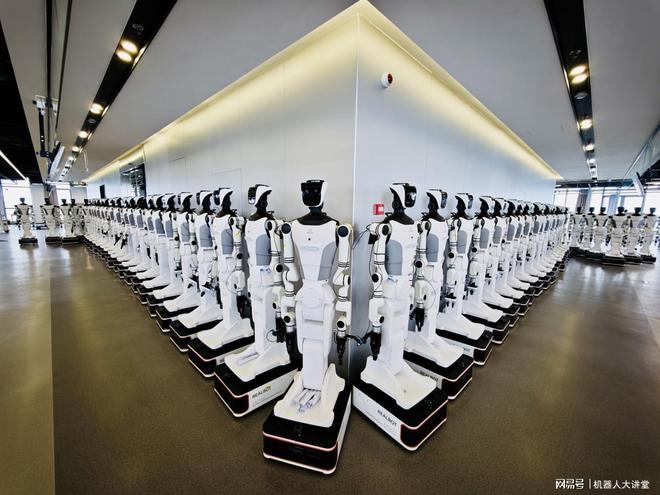
The World Artificial Intelligence Conference (WAIC) 2026 opened on July 17 in Shanghai, showcasing leading tech companies and innovations. Realman Intelligent, a company focused on deploying practical robots, highlighted its RealBOT-S2 and RealBOT-L2 models, which demonstrated real-world tasks like opening refrigerator doors and making tea. The robots attracted significant attention from government officials and industry leaders. Realman Intelligent's commitment to practical robotics is underscored by its average fault-free operation time of 50,000 hours, achieving CRL3 certification. This reliability enables continuous operation, addressing labor shortages and reducing costs associated with workforce turnover. The company aims to integrate robots into various industries, emphasizing the importance of real-world deployment for effective learning and operation. Looking ahead, Realman Intelligent plans to expand its ecosystem by combining reliable hardware, real machine data, and remote operation networks. Their collaboration with partners like Zhongke Huiyuan showcases the capabilities of their industrial inspection robots, which operate 24/7 and enhance production efficiency. No further timeline was disclosed at the time of publication.

Industrial Robots Automation Technology AI Robotics Remote Operation Manufacturing Solutions
Agility Robotics Launches New Facility in Fremont to Enhance Physical AI Development

Agility Robotics Launches New Facility in Fremont to Enhance Physical AI Development

Agility Robotics has inaugurated a new facility in Fremont, California, aimed at accelerating advancements in physical AI that enhance customer operations. This 60,000-square-foot site will serve as a hub for software development and AI capabilities, focusing on training and testing technologies that enable the humanoid robot, Digit, to acquire new skills and perform complex tasks in various environments. The establishment of this facility is significant as it positions Agility Robotics in the heart of Silicon Valley, a region known for its AI talent and innovation. The company plans to employ nearly 200 staff members, including experts in hardware engineering and AI/ML software, to drive the development of next-generation AI capabilities that will enhance Digit's safety and productivity in enterprise settings. Looking ahead, Agility Robotics has secured over $300 million in multi-year orders for Digit v5 and has a growing pipeline of more than 30 customers. The Fremont facility is crucial for meeting the increasing demand for humanoid robots in warehouses and manufacturing, as it aims to deliver ongoing safety and productivity improvements in collaboration with human workers. No further timeline was disclosed at the time of publication.

Humanoids Infrastructure News agility robotics ai artificial intelligence
ByteDance Explores Physical AI, Indicating a Shift Beyond Traditional Models

ByteDance Explores Physical AI, Indicating a Shift Beyond Traditional Models

ByteDance has clarified its position regarding autonomous driving, stating it will not pursue smart driving. However, this clarification signals a significant shift as the company explores Physical AI. Unlike traditional AI, which learns from vast text data, Physical AI understands physical laws and causality, enabling it to predict physical states rather than merely generating text. The emergence of Physical AI is expected to peak around 2026 due to three key turning points: the spillover effects of large model technologies, breakthroughs in simulation technology that overcome data limitations, and a significant decrease in hardware costs. These advancements are paving the way for applications in autonomous driving, which has already seen large-scale commercialization in various sectors, outpacing humanoid robots still in demonstration phases. Industrial Physical AI is poised to revolutionize productivity through applications like predictive maintenance and quality inspection. While specialized robots are being deployed in logistics and inspection, the widespread implementation of general-purpose humanoid robots may take another 5 to 10 years. The competition in Physical AI has begun, marking a transformative shift as AI evolves from merely processing information to reshaping the world.

Physical AI Autonomous Driving Industrial Automation Simulation Technology
Vbot Launches Daitou EDU: A Versatile Quadruped Robot Development Platform

Vbot Launches Daitou EDU: A Versatile Quadruped Robot Development Platform

Vbot has introduced the Daitou EDU, a quadruped robot development platform designed for real-world applications. Unlike traditional robots that focus on speed and agility, the Daitou EDU emphasizes the importance of practical use cases in various sectors, such as property management and healthcare. The significance of the Daitou EDU lies in its advanced capabilities, including 128 TOPS edge computing power, integrated perception hardware, and autonomous mobility features. This platform allows developers to create applications without starting from scratch, addressing the gap between robotic capabilities and practical applications in diverse environments. Looking ahead, the Daitou EDU represents a shift in the robotics industry towards creating adaptable robots that can be redefined for multiple scenarios. As developers begin to leverage its features, the potential for innovative applications in various fields will expand, raising questions about the future roles of robots in everyday life.

Quadruped Robots Robotics Development Embodied Intelligence AI Applications
SpaceX's Starship V3 Plans for 1 Million Starmind Satellites by 2030

SpaceX's Starship V3 Plans for 1 Million Starmind Satellites by 2030

SpaceX's Starship V3 is set to revolutionize satellite deployment, aiming to launch 1 million Starmind satellites by 2030. The spacecraft can carry over 100 tonnes to low Earth orbit (LEO), significantly more than the Falcon 9's capacity. As of May 2026, Starship has completed 12 flights, with the next mission scheduled for late July 2026, focusing on operational payloads including AI1 prototypes in early 2027. This ambitious plan is crucial for expanding orbital compute capacity, targeting an annual addition of 100 GW through a million tonnes of satellite hardware. SpaceX's strategy hinges on achieving a launch cadence of approximately 12,000 flights, equating to about three launches per day. The company has invested over $15 billion in the Starship program, with expectations to begin payload deliveries in the second half of 2026, starting with Starlink V3 satellites. Looking ahead, the successful deployment of the Starmind constellation will depend on Starship's ability to meet its cost targets of $10–20 million per flight. If achieved, this would make launching satellites more economical than building ground data centers. The next significant milestone will be the launch of AI1 prototypes in early 2027, with full-scale deployments commencing in 2028 from the new Gigasat factory in Texas.

SpaceX's Starmind Project: Supplier Strategy and Chip Manufacturing Plans for 2026

SpaceX's Starmind Project: Supplier Strategy and Chip Manufacturing Plans for 2026

SpaceX's Starmind project, aimed at deploying up to 1 million AI satellites, was filed with the FCC on January 30, 2026. The initiative is designed to minimize reliance on external suppliers, with CEO Elon Musk stating that current chip production capabilities only meet 2% of the projected needs. The first satellite, AI1, is set for prototype launches in early 2027, featuring a 70-meter wingspan and a modular payload system that allows for interchangeable chips from various suppliers. The significance of Starmind lies in its ambitious supply chain strategy, which seeks to transition from external hardware suppliers to a fully integrated Musk-owned facility by 2028. The Gigasat manufacturing site in Bastrop, Texas, is expected to be operational by the end of 2027, with plans for high-volume production of the D3 chip, specifically designed for space applications. This approach aims to consolidate chip manufacturing processes under the Terafab joint venture, which has an estimated initial investment of $55 billion. Looking ahead, the next milestone for Starmind is the launch of AI1 prototypes in early 2027, while the full-scale chip production at Terafab is projected to ramp up significantly thereafter. However, analysts express skepticism regarding the feasibility of achieving Musk's ambitious compute goals, which may require substantial investment and time to establish the necessary manufacturing capabilities.

Chinese Robotics Companies Face Challenges with Data and AI Development

Chinese Robotics Companies Face Challenges with Data and AI Development

At the World Artificial Intelligence Conference (WAIC) in Shanghai, experts highlighted the challenges faced by Chinese robotics companies in enhancing their robots' real-world interactions. Industry insiders noted that a lack of sufficient data and advanced AI capabilities, referred to as a better 'brain', hinder the development of embodied AI systems. Wang Xiaogang, co-founder of SenseTime and chairman of Ace Robotics, emphasized the need for a closed-loop iterative system that integrates hardware, data, models, and real-world scenarios. He pointed out that while training data is collected from human demonstrations, the optimization of hardware design and data-collection methods is essential for improving embodied AI performance. Yao Maoqing from AgiBot also mentioned that the available multi-modal data about the physical world is inadequate compared to that used in large language models. This shortfall presents a significant bottleneck in training world models, which are crucial for the next generation of humanoid robots to effectively navigate their environments. No further timeline was disclosed at the time of publication.

WAIC 2026 Concludes with Key Trends in Embodied Intelligence Development

WAIC 2026 Concludes with Key Trends in Embodied Intelligence Development

The 2026 World Artificial Intelligence Conference (WAIC) concluded on July 20, showcasing over 1,100 companies and more than 300 global product launches. Embodied intelligence emerged as a core focus alongside intelligent computing, with over 200 companies presenting 208 embodied intelligence terminals and over 300 real machines. This year's event marked a significant shift from previous years, where robots were primarily showcased for their dexterity to now addressing real industrial needs and continuous operation requirements. The transformation in the exhibition atmosphere reflects a broader industry acceleration, as robots are now expected to perform complex tasks and maintain stability in multi-machine collaborations. The metrics for evaluation have evolved from basic capabilities to more practical measures such as operational duration and recovery rates. This shift indicates a move from a technology narrative to an industry narrative, highlighting the importance of a complete industry chain from perception hardware to deployment. Looking ahead, the advancements in embodied intelligence, particularly in sensor technology and production capabilities, will be crucial for the industry's growth. The introduction of high-precision sensors and the establishment of automated production lines signal a readiness for mass production. No further timeline was disclosed at the time of publication.

Embodied Intelligence Tactile Sensing Robotics AI Technology
New Interactive World Simulator Enhances Robot Policy Training and Evaluation

New Interactive World Simulator Enhances Robot Policy Training and Evaluation

A new Interactive World Simulator has been developed to improve robot policy training and evaluation by replacing traditional methods with a learned, action-conditioned video prediction model. This simulator allows for efficient data generation and scalable policy evaluation, addressing long-standing challenges in robot learning. The significance of this development lies in its ability to reduce the time and costs associated with data collection and evaluation. By enabling demonstrations to be collected within the simulator, the process becomes more reproducible and less prone to the issues faced in real-world settings, such as hardware failures and environmental changes. Looking ahead, the simulator has been trained on diverse manipulation tasks, showcasing its capability to accurately predict robot interactions. No further timeline was disclosed at the time of publication.

BrainCo Launches Innovative Brain-to-Robot Platform for Thought-Controlled Machines

BrainCo Launches Innovative Brain-to-Robot Platform for Thought-Controlled Machines

BrainCo has introduced a groundbreaking 'brain-to-robot' platform at the World Artificial Intelligence Conference in Shanghai. This system enables users to control robots solely through brain signals, utilizing a non-invasive brain-computer interface (BCI) that interprets electrical signals from the brain via an EEG headset. This development is significant as it addresses a major challenge in robotics: understanding human intentions. Nyx He, senior vice-president of BrainCo, emphasized that while robots have advanced in autonomous actions, the next frontier is enhancing their ability to comprehend human commands. The platform also aims to generate high-quality training data essential for training intelligent machines. Looking ahead, BrainCo's platform is compatible with various third-party hardware, including humanoid robots and robotic arms. The potential for this technology extends beyond mere control, as it could significantly improve the training processes for future robots, addressing the critical need for real-world interaction data in embodied AI applications. No further timeline was disclosed at the time of publication.

AI and Robotics Innovation
RoboScience Unveils First Cloud-Based Large Model for Robotics at WAIC

RoboScience Unveils First Cloud-Based Large Model for Robotics at WAIC

At the WAIC, RoboScience showcased a groundbreaking cloud-based embodied large model named Visics, capable of controlling multiple robotic hands. This innovation allows for seamless switching between different robotic hands while maintaining operational efficiency, demonstrating the ability to recognize and grasp various objects autonomously within 30 seconds. The significance of this development lies in its potential to revolutionize robotic operations across diverse applications. By enabling a single model to adapt to various hand configurations, Visics enhances the versatility of robotic systems, allowing them to perform complex tasks without the need for extensive retraining when hardware changes occur. Looking ahead, the industry will be keen to observe how Visics performs in real-world scenarios and its ability to execute long-term tasks by integrating multiple actions. No further timeline was disclosed at the time of publication.

Robotics Cloud Computing AI Automation Object Recognition
WAIC 2026: Aoyi's ROHand Showcases Dual-Arm Robots and Gains Over 200 Clients

WAIC 2026: Aoyi's ROHand Showcases Dual-Arm Robots and Gains Over 200 Clients

At the WAIC 2026 exhibition, Aoyi Technology showcased its full range of ROHand dexterous hands, having served over 200 clients in the embodied intelligence sector. The company introduced the OpenArm dual-arm robot to address the need for vast amounts of real data, enhancing the capabilities of its dexterous hands through a combination of hardware and data collection. This development is significant as it not only improves the dexterous hand's ability to perform tasks but also allows companies to gather specialized training data at a lower cost. The ROHand can mimic human hand movements with an accuracy of 0.6 seconds and lift weights up to 30 kg, demonstrating its versatility across various applications from industrial assembly to consumer services. Looking ahead, Aoyi's integration of the OpenArm robot with the ROHand is expected to enhance the dexterous hand's adaptability across different scenarios. The combination of hardware and data solutions positions Aoyi to address the industry's data scarcity, paving the way for broader applications in real-world environments. No further timeline was disclosed at the time of publication.

Dexterous Robots Data Collection Embodied Intelligence Robotics Solutions
BrainCo Launches Innovative Brain-Controlled Robot Platform at World AI Conference in China

BrainCo Launches Innovative Brain-Controlled Robot Platform at World AI Conference in China

BrainCo, based in Hangzhou, has introduced a groundbreaking robot platform that allows users to control robots using only their thoughts through EEG headsets. This advancement signifies a major step forward in embodied AI technology, where artificial intelligence is integrated into physical machines, enabling them to interact with the real world. The significance of this development lies in its potential to revolutionize human-robot interaction. By utilizing electroencephalogram (EEG) headsets, BrainCo's platform captures brain signals and employs AI algorithms to decode these signals, translating user intentions into robotic actions. This capability could enhance various applications across industries, making robots more intuitive and responsive to human commands. Looking ahead, the platform's compatibility with diverse third-party hardware, including humanoid robots and robotic arms, suggests a wide range of potential use cases. As the competition among global technology firms intensifies in the realm of embodied AI, BrainCo's innovation will be crucial to monitor for its impact on the future of robotics and AI integration. No further timeline was disclosed at the time of publication.

China's WAIC Highlights AI Advancements Amid US Rivalry and Global Collaboration Efforts

China's WAIC Highlights AI Advancements Amid US Rivalry and Global Collaboration Efforts

The World AI Conference (WAIC) in Shanghai is set to showcase China's ambition to compete in the AI sector, particularly in models, chips, and robotics. This event occurs against the backdrop of increasing technological rivalry with the US, which has imposed restrictions limiting China's access to advanced computing chips. China's government has prioritized technological self-reliance, accelerating the development of domestic alternatives in both hardware and software. Foreign ministry spokesman Lin Jian emphasized that China opposes ideological divisions and technological blockades, aiming to use WAIC to foster exchanges and consensus while promoting AI benefits to developing countries. This year's WAIC will serve as a critical indicator of China's progress in transforming AI model advancements into a comprehensive industrial ecosystem. Observers should pay attention to how China plans to influence global AI governance, safety standards, and international collaboration as AI technology increasingly integrates into the physical world.

Orbbec and Ant Group Unveil Advanced Data Collection Solutions at WAIC 2026

Orbbec and Ant Group Unveil Advanced Data Collection Solutions at WAIC 2026

At the 2026 World Artificial Intelligence Conference (WAIC) in Shanghai, Orbbec showcased its EGO RGB-D data collection platform in collaboration with Ant Group. This partnership aims to enhance data accuracy and stability for robotics applications by integrating self-developed depth chips and 3D vision hardware with spatial perception models. The significance of this collaboration lies in its potential to improve the quality of data used for physical AI model training and robotic perception. As embodied intelligence transitions from training to real-world applications, the focus shifts to data quality, sensor performance, and scalable delivery capabilities, addressing challenges such as occlusion and depth information loss in complex environments. Looking ahead, the EGO RGB-D series, designed for precise desktop operations, is expected to play a crucial role in advancing physical AI and embodied intelligence. No further timeline was disclosed at the time of publication.

Data Collection Robotics 3D Vision AI Sensor Technology
Xuri S600 Achieves Mass Production Validation with Over 20 Clients at WAIC

Xuri S600 Achieves Mass Production Validation with Over 20 Clients at WAIC

On July 15, during the World Artificial Intelligence Conference (WAIC) in Shanghai, Digua Robotics announced significant progress regarding the Xuri S600. The company has secured partnerships with over 20 leading clients, collaborating with more than 100 industry partners to complete adaptive integration across various sectors, including humanoid robots and industrial applications. Several collaborative models have entered real-world testing and mass production validation phases, accelerating the platform's industrial deployment. The importance of this development lies in the Xuri S600's recognition for its core capabilities in embodied intelligence mass production. The platform's single-chip full-stack design offers high reliability and a comprehensive engineering toolchain, which has garnered industry-wide acknowledgment since its launch in November 2025. Notably, multiple benchmark projects have made clear progress, with the A3 robot from Itstone Technology set to deploy the Xuri S600 for large-scale industrial applications. Looking ahead, the Xuri S600 is transitioning from technical validation to real hardware and mass production verification. Key clients have shared their experiences, emphasizing the platform's ability to facilitate stable and predictable robot deployment. No further timeline was disclosed at the time of publication.

Embodied Intelligence Humanoid Robotics Industrial Automation AI Technology
MIT's JARVIS Challenge Explores AI's Role in Jet Engine Engineering

MIT's JARVIS Challenge Explores AI's Role in Jet Engine Engineering

The JARVIS Challenge, held at MIT, investigated the potential of AI in designing and building jet engines. Over four weeks, undergraduate teams utilized AI tools to create a small gas turbine engine, aiming for a thrust of 50-100 pounds. Professor Zolti Spakovszky emphasized that while AI can enhance hardware engineering, human engineering judgment remains crucial. This initiative is significant as it highlights the evolving relationship between AI and engineering, particularly in safety-critical domains. With support from MIT Lincoln Laboratory and corporate sponsors like Safran and Voyager Technologies, students had unprecedented access to AI resources, fostering an environment of innovation and exploration. Looking ahead, the challenge showcased the importance of integrating AI into engineering workflows. As students learned to navigate AI's capabilities and limitations, it raises questions about the future of engineering education and the skills required in a rapidly changing technological landscape. No further timeline was disclosed at the time of publication.

Classes and programs Contests and academic competitions Students Undergraduate STEM education Artificial intelligence
Efort to Showcase Universal Base Technology at WAIC 2026 for Robotics Advancement

Efort to Showcase Universal Base Technology at WAIC 2026 for Robotics Advancement

Efort's QiZhi will present its Universal Base technology at the WAIC 2026, aiming to enhance the capabilities of robots. The technology focuses on providing a foundational infrastructure that allows robots to learn and perform tasks across various scenarios, addressing the industry's need for a generalized capability rather than just hardware improvements. This initiative is crucial as the robotics sector has seen a significant influx of capital, with funding in the domestic embodied intelligence sector surpassing 93.5 billion yuan in the first half of 2026. However, the industry consensus highlights a gap in data availability and the need for a robust framework to enable effective learning and task execution by robots. Looking ahead, Efort's approach could redefine the landscape of robotics by shifting the focus from hardware specifications to a comprehensive technological foundation. As the industry transitions from demonstration to practical applications, the success of this Universal Base technology will be pivotal in overcoming existing challenges and enhancing the deployment of robots in real-world scenarios. No further timeline was disclosed at the time of publication.

Robotics AI Industrial Automation Machine Learning
Ant Group's Robotics Subsidiary Introduces Innovative Robot Brain Technology

Ant Group's Robotics Subsidiary Introduces Innovative Robot Brain Technology

Ant Group's robotics subsidiary, Robbyant, has adopted a unique approach by prioritizing the development of a robot brain over hardware design. This strategy leverages the AI infrastructure behind Alipay, which processes billions of payment transactions daily, to enhance robots' ability to perceive their environment and make autonomous decisions. The introduction of the LingBot-VA 2.0 marks a significant advancement as it is the world's first embodiment-native pre-trained VA base model, specifically tailored for robots. In real-world tests, robots equipped with this model achieved a remarkable success rate of 93.6% in dual-arm tasks, showcasing the potential of this innovative technology. As hardware becomes increasingly standardized, the focus on software intelligence and data advantages is emerging as a new competitive edge. Ant Group's initiative to create a robot brain from its extensive payment data aims to bridge the gap between the digital and physical worlds, positioning Robbyant as a leader in the robotics field.

Robotics AI Machine Learning Automation
Thirteen New Embodied AI Models Released in June 2026 by BAAI and Alibaba

Thirteen New Embodied AI Models Released in June 2026 by BAAI and Alibaba

In June 2026, the landscape of embodied AI saw the introduction of 13 new models, including significant contributions from BAAI and Alibaba's Qwen-Robot. This rapid development indicates a shift from traditional hardware benchmarks to a focus on software intelligence, highlighting the competitive nature of the field. The emergence of these models underscores the growing importance of software capabilities in embodied AI, as companies strive to enhance their offerings and differentiate themselves in a crowded market. This trend reflects a broader industry movement towards prioritizing intelligent software solutions over hardware specifications. Looking ahead, industry observers should monitor the ongoing advancements in embodied AI models, as the pace of innovation suggests that new releases may continue to emerge frequently. No further timeline was disclosed at the time of publication.

Technology

Emesent Secures $17 Million to Enhance AI-Driven Drone Operations and Expand Manufacturing

Emesent Secures $17 Million to Enhance AI-Driven Drone Operations and Expand Manufacturing

Emesent, an Australian drone mapping company, has raised $17 million to boost its AI-powered autonomous operations. This funding includes a $7 million venture debt facility from the National Reconstruction Fund Corporation and a $10 million equity round from notable investors such as Main Sequence and QIC Ventures. The investment aims to enhance the capabilities of drones in complex environments with minimal human intervention. The significance of this funding lies in Emesent's strategy to focus on software advancements alongside hardware improvements. The company plans to develop its Cortex AI autonomy software and Aura cloud platform, which will enable drones to operate in GPS-denied areas and process 3D mapping data efficiently. Emesent's existing Hovermap LiDAR payload is already utilized in over 200 mine sites globally, showcasing its established presence in the industrial drone sector. Looking ahead, Emesent intends to expand its manufacturing capabilities in Queensland while pursuing growth in international markets. CEO Charles Miller emphasized the importance of this investment in enhancing AI and autonomy for industries such as mining and defense. No further timeline was disclosed at the time of publication for the anticipated developments from this funding round.

News
Insta360 Introduces AI Cameraman Concept with Luna Ultra Gimbal on 11th Anniversary

Insta360 Introduces AI Cameraman Concept with Luna Ultra Gimbal on 11th Anniversary

Insta360 celebrated its 11th anniversary by presenting a vision for an AI-powered Cameraman robot. This concept is not limited to a single hardware product but represents an AI agent capable of autonomous filming, with panoramic drones as one of its initial prototypes. The company has developed essential technologies for various components of the robot, including its brain and sensory systems. The significance of this development lies in Insta360's ambition to innovate beyond traditional photography solutions. The Luna Ultra dual-camera gimbal is highlighted as a crucial step towards realizing the Cameraman's full potential. Founder Liu Jingkang emphasized the company's commitment to addressing challenges that others may avoid, focusing on creativity and aesthetics in their technological pursuits. Looking ahead, Insta360 aims to further refine its AI Cameraman concept and explore additional prototypes. No further timeline was disclosed at the time of publication, but the company's focus on commercialization and efficiency suggests a strategic roadmap for future developments in autonomous filming technology.

News Feed
Inside Momenta: Elon Musk-style CEO, AI obsession, and mass production machines.

Inside Momenta: Elon Musk-style CEO, AI obsession, and mass production machines.

Momenta, a Chinese autonomous driving company, has made significant strides in the industry, achieving a market capitalization of HKD 70 billion on its IPO debut on July 8. Founded by Cao Xudong, who frequently travels to the U.S. to experience Tesla's Full Self-Driving (FSD) technology, the company boasts over 50% market share in designated vehicle models and over 60% in mass-produced vehicles. Cao's strategic decision to focus on L2-level mass production, rather than the more commonly pursued L4 direction, has been pivotal in establishing Momenta's competitive edge. Despite initial skepticism and funding challenges, his commitment to engineering efficiency has driven the company to achieve a gross margin increase from 17.5% to 71.6% over three years, alongside a doubling of revenue and narrowing losses. As the market for L2 technology becomes increasingly crowded with competitors like Huawei and Horizon Robotics, Momenta faces mounting pressure. The company is also navigating rapid advancements in AI technology, with a focus on world models and robotics as future growth areas. Cao's vision includes integrating hardware and software to enhance cost-effectiveness and maintain a competitive advantage. Despite the challenges, Cao remains optimistic about Momenta's potential, emphasizing the importance of a passionate team dedicated to AI innovation. As the industry evolves, the company's past successes may serve as a foundation for navigating future uncertainties.

SpaceX Launches Starmind Project for 1 Million AI Satellites by 2028

SpaceX Launches Starmind Project for 1 Million AI Satellites by 2028

SpaceX has officially named its orbital AI infrastructure project 'Starmind,' which aims to deploy a constellation of up to 1 million satellites. This initiative, confirmed by Elon Musk on June 22, 2026, will enable AI inference directly in space, utilizing solar energy rather than terrestrial power sources. The first satellite, designated AI1, was unveiled on June 8, 2026, and is designed to operate in sun-synchronous orbits. The significance of Starmind lies in its potential to overcome the limitations faced by ground-based data centers, such as land, power, and water constraints. By running AI computations in orbit, Starmind can provide a more efficient solution to the growing demand for AI computing power. The project leverages the existing Starlink infrastructure for data transmission, distinguishing its function from Starlink's internet relay capabilities. Looking ahead, SpaceX plans to begin hardware deployment with the AI1 satellite, while full-scale production and deployment of the satellite constellation are targeted for 2028. As of now, no Starmind satellites have been launched, and further engineering challenges remain to be addressed, particularly regarding the scalability of the satellite design.

Microsoft unveils next-generation platform "Project Solara," transitioning from GUI to AI agents.

Microsoft unveils next-generation platform "Project Solara," transitioning from GUI to AI agents.

At the Microsoft Build 2026 conference held in June, the tech giant unveiled "Project Solara," a groundbreaking platform designed to prioritize AI agents over traditional graphical user interfaces and mobile applications. This innovative system facilitates collaboration between cloud-based AI agents and edge devices, enabling a seamless user interface that transcends hardware limitations. The announcement included an overview of two conceptual models, illustrating a new vision for computing in the age of artificial intelligence. As Microsoft explores this "AI agent-first" approach, it raises questions about the future of user interaction and the potential transformations in technology.

Soft, robotic cells from morph embed physical AI into hardware

Soft, robotic cells from morph embed physical AI into hardware

Morph has introduced an innovative soft robotics platform that focuses on the design and manufacturing of what it terms “soft robotic cells.” This new technology integrates physical artificial intelligence into hardware, enhancing the capabilities of robotic systems. The launch marks a significant advancement in the field of robotics, aiming to improve the functionality and adaptability of robots in various applications. The announcement was made recently, highlighting Morph's commitment to pushing the boundaries of robotics and AI integration. The development of these soft robotic cells is expected to open new avenues for automation and intelligent systems across multiple industries.

Artificial Intelligence Artificial Intelligence / Cognition Design / Development Financial Grippers Investments
Increased Security for Physical AI

Increased Security for Physical AI

Infineon Technologies has announced the integration of its Optiga TPM SLB 9672 hardware security module into Nvidia's Jetson Thor computing platform, which is designed for robotics and autonomous systems. This collaboration aims to enhance security measures for physical artificial intelligence applications. By incorporating advanced security features, the partnership seeks to address growing concerns regarding data protection and system integrity in increasingly automated environments. The integration is expected to provide developers with robust tools to build secure and reliable robotic solutions.

Allgemein Robotersteuerung & Digital Twin Robotik
OpenAI announces entry into robotics, focusing on developing assistive robots in the short term.

OpenAI announces entry into robotics, focusing on developing assistive robots in the short term.

OpenAI CEO Sam Altman announced via social media that the company is seeking talented full-stack hardware, operations, systems, and machine learning engineers to collaborate on developing socially beneficial robots. He emphasized that artificial intelligence should assist humans in the real world. In the short term, OpenAI aims to create robots that can help technical workers build future infrastructure, while in the long term, the company envisions a future where everyone has a personal robot capable of fulfilling various needs. Altman revealed that OpenAI's world simulation research project has rapidly evolved over the past year into OpenAI Robotics, led by Aditya Ramesh. The project is making significant strides, grounded in the deep integration and collaborative design of robotics hardware and machine learning research.

Dreame Hosts Silicon Valley Launch Event Showcasing AI Hardware Expansion

Dreame Hosts Silicon Valley Launch Event Showcasing AI Hardware Expansion

Dreame Technology recently held its “DREAME NEXT” event in Silicon Valley, where the company unveiled an ambitious AI-driven hardware strategy. This initiative includes enhancements to its existing line of robot vacuums and the introduction of a new lawn mower series, which has seen a remarkable 255% year-over-year sales growth. Additionally, Dreame announced plans to expand its product offerings to include major home appliances, signaling a significant shift in its market approach. The event highlights Dreame's commitment to leveraging artificial intelligence to innovate and enhance user experience across its product range.

News
Better Hardware Could Turn Zeros into AI Heroes

Better Hardware Could Turn Zeros into AI Heroes

Researchers at Stanford University have developed a groundbreaking hardware accelerator named Onyx, designed to enhance the efficiency of artificial intelligence (AI) computations by leveraging the concept of sparsity. This innovation comes in response to the growing energy demands and carbon footprint associated with increasingly large language models (LLMs), such as Meta's recent Llama release, which boasts 2 trillion parameters. Onyx aims to address the limitations of current hardware, which often fails to fully utilize the sparse nature of AI models, where many parameters are effectively zero. By re-engineering the architecture to support both sparse and dense computations, Onyx achieves significant energy savings—consuming up to one-seventieth the energy of traditional CPUs and performing computations eight times faster on average. The development of Onyx reflects a broader trend in AI research, where experts are exploring new algorithms and hardware solutions to mitigate the environmental impact of AI technologies. The team at Stanford plans to expand Onyx's capabilities to support a wider range of AI operations, potentially revolutionizing the field and paving the way for more sustainable AI practices. As the demand for efficient AI solutions grows, Onyx represents a promising step toward balancing performance and energy consumption in machine learning.

Ai-models Gpus Energy-efficiency Data-compression
HNSE ASIA AI HARDWARE BATTLE 2025 Adds Japan retail showcase for Top 10 Winners

HNSE ASIA AI HARDWARE BATTLE 2025 Adds Japan retail showcase for Top 10 Winners

The HaiNan-Southeast Asia AI Hardware Battle (HNSE AHB) has announced an enhanced prize package for its upcoming competition. Organized by TechNode and TNGlobal, and presented by Lingshui Li Autonomous County Development Group Holdings Limited, this year’s event will reward each of the Top 10 winners with a minimum two-week in-store showcase at select CCC Group retail outlets across Japan. This initiative aims to provide greater visibility and support for innovative AI hardware solutions, fostering collaboration and growth within the tech community. The competition is set to take place in the coming months, highlighting the increasing importance of AI technology in the region.

Events News CHINA Hardware HNSE ASIA AI HARDWARE BATTLE 2025 ADDS JAPAN RETAIL SHOWCASE FOR TOP 10 WINNERS; GREEN FUNDING JOINS AS STRATEGIC PARTNER
SpaceX's Starmind Faces Feasibility Challenges for 1 Million Satellite Deployment

SpaceX's Starmind Faces Feasibility Challenges for 1 Million Satellite Deployment

On January 30, 2026, SpaceX submitted a request to the FCC to launch up to 1 million satellites as part of its Starmind orbital compute constellation. This ambitious plan is unprecedented, as the total number of satellites ever launched globally is in the low tens of thousands. The proposal seeks a waiver from standard deployment milestones, citing reliance on the Starship's full reusability for success. The significance of this request lies in the technical and logistical challenges it presents. Experts warn that low Earth orbit may not support the proposed number of active satellites without risking a debris cascade. SpaceX's own IPO prospectus acknowledges unresolved dependencies related to Starship's launch cadence and reusability, which are critical for the orbital AI compute strategy. Looking ahead, the timeline for achieving the necessary launch cadence and manufacturing capacity remains uncertain. SpaceX's Gigasat facility in Texas aims for volume production by late 2027, but this would require unprecedented output levels. No further timeline was disclosed at the time of publication, leaving the feasibility of the Starmind project in question.

Orbbec Unveils Robot-Free Data Collection Hardware Platform to Help Customers Capture Real-World Demonstrations for Physical AI at Scale

Orbbec Unveils Robot-Free Data Collection Hardware Platform to Help Customers Capture Real-World Demonstrations for Physical AI at Scale

Leveraging its deep expertise in and broad product portfolio of robotics and AI vision, Orbbec is one of the few industry providers that combines advanced multi-sensor calibration and synchronization technologies, a full-stack vision product portfolio, and global-scale manufacturing and delivery capabilities.

Vention and FANUC America Join Forces to Bring Industrial Robots to Vention's AI-Driven Hardware and Software Platform

Vention and FANUC America Join Forces to Bring Industrial Robots to Vention's AI-Driven Hardware and Software Platform

At Automate 2026, live demonstrations showcased the capabilities of FANUC's CRX10iA and LR Mate 200iD robots, which are enhanced by Vention's advanced MachineMotion AI and MachineLogic software. These technologies are designed to optimize machine tending and adaptive robotic motion applications. The event, taking place in 2026, highlights the growing integration of artificial intelligence in automation processes, aiming to improve efficiency and flexibility in manufacturing environments. By leveraging these innovative solutions, companies can streamline operations and adapt to varying production demands, reflecting the industry's shift towards smarter, more responsive automation systems.

AI Company Aims to Be the 'Brain Supplier' for Embodied Intelligence with World Models and Hardware Adaptation

AI Company Aims to Be the 'Brain Supplier' for Embodied Intelligence with World Models and Hardware Adaptation

An innovative AI company is making strides in the development of advanced world models and adaptable systems aimed at enhancing embodied intelligence. Rather than concentrating solely on physical robotics, the company prioritizes the capabilities of its models, reflecting a shift in focus within the industry. Founded by a team of seasoned professionals with extensive experience in artificial intelligence, the company has effectively implemented its solutions in a range of real-world applications. This approach not only showcases the versatility of their technology but also highlights the growing recognition of the significance of model performance in the evolving landscape of AI.

Embodied Intelligence AI Models Robotics Industrial Automation
Ruiliman Showcases at FAIR plus 2026: Strengthening the 'True Working' Robotics Ecosystem with Reliable Hardware and Mass Delivery Capabilities

Ruiliman Showcases at FAIR plus 2026: Strengthening the 'True Working' Robotics Ecosystem with Reliable Hardware and Mass Delivery Capabilities

At the FAIR plus 2026 event, Ruiliman unveiled its cutting-edge robotics capabilities, announcing plans to achieve a production capacity exceeding 1 million integrated joint modules by the year 2026. The company underscored the significance of fostering a collaborative ecosystem to facilitate the widespread implementation of robotics across multiple industries. This initiative aims to enhance efficiency and innovation, positioning Ruiliman as a leader in the evolving robotics landscape.

Robotics Manufacturing Automation Ecosystem Development
1X Details NEO's 'Human-in-the-Loop' Strategy and Hardware as $20,000 Pre-Orders Go Live

1X Details NEO's 'Human-in-the-Loop' Strategy and Hardware as $20,000 Pre-Orders Go Live

1X has opened pre-orders for its $20,000 NEO robot, marking a significant step in the company's strategy to enhance its artificial intelligence capabilities. The initiative, aimed at early adopters, involves utilizing a human-piloted "Expert Mode" that allows users to help train the robot's AI system. This approach fosters a collaborative relationship between humans and technology, described by the company as a "social contract." The NEO robot features a lightweight, tendon-driven body, designed to facilitate agility and responsiveness. By engaging early users in the training process, 1X aims to refine the robot's functionality and adaptability in real-world scenarios.

1X-technologies teleoperation NEO
Interview with Jun Wu of GMEX Robotics: ‘We provide an integrated terminal + brain closed-loop system’

Interview with Jun Wu of GMEX Robotics: ‘We provide an integrated terminal + brain closed-loop system’

As artificial intelligence continues to capture public attention, experts emphasize that the future of robotics hinges on more than just advanced software. While numerous companies are focused on creating sophisticated AI systems and foundation models, there is a growing consensus that the true challenge lies in integrating this intelligence with reliable hardware capable of functioning effectively in the physical environment. This perspective highlights the need for a holistic approach to robotics, where both software and hardware advancements are essential for achieving practical and efficient robotic solutions.

Features Robotics AI platforms ai robotics artificial intelligence automation news
Open source hardware for robotics: Democratizing robot building

Open source hardware for robotics: Democratizing robot building

In recent years, discussions surrounding open-source robotics have predominantly centered on software, particularly the Robot Operating System (ROS), which has established itself as a leading framework for robot development. However, the narrative is evolving as a diverse ecosystem of open-source hardware platforms emerges, significantly reducing barriers for developers and innovators in the field. This shift is occurring against the backdrop of a growing demand for accessible robotic solutions, driven by advancements in technology and an increasing interest in automation across various industries. The integration of open-source hardware with existing software frameworks is fostering collaboration and innovation, enabling a broader range of participants to contribute to and benefit from the robotics revolution. As this trend continues to gain momentum, it is reshaping the landscape of robotics, making it more inclusive and accessible to a wider audience.

Computing Features Robotics arduino automation news automation technology
CJ Logistics Partners with Rainbow Robotics to Develop AI-Powered Humanoids for Warehouse Tasks

CJ Logistics Partners with Rainbow Robotics to Develop AI-Powered Humanoids for Warehouse Tasks

CJ Logistics, a prominent South Korean logistics company, has announced a collaboration with Rainbow Robotics to create advanced AI-powered humanoid robots designed for autonomous decision-making in warehouse operations. Under this partnership, Rainbow Robotics will provide the necessary hardware, while CJ Logistics will concentrate on developing 'Agentic AI' and determining specific tasks for the robots. Field tests of these innovative robots are scheduled to take place later this year, marking a significant step towards enhancing efficiency and automation in logistics. This initiative aims to revolutionize warehouse management by integrating cutting-edge technology to streamline operations and improve productivity.

rainbow-robotics k-humanoid-alliance
Yushu's Transformation: From Hardware to Intelligent Robotics with G1 Surgery

Yushu's Transformation: From Hardware to Intelligent Robotics with G1 Surgery

Yushu Technology has evolved from a hardware company into a model-driven enterprise, achieving significant milestones in robotics. On July 9, 2026, a surgeon at the University of California, San Diego, successfully performed the world's first live animal gallbladder removal using the Yushu G1 humanoid robot, showcasing its advanced capabilities. This operation, which involved a real pig and took under two hours, highlights the robot's precision and understanding of biological tissues. The transformation is underscored by Yushu's rapid registration on the Science and Technology Innovation Board, taking just 104 days, the fastest in its history. The G1 robot has previously demonstrated its ability to perform tasks like screwing, pouring, and sorting, but the surgical procedure required a higher level of precision and real-time feedback. Yushu defines its embodied intelligence model as a technology enabling robots to achieve high stability and complex motion control, akin to a robot's small brain. Investors are taking notice, with the embodied intelligence sector seeing a 4.2% increase from July 10 to 17, and Yushu-related stocks rising by an average of 7.8%. The company plans to allocate 2.022 billion for intelligent robot model research, part of a total fundraising of 42.02 billion. Future developments include the UnifoLM-WMA-0 model, which predicts actions and world states, marking a significant advancement in robotics technology.

Humanoid Robots Robotic Surgery AI Robotics Innovation
Walden Robotics Launches AI-Driven Factory Robots for Real-World Automation

Walden Robotics Launches AI-Driven Factory Robots for Real-World Automation

Walden Robotics, a US-based startup, has unveiled a general-purpose robotics platform that enables Physical AI robots to learn and adapt while performing real work. Unlike traditional robots that follow pre-programmed workflows, Walden's robots continuously improve through real-world operations, making them suitable for complex tasks alongside human workers from the outset. The significance of Walden Robotics lies in its full-stack approach, which integrates hardware, AI, and deployment software to create robots that evolve in capability over time. With $300 million in funding and a valuation of $1.1 billion, the company is addressing the growing demand for flexible automation in sectors like automotive, aerospace, and logistics, driven by labor shortages and increasing product complexity. Looking ahead, Walden Robotics has already begun deploying its robots in production environments, including a Toyota manufacturing plant in North America. The company aims to enhance its robots' skills through real-world experience, utilizing advanced AI techniques such as Large Behavior Models and Diffusion Policy. No further timeline was disclosed at the time of publication.

AI and Robotics Innovation
Marvel-Tech Secures Over RMB500 Million in Two Financing Rounds for Gas Turbine Development

Marvel-Tech Secures Over RMB500 Million in Two Financing Rounds for Gas Turbine Development

Shanghai-based Marvel-Tech has successfully completed two financing rounds, raising over RMB500 million. The C round was led by HongShan, while the B round saw joint leadership from C&D Emerging Investment and Qiming Venture Partners. The funds raised will be utilized to establish a manufacturing and assembly center for Marvel-Tech's gas turbine product lines, as well as a high-power unit performance testing center. The company aims to achieve a manufacturing and delivery capacity of 1GW by 2026. Marvel-Tech's current offerings include 8MW and 30MW gas turbines tailored for green-fuel applications and AI data center power infrastructure. Notably, its technology allows for the combustion of hydrogen, ammonia, and natural gas without requiring hardware modifications. No further timeline was disclosed at the time of publication.

News Feed
RobotToday Initiative

Robotics needs a service framework.

RSF defines a common language for robot service capability, lifecycle operations, certification pathways, and service-provider networks.