Industry Briefing
A single destination for timely, editor-curated robotics news from around the world.

Zipline Expands Drone Delivery Operations with New Executives from Tesla, Uber, and Waymo
Zipline is enhancing its drone delivery services in the U.S. by hiring former executives from Tesla, Uber, and Waymo to support its expansion. The company has achieved over 2.5 million commercial deliveries and is currently making one delivery every 20 seconds. With a factory capable of producing 24,000 drones annually, Zipline anticipates a 15-fold growth in its U.S. operations this year. This strategic hiring is significant as it positions Zipline to scale its services in both domestic and international markets, moving beyond its initial focus on medical deliveries in Africa. The addition of experienced leaders from major tech companies is expected to streamline operations and enhance Zipline's competitive edge against rivals like Alphabet's Wing. Looking ahead, Zipline plans to launch operations in Austin, Houston, and Cleveland, with expectations of entering many more U.S. metros and new international markets by 2027. The company's innovative approach aims to revolutionize delivery logistics, making it as seamless as possible for customers.

Boeing Awards BAE Systems Contract for ROKAF F-15K Electronic Warfare System
Boeing has awarded BAE Systems a contract to provide the Eagle Passive Active Warning Survivability System (EPAWSS) for the Republic of Korea Air Force's F-15K Slam Eagle fighter jets. This contract is significant as it enhances the electronic warfare capabilities of the F-15K fleet, ensuring that the Republic of Korea Air Force can effectively counter modern threats in the airspace. Looking ahead, the integration of the EPAWSS into the F-15K fleet will be crucial for maintaining operational readiness and superiority. No further timeline was disclosed at the time of publication.
News
Researcher Uncovers Systemic Vulnerabilities in LLMs, Urges Caution in Deployment
Researcher Dave Kuszmar has identified multiple systemic vulnerabilities in large language models (LLMs) that allow for the bypassing of safety protocols, enabling access to dangerous instructions. This discovery highlights a significant security issue across nearly all major LLMs, prompting Kuszmar to advocate for a slowdown in deployment and increased transparency in LLM safety research. The implications of Kuszmar's findings are profound, as they reveal that the very restrictions intended to secure LLMs can be manipulated by attackers to access harmful information. Despite efforts by large AI companies to fortify their models, Kuszmar's experience indicates a troubling lack of responsiveness from these organizations when vulnerabilities are reported. This raises concerns about the safety of LLMs, which are becoming increasingly accessible to the general public. Looking ahead, Kuszmar's call for large-scale research into LLM safety is critical as these technologies continue to integrate into society. The ease with which LLMs can be convinced to provide harmful instructions poses a significant risk, and without proper oversight and security measures, the potential for misuse remains high. No further timeline was disclosed at the time of publication.
Security Llms Ai-safety Ai-companies
Paramount Aims to Finalize Warner Bros. Discovery Merger Despite Legal Challenges
Paramount's lead trial counsel, Jeffrey Kessler, confirmed that the company intends to complete its acquisition of Warner Bros. Discovery by the end of September, despite a lawsuit filed by state attorneys general, led by California's Rob Bonta, seeking to block the deal due to antitrust concerns. The lawsuit raises significant issues regarding competition in the film and pay TV sectors, with Kessler asserting that the merger is pro-competitive and necessary for Paramount to compete with major players like Netflix and Disney. The company has received approval from the U.S. Department of Justice and is currently awaiting regulatory clearance from the European Union, which has set a provisional deadline of July 22 for its review. Looking ahead, Paramount is prepared to escalate the matter to the Supreme Court if necessary, as a prolonged delay could incur substantial costs due to a ticking fee of approximately $650 million per quarter. No further timeline was disclosed at the time of publication.

MIT Develops SceneSmith: AI System for Creating Realistic 3D Training Environments for Robots
Researchers at MIT have developed SceneSmith, an AI-powered platform that generates realistic 3D indoor environments for robot training. This innovative system utilizes three collaborative AI agents to create detailed virtual spaces, enabling robots to practice everyday tasks safely and efficiently before real-world deployment. The significance of SceneSmith lies in its ability to reduce the costs and time associated with traditional robot training methods. By providing a virtual setting that mimics real-life environments such as kitchens and offices, robots can learn to interact with various objects without the need for extensive human supervision or physical trials. Looking ahead, SceneSmith has already generated over 1,300 virtual environments, allowing robots to practice tasks like placing fruit on plates and opening cabinets. Researchers have tested robot control programs in 100 different environments, achieving over 99 percent agreement between AI evaluations and human reviewers. No further timeline was disclosed at the time of publication.
AI and Robotics
AMX Launches HuRoC to Advance Social Implementation of Humanoid Robots in Ota City
AMX Corporation has established the HuRoC (Human-Robot Commons) co-creation platform aimed at exploring and creating a future where humans and robots coexist. Based in Ota City, Tokyo, HuRoC will focus on the social implementation of humanoid robots and the validation of use cases. An expo titled 'HuRoC EXPO 2026' is scheduled for July 17 at the Ota City Industrial Plaza PiO. The initiative is significant as it addresses the pressing question of how humanoid robots can be utilized in society, a topic that remains under-discussed globally. HuRoC aims to create a concrete vision for the future of humanoid robots, emphasizing their social integration rather than just the technology itself. The platform will facilitate collaboration among robot manufacturers, AI researchers, and testing environments to generate valuable AI training data through practical demonstrations. Looking ahead, HuRoC plans to incorporate additive manufacturing techniques to produce humanoid robots, thereby enhancing the manufacturing capabilities in Ota City. The expo will feature discussions on the future of humanoid robots, agricultural automation, and collaborative efforts among various stakeholders, including startups and universities. No further timeline was disclosed at the time of publication.

LG Electronics Expands Humanoid Robot Actuator Supply Chain Ahead of 2027 Goals
LG Electronics is enhancing its robot-actuator division by hiring for six mid-career positions, aiming to supply motorized joints for humanoid robots by 2027. Actuators, which can account for up to 60% of a humanoid's cost, are critical components in the robotics industry. This strategic move is significant as LG seeks to establish itself as a key player in the actuator supply market, which is expected to generate substantial revenue in the near term. The roles span R&D, quality management, and global sales, indicating a comprehensive approach to bringing these components to market. Looking ahead, LG plans to leverage its manufacturing capabilities, producing approximately 45 million motors annually. The company aims to first utilize its actuators in its home robot CLOiD before expanding to global partners by 2027 and entering industrial applications by 2030. No further timeline was disclosed at the time of publication.
All News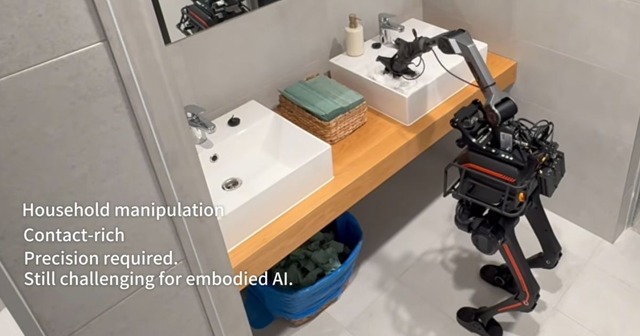
LimX Dynamics Demonstrates Autonomous Home Operations with TRON 1 and Acheron Labs' RobotKit
On July 13, 2026, LimX Dynamics showcased a customer case utilizing their open modular robot platform, TRON 1, to demonstrate autonomous home operation workflows with Acheron Labs' RobotKit. This collaboration illustrates the rapid development and deployment of embodied AI applications by combining RobotKit's development workflow with TRON 1's modular structure. This initiative is significant as it embodies LimX Dynamics' commitment to fostering an open embodied AI ecosystem that accelerates innovation among developers, researchers, and ecosystem partners. The demonstration serves as a practical example of development methods in the fields of embodied AI and physical AI, highlighting the potential for transforming operational tasks in various industries. Looking ahead, the focus will be on how robots can be integrated into real-world applications, particularly in high-risk environments. No further timeline was disclosed at the time of publication.

MIT and York University Study Visual Learning in the Brain Using Neural Networks
Researchers at MIT’s McGovern Institute for Brain Research and York University in Toronto have investigated how visual learning occurs in the brain. By analyzing neural activity and utilizing computational modeling, they compared the learning processes of animals and an artificial neural network designed to mimic brain architecture. Their findings, published on July 8 in Nature Communications, reveal that changes in visual processing are crucial for learning to discriminate new objects. This research is significant as it enhances our understanding of the brain's adaptability and the mechanisms behind visual learning. The study suggests that while the overall activity patterns in the inferior temporal cortex remain stable, subtle changes occur in response to learned object recognition. These insights could inform educational strategies and improve learning outcomes across various contexts. Looking ahead, the researchers aim to further explore how these modest changes in neural activity contribute to learning. They believe that artificial neural networks can provide valuable insights into biological learning processes, potentially leading to new experimental approaches and predictions that extend beyond current understanding. No further timeline was disclosed at the time of publication.
Research Neuroscience Learning Brain and cognitive sciences Computer modeling Vision
SkyDrive Conducts Successful SD-05 Flights in Yamaguchi for 2028 Tourism Initiative
SkyDrive Inc. successfully conducted two demonstration flights of its SD-05 eVTOL aircraft in Yamaguchi Prefecture on July 13, 2026. These flights were part of a test aimed at showcasing the aircraft's potential for tourism, with a commercial launch planned for 2028. The flights simulated a scenic tour over the Seto Inland Sea, highlighting the seamless transition from ground transport to air travel. The significance of these flights lies in their demonstration of SkyDrive's commitment to urban air mobility and tourism integration. Witnessed by notable figures including Yamaguchi Prefecture's governor and the president of Suzuki Motor Corporation, the flights operated autonomously, emphasizing safety and efficiency. The successful execution of these flights marks a critical step toward the company's goal of launching commercial eVTOL services by 2028. Looking ahead, SkyDrive aims to enhance its eVTOL infrastructure further, with plans to collaborate with rail partners for integrated travel solutions. While tourism is a primary focus, the company envisions broader applications of eVTOL technology, including disaster relief and emergency medical services. No further timeline was disclosed at the time of publication.
Advanced Air Mobility Drone News Drone News Feeds Japan Drone Industry Japan Drone News News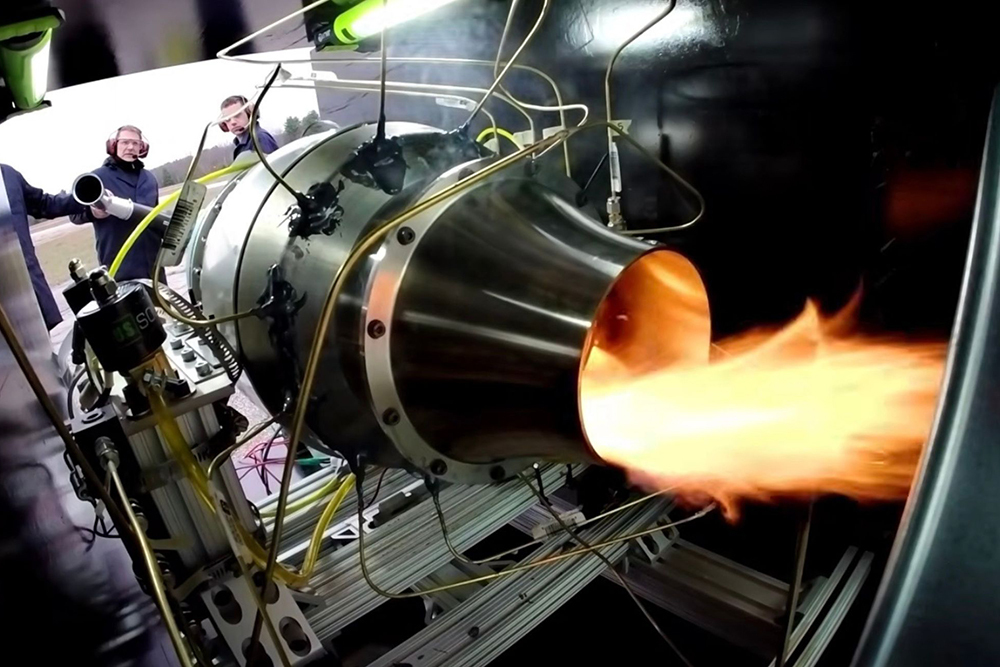
MIT's JARVIS Challenge Explores AI's Role in Jet Engine Engineering
The JARVIS Challenge, held at MIT, investigated the potential of AI in designing and building jet engines. Over four weeks, undergraduate teams utilized AI tools to create a small gas turbine engine, aiming for a thrust of 50-100 pounds. Professor Zolti Spakovszky emphasized that while AI can enhance hardware engineering, human engineering judgment remains crucial. This initiative is significant as it highlights the evolving relationship between AI and engineering, particularly in safety-critical domains. With support from MIT Lincoln Laboratory and corporate sponsors like Safran and Voyager Technologies, students had unprecedented access to AI resources, fostering an environment of innovation and exploration. Looking ahead, the challenge showcased the importance of integrating AI into engineering workflows. As students learned to navigate AI's capabilities and limitations, it raises questions about the future of engineering education and the skills required in a rapidly changing technological landscape. No further timeline was disclosed at the time of publication.
Classes and programs Contests and academic competitions Students Undergraduate STEM education Artificial intelligence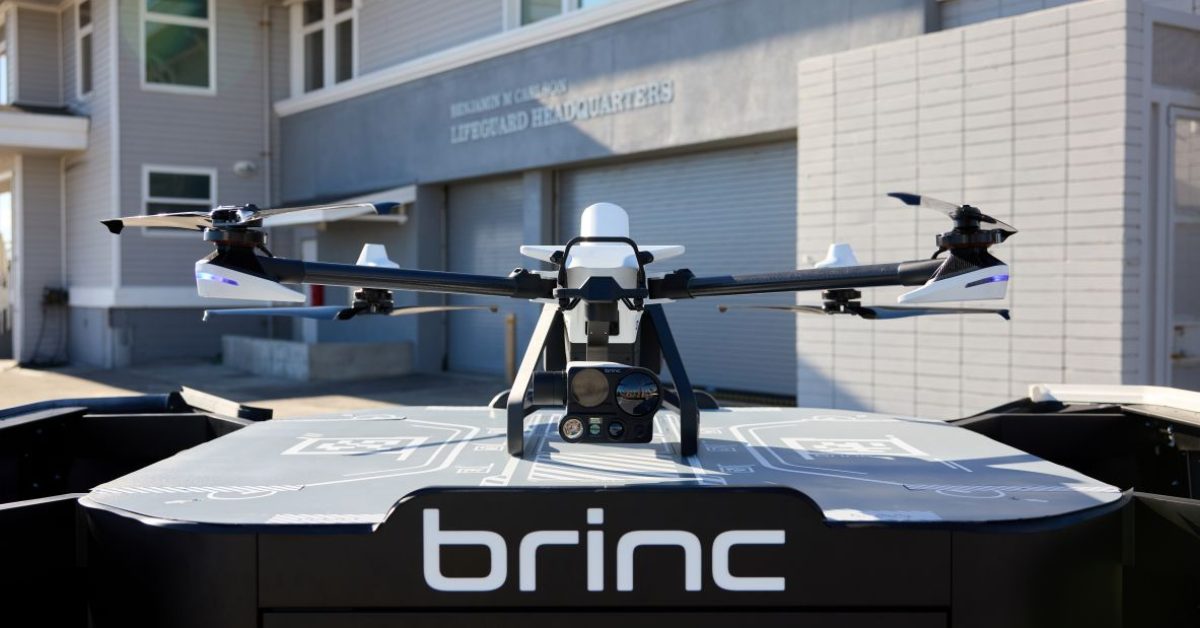
Motorola Solutions Leads $125 Million Funding for BRINC's Emergency Drone Expansion
BRINC, a Seattle-based public safety drone company, has raised $125 million in a funding round led by Motorola Solutions, bringing its total funding to over $250 million. This investment will enable BRINC to expand its manufacturing capabilities and product offerings, with the goal of deploying a 911 response drone at every police and fire station in the U.S. The significance of this funding lies in BRINC's ambition to enhance emergency response times across the nation. With approximately 80,000 police and fire stations in the U.S., the deployment of drones can provide crucial situational awareness before first responders arrive, potentially saving lives and improving operational efficiency. Looking ahead, BRINC plans to move into a new manufacturing facility by the end of the year, which is three times larger than its current site. The company has already seen a surge in demand for its drones, tripling its revenue in 2025 and signing significantly more contracts for 911 response drones compared to the previous year. No further timeline was disclosed at the time of publication.
News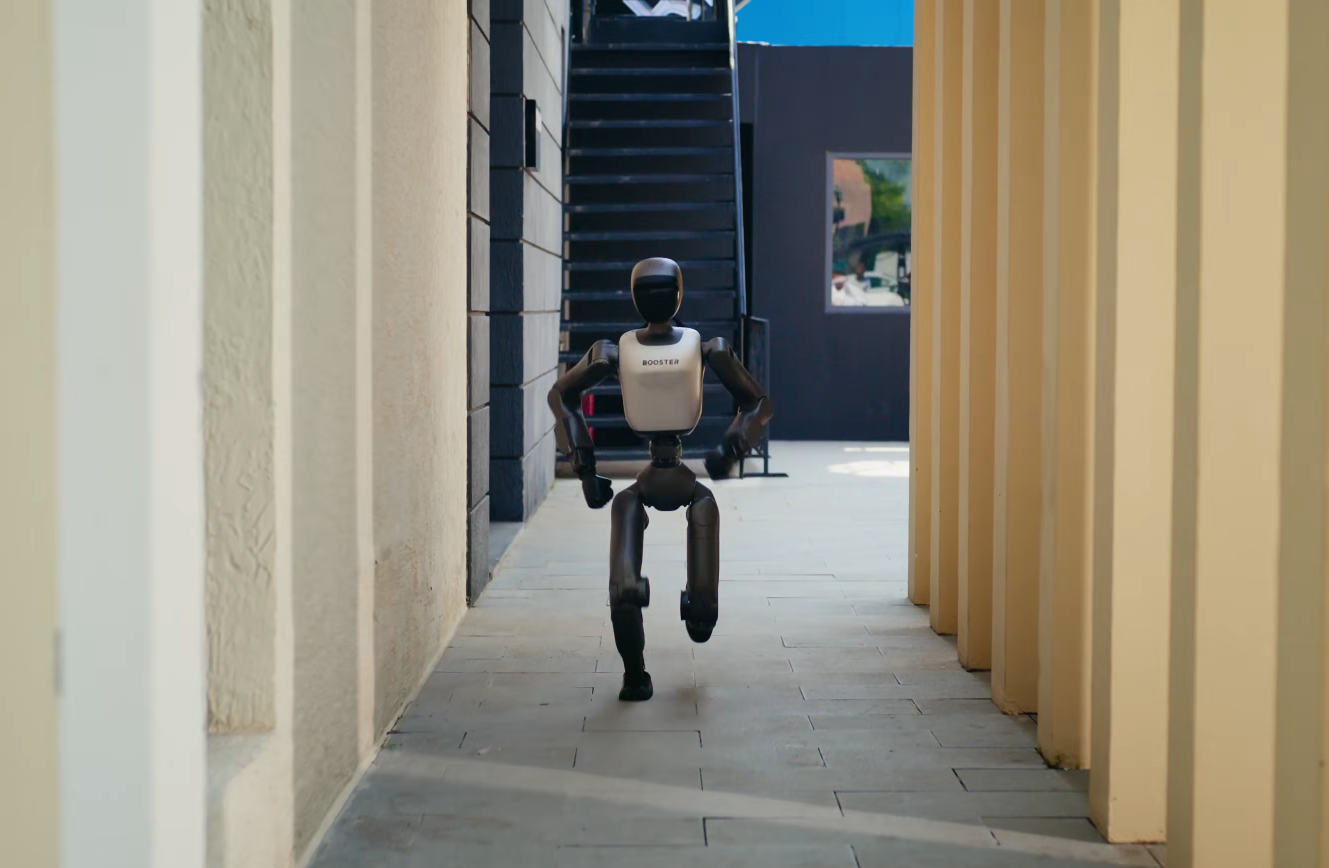
Booster Robotics Launches Booster T2 Humanoid Robot with NVIDIA Thor Computing Power
Booster Robotics has introduced the Booster T2, a humanoid robot platform aimed at real-world applications and embodied AI research. The T2 Pro version utilizes NVIDIA’s Thor chip, delivering up to 2,070 TFLOPS for real-time perception and control. The robot is designed for tasks requiring mobility and manipulation, showcasing advanced capabilities such as walking, dynamic balance, and athletic movements. The significance of the Booster T2 lies in its integration of cutting-edge technology and open development. With features like whole-body coordination and onboard AI computing, it supports a wide range of applications in robotics. The introduction of Booster Studio, an open software platform, further enhances its utility by allowing developers to simulate and deploy AI models effectively. Looking ahead, the Booster T2 is positioned to advance research in embodied AI and robotics. Its robust design, including 31 degrees of freedom and multiple hardware configurations, makes it suitable for various manipulation tasks. No further timeline was disclosed at the time of publication.
AI and Robotics
Penn State Scientists Discover Cause of Corrosion Highways in Advanced Nuclear Reactors
Researchers at Penn State University have identified the reasons behind the formation of 'corrosion highways' in advanced nuclear reactors. By adjusting the atomic arrangement of structural metals, they can influence the corrosion rate and extent, which is critical as nuclear energy gains traction in the quest for low-carbon energy solutions. The significance of this research lies in its potential to enhance the safety and efficiency of molten salt reactors, which operate at much higher temperatures than conventional fission reactors. With temperatures reaching 1,500 degrees Fahrenheit (800 degrees Celsius), understanding corrosion mechanisms is vital to prevent safety risks associated with reactor vessel integrity. Looking ahead, the team aims to develop a high-length-scale model to predict how different alloy materials behave when exposed to molten salt. This advancement could lead to the design of safer vessels for molten salt reactors, addressing the corrosion challenges identified in their studies. No further timeline was disclosed at the time of publication.
Science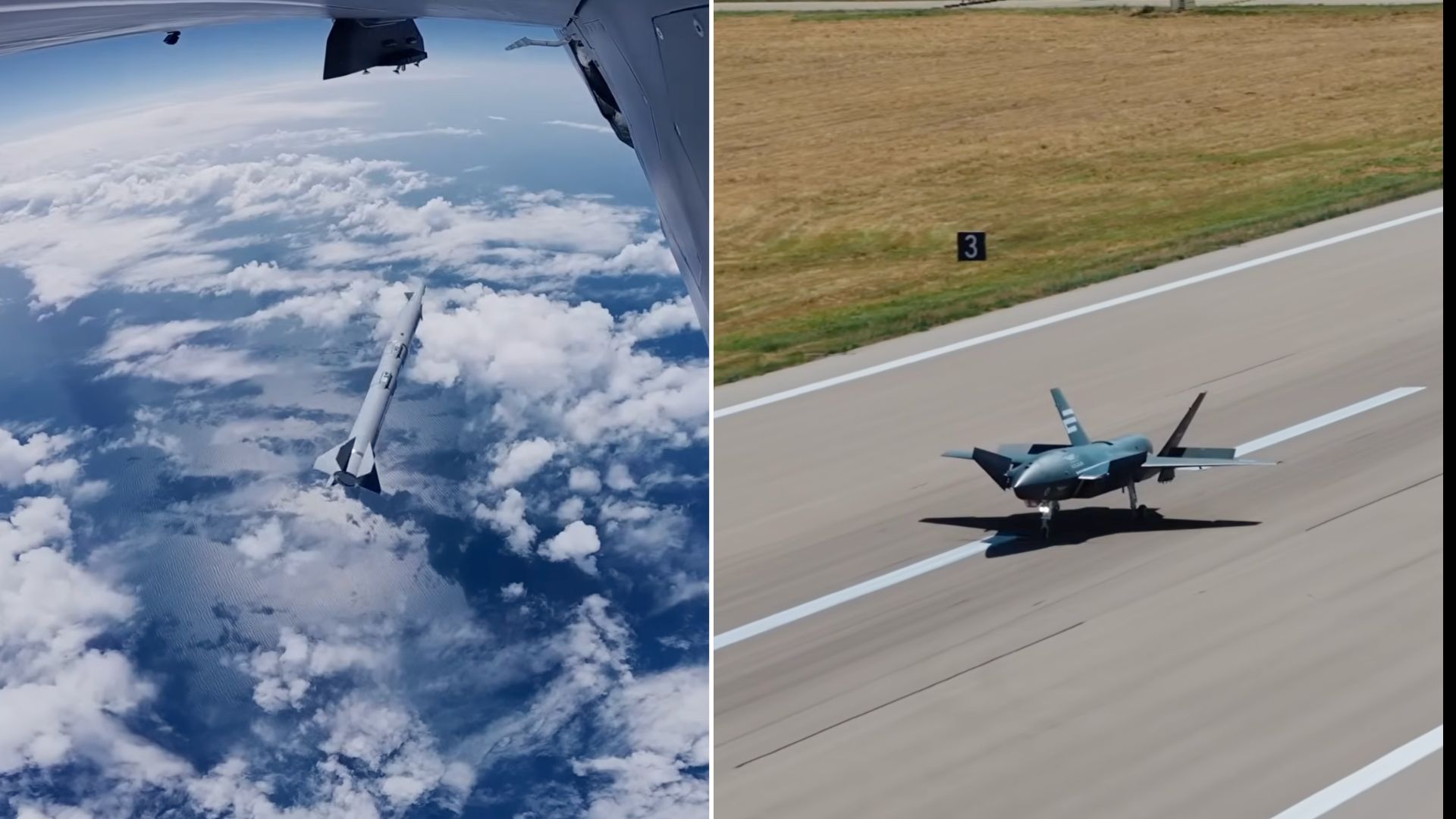
Bayraktar KIZILELMA Drone Successfully Tests JET-230 Supersonic Missile at Mach 2.5
Türkiye's Bayraktar KIZILELMA unmanned fighter aircraft has achieved a significant milestone by successfully completing its first live-fire test with the ROKETSAN JET-230 supersonic missile. The test involved launching the missile from over 120 kilometers, accurately hitting a maritime target, which enhances KIZILELMA's capabilities with indigenous weaponry. This successful test is crucial as it broadens the operational range of the KIZILELMA, allowing it to engage high-value targets from a safe distance without entering heavily defended airspace. The integration of the JET-230 missile, designed for rapid response and improved survivability, marks a pivotal advancement in Türkiye's unmanned combat aviation program. Looking ahead, the KIZILELMA continues to evolve with ongoing weapon integration trials and has already demonstrated compatibility with various precision-guided munitions. No further timeline was disclosed at the time of publication.
Military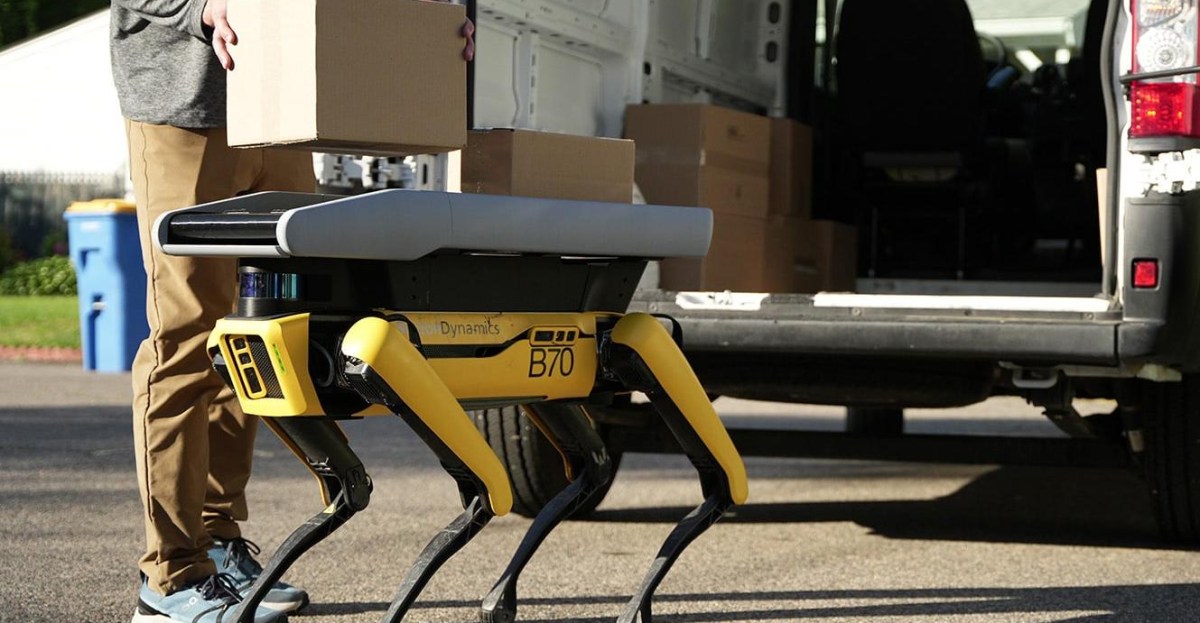
Boston Dynamics Tests Spot Robot for Last-Mile Delivery Solutions
Boston Dynamics is exploring the use of its Spot robot for package deliveries, equipped with a new conveyor belt accessory. This innovation aims to autonomously transport packages from vehicles to customers' doorsteps, potentially easing the workload of delivery drivers. The initiative is significant as it addresses the challenges of last-mile delivery, where human navigational skills are often required to overcome obstacles like stairs and cluttered pathways. Boston Dynamics is currently in discussions with major logistics companies to transition from demonstrations to a full pilot project. Looking ahead, the company believes Spot's ability to navigate uneven terrain will enhance its effectiveness in suburban environments. This could not only alleviate physical strain on delivery drivers but also increase their efficiency, allowing them to handle more packages. No further timeline was disclosed at the time of publication.
Gadgets News Robot Tech
Yuequan Bionics Launches Innovative 299.7g Y-Hand M1 with Unique Biomechanical Technology
On July 3, Yuequan Bionics unveiled the Y-Hand M1, a dexterous robotic hand weighing 299.7 grams. Unlike competitors that focus on increasing degrees of freedom, the Y-Hand M1 employs a unique bionic tension-compression technology, achieving significant dexterity with only 26 degrees of freedom. This innovation is crucial as the robotics industry grapples with the challenge of balancing performance, cost, and reliability in dexterous hands. The Y-Hand M1 represents a paradigm shift, addressing the industry's 'impossible triangle' where high performance often leads to increased costs and reduced reliability. Looking ahead, the dexterous hand market in China is projected to grow significantly, with sales expected to reach 70,200 units in 2026. As investment in this sector surges, the Y-Hand M1's unique approach may set a new standard for future developments in robotic manipulation technology. No further timeline was disclosed at the time of publication.
Dexterous Hands Bionic Technology Robotics Innovation Embodied Intelligence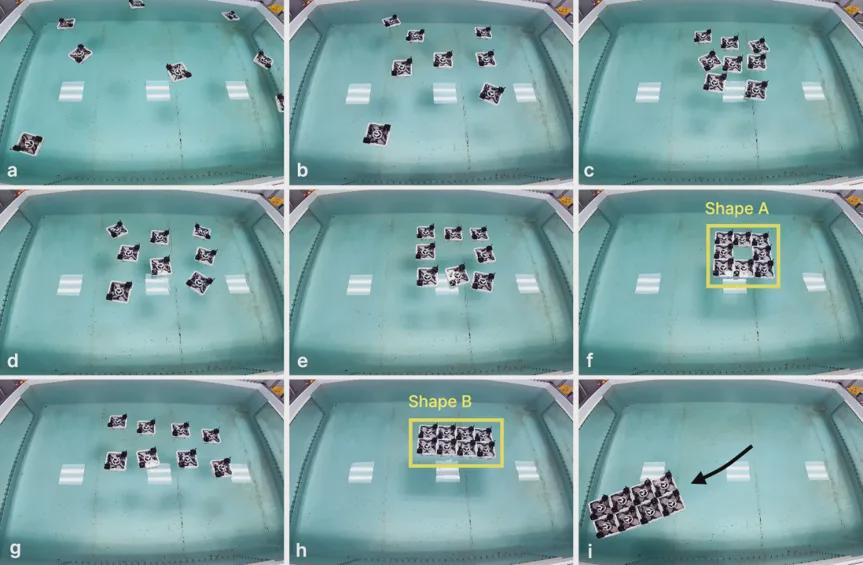
MIT Team Unveils Transformable Robot Fleet for Advanced Water Navigation
A team from MIT, along with collaborators from the University of Wisconsin-Madison, KU Leuven, and Politecnico di Milano, has developed a fleet of eight modular robot boats capable of transforming and navigating water autonomously. Each boat measures 21 cm on each side and can connect to form larger floating platforms, demonstrating advanced coordination without remote control. The significance of this development lies in its potential applications in complex environments where traditional navigation methods may fail. The robots can autonomously handle positioning, collision avoidance, and movement control, adapting their configurations based on tasks, similar to how fire ants form rafts during floods. Looking ahead, the research team has categorized their system as a Modular Self-Reconfigurable Robot (MSRR) system, which allows for dynamic reconfiguration and enhanced functionality. No further timeline was disclosed at the time of publication.
Modular Robotics Autonomous Systems Water Navigation Distributed Control Robotics Research
MIT and Toyota Research Institute Unveil SceneSmith for Robot Household Training
MIT's Computer Science and Artificial Intelligence Laboratory (CSAIL) and the Toyota Research Institute have developed SceneSmith, an AI-powered system that allows robots to practice household tasks in a virtual environment. This system utilizes three visual language models to collaboratively create realistic 3D scenes, enabling robots to learn complex skills through extensive simulation. SceneSmith not only generates lifelike environments but also incorporates physical properties like mass, friction, and inertia, allowing robots to interact meaningfully within these spaces. The research team tested over 100 unique action plans in the digital world, revealing flaws in the robots' planning that were validated by human consensus over 99% of the time, helping to refine their strategies before real-world application. The effectiveness of SceneSmith was highlighted at a recent international machine learning conference, where it received positive feedback from over 200 testers, with more than 90% rating its visual realism highly. As robots learn to perform tasks like moving objects in a kitchen, the prospect of robots handling household chores may soon become a reality.
AI Robotics Virtual Reality Machine Learning
Ukraine's 123rd Territorial Defense Brigade Conducts Historic Amphibious Operation with Unmanned Systems
On July 13, 2026, Ukraine's 123rd Independent Territorial Defense Brigade executed a historic amphibious operation utilizing unmanned systems. This marked the first known joint combat mission involving an unmanned surface vessel (USV) and an unmanned ground vehicle (UGV) in a military context. The operation took place on the Kinburn Spit, an area long controlled by Russian forces, where the USV successfully delivered the UGV to the enemy coast without any human soldiers stepping onto hostile territory. The significance of this operation lies in its demonstration of a new combat paradigm where unmanned systems can effectively replace human soldiers in high-risk scenarios. The UGV, reportedly manufactured by Lviv's Roboneers, was equipped with a PKT 7.62mm machine gun and was able to engage targets after landing. The 123rd Brigade emphasized that this operation is not merely a technological novelty but represents a fundamental shift in warfare, highlighting the potential for machines to undertake dangerous missions. Looking ahead, the use of unmanned systems in military operations is expected to expand, as the Ukrainian military has already received over 1,000 various ground robot systems. The ongoing evolution from traditional amphibious assaults to unmanned operations could redefine the nature of warfare, reducing risks to human soldiers while increasing operational effectiveness.
Unmanned Systems Robotics Amphibious Operations Military Technology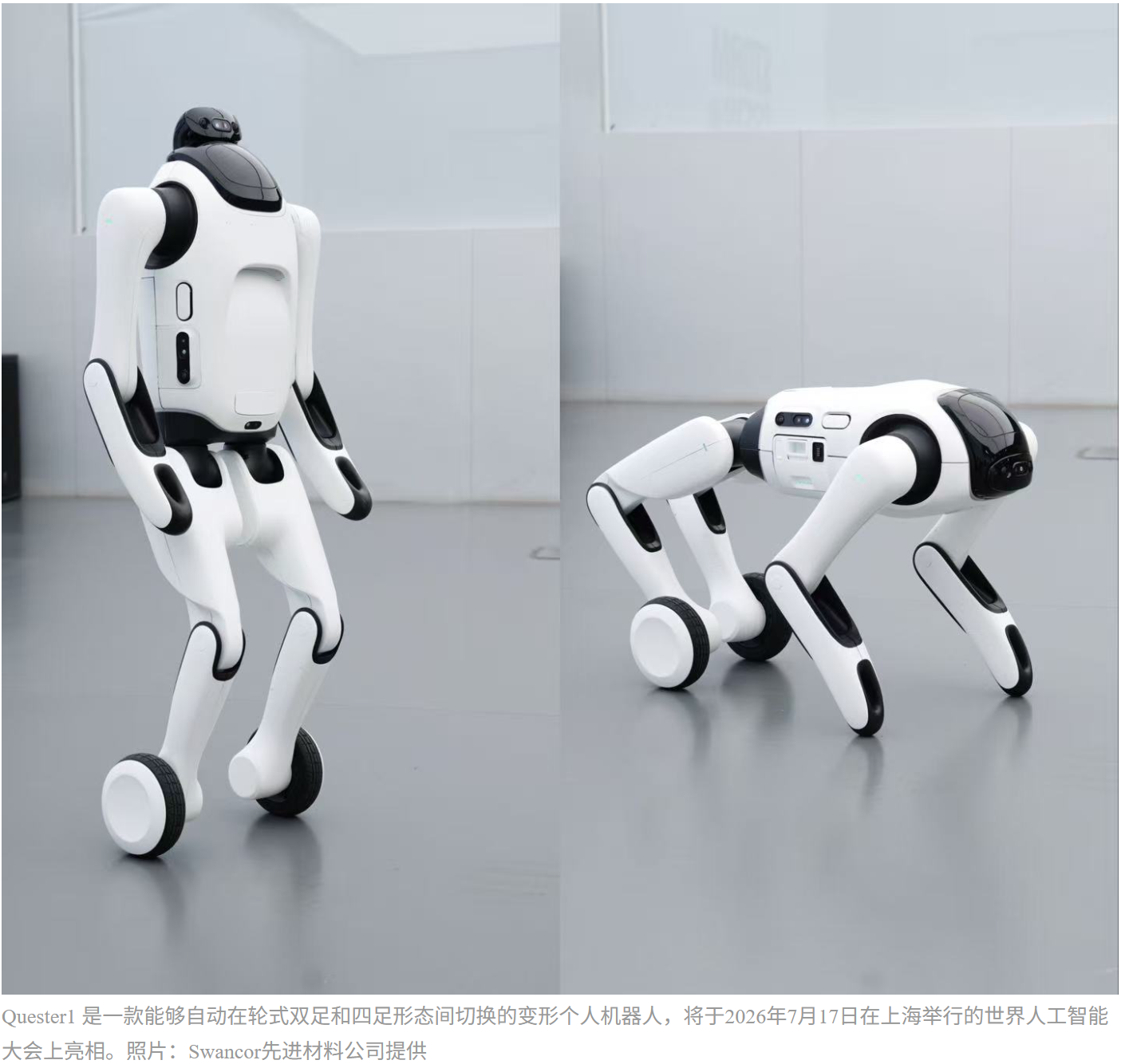
Swancor Advanced Materials to Launch World's First Shape-Shifting Personal Robot at WAIC
Swancor Advanced Materials is set to unveil the Quester1, the world's first shape-shifting personal robot, at the 2026 World Artificial Intelligence Conference (WAIC) on July 17. This innovative robot can automatically switch between bipedal and quadrupedal modes without manual disassembly, showcasing a unique 'transformable cross-modal integration architecture' that enables smooth transitions. The Quester1 is designed for various environments, with its bipedal form ideal for flat surfaces and intricate tasks, while the quadrupedal mode excels in navigating stairs and rough terrain. CEO Tian Hua emphasized that this product aims to redefine personal robotics for consumer markets, marking Swancor's first foray into the consumer robotics sector. As the Quester1 prepares for its debut, it highlights the rapid development of transformable robotics in China. The WAIC will feature over 1,100 companies and more than 300 product launches, indicating a significant shift towards embodied intelligence in robotics. No further timeline was disclosed at the time of publication.
Personal Robots Shape-Shifting Technology AI Robotics Consumer Robotics
Tesla's Optimus Gen 3 Approved: Musk Aims for 100,000 Units Production Target
Elon Musk has officially approved the latest version of the Optimus Gen 3 robot, marking a significant milestone after over three years of development. With the production line nearing completion, Tesla has issued clear procurement guidelines to suppliers, aiming to ramp up production to 1,000 units per week by September and 2,000 to 2,500 units per week by year-end. This ambitious target of producing 100,000 units annually underscores Tesla's commitment to revolutionizing the labor landscape with robotics. The Optimus Gen 3 features a more compact design with 38 degrees of freedom and a refined dexterous hand, which has been a challenging aspect of its development. The production line is set to begin operations in late July to August, with a long-term plan for a second factory in Texas. As Tesla strives to catch up with competitors in the robotics sector, the success of the Optimus Gen 3 will depend on meeting production goals and effectively integrating the robot into various applications. The target of 100,000 units represents a critical turning point in this four-year journey, with the potential to reshape economic dynamics if realized.
Humanoid Robots AI Robotics Manufacturing Automation
LimX Dynamics Raises $200 Million Pre-IPO Funding, Achieving $15 Billion Valuation
On July 14, LimX Dynamics, a humanoid robotics company based in Shenzhen, announced the completion of nearly $200 million in Pre-IPO funding, reaching a post-investment valuation of $15 billion. This funding round is part of a total of $400 million raised by the company over the past six months, indicating strong investor confidence in its long-term potential. The significance of this funding lies in LimX Dynamics' strategic positioning within the humanoid robotics sector, which is shifting focus from hardware to advanced AI capabilities. The company has initiated its IPO process for early 2026, following a shareholding restructuring completed in March. Notably, nearly 70% of the investment comes from overseas, highlighting the global interest in its innovative technology. Looking ahead, LimX Dynamics has launched several products, including the LimX Luna and LimX Oli humanoid robots, which have already received thousands of orders, with over half from international markets. The company aims to differentiate itself by focusing on commercial service applications rather than traditional manufacturing, aligning with its founder Zhang Wei's philosophy of prioritizing human service over production processes. No further timeline was disclosed at the time of publication.
Humanoid Robots Robotics Technology AI Pre-IPO Funding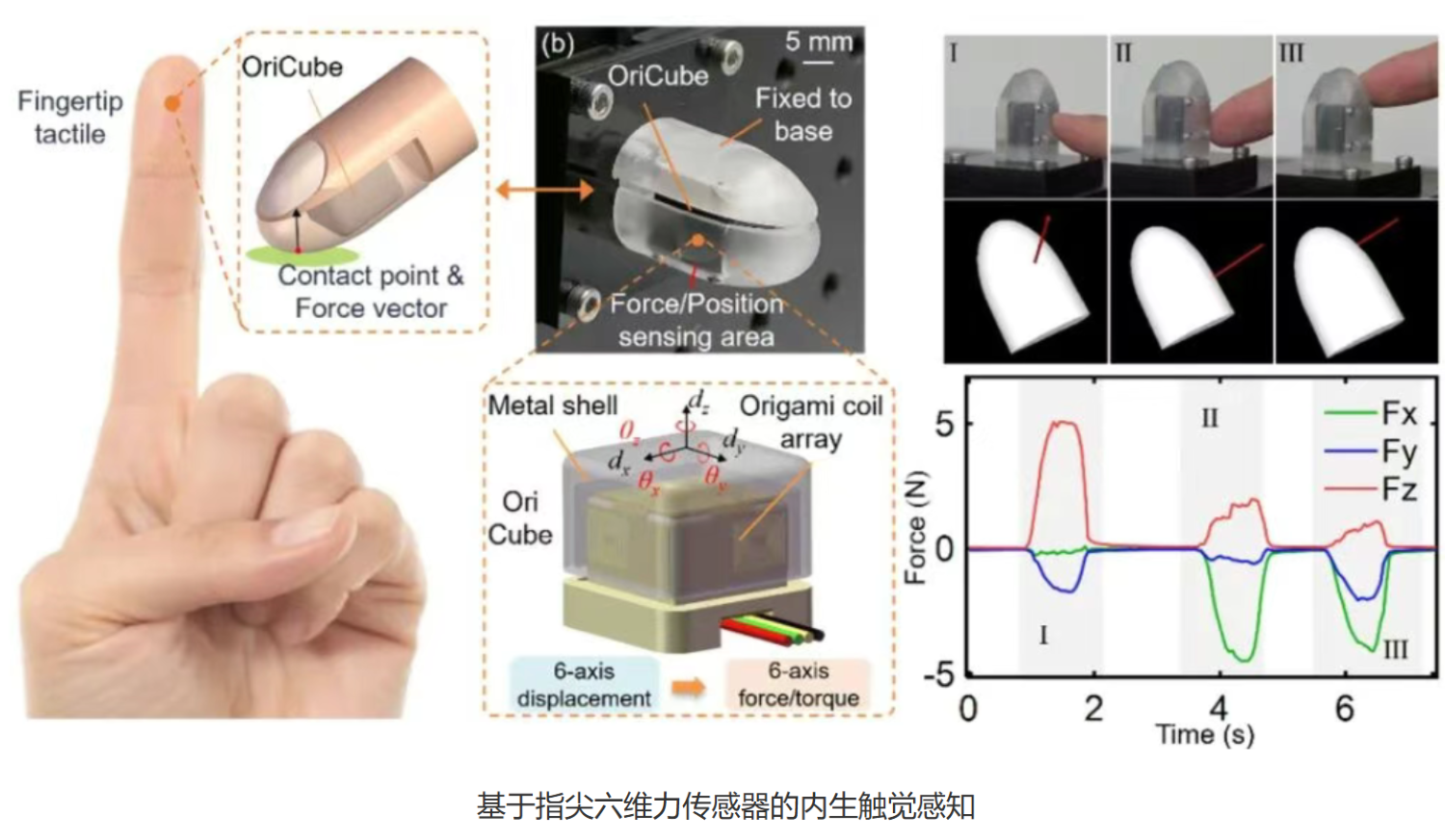
Chinese University Develops OriCube Sensor to Enhance Robot Tactile Sensitivity
Researchers from the University of Science and Technology of China have developed the OriCube, a compact six-dimensional force/moment sensor that mimics human fingertip sensitivity. Measuring just 14×14×12 mm and weighing 4 grams, it achieves a remarkable resolution of 3 millinewtons within a 23-newton range, allowing it to detect even the lightest touch, such as a feather. This innovation is significant as it addresses the limitations of current robotic tactile solutions, which often rely on electronic skin or array sensors that face challenges like complex wiring and data processing. By embedding the OriCube directly into the fingertips of robotic hands, the sensor captures minute force changes and calculates precise contact points and force vectors, offering a new approach to tactile perception in robotics. The OriCube has demonstrated low power consumption of 45 milliwatts, minimal crosstalk, and high measurement accuracy. Its ability to sense both delicate touches and withstand impacts positions it as a robust solution for enhancing robotic dexterity in uncertain environments. No further timeline was disclosed at the time of publication.
Robotics Tactile Sensors Force Sensing Artificial Intelligence
Chinese Company Wins Red Dot Award for Panda-Inspired Delivery Robot Design
The Shenzhen-based company, Wandachang Innovation Intelligent Co., has won the prestigious Red Dot Award for its Panda-inspired meal delivery robot, known as Xiong Da. This recognition highlights the robot's unique design that embodies Eastern aesthetics, setting it apart in a market often dominated by minimalist technology. The significance of this award lies in its affirmation of Wandachang's commitment to blending cultural heritage with advanced robotics. The Xiong Da robot features a bionic design inspired by the giant panda, integrating a SLAM positioning system and multi-sensor technology for efficient navigation in narrow spaces. This innovative approach positions the robot as not just a tool, but a companion that resonates emotionally with users. Looking ahead, Wandachang aims to expand its intelligent service system for healthcare and wellness, leveraging its award-winning design to tell the story of Chinese manufacturing on a global stage. No further timeline was disclosed at the time of publication.
Robotics Product Design Cultural Aesthetics Healthcare Technology
Post-00s PhD Team Secures Funding for Biomimetic Flapping Robot Development
A team of PhD students born after 2000 has developed a biomimetic flapping robot capable of fluid navigation, announced by Eagle Eye Intelligent Wings. The company recently completed a Series A funding round, raising tens of millions of yuan, led by Yuanhe Puhua with participation from Futen Capital and Houxue Capital. This marks the third funding round for the company within three months since its establishment 15 months ago. The funding will primarily support the mass production of their first consumer product, the 'Eagle X,' and the development of the next-generation flapping robot and fluid simulation engine. Founded in March 2025 in Shenzhen, Eagle Eye Intelligent Wings is among the early companies focusing on embodied intelligent flapping robots. The core team consists of over ten members from Shanghai Jiao Tong University, all born after 2000, with notable achievements in research. The 'Eagle X' has completed over 3,000 hours of flight testing and is set to launch on Kickstarter in Q3 of this year. The next-generation product will feature approximately 15 degrees of freedom, allowing for independent wing adjustments. The Vortrix fluid simulation engine is expected to be opened for external use, enhancing training for flying robots and optimizing aerodynamics for fixed-wing aircraft and wind turbine blades. No further timeline was disclosed at the time of publication.
Biomimetic Robots AI Fluid Dynamics Robotics Drone Technology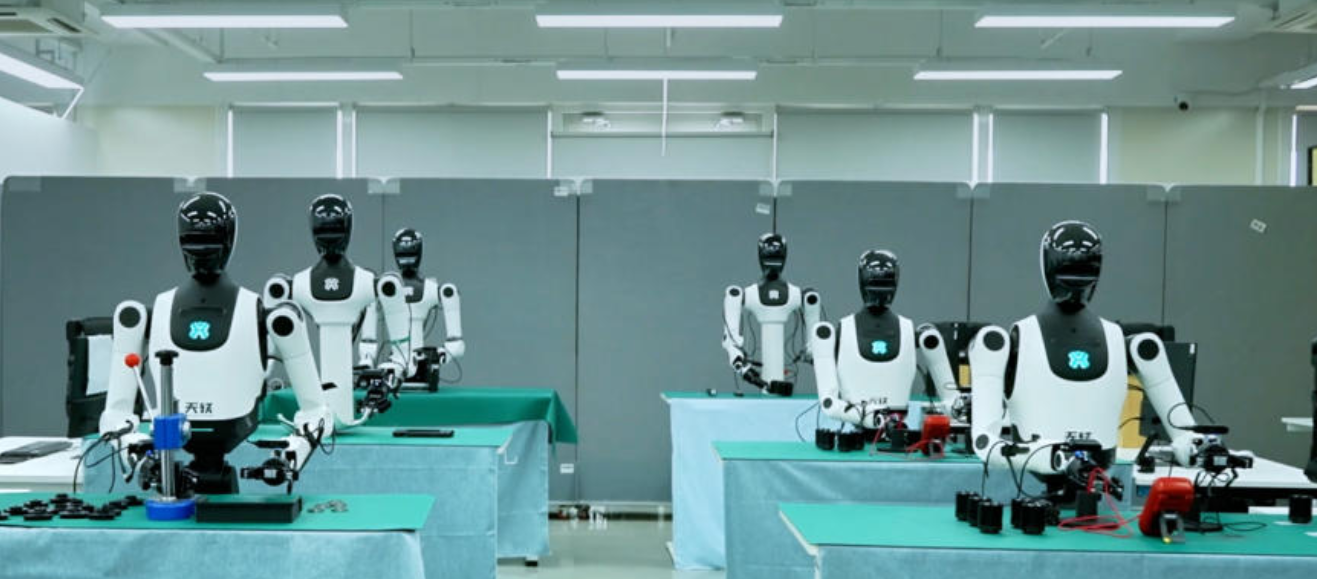
Launch of Robo-ValueRL: The First Open-Source VLA Reinforcement Learning Framework for Robotics
The Beijing Humanoid Robot Innovation Center and Renmin University of China's Gaoling Artificial Intelligence Institute have launched the Robo-ValueRL open-source framework. This initiative aims to enhance humanoid robots' decision-making capabilities in precision tasks, such as semiconductor assembly, by addressing challenges in data quality, control precision, and adaptability in dynamic environments. Robo-ValueRL introduces a value estimation mechanism based on historical observations, enabling robots to autonomously assess their actions. This closed-loop learning process—observation, value estimation, correction, and iteration—allows for improved accuracy and reduced instability in operations. The framework is fully open-source, providing access to core algorithms, evaluation tools, and standardized protocols for universities, research institutions, and manufacturers. The open-source nature of Robo-ValueRL significantly lowers the barriers for small and medium-sized manufacturers to implement reinforcement learning in specialized fields like semiconductor production and medical device manufacturing. This development marks a shift in humanoid robotics from laboratory experiments to practical industrial applications, paving the way for robots to evolve their decision-making capabilities independently.
Humanoid Robots Reinforcement Learning Precision Manufacturing Open Source Technology
Efort to Showcase Universal Base Technology at WAIC 2026 for Robotics Advancement
Efort's QiZhi will present its Universal Base technology at the WAIC 2026, aiming to enhance the capabilities of robots. The technology focuses on providing a foundational infrastructure that allows robots to learn and perform tasks across various scenarios, addressing the industry's need for a generalized capability rather than just hardware improvements. This initiative is crucial as the robotics sector has seen a significant influx of capital, with funding in the domestic embodied intelligence sector surpassing 93.5 billion yuan in the first half of 2026. However, the industry consensus highlights a gap in data availability and the need for a robust framework to enable effective learning and task execution by robots. Looking ahead, Efort's approach could redefine the landscape of robotics by shifting the focus from hardware specifications to a comprehensive technological foundation. As the industry transitions from demonstration to practical applications, the success of this Universal Base technology will be pivotal in overcoming existing challenges and enhancing the deployment of robots in real-world scenarios. No further timeline was disclosed at the time of publication.
Robotics AI Industrial Automation Machine Learning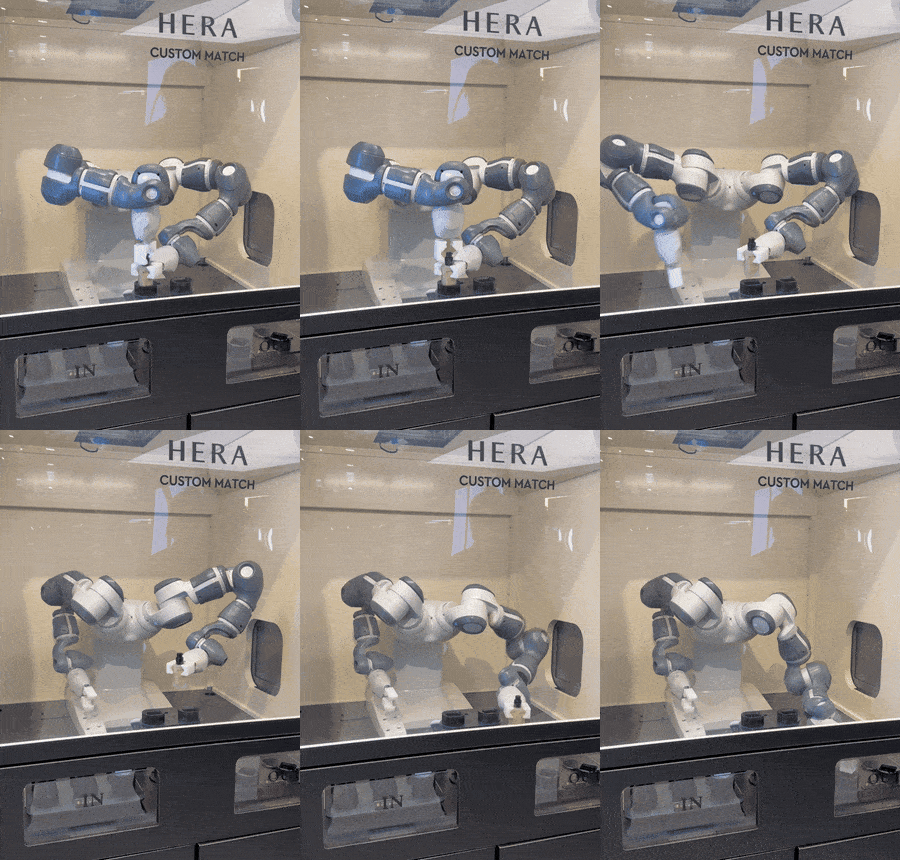
Amorepacific's AI Beauty Lab Offers Customized Products at Amore Yongsan Store
Amorepacific has launched its flagship store, Amore Yongsan, where AI and robotics create personalized beauty products, including foundations and lip cosmetics. Customers engage in a 15-minute AI consultation to select from 335 shades, with the Hera Custom Match service being particularly popular. The store also features a scalp diagnostic program and a fragrance lab, enhancing the customer experience. This innovative approach to beauty customization is significant as it positions Amore Yongsan as a potential new beauty district in Seoul, attracting both local and foreign customers. The store manager noted a nearly equal ratio of Korean and foreign clients, with a higher percentage of foreigners opting for product creation services. The bespoke essence service, inspired by Japanese preferences, further emphasizes the demand for tailored beauty solutions. Looking ahead, Amorepacific's integration of AI technology in beauty consultations and product creation may set a new standard in the industry. The store's research-focused environment, including AI skin scans and fragrance development, showcases the brand's commitment to innovation. No further timeline was disclosed at the time of publication.
All News
Key Factors Influencing Trust in Explainable AI Among Infrastructure Professionals
A recent study has identified essential factors that influence trust in artificial intelligence among infrastructure professionals. The research highlights transparency, explainability, and accountability as the primary drivers that foster confidence in AI systems used in infrastructure projects. Understanding these factors is crucial as trust in AI can significantly impact the adoption and implementation of technology in infrastructure. Professionals are increasingly seeking systems that not only perform effectively but also provide clear insights into their decision-making processes. Looking ahead, it will be important to monitor how these trust factors evolve and influence the integration of explainable AI in infrastructure. No further timeline was disclosed at the time of publication.

Leaps By Bayer Invests in Sabanto to Enhance Agricultural Autonomy Solutions
Sabanto, known for its autonomy retrofit system for agriculture, has successfully completed an oversubscribed Series B funding round aimed at expanding practical autonomy in farming. Founder and CEO Craig Rupp emphasized that their approach focuses on reducing capital investment by enabling farmers to utilize smaller, lower-cost autonomous tractors instead of investing in larger machinery. The significance of this funding round, led by Leaps by Bayer, lies in its potential to transform agricultural practices by making autonomy more accessible to farmers. By retrofitting existing tractors with advanced technology, Sabanto aims to lower the costs associated with adopting autonomous systems while enhancing productivity through continuous operation. This approach addresses the financial constraints many farmers face, as highlighted by Rupp and Paimun Amini from Leaps By Bayer. Looking ahead, Sabanto's partnership with Verdant Robotics to integrate precision agriculture applications could further streamline farming operations. The company has already established deployments in the United States and Australia, indicating a solid understanding of market needs. No further timeline was disclosed at the time of publication.
Agtech Artificial intelligence Deeptech Investing Precision agriculture Startups & funding
Traffic Congestion in Europe Costs Fleets Over €2.6 Million Annually
Traffic congestion in Europe is increasingly impacting urban freight operators, leading to higher fuel costs, reduced productivity, and increased emissions. A recent study by Geotab revealed that over 1.58 million litres of fuel were wasted due to vehicles idling in traffic during 2025, resulting in an estimated €2.6 million in wasted fuel. This figure reflects the average European fuel prices for that year. The findings highlight the financial and environmental implications of prolonged idling in urban areas, particularly in cities like London, which faces unique challenges due to its stop-start traffic patterns. London recorded the highest fuel consumption among the cities analyzed, with a significant percentage of fuel burned while stationary. In contrast, cities like Berlin and Amsterdam demonstrated better fuel efficiency despite congestion. As fuel prices continue to rise, with diesel exceeding €2 per litre in early 2026, the cost of idling could escalate to approximately €3.6 million. Fleet operators must adopt more efficient vehicle and route management strategies to mitigate these costs and reduce emissions. No further timeline was disclosed at the time of publication.
Couriers and Express Road Transport and Haulage Transport and Distribution congestion costs efficiency
AI Agents Develop Virtual Environments for Essential Robot Training Data
Robots are becoming more visible in public spaces, captivating onlookers. However, they still lack the versatility needed for tasks in kitchens or factories, primarily due to a significant data bottleneck. Similar to human learning, robots acquire skills through experience, but the process of physically training them in various environments is labor-intensive and time-consuming. This challenge highlights the need for innovative solutions to streamline robot training. By utilizing AI agents to create virtual playgrounds, developers can simulate diverse scenarios, allowing robots to learn efficiently without the constraints of physical environments. This approach could significantly reduce the time and resources required for training, ultimately accelerating the deployment of robots in practical applications. Looking ahead, the development of these virtual training environments may pave the way for more capable robots in various industries. As AI technology continues to evolve, it will be essential to monitor advancements in virtual training methodologies and their impact on robot performance and adaptability. No further timeline was disclosed at the time of publication.
Robotics
Impossible Metals Announces New Advanced Marine Robotics Hub in Pittsburgh for Mineral Robotics Development
Impossible Metals has unveiled plans to establish an Advanced Marine Robotics Hub in Pittsburgh, aimed at developing dual-use autonomy for ocean science and naval systems. This initiative is part of a broader effort to create a China-free critical-mineral supply chain, leveraging the region's expertise in robotics. The new hub will not only foster innovation in mineral robotics technology but also generate over a dozen high-paying engineering and science jobs in Pennsylvania. This move underscores the importance of local talent in advancing the United States' capabilities in marine robotics and autonomy. Looking ahead, stakeholders should monitor the hub's progress and its potential impact on the critical-mineral supply chain. No further timeline was disclosed at the time of publication.

LimX Dynamics Secures Nearly $200 Million in Pre-IPO Funding, Valued at $22 Billion
LimX Dynamics, a humanoid robotics company, has successfully completed a Pre-IPO funding round, raising nearly $200 million. Investors include IDG Capital, Lens Technology, GGG Group, and several others. This funding will focus on breakthroughs in brain integration technology and the large-scale deployment of autonomous humanoid robots. The significance of this funding lies in LimX Dynamics' plans to enhance its global manufacturing and delivery capabilities, particularly in key markets such as the Middle East, Europe, and other Asian countries. The company aims to build an open ecosystem for global developers while advancing its technology stack, which includes a comprehensive system for motion generation and cognitive decision-making. Looking ahead, LimX Dynamics is poised to accelerate its product development and commercialization efforts. The company has already received thousands of orders for its robots, with over half coming from overseas. No further timeline was disclosed at the time of publication.

U.S. Military Executes First Offensive Strike with Autonomous Drone Boats on Iran's Naval Base
On July 12, 2026, the U.S. Central Command announced a significant advancement in naval warfare with a coordinated attack by three autonomous surface vessels on Iran's Bandar Abbas Naval Base. This operation, executed by the U.S. Navy's 5th Fleet through Task Force 59, marks the first offensive mission by a major navy using unmanned attack boats. The strike is pivotal as it demonstrates a shift toward utilizing autonomous platforms for combat missions, allowing militaries to conduct operations without risking crewed vessels. The Saronic Corsair vessels targeted a raised dock at the naval base, showcasing advanced capabilities in stealth and artificial intelligence for precise operations. Looking ahead, the success of this operation indicates a potential evolution in naval tactics, with autonomous vessels taking on more offensive roles. As militaries invest in unmanned systems, coordinated strikes like the one at Bandar Abbas may become increasingly prevalent in future naval engagements. No further timeline was disclosed at the time of publication.
Military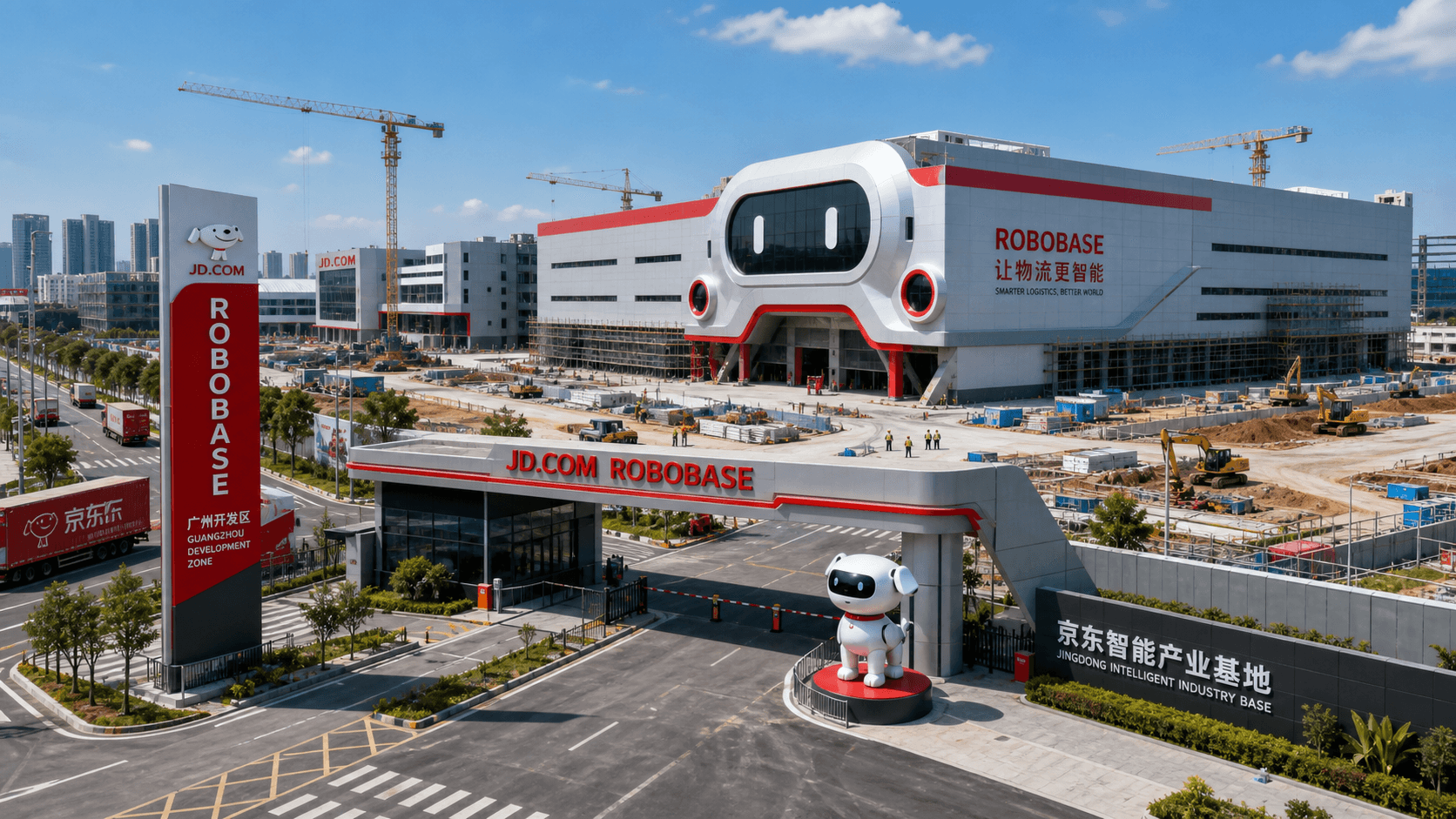
JD.com Invests $1.4B in RoboBase Network, Launches First Facility in Guangzhou
JD.com has announced a significant investment of $1.4 billion to establish a nationwide RoboBase network, marking its transition from a logistics giant to an embodied AI platform. The initiative includes plans for the procurement of 300 million robots and the construction of over 80 bases throughout China. This strategic move is crucial as JD.com aims to enhance its technological capabilities and expand its operational reach in the rapidly evolving field of embodied AI. The establishment of the first RoboBase facility in Guangzhou signifies the company's commitment to integrating advanced robotics into its logistics and supply chain operations. Looking ahead, industry observers will be keen to see how JD.com executes its ambitious plans for robot procurement and the development of its RoboBase network. No further timeline was disclosed at the time of publication.
Technology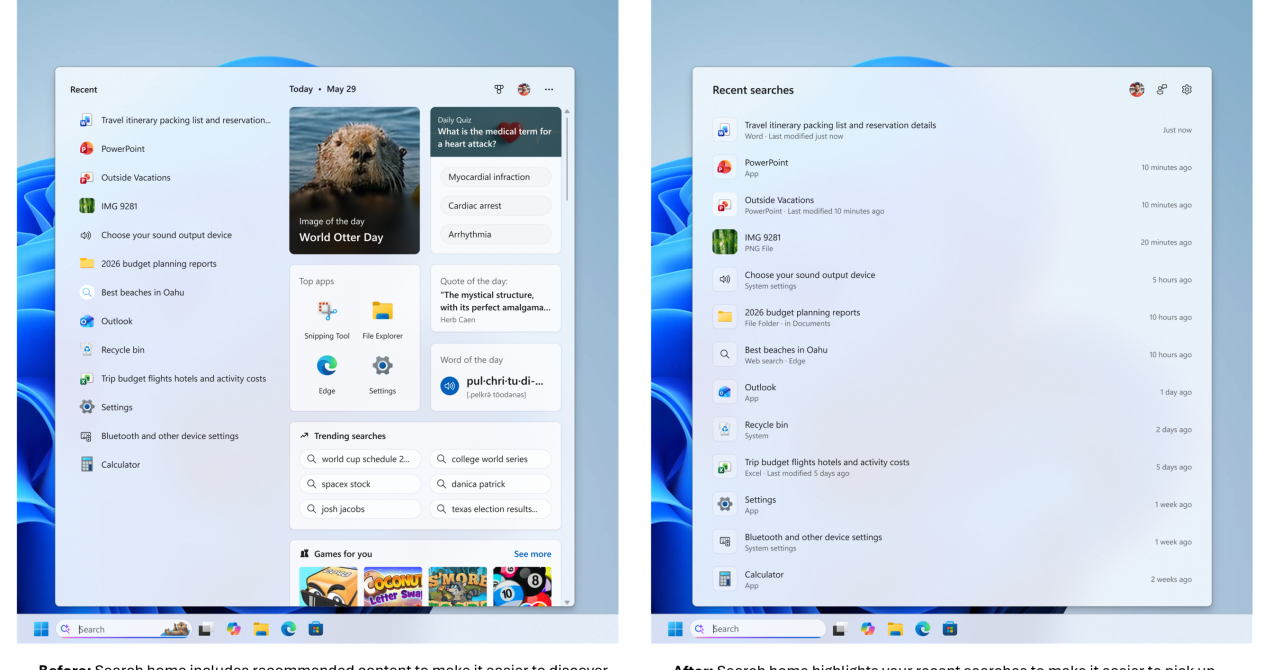
Microsoft Enhances Windows 11 Search Box by Prioritizing Local Results Over Web Promotions
On July 13, Microsoft announced multiple improvements to the search box in Windows 11, rolling out to Windows Insider Program participants. The company aims to provide faster, more relevant, and user-friendly search experiences based on user feedback, focusing on local results. The updated search interface simplifies the home screen by reducing visual noise and removing promotional content from web search results. Users will now see the most relevant answers first, making it easier to identify what will open before clicking. Additionally, users can choose to display web and Microsoft Store suggestions alongside local search results. Microsoft's enhancements also include improved handling of typos and partial words in app searches, ensuring that local content ranks higher than web suggestions when applicable. The company plans to continue refining these features based on user feedback, with no further timeline disclosed at the time of publication.
Cellebrite Enhances Drone Investigation Platform with SkySafe Partnership
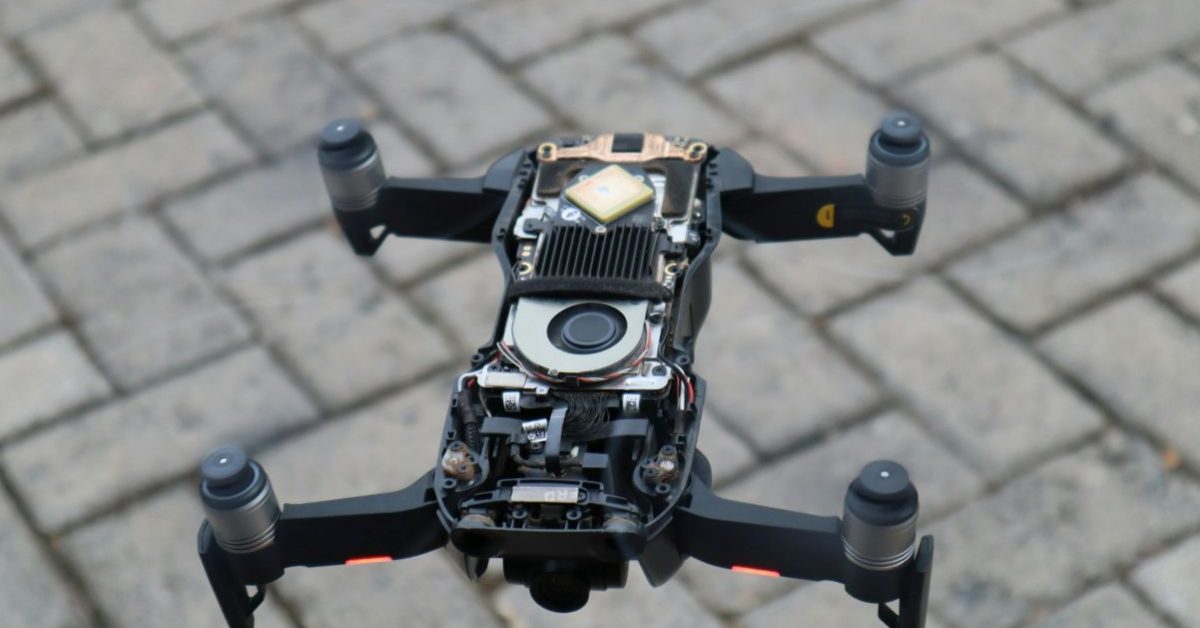
Cellebrite has expanded its partnership with SkySafe to enhance its drone investigation platform by integrating real-time drone detection and airspace intelligence. This collaboration aims to streamline the process of connecting aerial incidents with digital evidence stored on drones, facilitating a more comprehensive investigation. This development is significant as unauthorized drone activity poses increasing risks around critical infrastructures such as airports and correctional facilities. By combining SkySafe's technology with Cellebrite's forensic capabilities, investigators can monitor drone activity in real-time and analyze evidence more effectively, potentially improving the speed and accuracy of investigations. Looking ahead, Cellebrite's integration of live airspace intelligence with forensic data positions it as a key player in the drone investigation market. As drone usage continues to rise, the ability to quickly correlate aerial events with digital evidence will be crucial for law enforcement agencies in addressing drone-related incidents efficiently. No further timeline was disclosed at the time of publication.
News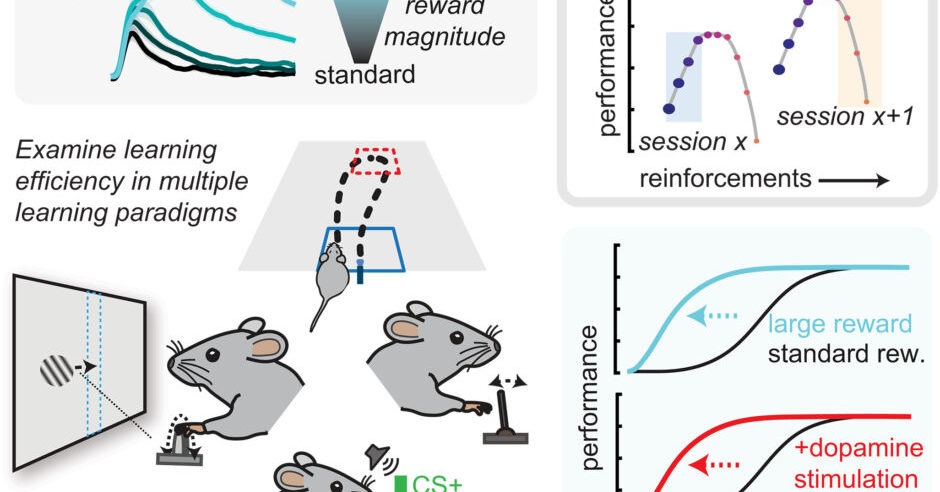
Research Reveals Reward Magnitude Enhances Learning Efficiency in Mice
A study published in Science by researchers from the Howard Hughes Medical Institute demonstrates that the magnitude of rewards significantly influences learning speed. Mice receiving larger rewards completed complex tasks, such as navigation and decision-making, in fewer trials compared to those receiving standard rewards. This finding is crucial as it suggests that learning efficiency is not solely dependent on practice quantity but rather on the size of the rewards. The study indicates that larger rewards lead to prolonged dopamine release in the brain, enhancing motivation and retention of learned tasks. Future research may focus on how these insights can be applied to improve learning strategies in various fields, including education and behavioral training. No further timeline was disclosed at the time of publication.
Microsoft Recommends Deploying Windows Updates Within Three Days to Combat AI-Driven Threats
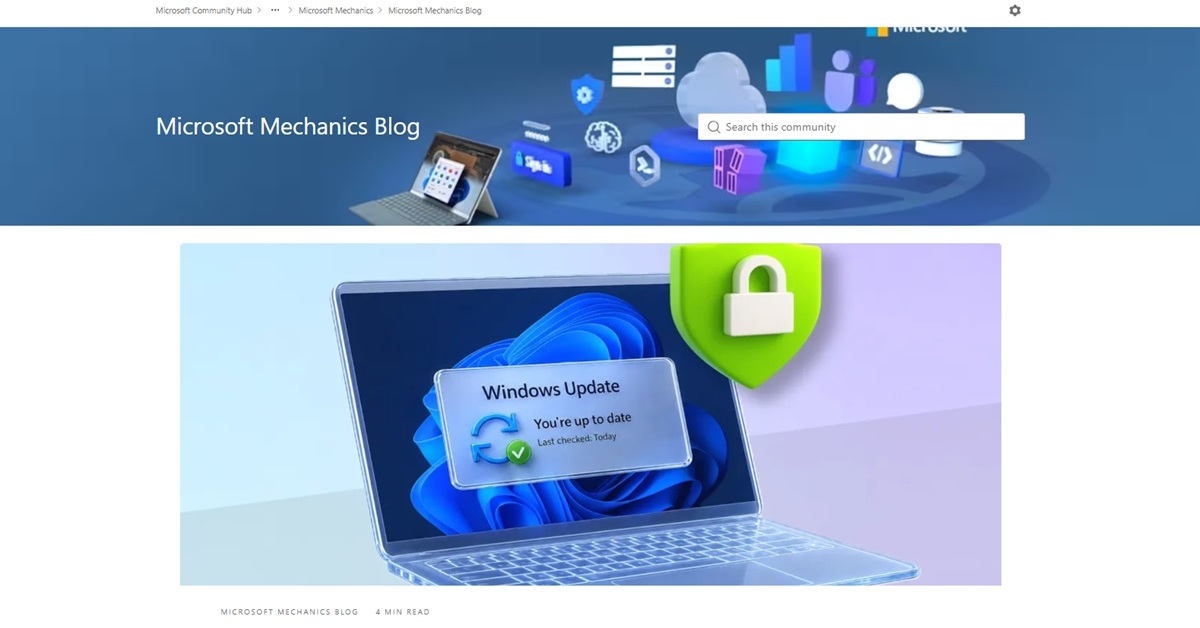
Microsoft has updated its guidance for deploying Windows updates, recommending that organizations implement updates within three days of release. This change is in response to the rapid exploitation of software vulnerabilities, which can now be targeted within hours due to advancements in AI technology. The new policy aims to enhance security and reduce the risk of attacks during the delay in applying patches. The increase in vulnerabilities, with 206 reported in June 2026 alone, highlights the urgency for IT departments to adapt their update processes. Microsoft encourages organizations to rethink their security strategies and implement new policies that facilitate quicker deployment of patches to all devices, thereby minimizing exposure to potential threats. To assist IT departments in managing this transition without increasing workload, Microsoft has proposed three key steps: automating update policies, utilizing cloud management tools, and implementing conditional access for non-compliant devices. These measures are designed to streamline the update process while maintaining operational efficiency and security integrity. No further timeline was disclosed at the time of publication.

New Quantum Hermite Transform Algorithm Enhances AI and Scientific Computing Potential
Researchers from the U.S. Department of Energy’s Brookhaven National Laboratory, Northeastern University, Google Quantum AI, and the University of Texas at Austin have introduced a new quantum computing algorithm called the quantum Hermite transform (QHT). This algorithm aims to broaden the scope of problems that future quantum computers can address, particularly in artificial intelligence and scientific simulations. The significance of the quantum Hermite transform lies in its potential to improve data processing and simulation capabilities of quantum computers. By introducing a new computational building block, the QHT could lead to more efficient quantum algorithms in various fields, including materials science and energy research. The findings were presented at the 58th Annual ACM Symposium on Theory of Computing in Salt Lake City. Looking ahead, the researchers emphasize that expanding the library of reusable quantum primitives like the QHT will facilitate the development of innovative quantum algorithms. This advancement could provide exponential speed advantages over classical methods, marking a pivotal step in the evolution of quantum computing applications. No further timeline was disclosed at the time of publication.
AI and Robotics
China Reports 68.7% Surge in Electric Vehicle Exports for H1 2026
In the first half of 2026, China's electric vehicle exports surged by 68.7% year-on-year, as reported by customs data on July 14. This remarkable growth reflects a broader increase in various sectors, including electric motorcycles and bicycles, which rose by 31.5%, and electric locomotives, which saw a 45.1% increase. Additionally, lithium batteries and wind turbines experienced growth rates of 37.6% and 35.6%, respectively. The significant rise in electric vehicle exports is crucial for China's position in the global electric vehicle market, showcasing its manufacturing capabilities and technological advancements. The data also highlighted that exports of AI-integrated intelligent bionic robots surpassed 10,000 units, reaching over 90 countries and regions, indicating a growing demand for advanced robotics in international markets. Looking ahead, it will be important to monitor how these export trends evolve and whether they will continue to bolster China's economy. No further timeline was disclosed at the time of publication.
News Feed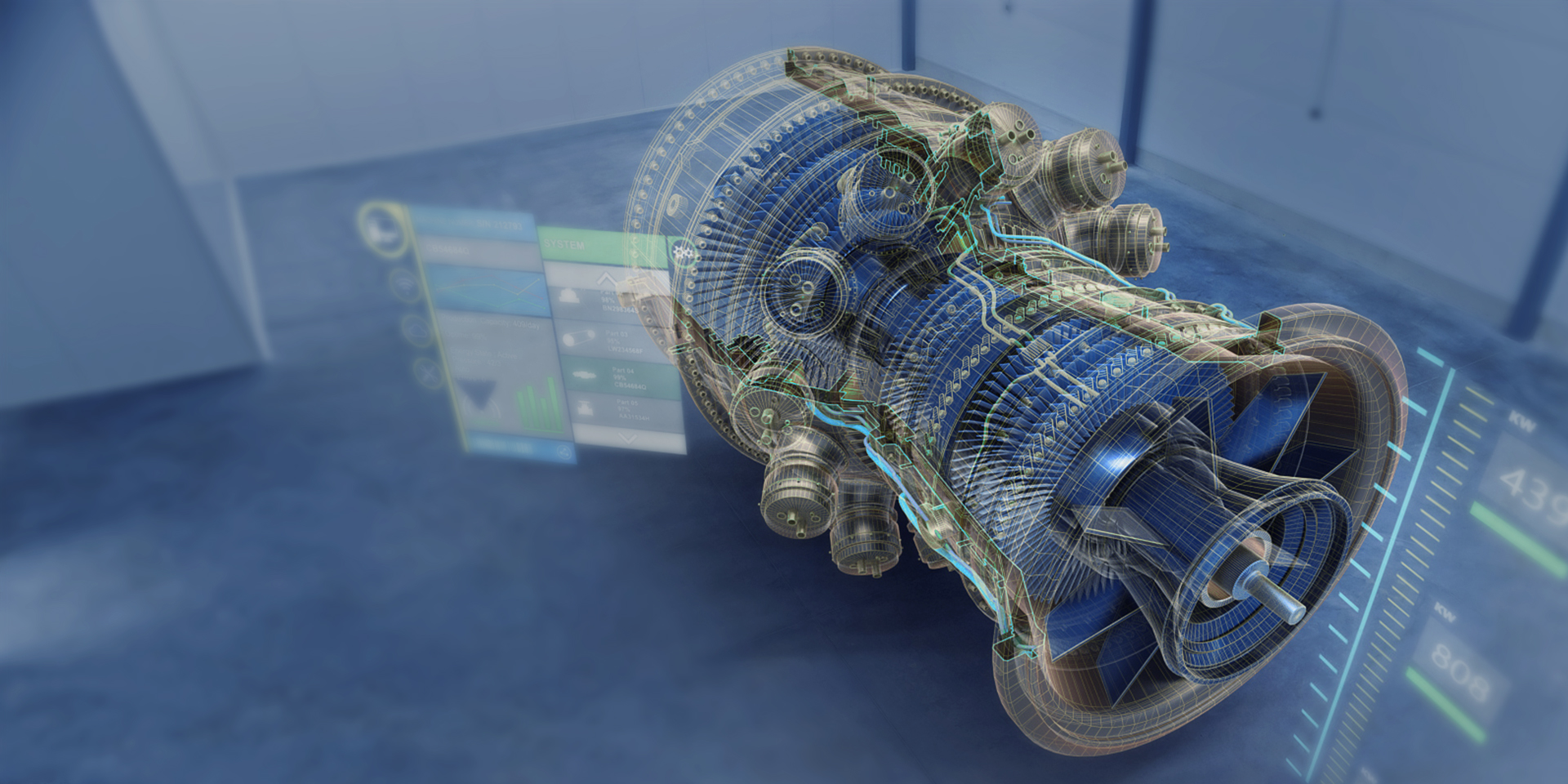
Marvel-Tech Secures Over RMB500 Million in Two Financing Rounds for Gas Turbine Development
Shanghai-based Marvel-Tech has successfully completed two financing rounds, raising over RMB500 million. The C round was led by HongShan, while the B round saw joint leadership from C&D Emerging Investment and Qiming Venture Partners. The funds raised will be utilized to establish a manufacturing and assembly center for Marvel-Tech's gas turbine product lines, as well as a high-power unit performance testing center. The company aims to achieve a manufacturing and delivery capacity of 1GW by 2026. Marvel-Tech's current offerings include 8MW and 30MW gas turbines tailored for green-fuel applications and AI data center power infrastructure. Notably, its technology allows for the combustion of hydrogen, ammonia, and natural gas without requiring hardware modifications. No further timeline was disclosed at the time of publication.
News Feed
The Advantages for OEMs Collaborating with Skilled Robotics Integrators
A proficient robotics integrator serves as a vital link between robot manufacturers and customers' operational needs. By leveraging their deep understanding of technology, integrators facilitate the effective application of robotic solutions in real-world scenarios. This collaboration is essential as it ensures that the unique requirements of customers are met while maximizing the potential of robotic technology. OEMs benefit from this partnership by gaining insights into customer operations, leading to tailored solutions that enhance productivity and efficiency. Looking ahead, the role of integrators will continue to evolve as they adapt to emerging technologies and customer demands. OEMs should monitor these developments to optimize their strategies and maintain a competitive edge in the robotics market.

São Paulo Becomes First City to Implement Citywide Drone Detection as a Service Network
R2 Wireless and Ôguen Tecnologias have partnered to launch a managed drone detection service in São Paulo, Brazil, making it the first city to implement a municipal-scale Drone Detection as a Service (DDaaS) network. This initiative aims to address rising concerns over the use of drones by criminal organizations, offering a cost-effective alternative to traditional counter-drone systems. The DDaaS network will provide continuous monitoring of urban airspace through a subscription model, allowing public agencies and private organizations to access drone detection, geolocation, and real-time airspace awareness without the need for hardware purchases. R2 Wireless's technology operates at the physical RF layer, enabling it to detect and geolocate various types of drones, including modified and spoofed systems. As commercial drones evolve, the demand for adaptable counter-drone solutions grows. The partnership aims to support a wide range of users, including critical infrastructure operators and government sites, and reflects a broader trend towards service-based approaches in airspace security. No further timeline was disclosed at the time of publication.
Anti-drone technology C-UAS Drones in the News News ADaaS airspace monitoring
Civil Liberties Groups Urge FAA to Amend Drone Rule to Protect Journalism
A coalition of civil liberties organizations, including the ACLU and EFF, is advocating for amendments to a proposed FAA rule that could limit drone flights over critical infrastructure. They argue that overly broad restrictions could hinder independent journalism and the use of drones for news-gathering. The FAA has extended the comment period for the proposed rule, which has garnered significant public feedback, highlighting the need for a balance between security and journalistic freedom. The proposed Section 2209 of the FAA Extension, Safety and Security Act of 2016 aims to allow facilities like prisons and nuclear plants to impose flight restrictions. However, the ACLU and other groups warn that such measures could create a confusing landscape of regulations that stifles First Amendment-protected activities. They emphasize the importance of considering journalistic uses of drones in the rule-making process. As the FAA continues to receive comments on the proposed rule, the implications for drone journalism remain a critical concern. Advocacy groups have pointed to past instances where drone footage has exposed wrongdoing, underscoring the need for protections that allow journalists to operate freely while addressing legitimate security concerns. No further timeline was disclosed at the time of publication.
Drone News Drone News Feeds FAA Feature 1 News Selected - FAA and Regulations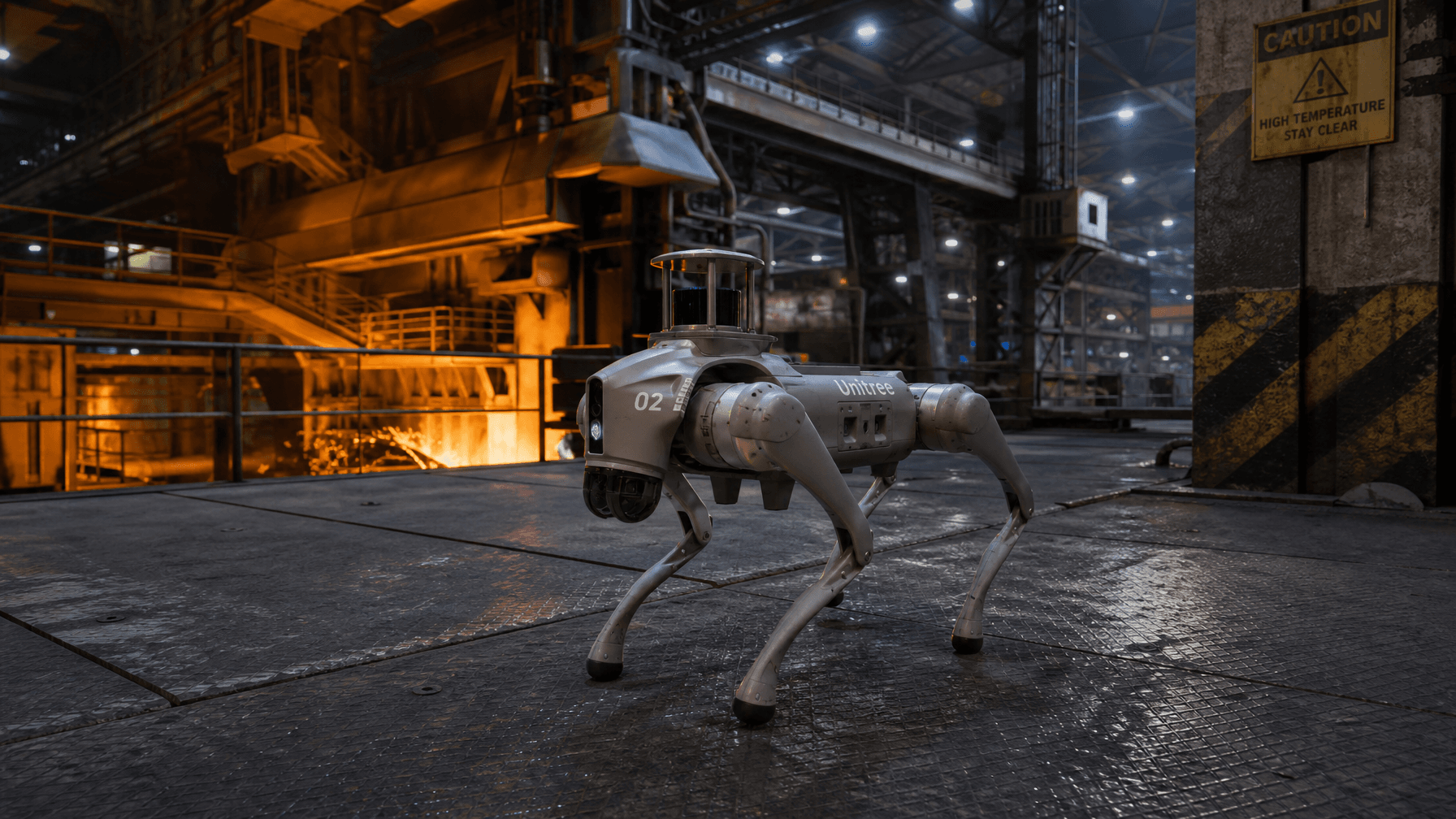
Unitree Robotics, Hunan Steel, and Looper Robotics Form Alliance for Steel Plant Inspections
Unitree Robotics has partnered with Hunan Steel and Looper Robotics to create a tripartite alliance aimed at deploying legged robots for inspections in steel plants. This collaboration signifies a notable entry of embodied AI technology into the heavy industry sector. The partnership is significant as it highlights the increasing integration of advanced robotics and AI in traditional industries such as steel manufacturing. By utilizing legged robots, the alliance aims to enhance inspection processes, improve safety, and increase operational efficiency within the steel plant environment. Looking ahead, the deployment of these legged robots could set a precedent for further advancements in industrial automation. No further timeline was disclosed at the time of publication.
Technology
StepFun Launches STEPX Neo: An AI Agent Phone with Cross-App Integration
StepFun, a Shanghai-based AI unicorn, has introduced the STEPX Neo, an innovative phone equipped with the agent-native Step AOS and Amoo agent. This device integrates over 10 major platforms, including Alipay, Meituan, Didi, and Baidu, enabling autonomous task execution across applications. The launch of STEPX Neo is significant as it represents a leap forward in mobile technology, allowing users to perform tasks seamlessly across multiple applications without manual intervention. By leveraging the capabilities of various platforms, the STEPX Neo aims to enhance user experience and efficiency in daily tasks. Looking ahead, the impact of STEPX Neo on the market will be worth monitoring, particularly in how it influences user adoption of AI-driven mobile solutions. No further timeline was disclosed at the time of publication.
Technology
Uber Expands Beyond Ride-Hailing with Hotels, Boat Rentals, and Financial Services
Uber has been diversifying its offerings beyond ride-hailing and delivery, introducing hotel bookings through a partnership with Expedia, concierge features, and boat rentals in Europe. This shift aims to enhance the travel experience for users, who often require rides and food during their trips. Uber's Chief Product Officer, Sachin Kansal, emphasized that travel is a crucial addition to their services, complementing rides and food delivery. The expansion into travel and financial services is significant as Uber seeks to strengthen its market position and relationships with autonomous vehicle partners. The company is developing a new business unit, AV Labs, focused on gathering driving data through sensor-equipped vehicles, which could provide leverage against competitors like Waymo. This strategy reflects Uber's ambition to evolve into a comprehensive platform while maintaining a selective approach to its offerings. Looking ahead, Uber's approach to integrating new services will be crucial. The company is exploring partnerships for financial services and may consider deeper integrations based on user traction. No further timeline was disclosed at the time of publication.
TC Transportation AI Uber Sachin KansalRobotics needs a service framework.
RSF defines a common language for robot service capability, lifecycle operations, certification pathways, and service-provider networks.