Education & Research Press Release Research Institute
Researcher Uncovers Systemic Vulnerabilities in LLMs, Urges Caution in Deployment
Original from IEEESpectrumAI: How I Turned AI to the Dark Side

Researcher Uncovers Systemic Vulnerabilities in LLMs, Urges Caution in Deployment

Researcher Dave Kuszmar has identified multiple systemic vulnerabilities in large language models (LLMs) that allow for the bypassing of safety protocols, enabling access to dangerous instructions. This discovery highlights a significant security issue across nearly all major LLMs, prompting Kuszmar to advocate for a slowdown in deployment and increased transparency in LLM safety research.

The implications of Kuszmar's findings are profound, as they reveal that the very restrictions intended to secure LLMs can be manipulated by attackers to access harmful information. Despite efforts by large AI companies to fortify their models, Kuszmar's experience indicates a troubling lack of responsiveness from these organizations when vulnerabilities are reported. This raises concerns about the safety of LLMs, which are becoming increasingly accessible to the general public.

Looking ahead, Kuszmar's call for large-scale research into LLM safety is critical as these technologies continue to integrate into society. The ease with which LLMs can be convinced to provide harmful instructions poses a significant risk, and without proper oversight and security measures, the potential for misuse remains high. No further timeline was disclosed at the time of publication.

Editor's Note

The findings presented by Kuszmar underscore the urgent need for enhanced security measures in the development and deployment of large language models. As these technologies become more prevalent in various sectors, the potential for misuse raises critical questions about regulatory frameworks and ethical considerations in AI. Stakeholders must prioritize safety to mitigate risks associated with LLM vulnerabilities.


RobotToday Initiative

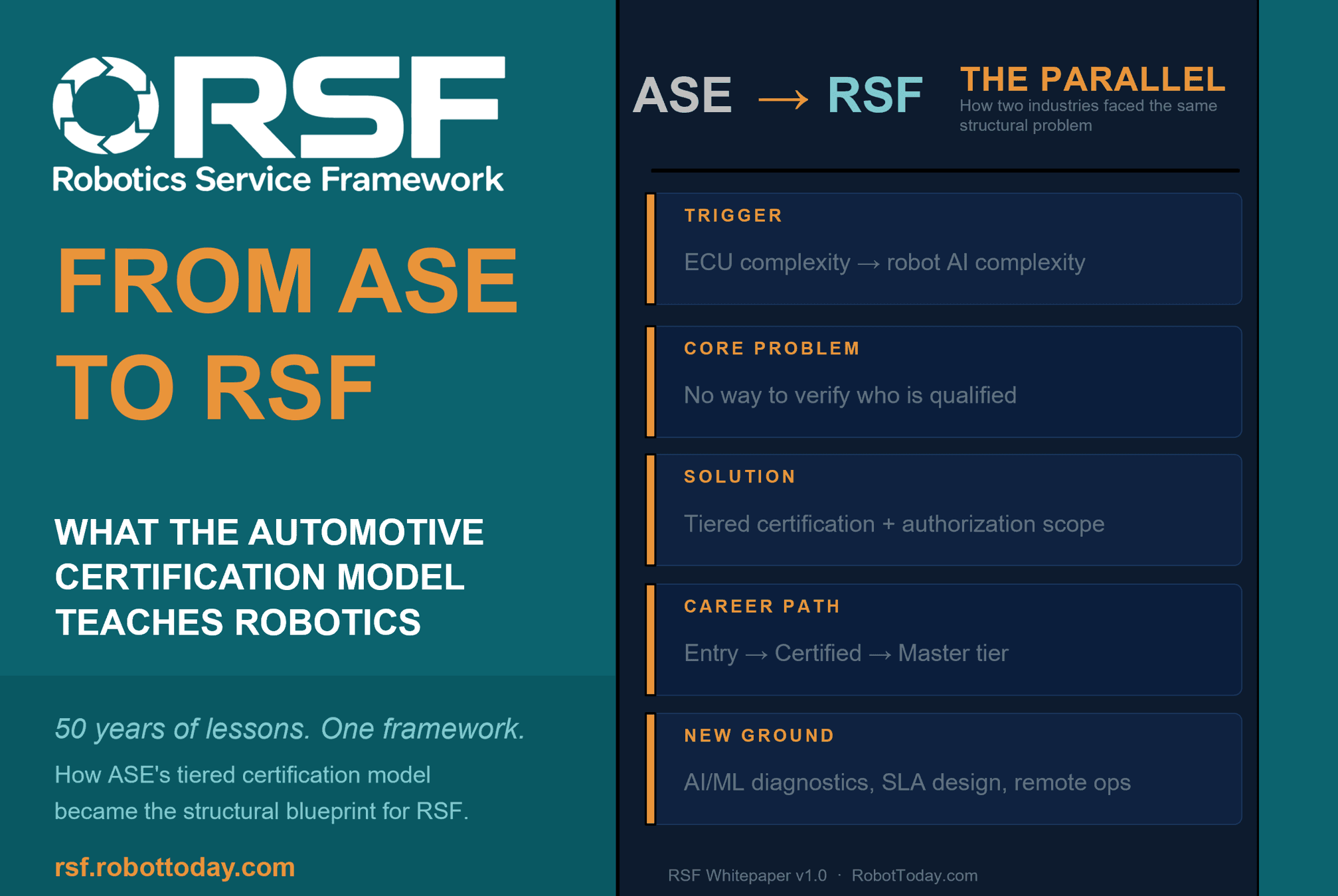
Robotics needs a service framework.

RSF defines a common language for robot service capability, lifecycle operations, certification pathways, and service-provider networks.

Share

Related Articles/News

MIT and Toyota Research Institute Unveil SceneSmith for Robot Household Training

MIT and Toyota Research Institute Unveil SceneSmith for Robot Household Training

MIT's Computer Science and Artificial Intelligence Laboratory (CSAIL) and the Toyota Research Institute have developed SceneSmith, an AI-powered system that allows robots to practice household tasks in a virtual environment. This system utilizes three visual language models to collaboratively create realistic 3D scenes, enabling robots to learn complex sk...

AI Robotics Virtual Reality
University of Illinois Researchers Challenge Traditional Views on Brain Decision Making

University of Illinois Researchers Challenge Traditional Views on Brain Decision Making

Researchers at the University of Illinois Urbana Champaign have revealed new insights into brain decision-making processes, suggesting that these processes begin earlier than previously thought. This research, led by Professor Yurii Vlasov, indicates that early sensory brain regions play a crucial role in decision-making, contradicting the long-held belie...

Microsoft Edge 150 Launches with Google Account Sign-In and OpenAI Unveils GPT-5.6

Microsoft Edge 150 Launches with Google Account Sign-In and OpenAI Unveils GPT-5.6

On July 2, Microsoft released version 150.0.4078.48 of Microsoft Edge for desktop, introducing support for Google account sign-ins on both Windows and macOS. This update allows users to log in using either a Microsoft or Google account, enhancing accessibility for users. IT administrators can manage this feature through a new policy called 'NonMicrosoftAc...

ROBOTTODAY Weekly July 6 – 10, 2026

ROBOTTODAY Weekly July 6 – 10, 2026

This week in robotics: AI² Robotics raises $735M for wheeled humanoids, Unitree G1 performs first live surgery, Dexmal launches DexOS platform, Agility Robotics announces SPAC, and Ondas acquires DZYNE for $875.8M. July 6–10, 2026.

RobotToday Weekly
OpenAI's Greg Brockman Takes Charge of Product Strategy Amid Leadership Changes

OpenAI's Greg Brockman Takes Charge of Product Strategy Amid Leadership Changes

OpenAI has announced that Greg Brockman, co-founder and president, will take over product responsibilities following the resignation of Fidji Simo due to chronic illness. Simo, who had been with the company for about a year, will transition to a part-time advisory role. Brockman will now oversee key initiatives including ChatGPT and enterprise teams, repo...

FORT Robotics Enhances AI Safety with Nvidia Halos at Automate Conference

FORT Robotics Enhances AI Safety with Nvidia Halos at Automate Conference

FORT Robotics has joined the Nvidia Halos for Robotics ecosystem to enhance safety for autonomous robots. The company will showcase its agentic safety application, developed using the Nvidia Halos Outside-In Safety Blueprint, at the Automate conference in Chicago. This innovative solution utilizes external infrastructure sensors and visual AI agents to pr...

Artificial Intelligence Industry ai
OpenAI Launches GPT 5.6 as Preferred Model for Microsoft 365 Copilot Integration

OpenAI Launches GPT 5.6 as Preferred Model for Microsoft 365 Copilot Integration

OpenAI has announced that its latest model, GPT 5.6, will serve as the preferred AI model for Microsoft 365 Copilot, enhancing productivity applications like Word, Excel, and PowerPoint. This announcement came amid reports of Microsoft increasingly utilizing its in-house models, known as MAI, to reduce costs. The launch event took place on Thursday, reinf...

AI Copilot gpt-5.6
Physical AI Landscape: From Digital Intelligence to the Embodied Physical World

Physical AI Landscape: From Digital Intelligence to the Embodied Physical World

A comprehensive industry analysis of Physical AI — covering Embodied AI, Field AI, Factory AI, VLM, World Model, VLA, and the VLA vs WAM architecture debate. Includes 20+ companies, 28 references, and the RobotToday Physical AI Landscape diagram. July 2026.

Artificial Intelligence
OpenAI introduces GPT-5.6 models with enhanced efficiency and cybersecurity features

OpenAI introduces GPT-5.6 models with enhanced efficiency and cybersecurity features

OpenAI has launched its latest family of models, GPT-5.6, featuring three variants: Sol, Terra, and Luna. Announced on Thursday, these models promise significant advancements in enterprise applications, coding, and scientific research. Notably, Sol is reported to be 54% more token efficient for coding tasks, positioning it as a leading option in the AI la...

AI ChatGPT gpt-5.6
InDro Robotics Introduces Axiom Humanoid Platform to Enhance Physical AI Research Accessibility

InDro Robotics Introduces Axiom Humanoid Platform to Enhance Physical AI Research Accessibility

InDro Robotics has launched the Axiom, a modular humanoid-style robotic platform aimed at facilitating Physical AI research. Announced on July 10, 2026, this budget-friendly solution is designed to lower the barriers for researchers and academic institutions in developing advanced robotics applications. Initial customer units are already being shipped, in...

Commercial UAV Expo Launches DRONERESPONDERS Training for Public Safety Applications

Commercial UAV Expo Launches DRONERESPONDERS Training for Public Safety Applications

The Commercial UAV Expo has introduced a new two-day program management training course as part of its Public Safety Summit. This initiative focuses on various applications of drones in public safety, including their use as first responders, in fire services, crash-scene management, and shared-airspace operations. The course will also feature a two-part s...

2026H2 Robotics Events Briefing: Tailored Recommendations for Robotics Readers

2026H2 Robotics Events Briefing: Tailored Recommendations for Robotics Readers

Discover the ultimate directory of global robotics events in 2026. Tailored briefings for engineers, investors, and founders on humanoid robots, AI, and industrial automation by RobotToday.

Events Market and Business News

Related Suppliers

OpenAI

OpenAI is developing a humanoid platform that integrates advanced machine learning algorithms and robotics. This platform utilizes deep reinforcement learning for adaptive behavior and natural language processing for human interaction. The architecture includes sensor fusion for environmental awareness and actuators for precise movement. The system aims to enhance human-robot collaboration in various applications, including industrial automation and service robotics.

Google Ventures

Venture capital arm of Alphabet investing in AI-native applications, autonomous systems, photonic computing, data infrastructure, and hardware-software platforms. Portfolio includes AI coding agents, multimodal systems, and inference infrastructure companies.

Titan Aerospace (Acq by Google)

Titan Aerospace developed high-altitude solar-powered unmanned aerial vehicles designed for stratospheric, near-continuous operation. Acquired by Google in 2014, the technology contributed to Project Loon and efforts to provide internet connectivity from near-space platforms.

Abaka AI

Abaka AI offers a robust data platform that supports the entire AI data lifecycle, including data collection, annotation, and processing. It provides pre-curated multimodal datasets for various applications such as LLM training, speech recognition, and image generation. The platform ensures compliance with GDPR/CCPA and features automated annotation capabilities, enhancing efficiency and accuracy in data handling for AI development.

Nano Dimension (IL)

Nano Dimension is an Israeli industrial 3D printing company specialising in additively manufactured electronics (AME). Its digital manufacturing platform integrates ECAD/MCAD design, pick-and-place assembly, and LLM-based manufacturing intelligence. The company holds patents on large language model applications for electronics production optimisation.

3D Printing Industrial Manufacturing Software & Algorithm Provider

Kornia AI

Kornia is an open-source library for computer vision built on PyTorch, providing differentiable geometric operations for spatial AI applications. It supports research and production deployment with over 2 million monthly downloads. Kornia-rs is a Rust-based high-performance library designed for low-level 3D computer vision tasks, emphasizing memory safety and efficiency. Bubbaloop facilitates MLOps for multimodal AI model deployment.

Toyota Research Institute (TRI)

The Toyota Research Institute (TRI) focuses on advancing automated driving technologies, human-centered AI, and robotics to enhance user experience and societal benefits. Key research areas include predictive modeling for human behavior, energy-efficient materials for zero-emissions vehicles, and scalable automation solutions. TRI aims to integrate these innovations into Toyota products to improve quality of life and promote sustainable mobility.

Shinkei Systems

Shinkei Systems leverages robotics and computer vision to enhance the efficiency of the commercial fishing industry. By integrating automation with artisanal harvesting techniques, the company aims to minimize post-harvest losses and optimize supply chain transparency. This approach addresses systemic inefficiencies, ensuring that the nutritional quality and freshness of fish are preserved from catch to consumer.

Miru

Miru is a deployment and monitoring stack designed for robotics applications, facilitating the orchestration of robotic systems. It integrates containerization technologies, such as Docker, for efficient resource management and scalability. Miru employs real-time telemetry and logging frameworks to monitor system performance and health, enabling proactive fault detection and resolution in robotic operations. Its architecture supports modularity and interoperability across diverse robotic platforms.

Xcelpros Technologies Pvt Ltd

We specialize in the deployment of on-premise, cloud and mobility solutions in industry leading technologies such as Microsoft Dynamics 365, AX, NAV, Microsoft Dynamics CRM, Business Intelligence, intelligent Business Process Management (iBPM), SharePoint and Azure. Our team is comprised of forward-thinking, experienced Subject Matter Experts (SMEs) and Technology Consultants with decades of business, industry, and regulatory experience.

Soul Machines

New Zealand AI company (now in receivership as of February 2026) that developed lifelike digital human avatars powered by large language models for customer service and enterprise deployment. Created Digital Workers and Workforce Connect platforms.

Mosaic ATM

Mosaic ATM is a US aviation technology company applying AI, computer vision, and large language models to air traffic management challenges. The company supports FAA procurement, provides systems engineering and R&D services, and develops next-generation solutions for airspace intelligence and operational automation.

Education & Research Software & Algorithm Provider Control & Software Systems