Industry Briefing
A single destination for timely, editor-curated robotics news from around the world.
Humanoid Robots Reach an Inflection Point from Acrobatics to Generality
Humanoid robots are experiencing a significant transition from specialized acrobatic capabilities to more generalized functionalities. This evolution is crucial as it enhances their applicability across various sectors, including healthcare, manufacturing, and service industries. The shift towards generality in humanoid robots indicates a growing trend in robotics, where versatility and adaptability are becoming essential traits. This development matters because it opens new avenues for humanoid robots to perform tasks that were previously thought to be exclusive to humans. By moving beyond acrobatic feats, these robots can now engage in more complex interactions and assist in diverse environments. This shift is expected to drive further investment and research in the field, fostering innovation and collaboration among industry players. Looking ahead, it will be important to monitor advancements in humanoid robotics, particularly in their ability to integrate into everyday life and work alongside humans. The ongoing research and development efforts will likely lead to breakthroughs that enhance their functionality and usability. No further timeline was disclosed at the time of publication.
Editorial
Global First 6S Store Expands Rapidly Across China, Showcasing Robots in Various Applications
On July 28, the world's first robot 6S store celebrated its first anniversary in Longgang, Shenzhen. Initially a novelty shop with a few robots, it has transformed into a scalable business model with over 20 locations opened nationwide within a year. This rapid expansion highlights the growing acceptance of the 6S store model in the market, offering various robotic applications such as intelligent banking services, competitive robotics, and smart home assistance. The CEO, Lin Feng, noted that the operational capabilities of the robots have evolved significantly, showcasing advancements in both algorithms and hardware. As robots transition from mere exhibits to commercial products, the 6S store is not just a retail outlet but a comprehensive hub for interaction, solutions, and community engagement. The simultaneous deployment of nine distinct scenarios indicates the model's potential to reshape the landscape of intelligent services across multiple sectors.
Robotics Retail Automation Smart Home Technology AI Service Robots
TRIC Robotics Expands Operations to 1,500 Acres of Strawberries with 15 Autonomous Robots
TRIC Robotics, an agricultural robotics startup, has scaled its operations from half-acre trials in 2021 to managing over 1,500 acres of commercial strawberries in California this year. The company utilizes a fleet of 15 autonomous robots equipped with UV-C light and bug vacuums, operating nightly to combat pests and diseases without the use of chemical pesticides. This significant expansion is crucial as it demonstrates the potential of robotics in agriculture, particularly in addressing the challenges of pest control and disease management. TRIC Robotics employs a robots-as-a-service model, which eliminates upfront costs for farmers, thereby lowering barriers to adoption and providing a consistent revenue stream for the company. Looking ahead, TRIC Robotics aims to further develop its robotics platform beyond strawberries, leveraging its current success to attract more farmers. The company’s innovative approach, which includes operating at night to minimize disruption, is expected to enhance the acceptance of autonomous technologies in agriculture. No further timeline was disclosed at the time of publication.
Agtech Deeptech Precision agriculture Startups & funding US & Canada Video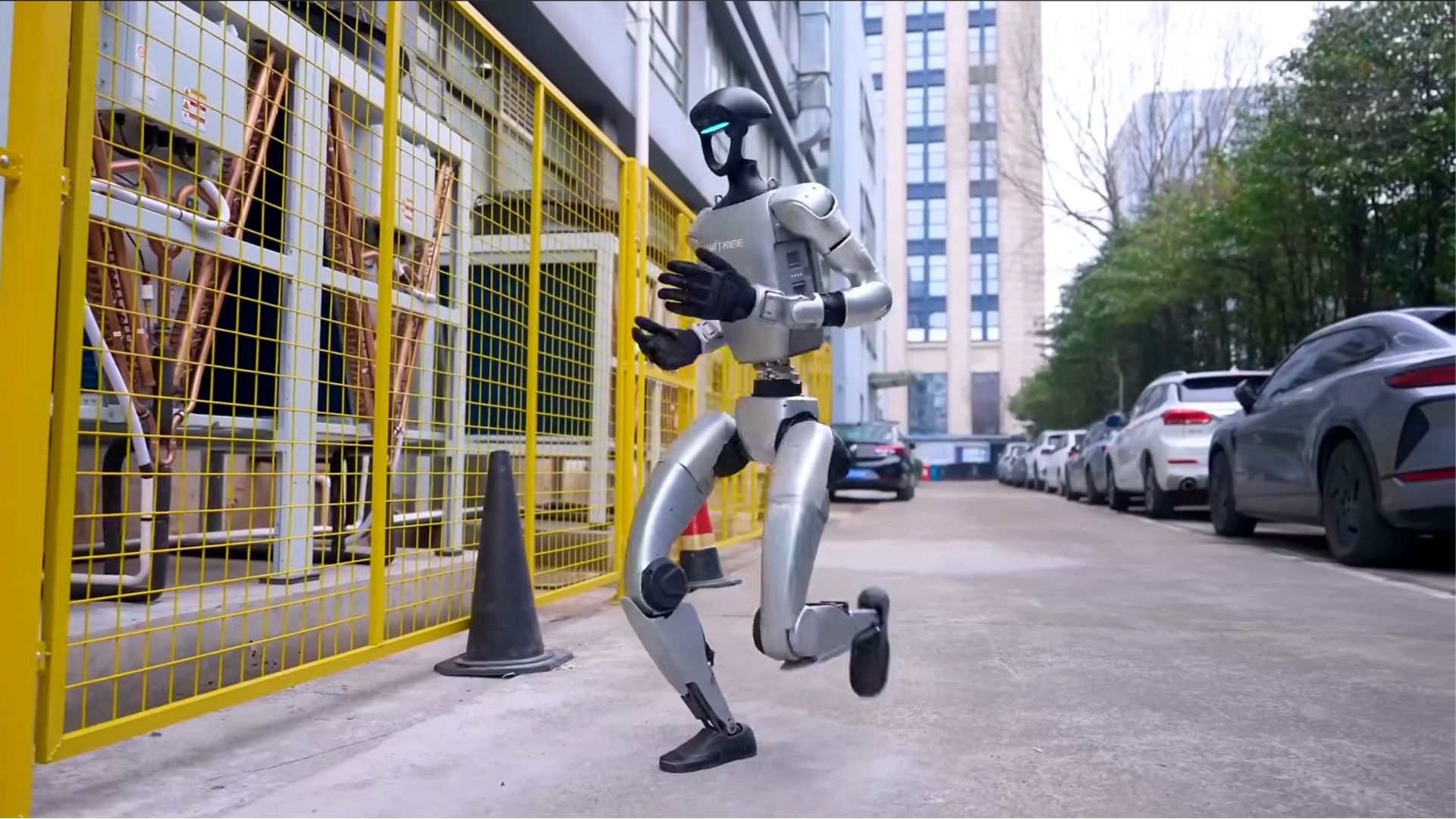
Researchers Develop BeyondMimic Framework for Humanoid Robots to Perform Agile Acrobatics
Researchers have introduced a new framework named BeyondMimic, enabling humanoid robots to execute agile, humanlike movements without the need for separate training for each skill. This system allows robots to perform complex maneuvers such as cartwheels and spin kicks by learning from human motion data, addressing the limitations of current humanoid control systems that often require extensive fine-tuning. The significance of BeyondMimic lies in its ability to teach robots a wide range of skills through a two-stage learning framework. The first stage employs reinforcement learning to track human motions, utilizing a shared reward structure to avoid the need for motion-specific tuning. The second stage introduces a latent diffusion model, allowing the robot to generate and adapt movements based on existing skills, thus overcoming challenges in natural skill transitions. Looking ahead, the BeyondMimic framework demonstrates promising capabilities, such as smoothly transitioning between walking and acrobatics. The potential for integrating waypoint tracking with obstacle avoidance suggests further applications in dynamic environments. No further timeline was disclosed at the time of publication.
AI and Robotics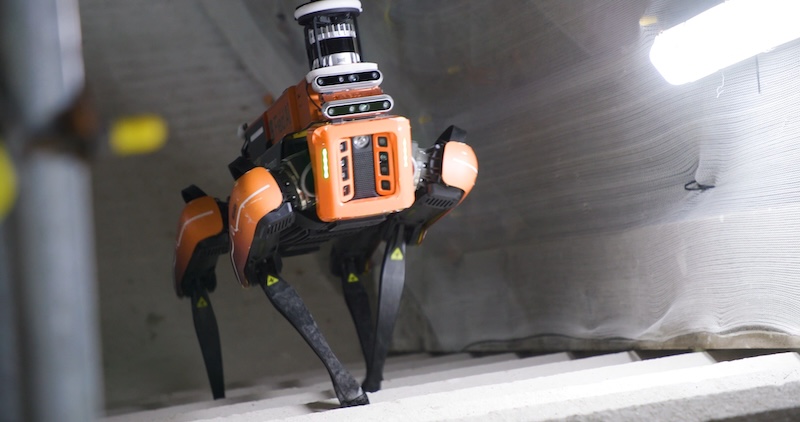
McLaren Construction Partners with FieldAI to Deploy Autonomous Robots Across UK Sites
McLaren Construction has formed a partnership with FieldAI to implement autonomous quadruped robots at its construction sites in the UK. These robots will initially be used for capturing 360° site imagery, generating point cloud data, and assisting with progress verification, safety compliance, and quality assurance. The capabilities of these robots will expand over time, enhancing their utility on-site. This partnership is significant as it marks FieldAI's entry into the UK market and builds upon its existing deployments across Europe, Asia, and North America. The use of AI-enabled deviation analysis will facilitate quicker identification of quality issues, ensuring better installation practices and reducing rework. McLaren aims to enhance project monitoring and compliance through this innovative technology. Looking ahead, McLaren Construction anticipates that the collaboration will yield valuable insights for broader robotic applications within the company. The deployment of FieldAI's Field Foundation Models will enable robots to adapt to complex environments without relying on pre-existing maps, thus enhancing operational efficiency. No further timeline was disclosed at the time of publication.
Construction News artificial intelligence Autonomous robots autonomous systems construction automation
Hai Robotics Achieves 10,000 HaiClimber Robots Deployed Globally
Hai Robotics has announced that over 10,000 HaiClimber robots have been contracted for customer projects worldwide, marking a significant milestone in the solution's commercial growth. Since its global launch in 2025, HaiPick Climb has been implemented in 12 countries across various continents, including Asia, Europe, North America, South America, and Australia. This achievement highlights the growing adoption of HaiPick Climb among notable customers such as ANTA, Panasonic, and METTLER TOLEDO, spanning diverse industries like apparel, e-commerce, and healthcare. The company's commitment to reliability in warehouse automation has been evident since its inception, and the development of HaiPick Climb reflects years of engineering validation and refinement, ensuring long-term stability and performance. Looking ahead, Hai Robotics aims to leverage real-world project experiences to enhance the reliability and delivery standards of HaiPick Climb. As the solution continues to adapt to evolving workflows and operational requirements, it is expected to support stable fulfillment performance and facilitate future system expansions for customers worldwide. No further timeline was disclosed at the time of publication.
Warehouse Automation Robotics Logistics E-commerce Supply Chain Management
Feagine Robotics Unveils Fi0: A Learning Model for Diverse Robot Bodies
Feagine Robotics has launched Fi0, a cross-embodiment foundation model that retains task knowledge across various robot structures. This innovation addresses the challenge of adapting AI systems to different physical forms, enhancing their ability to generalize across unfamiliar machines. The introduction of three tendon-driven soft manipulators—A01, A02, and A03—supports this concept by providing varying lengths and degrees of freedom. This approach is crucial as robotics evolves beyond standardized industrial arms, allowing for improved adaptability and efficiency in diverse operational environments. Looking ahead, Feagine aims for Fi0 to minimize retraining when robots face new tasks, enabling them to learn from single human demonstrations. This could revolutionize how robots interact with their environments, suggesting a future where multiple robot embodiments can share intelligence seamlessly, catering to specific applications without being limited by their physical designs. No further timeline was disclosed at the time of publication.
AI and Robotics
Renault Group Enhances Warehouse Automation with Exotec's Skypod Robots in France and Germany
Renault Group has partnered with Exotec to automate its spare parts operations across warehouses in France and Germany. The deployment of Exotec's Skypod robots has reduced order processing time from two hours to just 15 minutes, significantly improving efficiency and customer satisfaction. This transformation comes as Renault addresses challenges in managing the delivery and distribution of vehicle parts, particularly in France, which represents 37 percent of its parts and accessories business. The collaboration with Exotec has led to a complete reorganization of Renault's spare parts warehouses, including the closure of the older Cergy site and the establishment of a new facility in Puiseux. The Villeroy warehouse now features 167 Skypod robots and is capable of processing 4,130 bins per hour, allowing for the storage and picking of over 1.6 million items. This modernization aims to handle 20,000 order lines daily while stabilizing the workforce and reducing reliance on temporary staff. Looking ahead, Renault Group's partnership with Exotec is expected to further enhance operational efficiency and inventory management. The integration of specialized machines alongside the Skypod system is set to improve traceability and stock management. No further timeline was disclosed at the time of publication.
News Warehouse robots automated warehouse automotive logistics exotec exotec skypod
UBTech’s lifelike humanoid robots built for companionship arriving in homes across China
UBTech Robotics, recognized as the world's first publicly traded humanoid robot manufacturer, has introduced a new consumer humanoid robot aimed at personal companionship. The U1 model, unveiled on Tuesday in Shenzhen, features lifelike silicone skin and advanced emotional artificial intelligence, reflecting a growing trend among Chinese tech companies to shift robotic applications from industrial settings to domestic environments. Available in both male and female versions, the U1 stands at 183 cm and 168 cm tall, respectively, and comes in three variants: Lite, Pro, and Ultra. This launch signifies a notable advancement in the integration of robotics into everyday life, as UBTech seeks to enhance human-robot interaction in personal spaces.

China's Robotics Industry Sees Multiple Breakthroughs Across Humanoid Robots and Physical AI
China's robotics industry has achieved significant advancements in humanoid robots and physical artificial intelligence, marking a pivotal moment in the sector's development. These breakthroughs were reported in October 2023, showcasing the country's commitment to enhancing its technological capabilities. The innovations include improved mobility and functionality in humanoid robots, which are now capable of performing complex tasks that were previously thought to be the domain of human workers. This progress is driven by a combination of increased investment in research and development, collaboration between universities and tech companies, and a growing demand for automation across various industries. As China aims to position itself as a global leader in robotics, these developments not only highlight the nation's technological prowess but also its strategic focus on integrating AI into everyday applications. The advancements are expected to have far-reaching implications, potentially transforming sectors such as manufacturing, healthcare, and service industries. By leveraging cutting-edge technology, China is setting the stage for a future where robots play an integral role in both the economy and society.
Robotics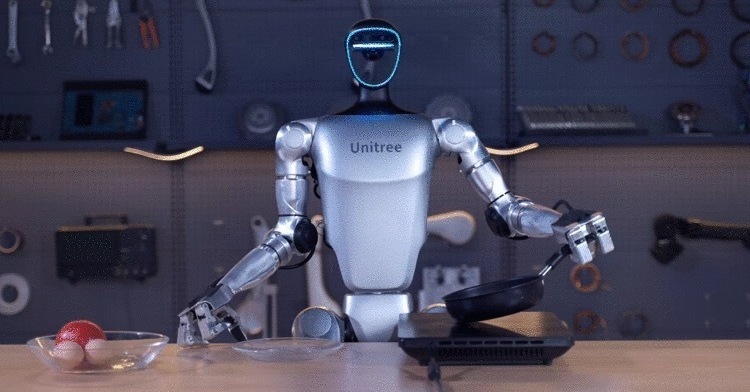
GMO subsidiary to sell acrobatic humanoid robots "H1" and "G1" in Japan under Unitree partnership.
On June 19, GMO AI & Robotics Trading announced a partnership with Chinese humanoid robot manufacturer Unitree Robotics, establishing a domestic agency agreement. This collaboration marks the beginning of sales for several robotic models, including the humanoid robots "G1" and "H1," as well as the quadrupedal robots "Go2" and "B2." The move aims to enhance the availability of advanced robotics technology in the domestic market, reflecting a growing interest in automation and robotics solutions.
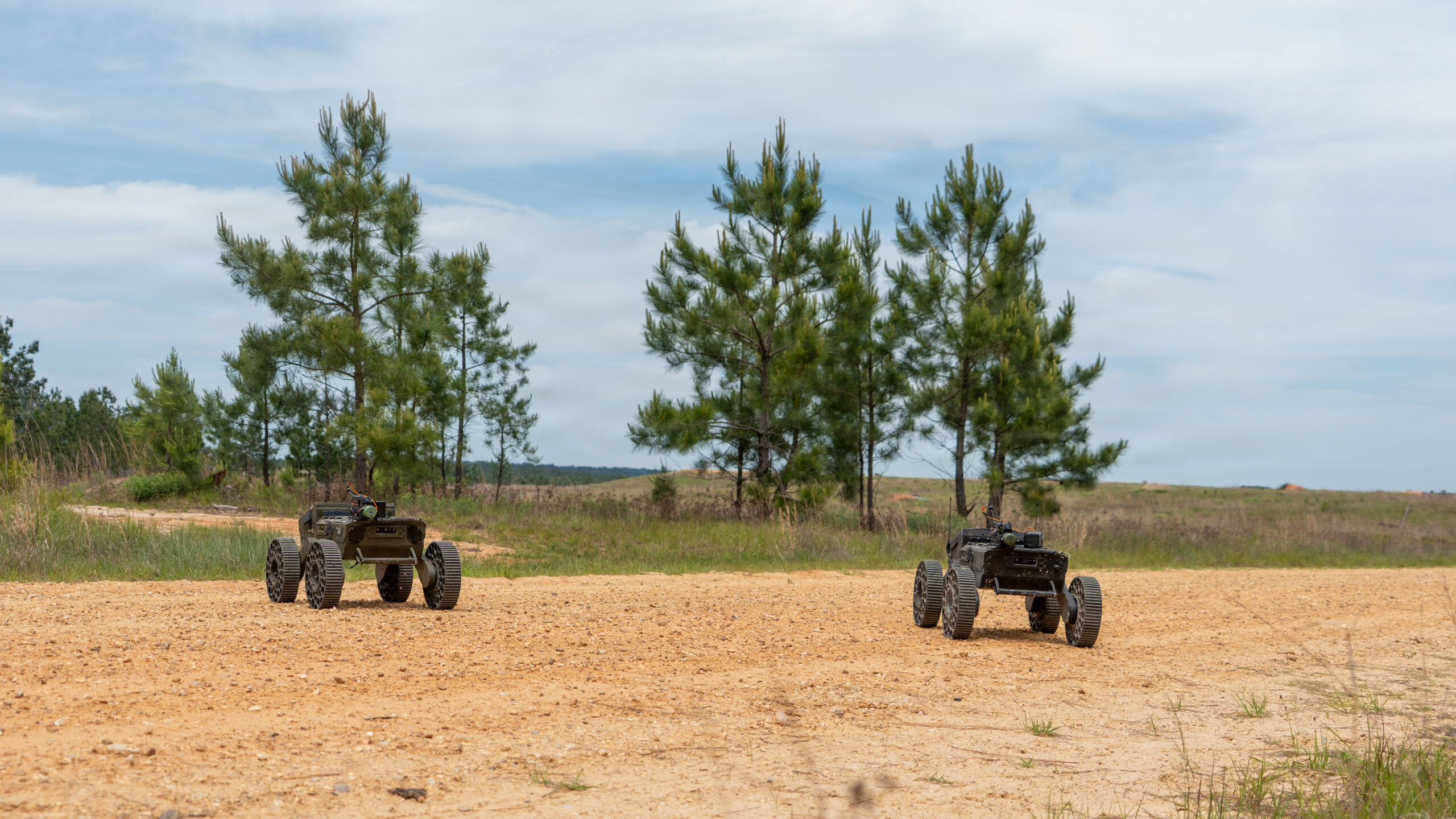
Preparing for the future fight: How one brigade is sacrificing robots in lieu of humans
The 3rd Mobile Brigade Combat Team of the 101st Airborne Division recently executed a successful robotic combined arms breach during a rotation at the Joint Readiness Training Center (JRTC). This operation, highlighted by the brigade's commander in an interview with Breaking Defense, showcases the unit's advancements in integrating robotic technology into combat scenarios. The exercise aimed to enhance operational effectiveness and readiness in modern warfare, reflecting the military's ongoing commitment to innovation and adaptation in response to evolving threats. The successful breach demonstrates the brigade's capability to leverage advanced technologies to improve tactical operations on the battlefield.
Land Warfare 101st Airborne Division Army autonomy Drones UGV
Pudu Deploys 200 Cleaning Robots Across Swiss Supermarket Network
Swiss supermarket chain Denner has announced the deployment of 200 autonomous floor-cleaning robots throughout its store network, marking a significant expansion of its cleaning operations. This initiative follows a successful pilot program conducted in four stores in 2025, which demonstrated the effectiveness of the technology. The partnership with Chinese robot manufacturer Pudu Robotics and regional distributor Robobee has facilitated this rollout, aimed at enhancing operational efficiency and maintaining cleanliness in stores. The move reflects Denner's commitment to innovation and improving customer experience through advanced automation solutions.
AI AI Funding & Investment AI Use Cases Robotics Denner Pudu Robotics
New 10-watt antenna helps underwater robots communicate across 2,296 feet
Researchers have developed an innovative antenna system aimed at enhancing communication between underwater robots, particularly in challenging environments such as murky waters. This advancement comes as part of ongoing efforts to improve the efficiency and effectiveness of robotic operations in marine settings. The new system was unveiled during a technology conference held in San Diego on October 15, 2023. The motivation behind this development stems from the increasing reliance on underwater robots for various applications, including environmental monitoring, search and rescue missions, and marine research. Traditional communication methods often struggle in low-visibility conditions, which can hinder the performance of these robots. The newly designed antenna system utilizes advanced signal processing techniques to facilitate clearer and more reliable communication between multiple robots operating simultaneously. By overcoming the limitations posed by murky water, this technology promises to enhance collaborative efforts among underwater robots, leading to improved outcomes in their respective missions. As the demand for autonomous underwater vehicles continues to grow, this breakthrough could play a crucial role in advancing the capabilities of marine robotics, ultimately contributing to better data collection and exploration of underwater environments.
Hyundai Motor Group to deploy 25,000 Atlas robots across factories
Hyundai Motor Group announced plans to integrate over 25,000 Atlas humanoid robots, developed by its US subsidiary Boston Dynamics, into its vehicle manufacturing processes. This initiative was revealed during an investor relations session hosted by JPMorgan Chase on Monday in Boston. The company aims to enhance its production capabilities by manufacturing key components for these robots in the United States. Officials from six affiliates, including Hyundai Motor, Kia, and Hyundai Mobis, participated in the event, highlighting the group's commitment to innovation and efficiency in its operations.
All News
In Latvia, military robots roll across a new communication challenge: woodlands
Users in a Baltic nation have encountered serious issues with the communication systems of unmanned ground vehicles (UGVs), particularly those utilizing Starlink technology. These challenges have been most pronounced in densely forested regions, where the terrain appears to interfere with the effectiveness of the satellite-based communication. The reports highlight the difficulties faced by operators in maintaining reliable connectivity, which is crucial for the successful deployment and operation of UGVs in these environments. As reliance on advanced communication systems grows, addressing these connectivity problems becomes increasingly important for ensuring operational efficiency and safety in challenging landscapes.
Global Land Warfare Army canada Drones Europe
Robot Talk Episode 151 – Robots to study the ocean, with Simona Aracri
Claire recently engaged in a conversation with Simona Aracri, a researcher at the National Research Council of Italy, to discuss groundbreaking robot designs aimed at enhancing oceanography and environmental monitoring. Aracri, who is affiliated with the Institute of Marine Engineering, shared insights from her extensive background, including her previous role as a Post Doctoral Research Associate at the University of Edinburgh. The dialogue highlighted the importance of innovative technology in addressing environmental challenges and improving data collection methods in marine research. This exchange underscores the growing collaboration between researchers and institutions in the pursuit of sustainable solutions for oceanic studies.
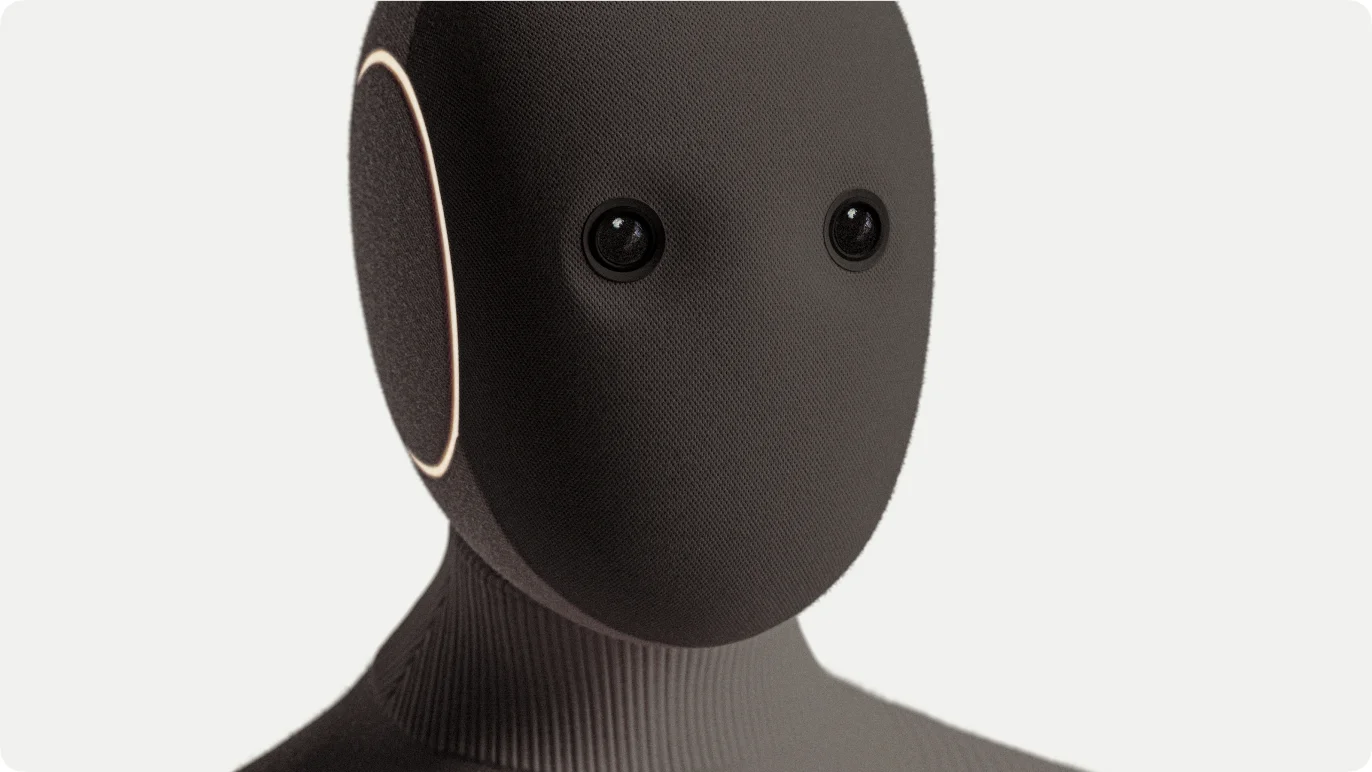
1X Partners with EQT to Deploy Up to 10,000 Humanoid Robots Across Global Industry
A robotics firm has entered into a strategic partnership with its investor, EQT, aimed at providing NEO androids to a network of more than 300 companies. This agreement signifies a significant opportunity for the firm to expand its presence in the enterprise sector. The collaboration is expected to leverage EQT's extensive portfolio, facilitating the integration of advanced robotics solutions into various industries. This move comes as businesses increasingly seek innovative technologies to enhance efficiency and productivity. The rollout of NEO androids is anticipated to begin shortly, positioning the robotics firm at the forefront of a rapidly evolving market.
1X-technologies US Business NEO
Xiaomi says humanoid robots to be deployed across its factories within five years
Xiaomi's CEO, Lei Jun, announced the company's plans to implement humanoid robots across its factories within the next five years, aiming to enhance manufacturing processes through artificial intelligence. In a recent interview, Lei highlighted the advancements at Xiaomi's automobile plant, where the inspection of large die-cast components is set to be streamlined by these robotic innovations. This initiative reflects Xiaomi's commitment to modernizing its production capabilities and increasing efficiency in response to the evolving demands of the electronics industry.
News Feed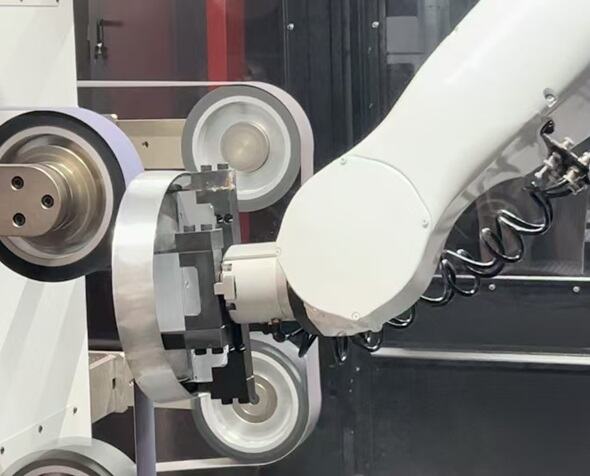
ROKAE Robotics Powers Automation Across 100+ Polishing Scenarios, Driving Innovation in Grinding Robots
ROKAE Robotics has unveiled a new range of high-performance grinding robots and innovative automation solutions, showcasing its expertise in core technologies. The launch, which occurred recently, highlights the company's significant market success across various sectors, including automotive, 3C electronics, metalworking, and general manufacturing. This strategic move aims to reinforce ROKAE's competitive advantage in the field of polishing automation, responding to the growing demand for efficient and advanced manufacturing processes. By integrating cutting-edge technology into their offerings, ROKAE Robotics is positioning itself as a leader in the automation industry, catering to the evolving needs of its diverse clientele.
Doosan Robotics to Supply 300 Collaborative Robots Across Southeast Asia
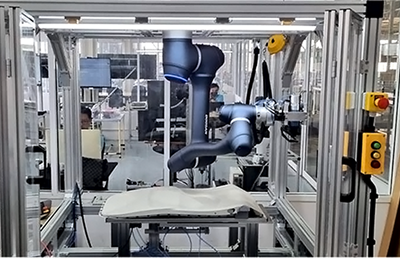
Doosan Robotics has signed a memorandum of understanding (MOU) with Thailand's VRNJ, a robotic system integrator, to supply 300 collaborative robots over the next two years. The agreement, announced on the 5th, includes an initial order of 60 units from Doosan's A, H, M, and P series. Both companies aim to develop customized automation solutions for manufacturing, targeting key Southeast Asian markets such as Thailand, Indonesia, the Philippines, and Vietnam. This partnership will enhance production efficiency through advanced solutions like parts finishing, palletizing, inspection, and pick-and-place automation. Ryu Jeong-hoon, CEO of Doosan Robotics, highlighted the region's significance as the second-largest manufacturing hub after China, noting the increasing demand for collaborative robots (cobots) due to a focus on productivity and worker safety. He emphasized the commitment to strengthen collaboration with VRNJ and boost marketing efforts to secure substantial orders in Southeast Asia.
Robotics needs a service framework.
RSF defines a common language for robot service capability, lifecycle operations, certification pathways, and service-provider networks.
Join the RobotToday community on LinkedIn
Daily robotics news, in-depth analysis, conference highlights, and discussions with professionals worldwide.