

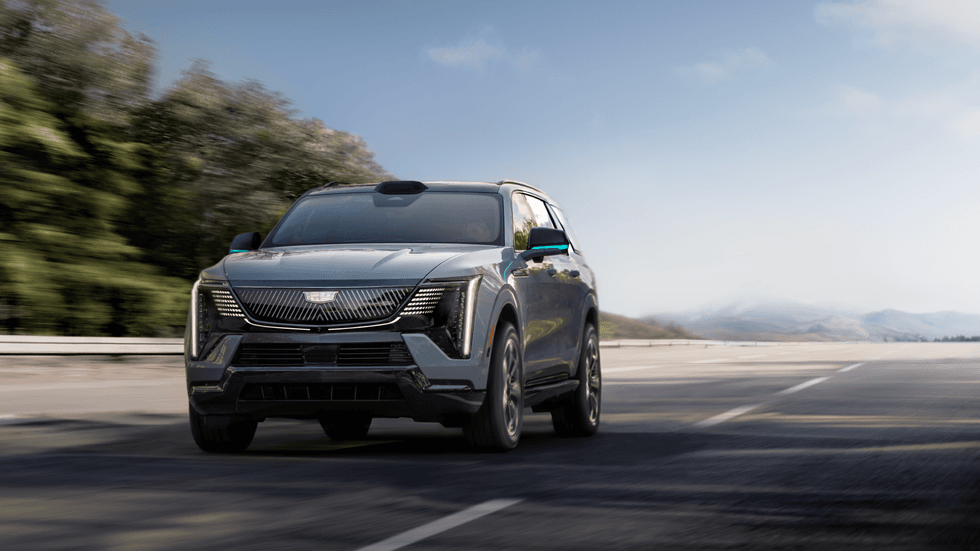
General Motors (GM) is advancing its autonomous driving technology by addressing the complex challenges associated with unpredictable road scenarios, known as the "long tail." This initiative is crucial as GM aims to achieve fully autonomous vehicles capable of navigating diverse environments safely. The company employs a combination of large-scale simulations, reinforcement learning, and advanced AI models, such as Vision Language Action (VLA), to enhance the decision-making capabilities of its autonomous systems.
To prepare for rare and unexpected driving situations, GM conducts millions of high-fidelity simulations that replicate real-world conditions. These simulations allow engineers to test the vehicles against hazardous scenarios that would be difficult to encounter safely in reality. Additionally, GM utilizes innovative techniques like “Seed-to-Seed Translation” to generate synthetic training data, enabling the modeling of extreme weather conditions and traffic scenarios.
The development process also incorporates a unique dual-frequency model that balances high-level decision-making with immediate vehicle control, ensuring quick responses to dynamic road conditions. Furthermore, GM's approach includes adversarial testing to identify potential safety risks by challenging the AI's perception capabilities.
As GM continues to refine its autonomous driving technology, the company is focused on creating an ecosystem that integrates various learning methods and addresses the critical edge cases that will determine the readiness of autonomous vehicles for widespread deployment. This comprehensive strategy aims to enhance safety and reliability, paving the way for a future where autonomous driving can operate without human intervention.
























Leave a comment