

SoftServe Introduces Virtual Gyms for Enhanced Robotics Training and Deployment
- Published
- Source
- RoboticsBusinessReview.com
SoftServe has highlighted the importance of 'virtual gyms' for robotics teams, emphasizing their role in preparing robots for dynamic environments. These high-fidelity simulation environments allow robots to train, fail, and recover safely before real-world deployment, addressing the challenges posed by unpredictable operational conditions. The global robotics market is projected to grow at a 19.6% CAGR from 2026 to 2036, underscoring the need for effective training solutions like virtual gyms to enhance robotic autonomy and performance.
The shift from programmed automation to physical AI necessitates that robots adapt to constantly changing environments, which traditional training methods struggle to accommodate. Virtual gyms integrate technologies such as digital twins, reinforcement learning, and sensor modeling to provide a comprehensive training platform. This approach mitigates the risks and costs associated with real-world trials, enabling teams to generate valuable training data in a controlled setting, thus improving deployment success rates.
Looking ahead, the adoption of virtual gyms is expected to become a standard practice in robotics development, as they offer a solution to the simulation-to-reality gap. No further timeline was disclosed at the time of publication, but the increasing complexity of robotic tasks suggests that the demand for such training environments will continue to rise as the industry evolves.
Original report
Why robotics teams need virtual gyms before deployment
RoboticsBusinessReview.com · Mariusz JaniakThis briefing is an independently written summary based on publicly available reporting and is provided for industry information and news discovery. The original report and source publication are credited and linked where applicable. RobotToday does not claim ownership of third-party source material.
Rights concerns? Contact [email protected] with the relevant URL and details. We will review the matter and take appropriate action where warranted.
More related news
- 1
- 2
- 3
- 4
- 5
- 6
- 7
- 8
- 9
- 10
- 11
- 12
Related Suppliers

University at Buffalo, Virtual Reality Lab
United States
VR/AR and robotics simulation research unit at University at Buffalo, exploring immersive simulation for autonomous systems and education.
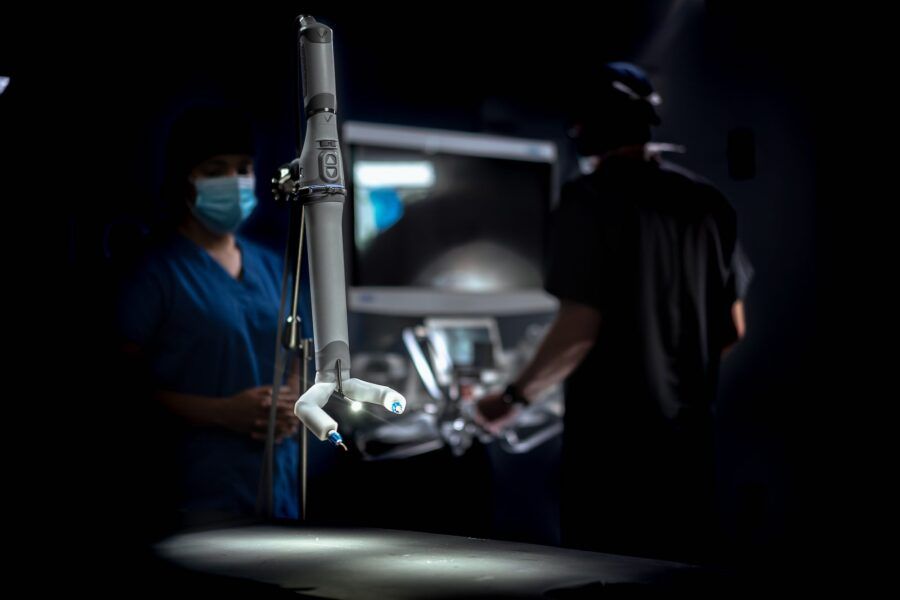
Virtual Incision Corporation
United States
Lincoln, Nebraska spin-off of University of Nebraska; developer of MIRA, the world's first miniaturized surgical robot, FDA-authorized in 2024 for colectomy.

Hebbian Robotics
United States
San Francisco YC S26 start-up founded 2026 that builds HFlow, an open-source SDK for checking and curating robot training data.
Aquitaine Robotics
France
Aquitaine Robotics is the Nouvelle-Aquitaine robotics cluster, an association founded in 2013 that groups about 150 companies, labs and training bodies.

ThoughtForge AI
United States
AI-powered robotic control platform using Active Inference for 99%+ accuracy in dynamic industrial environments.

Atlas Robotics
United States
US-based Physical AI company developing autonomous material handling robots including AI-powered pallet jacks and manipulation systems for warehouse operations.
Archetype AI
United States
Physical AI platform company deploying the Newton foundation model to fuse sensor data with language for real-world industrial intelligence.

Deplace AI
France
Paris-based physical AI startup capturing human motion demonstrations and converting them into multimodal action guidance priors for robotics models.

Twinsity
Germany
Kassel, Germany software company founded 2020; its TWINSPECT platform turns drone imagery into AI-analyzed digital twins for infrastructure inspection.

Salas O'Brien
United States
US employee-owned engineering firm whose Digital, Automation & Robotics group designs and integrates turnkey industrial robotic systems.

Learning Robots
France
Learning Robots is a Paris-Saclay CNRS spin-off making AlphAI, an educational robot and software for teaching artificial intelligence.

BridgeDP Robotics 桥介数物
China
Shenzhen developer of universal robot 'cerebellum' motion-control algorithms for humanoid, quadruped and wheeled-legged robots using RL and motion capture.
Robotics needs a service framework.
RSF defines a common language for robot service capability, lifecycle operations, certification pathways, and service-provider networks.
Join the RobotToday community on LinkedIn
Daily robotics news, in-depth analysis, conference highlights, and discussions with professionals worldwide.


