

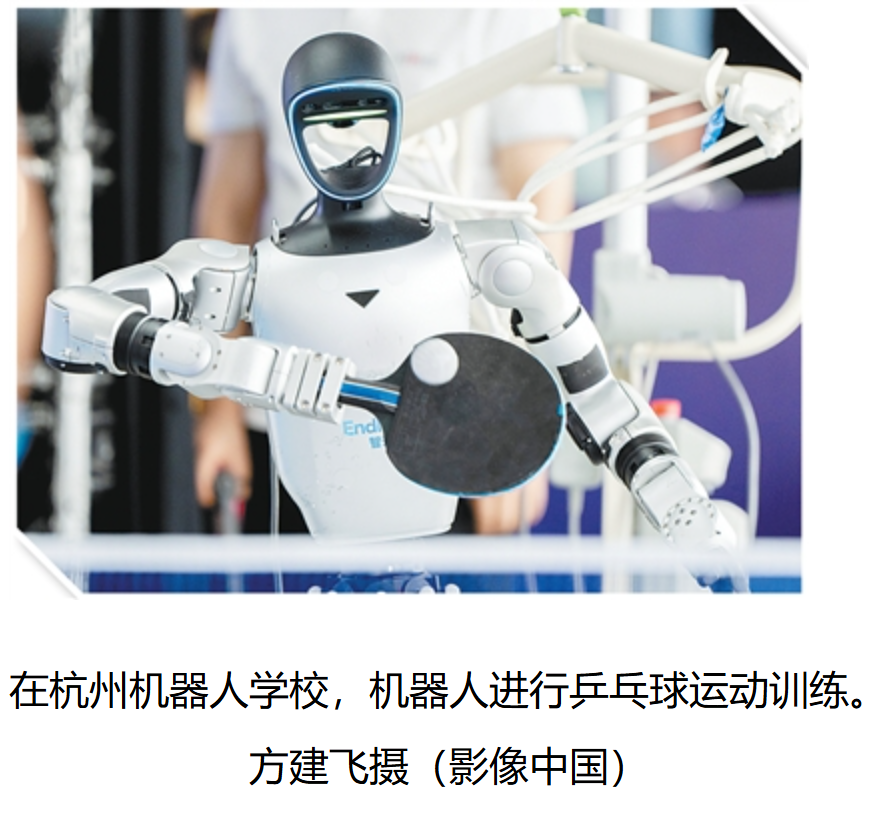
At RoboCup 2026 in Incheon, South Korea, two fully autonomous humanoid robots participated in the first complete 11-on-11 match, marking a significant leap in robotics from mere mobility to cognitive capabilities. This event featured 364 teams and nearly 3,000 researchers, showcasing the intricate development of robotic athletes.
The successful performance of these robots hinges on a trifecta of capabilities: hardware design, cognitive decision-making, and motion control. Innovations such as Boston Dynamics' Atlas robot, which has transitioned to an all-electric system, enhance fluidity and endurance. Meanwhile, advancements in artificial intelligence, including reinforcement learning and imitation learning, are enabling robots to master complex tasks and sports skills.
As robots demonstrate improved athleticism, they are poised to tackle more challenging tasks in diverse environments. For instance, a robot recently completed a half marathon in 50 minutes and 26 seconds, surpassing human records. Looking ahead, robots with refined movement and endurance will play crucial roles in future projects, such as constructing lunar research stations, while also enhancing applications in manufacturing and medical procedures.
Editor's Note
The evolution of robotic athletes reflects broader trends in technology adoption and industrial automation. As robots become more adept at mimicking human skills, their potential applications expand significantly, raising questions about their capabilities and roles in various sectors. The integration of advanced AI techniques is crucial for enhancing performance and safety in complex environments, which is essential for industries looking to leverage robotic solutions.































Leave a comment