

Pinterest Is Likely Dead Money (Q1 Preview)
- Published
- Source
- Seekingalpha.com
A recent report highlights the ongoing challenges faced by the global economy as inflation rates continue to rise. Economists from various institutions have noted that the inflation surge, driven by supply chain disruptions and increased consumer demand, is affecting both developed and emerging markets. This trend has been particularly pronounced in the United States and Europe, where central banks are considering tightening monetary policies to combat rising prices.
As of October 2023, the inflation rate in the U.S. has reached a 40-year high, prompting discussions among policymakers about potential interest rate hikes. In Europe, similar concerns have led the European Central Bank to signal possible adjustments in its approach to monetary policy. Analysts warn that if inflation persists, it could lead to slower economic growth and increased uncertainty in financial markets.
The situation has sparked debates among economists regarding the best course of action to stabilize prices without stifling growth. Many are advocating for a balanced approach that considers both immediate inflationary pressures and long-term economic recovery. As governments and central banks navigate these complex dynamics, the global economy remains on alert for potential repercussions from ongoing inflationary trends.
Original report
Pinterest Is Likely Dead Money (Q1 Preview)
Seekingalpha.comThis briefing is an independently written summary based on publicly available reporting and is provided for industry information and news discovery. The original report and source publication are credited and linked where applicable. RobotToday does not claim ownership of third-party source material.
Rights concerns? Contact [email protected] with the relevant URL and details. We will review the matter and take appropriate action where warranted.
More related news
-
1
ROBOTTODAY Weekly October 19 – 23, 2026 RobotToday · 21 hours ago
- 2
- 3
- 4
- 5
- 6
- 7
- 8
- 9
- 10
- 11
-
12
RO-MAN 2027 – Waterloo, Aug 23–27, 2027 RobotToday · 1 week ago
Related Suppliers
E-COBOT
France
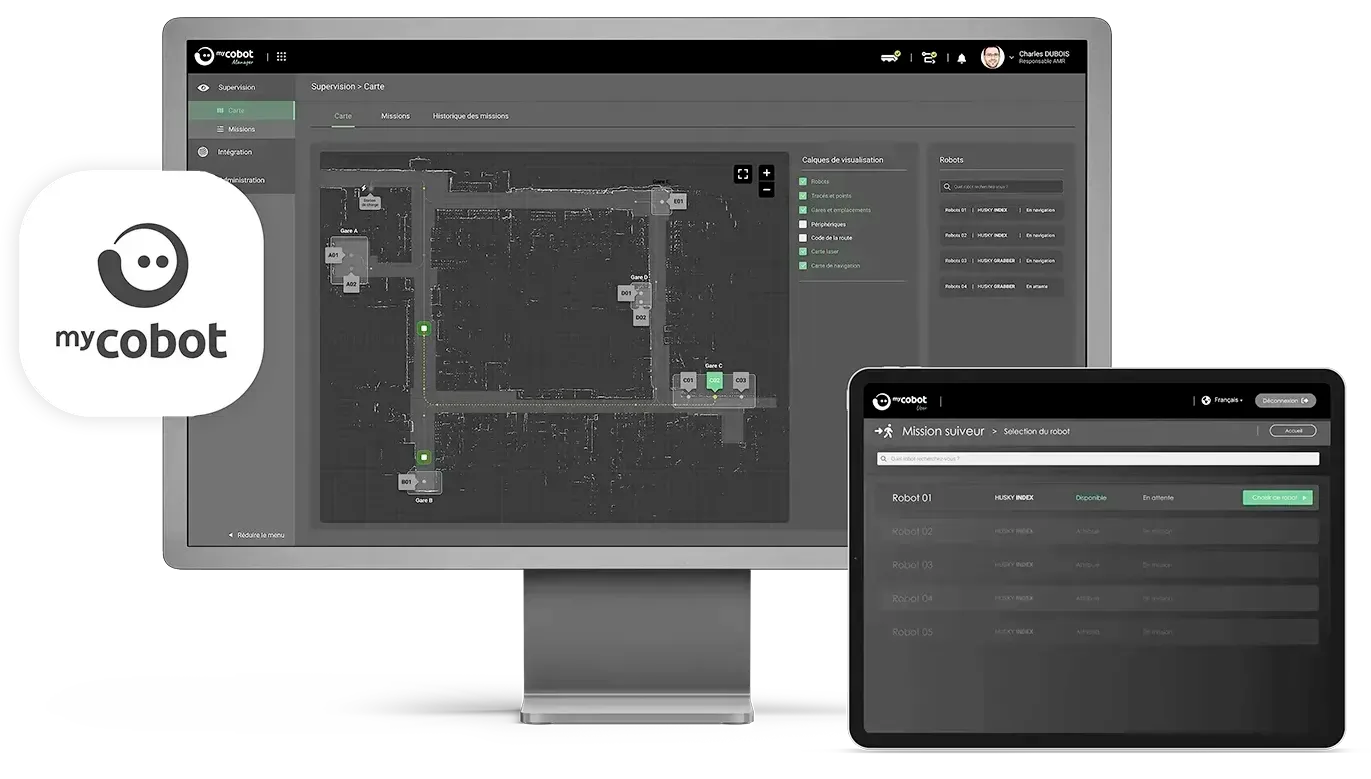
French AMR manufacturer and system integrator offering the HUSKY robot range and MyCobot fleet management software.
EasyMile
France
Toulouse, France autonomous-vehicle software company founded 2014; EZTow and EZDolly systems automate industrial tow tractors and cargo movers at airports.

Filics
Germany
Munich-based robotics startup making ultra-flat omnidirectional AMRs that drive under Euro pallets for space-efficient intralogistics.

BioRobotics Laboratory, Korea University of Technology and Education
Korea, Republic of (South)
South Korean university research laboratory focusing on haptics, exoskeletons, rehabilitation robotics, and autonomous ground vehicles.

McMaster Manufacturing Research Institute
Canada
Hamilton, Ontario applied manufacturing research center at McMaster University; runs a 21,000 sq ft facility with seven research labs.

Robotics Education & Competition Foundation
United States
The REC Foundation is a US nonprofit that runs VEX-based robotics and drone competitions reaching 1.1 million students across 70 countries.
Robotics needs a service framework.
RSF defines a common language for robot service capability, lifecycle operations, certification pathways, and service-provider networks.
Join the RobotToday community on LinkedIn
Daily robotics news, in-depth analysis, conference highlights, and discussions with professionals worldwide.


