NVIDIA Vera Achieves High Throughput and Fast Agent Performance in AI Infrastructure
- Published
- Source
- NvidiaNews
NVIDIA has introduced the Vera CPU, designed to enhance the performance of AI agents by efficiently executing tasks that involve searching for information, querying databases, and coding. This innovation allows businesses to deploy more AI agents simultaneously without increasing wait times, addressing the critical need for power-efficient solutions in AI factories.
The significance of NVIDIA Vera lies in its ability to deliver both rapid agent performance and high capacity per watt, eliminating the need for a combination of different x86 CPUs to achieve optimal speed and efficiency. This advancement is crucial as AI infrastructure providers strive to maximize productivity while adhering to power limitations.
NVIDIA's Vera CPU has already shown superior performance in a 100-megawatt data center comparison, outperforming both the fastest and most energy-efficient x86 CPUs. Early adopters are currently implementing Vera in production environments, indicating a strong potential for widespread adoption in the industry.
Original report
Vera Delivers the Best of Both Worlds: Highest Throughput and Fastest Agents
NvidiaNews · NVIDIAThis briefing is an independently written summary based on publicly available reporting and is provided for industry information and news discovery. The original report and source publication are credited and linked where applicable. RobotToday does not claim ownership of third-party source material.
Rights concerns? Contact [email protected] with the relevant URL and details. We will review the matter and take appropriate action where warranted.
More related news
- 1
- 2
- 3
- 4
- 5
- 6
- 7
- 8
- 9
- 10
- 11
- 12
Related Suppliers

NVIDIA Robotics
United States
NVIDIA robotics division delivering Isaac simulation and training tools, Jetson edge compute modules, and Omniverse digital twin frameworks for physical AI.

Deci AI (Acquired by NVIDIA)
Israel
Israeli deep learning optimization startup acquired by NVIDIA in May 2024 for ~$300M; known for AutoNAC neural architecture search technology.
Nscale
United Kingdom
London-based Nscale runs a full-stack AI/GPU cloud platform and on Aug 1, 2026 agreed to acquire Anyscale for $1.65 billion.
Turiya AI
United States
California-based multi-agent AI platform enabling manufacturers to automate engineering, quoting, and production workflows via no-code/low-code SaaS.
Universal Ubiquitous AI Co., Ltd. 宇泛智能科技股份有限公司
China
Hangzhou embodied-AI firm founded March 2014; builds the Manas foundation model, LingMao Cyvet quadruped robot, and proprietary joint actuators.
Alloy Enterprises Inc
United States
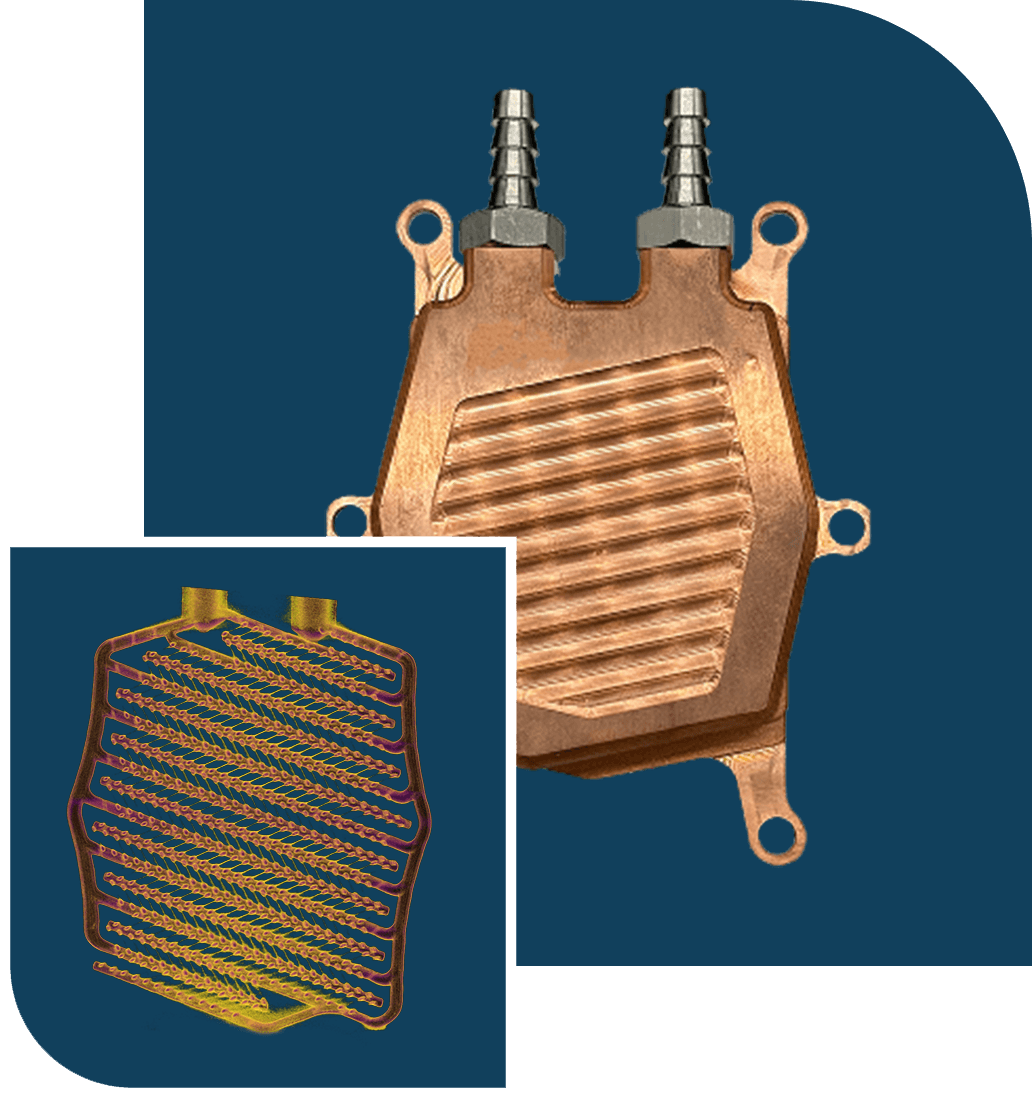
US thermal management maker founded 2020; patented Stack Forging™ yields leak-tight aluminum cold plates with 4× pressure drop reduction.

Mobilint, Inc.
Korea, Republic of (South)
South Korean AI semiconductor company designing power-efficient NPU chips (ARIES, REGULUS) for edge AI inference.

SkyMul Inc.
United States
Georgia Tech spin-off turning daily drone and LiDAR scans into quarter-inch digital twins for concrete work, with SkyTy rebar-tying robots.

Kipo AI
United States
San Francisco AI-native sourcing platform helping engineers find, evaluate, and procure mechanical and electronic automation components via LLM.
Deccan AI
United States
Enterprise data company providing expert-curated SFT, RLHF datasets, RL environments and evaluations for training LLMs and AI agents.

Lovell AI
United States
Texas startup building a hybrid-cloud Physical AI platform that designs, trains and deploys multi-agent robot brains for industrial robot fleets.

Lili-o Inc.
Germany
Early-stage robot software startup building a hardware-agnostic deterministic execution engine that teaches humanoids skills from one human demonstration.
Robotics needs a service framework.
RSF defines a common language for robot service capability, lifecycle operations, certification pathways, and service-provider networks.
Join the RobotToday community on LinkedIn
Daily robotics news, in-depth analysis, conference highlights, and discussions with professionals worldwide.