

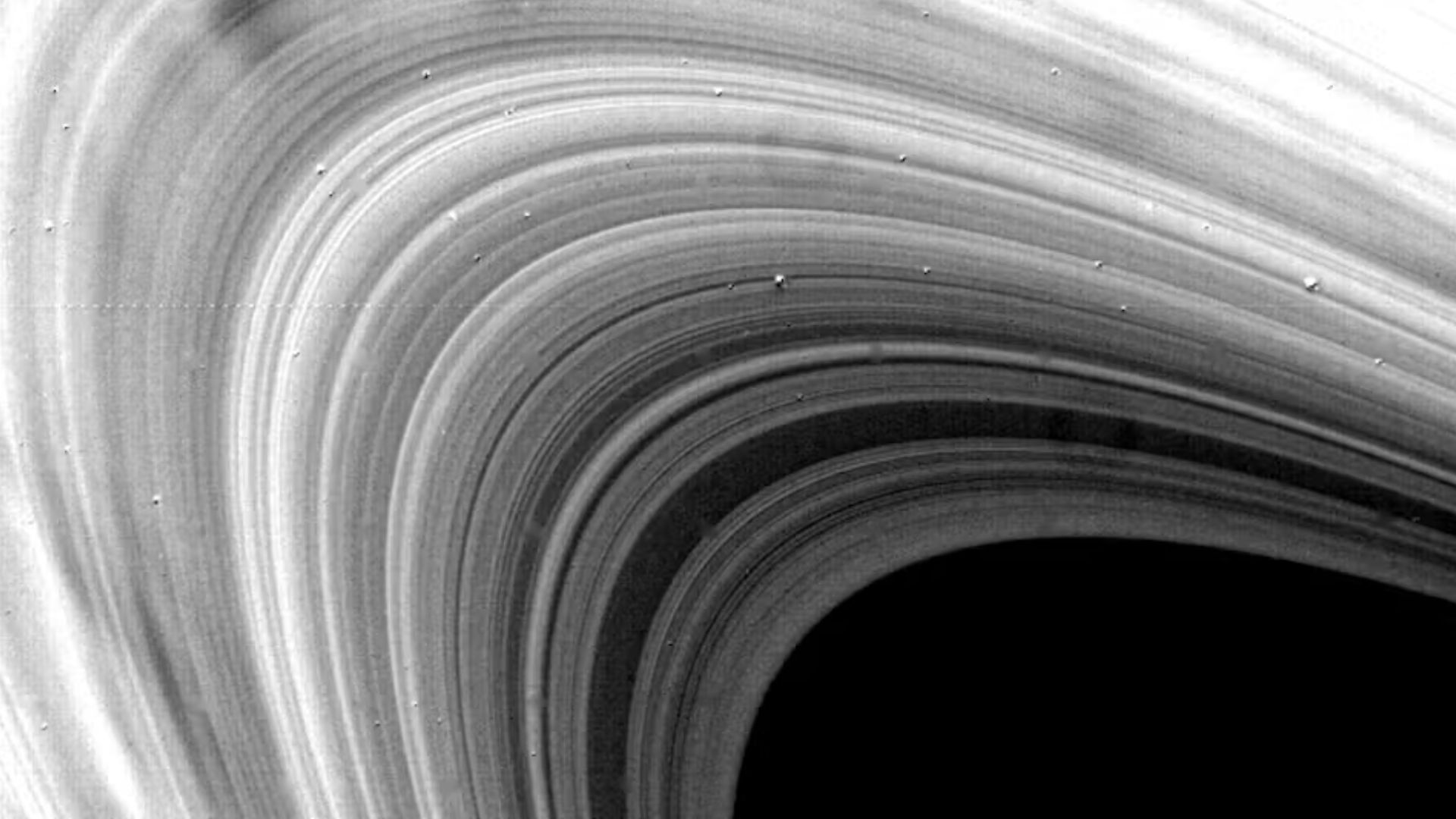
Researchers at the Indian Institute of Technology (IIT) Jammu, in collaboration with IIT Kanpur, utilized supercomputer simulations to investigate the chaotic behavior in dusty plasma, a specialized state of matter. This study involved tracking millions of particles, shedding light on turbulence and potentially advancing research in nuclear fusion and astronomy.
Understanding the microscopic roots of chaos in dusty plasma is crucial as it can hinder nuclear fusion reactors from achieving necessary temperatures for energy production. The researchers focused on two types of chaos: Kelvin-Helmholtz instability and Rayleigh-Taylor instability, which are significant in fluid dynamics. Their findings indicate that energy flow follows a mathematical pattern, and the stronger the coupling between dust particles, the slower the energy transfer process.
The team employed the Large-scale Atomic/Molecular Massively Parallel Simulator (LAMMPS) to analyze the behavior of billions of particles, bridging the gap between microscopic particle physics and macroscopic fluid dynamics. Future research aims to conduct three-dimensional simulations to further explore these phenomena. The findings were published in the journal Philosophical Transactions A.
Editor's Note
This research highlights the importance of advanced simulations in understanding complex physical systems. The findings could have significant implications for nuclear fusion technology and our understanding of astrophysical phenomena. As researchers continue to explore the chaotic behavior of dusty plasma, the potential for breakthroughs in clean energy and astrophysics remains promising.
































Leave a comment