

Five Essential Stages for Launching New Production Lines Effectively
- Published
The process of transitioning from a signed capital purchase order to the first saleable output often exceeds initial project timeline estimates. Delays typically arise not from the robotics or automation systems themselves, which function as intended, but from logistical challenges, power infrastructure issues, regulatory paperwork, and documentation gaps that can emerge unexpectedly.
Understanding the five critical stages involved in this process is vital for teams managing capital equipment installations. Key considerations include verifying floor loading capacity against dynamic load figures and ensuring physical access metrics align with installation requirements. Addressing dimensional mismatches during site surveys can significantly reduce labor costs and avoid unplanned expenses when equipment arrives.
As the equipment is positioned according to the layout, attention shifts to power delivery and compliance with electrical codes. Teams must ensure that licensed electricians handle first-fix electrical work, adhering to the latest NEC regulations. No further timeline was disclosed at the time of publication.
Original report
5 Simple Stages to Launch New Production Lines
RoboticsAndAutomationNews.com · Sam FrancisThis briefing is an independently written summary based on publicly available reporting and is provided for industry information and news discovery. The original report and source publication are credited and linked where applicable. RobotToday does not claim ownership of third-party source material.
Rights concerns? Contact [email protected] with the relevant URL and details. We will review the matter and take appropriate action where warranted.
More related news
- 1
- 2
- 3
-
4
RobotToday Weekly October 12 – 16, 2026 RobotToday · 2 days ago
- 5
- 6
- 7
- 8
- 9
- 10
- 11
- 12
Related Suppliers

SHAC USA
United States
North American branch of a Chinese linear motion maker supplying guideways, ball screws and linear axes to industrial automation markets.
Hiproject
Slovenia
Slovenske Konjice, Slovenia integrator founded 2018 building heat treatment and automation lines; exclusive UBTECH distributor for five Balkan countries.

Avatar Intelligent Equipment Co., Ltd.
China
Zhengzhou maker of integrated robot joint actuators (harmonic, planetary, cycloidal, micro), sold under the AtaroBot/Avatar Robotics brand with a 6-DOF hand.
Guangzhou Jingyuan Mechano-Electric Equipment Co., Ltd. 广州市井源机电设备有限公司
China
Guangzhou AGV maker (founded 2004, brand Jingyuan AGV) building platform, forklift, tugger, lifting and latent AGVs; 51% held by SZSE-listed Saixiang

Borg Robotics
United States
Detroit-based startup building modular AI-powered humanoid and industrial robots designed for warehouse and factory automation.

Plus One Robotics
United States
Plus One Robotics provides AI-powered 3D vision software and human-in-the-loop supervision for robotic parcel handling in logistics and warehousing.

Aletiq
United States
Paris, France PLM/PDM software maker founded 2019; centralizes CAD, BOM and quality data for manufacturers, raised EUR 6 million led by Point Nine.

OLogic, Inc.
United States
Silicon Valley robotics engineering firm founded 2005; 300+ completed robot projects spanning PCB design, ROS software, and mechanical engineering.
Nidec Drives
United States
Manufacturer of Control Techniques AC, DC, and servo variable-speed drives for industrial automation and motion control.
STOBER Drives
United States
German gearbox maker since 1934; US HQ in Maysville, KY; precision planetary gearboxes and servo drives for robotics and industrial automation worldwide.

TK USA Corp
United States
North American branch of Italy's TK Group, distributing TKFF390 PUR automation cables, M23 connectors, and assemblies for servo and motion-control applications.
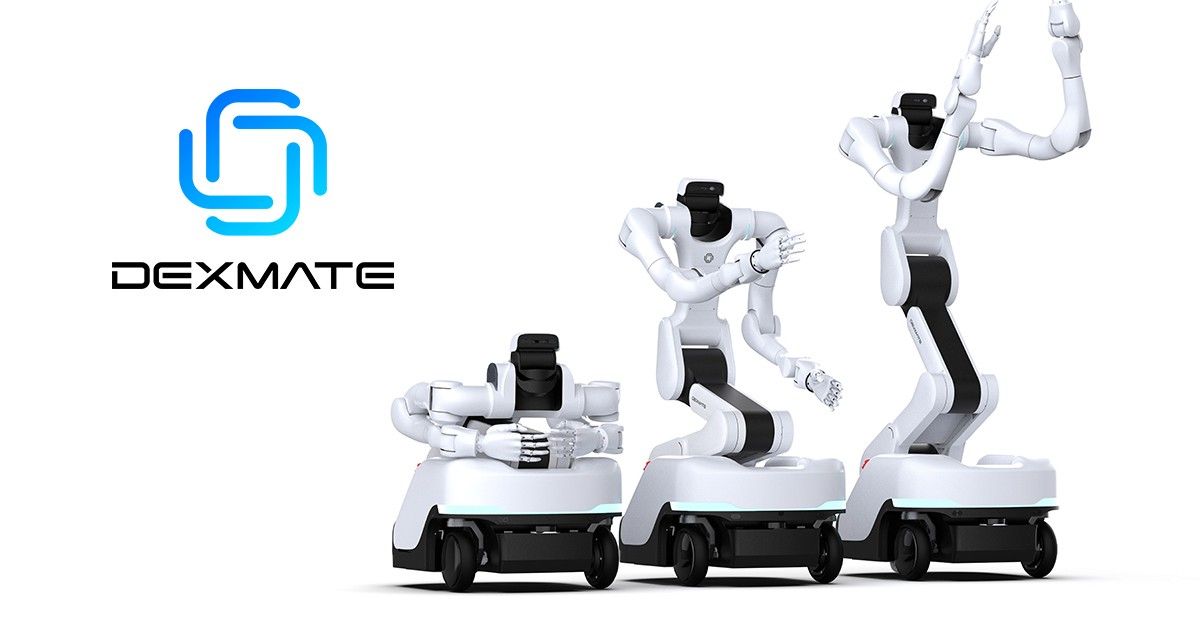
Dexmate
United States
Santa Clara maker, founded 2024, of Vega, a foldable wheeled bimanual humanoid on Jetson Thor listed from USD 83,000, plus grippers and a teleop exoskeleton.
Robotics needs a service framework.
RSF defines a common language for robot service capability, lifecycle operations, certification pathways, and service-provider networks.
Join the RobotToday community on LinkedIn
Daily robotics news, in-depth analysis, conference highlights, and discussions with professionals worldwide.


