


SmartSense (DE)
IoT-based condition monitoring and asset location tracking platform by Digi International. Serves healthcare, food service, and transportation industries with sensing-as-a-service solutions for product safety and regulatory compliance.
Contact SmartSense (DE)
WEBSITE
https://www.smartsense.coPHONE
+1 866-806-2653HEADQUARTERS
Company Facts
Founded
-
Primary Role
-
Company Size
-
Primary Region
-
Annual Sales
-
Funding Stage
-
Funding Total
-

Microsoft and Google Introduce New Standards for Authentication and Information Protection
Microsoft and Google have launched new measures to address three significant risks faced by IT departments: input errors in generative AI, misuse of stolen cookies, and the difficulty in assessing authentication strength. Microsoft has begun general availability of a feature in Microsoft 365 Copilot that detects sensitive information before processing input, halting the action if such data is identified. These advancements are crucial as the use of generative AI in business increases, leading to greater threats from accidental input of confidential information and session hijacking. The new capabilities from Microsoft and Google aim to enhance security and reduce reliance on traditional password-based defenses. Looking ahead, organizations should monitor the implementation of these new features, including Google's technology to invalidate stolen cookies on a device-by-device basis and the introduction of new session metadata to better assess login strength. No further timeline was disclosed at the time of publication.

Starbucks Workers United Launches National Boycott Amid Labor Dispute Over AI Integration
In August 2026, Starbucks Workers United, representing over 12,000 baristas across more than 550 stores, initiated a national boycott due to failed negotiations over key contract terms such as wage increases and staffing. The union accused Starbucks of irrational behavior and prioritizing ineffective AI investments over resolving labor disputes. The union's stance highlights the perceived misallocation of resources towards AI technologies, which they argue distract from pressing labor issues. Starbucks, however, maintains that it offers competitive pay and is committed to productive negotiations. AI has already been implemented in some locations, with drive-thrus utilizing AI robots for order taking and baristas equipped with virtual assistants. Despite the rise of robotic coffee-making companies, the union emphasizes the irreplaceable value of baristas in fostering human connections and managing complex interactions. While some argue that automation poses a long-term threat to barista jobs, data shows that over 97% of Starbucks beverages will still be made by hand in 2025, indicating that the role of baristas remains vital and far from obsolete.
Labor Relations Automation Technology Coffee Industry AI Integration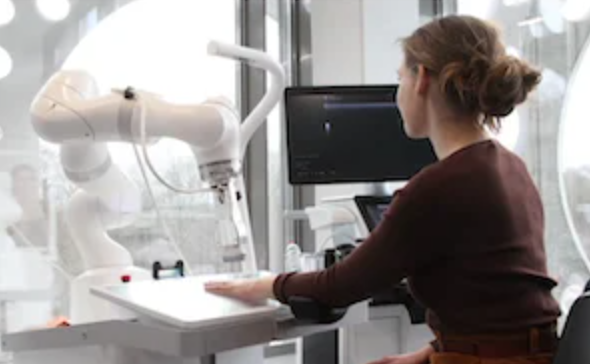
ROPCA Secures FDA Approval for Autonomous Ultrasound Robot ARTHUR for Rheumatoid Arthritis Diagnosis
Danish medical technology company ROPCA has received FDA 510(k) approval for its autonomous ultrasound robot, ARTHUR, designed for diagnosing rheumatoid arthritis. This innovative system allows patients to place their hands on a designated area while the robot, equipped with AI software DIANA, performs standardized ultrasound scans without the need for a physician's intervention. The significance of this approval lies in addressing the shortage of rheumatology specialists in the U.S., where 72% of counties lack access to such experts. With ARTHUR's ability to conduct efficient and repeatable joint ultrasound assessments, it aims to enhance the accessibility of objective imaging and improve clinical capabilities, as noted by Dr. Matthew J. Koster from the Mayo Clinic. Looking ahead, ROPCA's ARTHUR could revolutionize the diagnostic process for rheumatoid arthritis, potentially reducing the lengthy wait times patients currently face for joint ultrasound evaluations. No further timeline was disclosed at the time of publication.
Ultrasound Robotics Rheumatoid Arthritis AI in Healthcare Medical Technology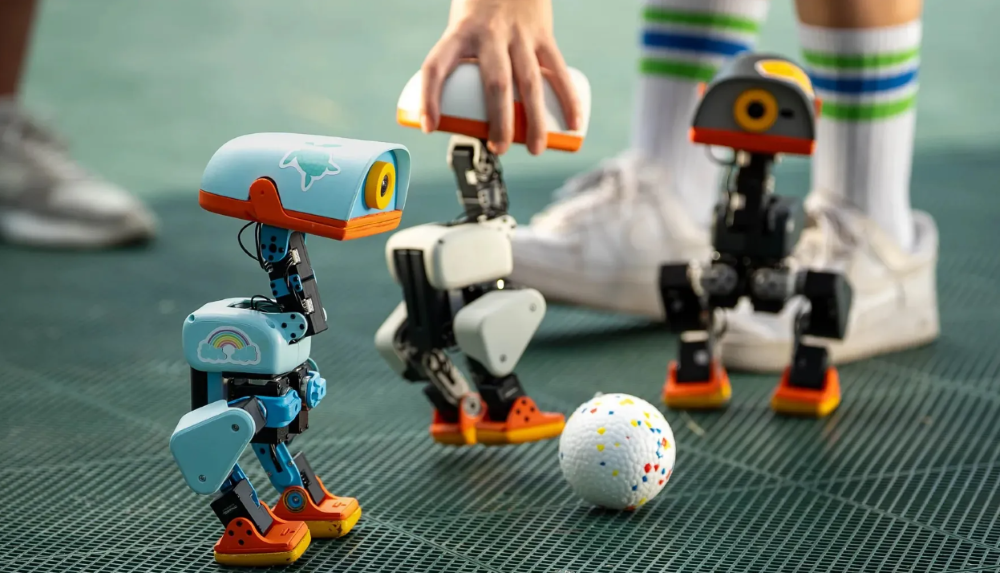
Hugging Face and Pollen Robotics Launch Affordable AI Robot Microduck for Developers
On August 27, Hugging Face, in collaboration with Pollen Robotics, officially launched Microduck, a bipedal robot designed as an affordable AI experimentation platform for developers. This initiative aims to transition robotic training from costly laboratory settings to the broader market. Microduck is not merely a toy; it features an open-source framework that allows users to employ reinforcement learning to teach the robot new skills in a simulated environment before deploying them to the physical robot. The robot is equipped with a Rockchip RK3566 processor, cameras, LIDAR, and motion sensors, enabling environmental perception and interaction. The initial market response has been promising, with pre-orders selling at a rate of one unit every four seconds, and Hugging Face aims to exceed 20,000 units sold. As the second robot from the partnership, following the desktop robot Reachy Mini, Microduck represents a significant step in making robotics more accessible to developers, heralding a new era of programmable and learning robots.
AI Robotics Open Source Reinforcement Learning Physical AI Robotics Development
Udi Robotics Approaches IPO as Veteran Team Transitions from Telecom to Robotics
Udi Robotics, founded by the original team behind the 'Little Smart' telecom device, is nearing its IPO on the Hong Kong Stock Exchange. The company has evolved from its telecom roots to become a significant player in the commercial service robotics sector, currently ranking as China's third-largest provider with an 8.9% market share. The transition from telecom to robotics highlights the team's expertise in managing complex systems, including supply chain procurement and large-scale deployment. Despite facing financial challenges, Udi Robotics has shown growth in revenue and a shift in its business model towards integrating AI and service solutions alongside hardware sales. Looking ahead, Udi Robotics aims to solidify its position in the market post-IPO, with projections indicating a significant portion of revenue will come from AI visual solutions and robotics-as-a-service by 2025. The upcoming IPO will determine not just the company's market entry but its ability to sustain and grow in a competitive landscape.
Service Robots AI Solutions Robotics Commercial Automation
Anthropic Launches Model Hardware Standard for AI-Enabled Robotics
On August 27, Anthropic officially released a research preview of the Model Hardware Standard (MHS). This unified specification is designed for the safe operation of physical devices by AI agents, enabling models like Claude to directly interpret and control robots, scientific instruments, and industrial equipment. The MHS aims to replicate the success of the Model Context Protocol (MCP) in the software domain, which serves as a universal language for AI interactions with applications like Gmail and Slack. By establishing standardized 'dialogue rules' between AI and hardware, MHS simplifies programming interfaces into basic commands such as 'read' and 'write', allowing devices to discover and communicate across networks without the need for specialized coding. Notably, MHS enables AI to understand previously unseen devices by incorporating essential information like weight and safety limits directly into the standard. Anthropic's collaboration with the Janelia Research Campus has led to the initial preview being made available to select research labs and advanced manufacturers, with plans for open-sourcing after the preview period. The AI-driven robotics market is projected to reach a trillion-dollar valuation by 2035, highlighting the significance of MHS in bridging AI capabilities with physical operations.
AI Robotics Model Hardware Standard Scientific Research Automation Technology
WorkBuddy Transitions to Production at Shanghai Jahwa, Boosting Efficiency by 4.5 Times
Tencent's office agent WorkBuddy has successfully moved from pilot phase to full production at Shanghai Jahwa, a historic cosmetics manufacturer. This transition has resulted in a remarkable increase in operational efficiency, achieving more than a fourfold improvement across nine different departments. The significance of this development lies in the enhanced productivity that WorkBuddy brings to Shanghai Jahwa, a company with a century-long legacy in the cosmetics industry. The ability to streamline processes and improve efficiency is crucial for maintaining competitiveness in a rapidly evolving market. Looking ahead, it will be important to monitor how WorkBuddy continues to perform in its production role and whether further enhancements can be achieved. No further timeline was disclosed at the time of publication.
AI
XPeng Launches Major Upgrade to Second-Gen VLA with Dynamic 4D Spacetime Understanding
XPeng has introduced a significant upgrade to its second-generation Vehicle Learning Architecture (VLA), enhancing it with dynamic 4D spacetime understanding. This advancement enables production cars to exhibit Robotaxi-grade Level 4 (L4) autonomous behavior, marking a notable step forward in the integration of physical AI. The introduction of 4D spacetime capabilities is crucial as it allows vehicles to better interpret their environments and make real-time decisions, which is essential for safe autonomous driving. This upgrade positions XPeng at the forefront of the autonomous vehicle industry, showcasing its commitment to innovation and advanced technology. Looking ahead, industry observers will be keen to see how this upgrade impacts XPeng's market position and the broader implications for autonomous vehicle technology. No further timeline was disclosed at the time of publication.
Auto
Anthropic Introduces Software Standard for Claude to Enhance Collaboration with Robots and Lab Tools
Anthropic PBC has unveiled a new software standard designed to improve the interaction between AI assistants, such as Claude, and various robotic and scientific lab tools. This development aims to streamline operations in both manufacturing and scientific environments, enhancing the efficiency of AI in these sectors. The introduction of this software standard is significant as it represents a step forward in integrating AI technologies with physical systems. By enabling Claude to better collaborate with robots and lab equipment, Anthropic is addressing a critical need for improved automation and precision in scientific and manufacturing processes. Looking ahead, industry stakeholders will be keen to observe how this new standard impacts the deployment of AI in robotics and lab settings. No further timeline was disclosed at the time of publication.
Hugging Face Launches MicroDuck, an Open-Source Robot Amid Nvidia Acquisition Rumors
Hugging Face has introduced MicroDuck, an innovative open-source robot capable of walking, talking, and roller-skating. Co-founder Thomas Wolf highlighted the increasing demand for robotics and open-source AI, noting that the company is selling approximately one MicroDuck every four seconds. The launch of MicroDuck is significant as it reflects the growing interest in robotics and AI technologies. Hugging Face's focus on open-source solutions positions it well in a competitive landscape, attracting attention from various investors and companies looking to expand their portfolios in AI and robotics. Looking ahead, the market will be keen to observe any developments regarding Hugging Face's potential acquisition by Nvidia, which has been reported to be nearing a $13 billion deal. No further timeline was disclosed at the time of publication.


