

Cobot Palletizing vs. Traditional Palletizers: Speed, Footprint, and Cost Analysis
- Published
- Source
- jaka.com
The palletizing process at the end of production lines is undergoing a significant transformation as manufacturers evaluate the shift from traditional palletizers to collaborative robot (cobot) systems. This change is driven by the need for greater flexibility and efficiency in supply chain operations. Traditional palletizers, known for their high-speed capabilities and suitability for single-SKU production, dominate high-output environments like food and beverage processing. However, cobots, equipped with 6-axis robotic arms, offer a more adaptable solution, particularly for facilities handling diverse product mixes.
The transition is taking place as manufacturers seek to optimize space and reduce costs. Traditional systems require extensive floor space and safety barriers, often leading to operational bottlenecks. In contrast, cobots can operate safely alongside human workers, fitting into tighter spaces and allowing for more efficient warehouse layouts.
Cost considerations also play a crucial role in this shift. While traditional palletizers may have similar initial costs, their total cost of ownership is significantly higher due to installation and maintenance expenses. Cobots, like those developed by JAKA, provide a more economical option, with easier installation and lower energy consumption. JAKA's Zu series exemplifies this innovation, offering advanced palletizing solutions that enhance productivity while minimizing product damage.
As the industry adapts to these technological advancements, the choice between traditional and cobot palletizing systems will ultimately hinge on manufacturers' specific needs for speed, space, and cost efficiency.
Original report
Cobot Palletizing vs. Traditional Palletizers: Speed, Footprint, and Cost Analysis
jaka.com · JAKAThis briefing is an independently written summary based on publicly available reporting and is provided for industry information and news discovery. The original report and source publication are credited and linked where applicable. RobotToday does not claim ownership of third-party source material.
Rights concerns? Contact [email protected] with the relevant URL and details. We will review the matter and take appropriate action where warranted.
More related news
- 1
-
2
RobotToday Weekly October 12 – 16, 2026 RobotToday · 2 days ago
- 3
- 4
- 5
-
6
RoboBoston 2027 – Boston, May 1, 2027 RobotToday · 5 days ago
-
7
RO-MAN 2027 – Waterloo, Aug 23–27, 2027 RobotToday · 5 days ago
- 8
- 9
- 10
- 11
-
12
LogiMAT China 2027: April 21–23, Shenzhen RobotToday · 2 weeks ago
Related Suppliers
Collaborative Robotics
United States
Maker of Proxie, a swerve-drive autonomous mobile manipulator that moves materials alongside people without facility changes.

Massachusetts Technology Collaborative
United States
Massachusetts state agency fostering technology and robotics innovation through funding, partnerships, and the MassRobotics Accelerator.

Azalea Robotics
United States
Berkeley-based YC-backed startup building fully-mobile collaborative robots for autonomous airport baggage handling on ramps and in terminals.
E-COBOT
France
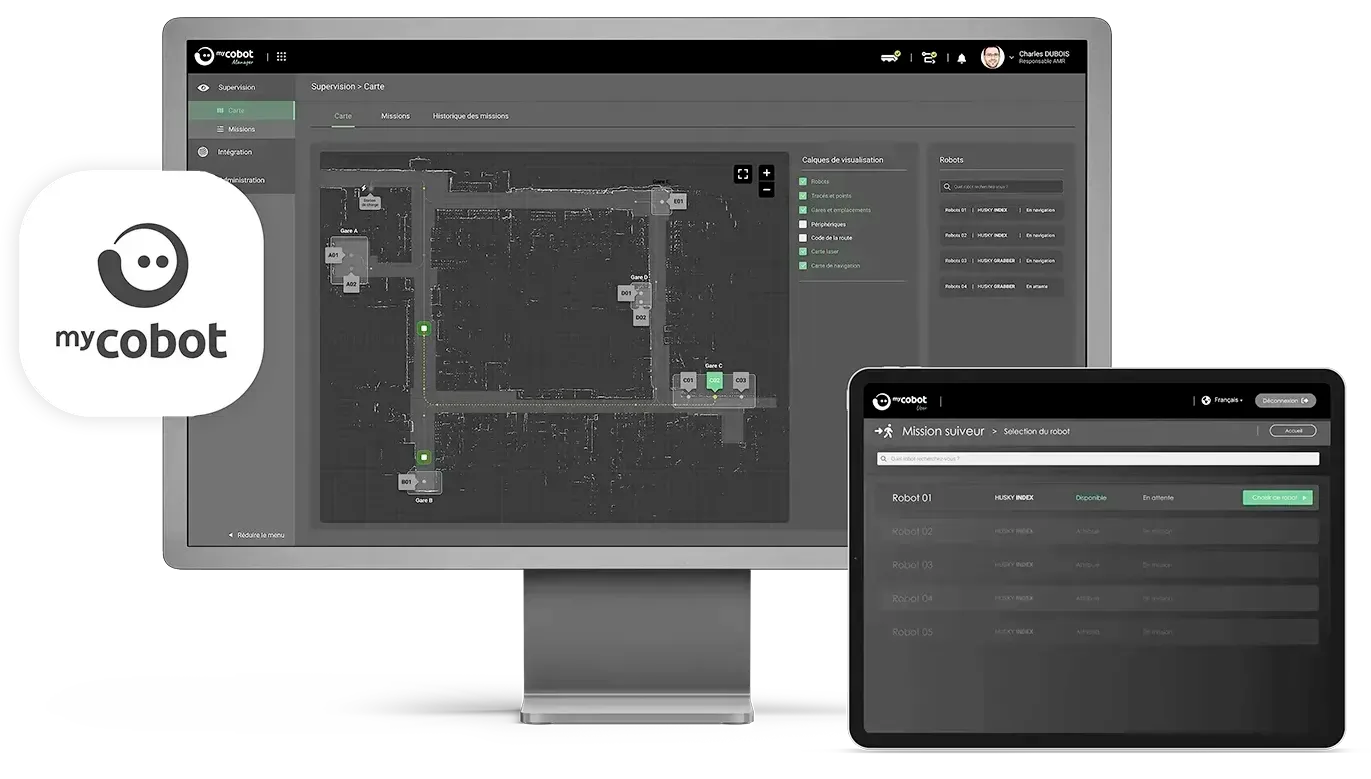
French AMR manufacturer and system integrator offering the HUSKY robot range and MyCobot fleet management software.
EasyMile
France
Toulouse, France autonomous-vehicle software company founded 2014; EZTow and EZDolly systems automate industrial tow tractors and cargo movers at airports.

Filics
Germany
Munich-based robotics startup making ultra-flat omnidirectional AMRs that drive under Euro pallets for space-efficient intralogistics.

Da Shiang Automation Industrial Co. Ltd. 達詳自動化工業股份有限公司
Taiwan
Taiwan-based robotic system integrator founded 2013; 1,000+ robot projects in automotive, aerospace, and metal manufacturing.

Janome Industrial Equipment Europe GmbH
Germany
German sales subsidiary of Janome Industrial Equipment (Japan), distributing servo presses and desktop/Cartesian robots in Europe since 1984.

Industrial Technology Research Institute (ITRI) 工業技術研究院
Taiwan
Hsinchu County, Taiwan applied-technology research institute founded 1973; over 6,500 staff developing autonomous mobile robots and AI perception systems.
Robotics needs a service framework.
RSF defines a common language for robot service capability, lifecycle operations, certification pathways, and service-provider networks.
Join the RobotToday community on LinkedIn
Daily robotics news, in-depth analysis, conference highlights, and discussions with professionals worldwide.


